
Elon Musk and Tesla are virtually synonymous in the eyes of the global financial markets. As the architect behind the world’s most valuable automaker, Musk’s financial health is inextricably linked to the performance of Tesla (TSLA). For investors, analysts, and financial enthusiasts, the question of exactly how much of the company he owns is not merely a matter of curiosity—it is a critical metric for understanding corporate governance, market volatility, and the future trajectory of the electric vehicle (EV) industry.
Understanding Musk’s ownership requires navigating a complex web of common stock, exercisable options, and legal disputes that have recently reshaped his portfolio. This article provides a comprehensive financial breakdown of Elon Musk’s Tesla holdings, the mechanics of his wealth, and what his equity stake means for the broader investment landscape.
Decoding Elon Musk’s Tesla Equity and Ownership Structure
At the heart of Tesla’s capital structure lies Elon Musk’s massive equity stake. Unlike many founders who diversify their holdings early on, Musk has historically kept the vast majority of his net worth tied up in his own ventures, with Tesla being the primary engine of his wealth.
Current Share Count and Percentage
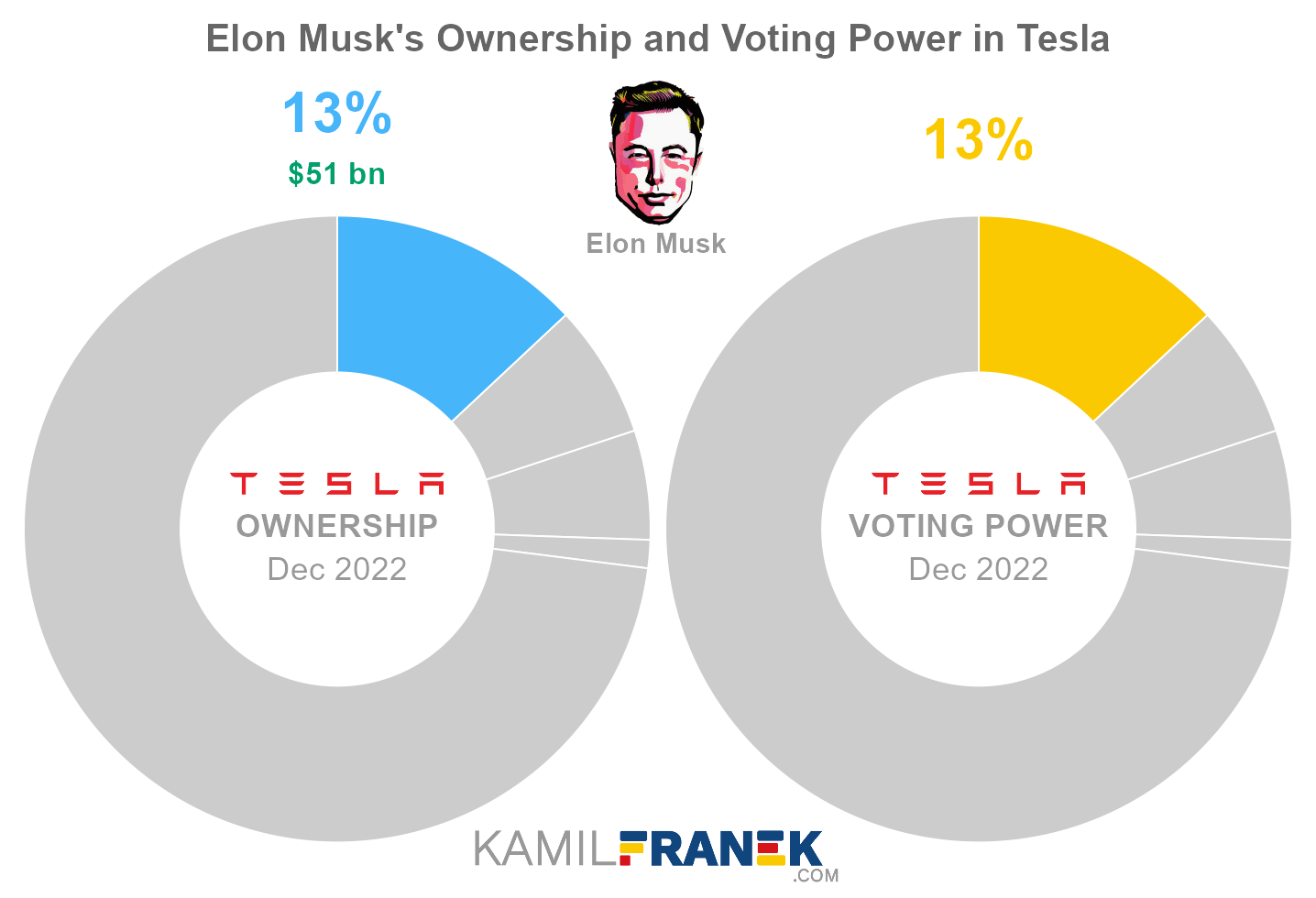
As of early 2024, Elon Musk remains the largest individual shareholder of Tesla. While the exact number fluctuates due to stock-based compensation and periodic sales, Musk owns approximately 411 million shares of common stock. This represents roughly 13% of the company’s total outstanding shares.
However, the “ownership” conversation is complicated by stock options. When including vested options that he has the right to exercise, his potential stake has historically hovered closer to 20% to 22%. This distinction is vital for investors because while common stock represents immediate voting power, options represent future dilution and potential capital gains that are contingent on hitting specific performance milestones.
The Impact of the 2018 CEO Performance Award
The most significant factor in Musk’s ownership journey was the 2018 CEO Performance Award. This was a compensation package like no other in corporate history, consisting of 12 tranches of stock options that vested as Tesla hit escalating market cap and operational milestones.
While these options significantly boosted his paper wealth, they became the subject of intense legal scrutiny. In early 2024, a Delaware judge voided the $56 billion pay package, arguing that the process for approving it was “deeply flawed.” This ruling created a massive financial vacuum, as it technically stripped Musk of the right to billions of dollars worth of options, bringing his effective ownership percentage back down toward the 13% mark until a new package is negotiated or the ruling is overturned.
Stock Splits and Their Effect on Holdings
To the casual observer, the number of shares Musk owns might seem to have exploded over the last few years. It is important to remember that Tesla has undergone two significant stock splits: a 5-for-1 split in 2020 and a 3-for-1 split in 2022.
From a financial perspective, these splits did not change the percentage of the company Musk owns; they simply increased the number of shares in circulation while lowering the price per share. For Musk, this increased the liquidity of his holdings, making it easier to sell specific tranches of stock to fund other ventures or pay tax obligations without drastically altering the market’s perception of his commitment.
The Financial Mechanics of Musk’s Wealth and Liquidity
Owning billions of dollars in stock is fundamentally different from having billions of dollars in a bank account. For Elon Musk, his Tesla shares serve as a primary source of collateral and a tool for capital allocation across his various business interests.
Stock Pledging and Margin Loans
One of the more sophisticated financial strategies Musk employs is “stock pledging.” Instead of selling shares and triggering capital gains taxes, Musk often uses his Tesla stock as collateral to secure personal loans from major financial institutions.
This allows him to maintain his voting power and benefit from future stock price appreciation while still accessing the cash needed to fund his lifestyle or invest in companies like SpaceX and Neuralink. However, this strategy carries “margin call” risk. If Tesla’s stock price were to plummet below a certain threshold, lenders could force Musk to sell shares to cover the loans, which could create a downward spiral for the stock price.
Divestment for the Twitter (X) Acquisition
The most significant shift in Musk’s Tesla ownership occurred during his acquisition of Twitter (now X). To fund the $44 billion purchase, Musk sold approximately $22.9 billion worth of Tesla stock in 2022.
These sales were a point of contention for Tesla investors, as they created significant “sell-side pressure,” driving the stock price down. From a personal finance standpoint, this move shifted Musk’s portfolio from being almost exclusively concentrated in Tesla and SpaceX to a more diversified (though still highly concentrated) asset base. It also demonstrated the “liquidity risk” inherent in his ownership; his need for cash for external projects can directly impact TSLA’s market performance.

Tax Obligations and Share Sales
Unlike a traditional CEO who receives a salary, Musk’s income is derived almost entirely from stock-based compensation. This creates unique tax situations. In 2021, Musk faced one of the largest individual tax bills in U.S. history—roughly $11 billion—following the exercise of a massive block of stock options that were set to expire. To pay this bill, he sold a significant portion of his holdings. For investors, understanding these tax-driven sales is crucial for distinguishing between a “lack of confidence” in the company and a routine financial requirement.
Investment Implications for Tesla Shareholders
For those holding TSLA in their portfolios, the size and nature of Musk’s stake are more than just trivia; they are fundamental to the stock’s valuation and risk profile.
Key Person Risk and Market Sentiment
In the world of finance, “Key Person Risk” refers to the danger that a company’s value is too closely tied to one individual. Because Musk owns such a large percentage of Tesla, his personal financial decisions—and even his public statements—can cause massive swings in the stock’s market capitalization.
When Musk’s stake is high, the market views it as an “alignment of interests,” assuming he will work harder to ensure the stock succeeds. Conversely, when he sells shares, it can signal to the market that he is distracted or that he believes the stock may be overvalued, leading to institutional sell-offs.
Institutional vs. Retail Ownership Balance
While Musk is the largest individual owner, the rest of Tesla’s equity is split between institutional investors (like Vanguard and BlackRock) and a unusually large contingent of retail investors.
Musk’s ownership serves as a bridge between these two groups. Institutional investors often look at his stake as a sign of stability, while retail investors—many of whom are “Musk fans”—see his high ownership as a reason to hold the stock through periods of high volatility. If Musk were to ever drop his ownership below 10%, it could trigger a re-evaluation of the stock by institutional risk models.
Voting Power and Corporate Governance
Equity ownership equals voting power. With a stake that effectively controls nearly 13% to 20% of the vote (depending on option status), Musk has significant sway over board appointments, merger proposals, and executive compensation.
This concentration of power is a double-edged sword. On one hand, it allows for the fast, decisive leadership that enabled Tesla to scale during its “production hell” years. On the other hand, it limits the ability of minority shareholders to provide oversight, a factor that has led to several lawsuits regarding the independence of Tesla’s Board of Directors.
Future Outlook: Options, Grants, and the 25% Threshold
The future of Musk’s Tesla ownership is currently at a crossroads, with significant implications for the company’s capital structure over the next decade.
The Quest for More Control
In early 2024, Elon Musk expressed a desire to own 25% of Tesla’s voting power before fully committing to making the company a leader in AI and robotics. His argument is rooted in security; he wants enough control to ensure the technology is used responsibly and to prevent a hostile takeover by “dubious interests.”
From a business finance perspective, reaching this 25% threshold would likely require a new, massive stock option grant. This would result in “dilution” for current shareholders—meaning each existing share would represent a slightly smaller piece of the company. Investors must weigh the cost of this dilution against the potential value Musk brings as the leader of Tesla’s AI initiatives.
Dilution Risks and Potential New Compensation Packages
As the board works to navigate the legal fallout of the voided 2018 pay package, the financial community is bracing for “Compensation 2.0.” Any new package will likely be tied to even more ambitious goals, such as the successful launch of the “Robotaxi” fleet or achieving specific revenue targets in the energy storage sector.
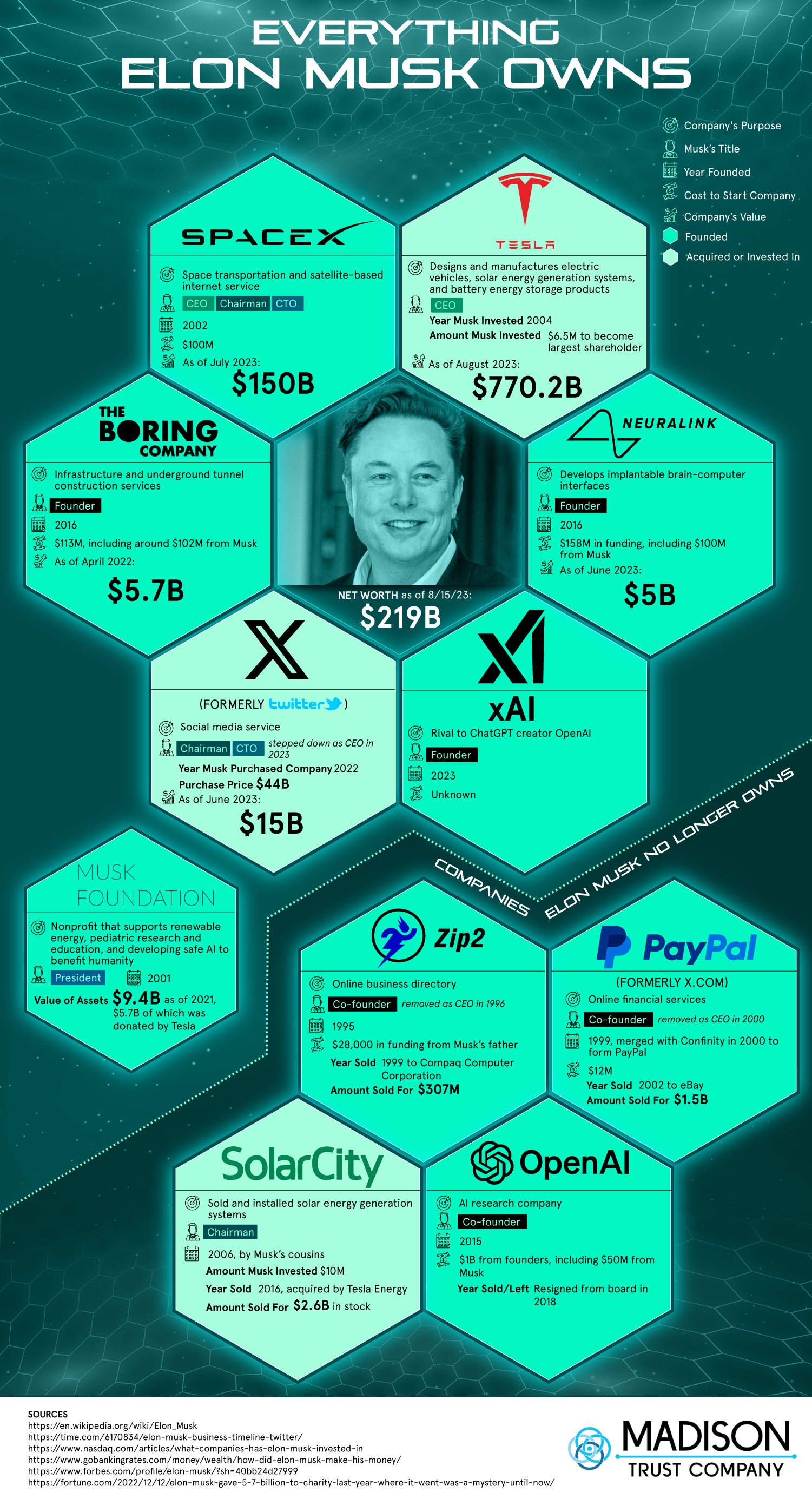
For the “Money” side of the equation, the structure of these future grants is vital. If the milestones are set too low, the stock could suffer from unnecessary dilution. If they are set too high, Musk may lack the financial incentive to focus on Tesla over his other ventures, such as xAI or SpaceX.
Conclusion: The Financial Weight of the Founder’s Stake
Elon Musk’s ownership of Tesla is a cornerstone of the modern financial markets. With a base stake of approximately 13% and the potential for much more through future grants and resolved legalities, he remains the dominant force in the company’s capital structure.
For the investor, Musk’s holdings represent a mix of massive potential and inherent risk. His equity provides the “skin in the game” that proponents of the company crave, but his use of that equity to fund external ventures and his demand for greater voting control introduce variables that traditional financial models struggle to quantify. As Tesla transitions from a pure-play EV maker to an AI and energy conglomerate, the fluctuations in Musk’s stock ownership will continue to be one of the most watched metrics in the world of business and finance.
aViewFromTheCave is a participant in the Amazon Services LLC Associates Program, an affiliate advertising program designed to provide a means for sites to earn advertising fees by advertising and linking to Amazon.com. Amazon, the Amazon logo, AmazonSupply, and the AmazonSupply logo are trademarks of Amazon.com, Inc. or its affiliates. As an Amazon Associate we earn affiliate commissions from qualifying purchases.