
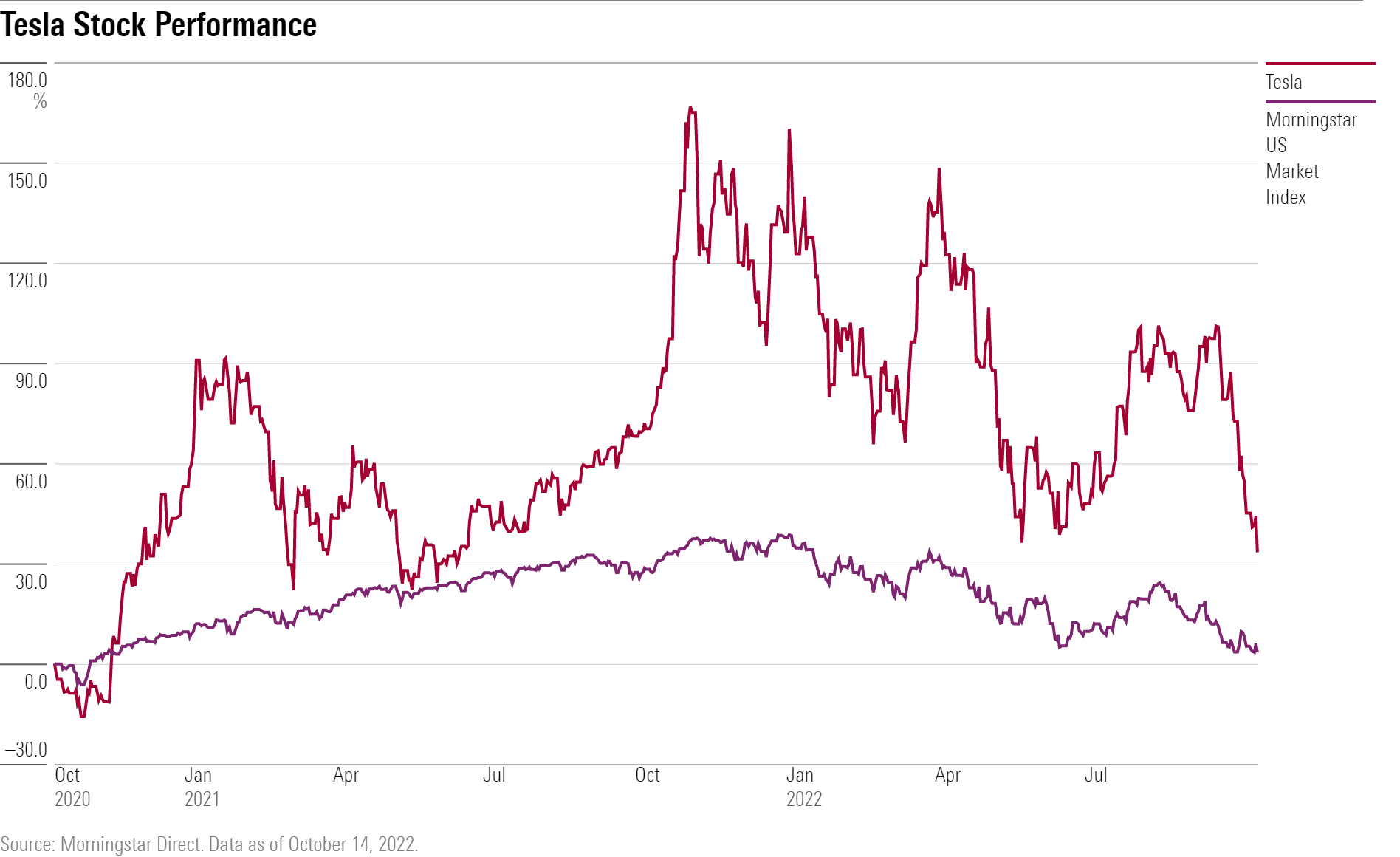
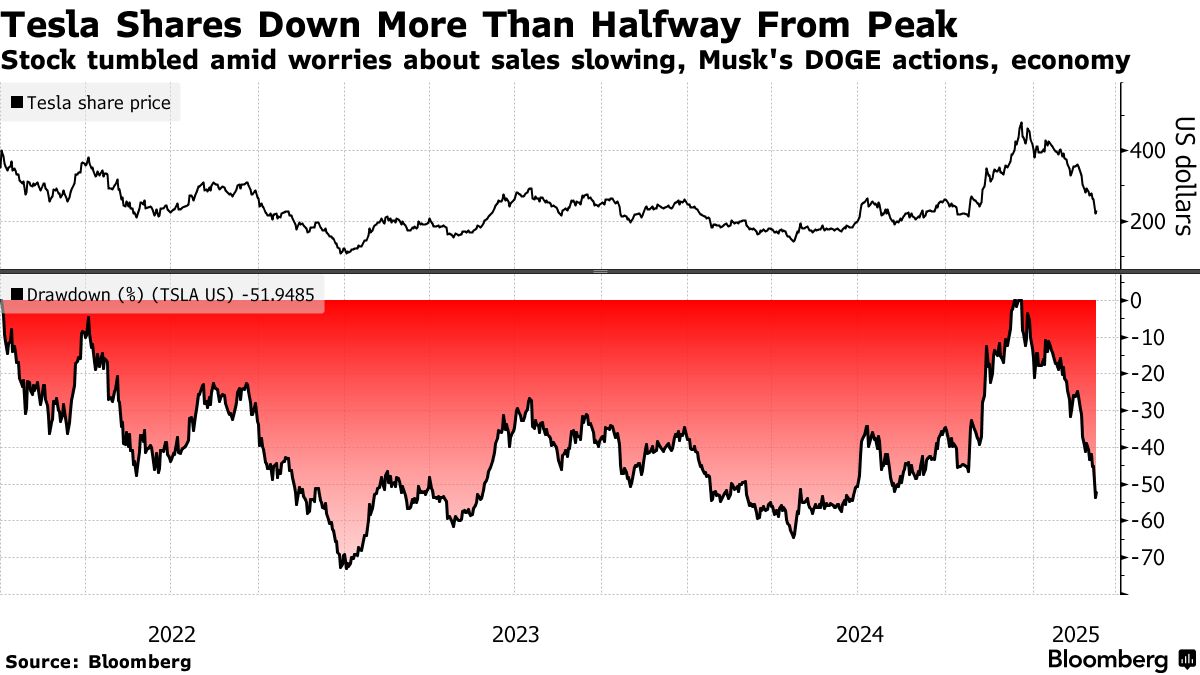
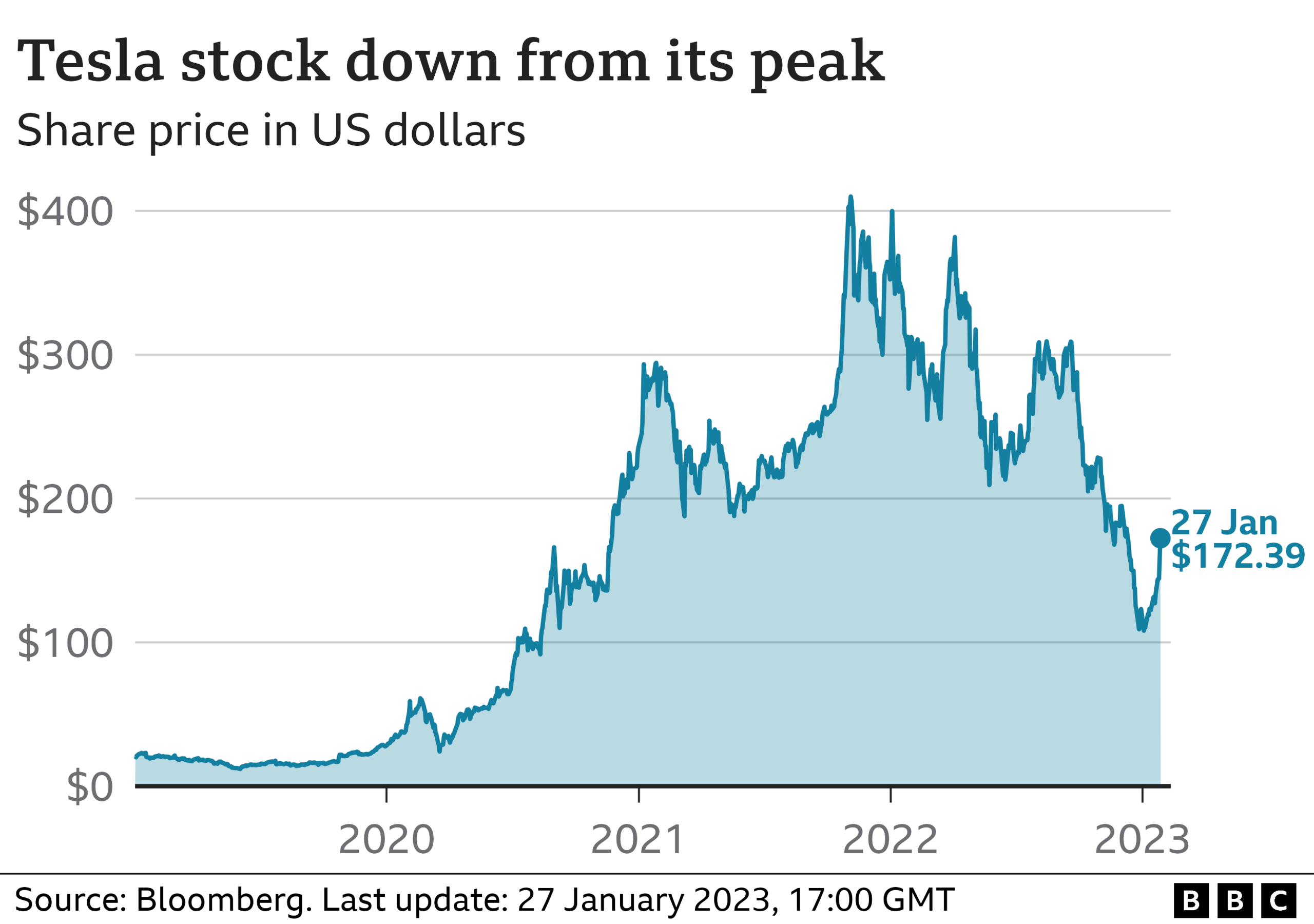
For over a decade, Tesla (TSLA) has been the darling of the stock market, transforming from a niche electric vehicle (EV) startup into a global powerhouse that redefined the automotive industry. However, recent quarters have seen a significant cooling in investor enthusiasm. As the stock experiences downward pressure, investors are grappling with a fundamental question: Is this a temporary correction in a long-term growth story, or is the “Tesla Premium” finally evaporating?
To understand why Tesla stock is down, one must look beyond the daily tickers and examine the convergence of macroeconomic headwinds, shifting competitive landscapes, and internal corporate challenges. From an investment perspective, the narrative surrounding Tesla is shifting from “boundless tech growth” to “mature industrial reality.”
1. Macroeconomic Pressures and the High-Interest Rate Environment
In the world of finance, the “cost of money” dictates the valuation of growth stocks. Tesla, which trades at a significantly higher price-to-earnings (P/E) ratio than traditional automakers, is particularly sensitive to fluctuations in interest rates.
The Cost of Capital and Growth Stock Valuation
When the Federal Reserve and other central banks maintain high interest rates to combat inflation, the present value of future cash flows diminishes. Tesla’s valuation is built largely on its potential earnings five to ten years down the line. When interest rates rise, the discount rate applied to those future earnings increases, leading to a downward revision of the stock’s current price. For investors, the “risk-free” return on government bonds becomes more attractive compared to the volatility of a high-growth stock like Tesla, leading to capital outflows from the equity.
Consumer Purchasing Power and Auto Loans
Beyond the institutional valuation models, high interest rates have a direct impact on Tesla’s bottom line: consumer affordability. Most consumers do not buy cars with cash; they finance them. As auto loan rates have climbed, the monthly payment for a Model 3 or Model Y has surged, even if the sticker price remains the same. This has forced Tesla to choose between two undesirable options: maintain high prices and lose sales volume, or slash prices and erode profit margins. To date, Tesla has chosen the latter, which has directly contributed to the stock’s decline as investors recalibrate their expectations for net income.
2. Competitive Pressures and the Erosion of Market Share
For years, Tesla enjoyed a “first-mover advantage” that bordered on a monopoly in the premium EV space. That era has officially come to an end. The global automotive landscape is now saturated with viable alternatives, putting immense pressure on Tesla’s market dominance.
The Rise of Chinese EV Giants
The most formidable threat to Tesla’s valuation comes from China, specifically companies like BYD. Unlike Tesla, which focuses on a premium-to-mass market bridge, BYD offers a diverse range of vehicles at various price points, often outperforming Tesla in terms of vertical integration and battery cost-efficiency. As BYD and other Chinese manufacturers like NIO and Li Auto expand into European and Southeast Asian markets, Tesla is no longer the “default” choice for the environmentally conscious consumer. This loss of market share in the world’s largest EV market (China) is a primary concern for institutional investors.
Price Wars and Margin Compression
In response to increasing competition and slowing demand, Tesla initiated a series of aggressive price cuts throughout 2023 and 2024. While this strategy helped maintain delivery volumes, it significantly damaged the company’s operating margins. In the “Money” niche of investing, margins are a key indicator of a company’s “moat.” Tesla’s margins used to resemble those of a software company (20% or higher); they are now beginning to look more like a traditional hardware manufacturer (closer to 10-15%). As the “tech-like” margins vanish, so does the justification for a tech-like P/E ratio.
3. Operational Hurdles and the Shift to a Demand-Constrained Market
For much of its history, Tesla was “supply-constrained”—it could sell every car it could possibly build. The narrative has now flipped. The company is facing a “demand-constrained” environment, where production capacity is outstripping consumer appetite.
Production Slowdowns and Supply Chain Disruptions
Tesla’s global footprint makes it susceptible to geopolitical instability. Recent disruptions in the Red Sea have affected shipping routes for components headed to the Gigafactory Berlin, leading to temporary production halts. Additionally, environmental protests and regulatory hurdles in Europe have slowed the expansion of its manufacturing capabilities. While these are often viewed as “transient” issues, they contribute to a pattern of unpredictability that equity markets generally dislike.
Inventory Buildup vs. Demand Satiation
Financial analysts have noted a growing gap between “Production” and “Deliveries” in Tesla’s quarterly reports. An increasing inventory of unsold vehicles suggests that the “early adopter” phase of the EV revolution is over. The “mass market” consumer is more skeptical, concerned about charging infrastructure, and more price-sensitive. When inventory builds up, it ties up capital and leads to further discounting, creating a feedback loop that continues to weigh on the stock price.
4. Corporate Governance and the “Elon Musk Risk”
In many ways, Tesla’s brand and stock price are inextricably linked to its CEO, Elon Musk. While his vision was the catalyst for the company’s astronomical rise, his recent extracurricular activities and leadership style have become a source of “key man risk” for the company’s valuation.
Distractions and the Twitter/X Fallout
Since the acquisition of Twitter (now X), investors have expressed concern that Musk’s attention is divided. From a business finance perspective, the concern is twofold: first, the potential for Musk to sell more TSLA shares to fund X’s losses, and second, the damage to the Tesla brand. Data from market research firms suggests that Musk’s increasingly polarized public persona has alienated a segment of Tesla’s core customer base—environmentally conscious, liberal-leaning buyers. When a CEO becomes a liability to the brand’s “goodwill,” the stock often pays the price.
Compensation Battles and Institutional Sentiment
The legal battles over Musk’s multi-billion dollar compensation package have also introduced an element of uncertainty. Large institutional investors, such as pension funds and asset managers, prioritize corporate governance and stability. The ongoing friction between the board of directors and the Delaware Chancery Court regarding executive pay creates a “governance discount” on the stock. Investors are wary of a company where the board is perceived as being insufficiently independent from the CEO.
5. Future Outlook: Valuing Tesla as a Car Company vs. a Tech Firm
The ultimate reason Tesla stock is down boils down to a fundamental disagreement over its valuation. The market is currently in the process of “price discovery,” trying to determine if Tesla should be valued as a legacy automaker or a future AI powerhouse.
The AI and Robotaxi Pivot
To counter the narrative of slowing car sales, Tesla has increasingly pivoted its investor messaging toward Artificial Intelligence, Full Self-Driving (FSD), and the “Robotaxi” fleet. From a financial standpoint, software-as-a-service (SaaS) revenue from FSD subscriptions would carry much higher margins than hardware sales. However, the timeline for regulatory approval and the technical perfection of these systems remains opaque. Until Tesla can prove that AI is a tangible contributor to the bottom line, rather than a theoretical future revenue stream, the market remains skeptical.
Long-term Investment Theses in a Maturing Market
As the EV industry matures, the “easy gains” in Tesla stock have likely been made. For the stock to rebound, Tesla needs to demonstrate that it can innovate its way out of margin compression—perhaps through the “unboxed” manufacturing process or cheaper battery chemistry. Investors are now looking for “Quality of Earnings.” They want to see stable growth, predictable margins, and a clear path to autonomy that doesn’t rely on hype.
In conclusion, Tesla’s recent stock decline is a multi-faceted issue. It is a combination of a harsh macroeconomic climate, a fiercely competitive global market, and internal leadership distractions. For the savvy investor, the current downturn represents a normalization of a stock that may have flown too high on optimism. Whether Tesla can reclaim its former glory depends on its ability to transition from a high-growth disruptor into a disciplined, high-margin industrial leader in the age of AI. Until that transition is clear, volatility will likely remain the name of the game.
aViewFromTheCave is a participant in the Amazon Services LLC Associates Program, an affiliate advertising program designed to provide a means for sites to earn advertising fees by advertising and linking to Amazon.com. Amazon, the Amazon logo, AmazonSupply, and the AmazonSupply logo are trademarks of Amazon.com, Inc. or its affiliates. As an Amazon Associate we earn affiliate commissions from qualifying purchases.