
In the world of investing, a significant amount of energy is dedicated to the “buy” side of the equation. Investors spend countless hours researching disruptive technologies, analyzing quarterly earnings reports, and scouring the market for undervalued gems. However, any seasoned veteran of the financial markets will tell you that while buying a stock determines your potential for profit, it is the decision of when to sell that determines your actual realized wealth.
Selling is often a far more difficult emotional and intellectual hurdle than buying. When a stock is up, greed whispers that it could go higher; when a stock is down, the fear of realizing a loss often leads to “bag-holding” in the hopes of a recovery that may never come. To navigate these turbulent waters, an investor must transition from emotional reacting to systematic execution. This guide explores the fundamental, strategic, and psychological milestones that signal the right time to exit a position.
1. The Fundamental Shift: When the Business Case Crumbles
The most compelling reason to sell a stock is that the original thesis for owning it no longer exists. Every investment should begin with a written “investment thesis”—a set of reasons why you believe the company will succeed. When the reality on the ground diverges from that thesis, the rationale for holding the stock vanishes.
Deteriorating Financial Health and Margins
While stock prices can be volatile in the short term, they ultimately follow the trajectory of corporate earnings. If a company begins to show a consistent trend of declining gross margins, it often indicates that its products are becoming commoditized or that its input costs are rising faster than its pricing power. Keep a close eye on the debt-to-equity ratio and free cash flow. If a company is burning through cash to sustain operations without a clear path to profitability, the risk of equity dilution or bankruptcy increases, making an exit the prudent choice.
Loss of Competitive Advantage (The “Moat” Problem)
Warren Buffett famously popularized the concept of the “Economic Moat”—a structural advantage that protects a company from competitors. When that moat is breached, the company’s long-term value is compromised. This might occur due to a “Black Swan” technological shift that renders a product obsolete, or perhaps a more agile competitor has successfully undercut the company’s market share. If the “unfair advantage” you initially identified has disappeared, the stock is likely no longer the vehicle you intended it to be.
Governance and Management Red Flags
We invest in companies, but we are effectively betting on the people running them. Significant red flags in leadership often precede a stock’s decline. This could include a sudden and unexplained departure of a respected CFO, a history of over-promising and under-delivering during earnings calls, or aggressive accounting practices designed to mask underlying weaknesses. When management loses credibility, the market typically discounts the stock’s valuation, and it may be time to move your capital to a team you trust.
2. Strategic Rebalancing: Managing Portfolio Risk
Sometimes, the decision to sell has nothing to do with the company itself and everything to do with the structure of your overall portfolio. Discipline in portfolio management is what separates professional investors from amateurs.
Addressing Concentration Risk and Position Sizing
It is a “good problem to have” when a single stock performs so well that it begins to dominate your portfolio. However, if a single position grows from 5% to 25% of your total assets, you are no longer diversified; you are concentrated. This exposes you to “idiosyncratic risk,” where a single piece of bad news regarding that one company could devastate your entire net worth. Selling a portion of your winners to bring them back down to a manageable “position size” is not an admission of a lack of faith; it is a vital act of risk management.
Asset Allocation and Market Cycles
Investment goals change over time. As an investor nears retirement or a major life purchase, their “risk tolerance” naturally decreases. In this context, selling stocks—even high-performing ones—to move into more stable assets like bonds, high-yield savings, or money market funds is a strategic necessity. Furthermore, if a specific sector (such as technology or energy) has become drastically overheated and valuations are reaching historical extremes, a disciplined investor might sell into the strength to rebalance into undervalued sectors.
3. Reaching Your Destination: Selling for Financial Goals

The ultimate purpose of investing is not to collect “points” on a screen; it is to fund a specific lifestyle or objective. Selling a stock is often the final step in a long-term financial plan.
Funding Life Milestones
Whether it is a down payment on a primary residence, funding a child’s education, or starting a business, there comes a time when capital must be converted from paper gains to liquid cash. If your investment has reached a value that allows you to achieve a major life goal, it is often wise to “take the win.” The stock market is volatile, and waiting for an extra 5% gain could result in a 20% drawdown right when you need the money most.
The Target Price Approach
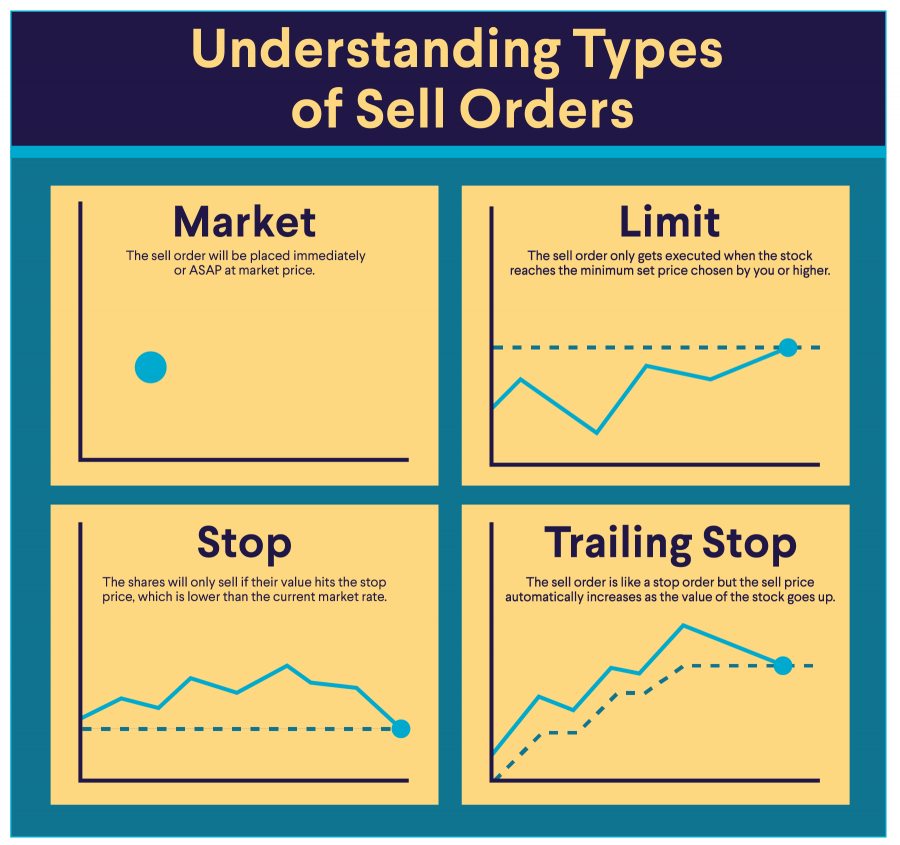
Many successful investors set a “price target” at the time of purchase. This is an estimate of what the company is actually worth based on discounted cash flow (DCF) analysis or historical valuation multiples (P/E, P/S). When a stock reaches its “intrinsic value” or becomes significantly overvalued relative to its growth prospects, it may be time to sell. By selling when a stock hits a predetermined target, you remove the “greed factor” from the equation and lock in profits while the market is still optimistic.
4. Tax Optimization and Capital Efficiency
In the realm of personal finance, it’s not about what you make; it’s about what you keep. Taxes play a massive role in the decision of when to sell.
Tax-Loss Harvesting Strategies
“Tax-loss harvesting” is the practice of selling a stock that is trading at a loss to offset the capital gains taxes incurred from selling winners. This is a common strategy used at the end of the fiscal year to lower an investor’s overall tax liability. By selling a “loser,” you can use that loss to “shield” your profits from the IRS. If you still believe in the long-term prospects of the company you sold at a loss, you can often buy it back after 30 days (to avoid the “wash sale” rule in the US).
Understanding the Timing of Capital Gains
The difference between “Short-Term Capital Gains” and “Long-Term Capital Gains” can be substantial. In many jurisdictions, holding a stock for more than a year qualifies you for a significantly lower tax rate. If you are approaching the one-year mark on a highly profitable position, it is often mathematically advantageous to wait until you hit the “long-term” threshold before selling, provided the company’s fundamentals remain sound.
5. Psychological Pitfalls: Knowing When Your Mind is the Enemy
The greatest obstacle to a successful exit is often the investor’s own psychology. Recognizing these mental traps is essential for making rational selling decisions.
Fighting the Sunk Cost Fallacy
One of the most dangerous phrases in investing is: “I’ll sell it as soon as I break even.” This is known as the sunk cost fallacy. The market does not know—and does not care—what price you paid for a stock. If a stock has dropped 50% because the business is failing, there is no guarantee it will ever return to your “break-even” point. Every day you hold a declining asset is a day you are missing out on the potential gains of a rising asset. Sometimes, the best move is to admit the mistake, take the loss, and redeploy the remaining capital into a better opportunity.
Avoiding the Trap of “Panic Selling”
While it is important to sell when fundamentals change, it is equally important not to sell just because the broader market is in a downturn. Market corrections (10% drops) and bear markets (20% drops) are a normal, healthy part of the economic cycle. Selling during a market-wide panic usually results in “selling at the bottom.” A disciplined investor sells because the company has changed, not because the ticker symbol is red.

Conclusion: Developing an Exit Strategy
Selling a stock is a nuanced art that requires a blend of cold financial analysis and self-awareness. To be a successful investor over decades, you must move away from the “buy and forget” mentality and toward a “buy and monitor” approach.
The best time to decide when to sell a stock is actually before you buy it. By establishing clear criteria—whether they are based on valuation, business fundamentals, or personal financial goals—you create a roadmap that protects you from the emotional highs and lows of the market. Remember, no one ever went bankrupt by taking a profit, and no one ever built a lasting legacy by holding onto a failing business out of pride. Master the exit, and you will master your financial future.
aViewFromTheCave is a participant in the Amazon Services LLC Associates Program, an affiliate advertising program designed to provide a means for sites to earn advertising fees by advertising and linking to Amazon.com. Amazon, the Amazon logo, AmazonSupply, and the AmazonSupply logo are trademarks of Amazon.com, Inc. or its affiliates. As an Amazon Associate we earn affiliate commissions from qualifying purchases.