
In the modern financial landscape, few events carry as much weight as the quarterly earnings announcement from NVIDIA Corporation (NVDA). Once known primarily as a niche manufacturer of graphics processing units (GPUs) for gamers, NVIDIA has transformed into the primary engine of the artificial intelligence (AI) revolution. Consequently, the question of “when are NVDA earnings?” has become a pivotal date on the calendars of retail investors, institutional fund managers, and global market analysts alike. Understanding the timing, the metrics, and the market implications of these reports is essential for anyone looking to navigate the volatile waters of technology investing and wealth management.
Understanding the NVIDIA Earnings Calendar and Fiscal Cycle
For investors looking to time their entries or protect their portfolios, the first step is understanding how NVIDIA structures its financial reporting. Unlike many companies that follow the standard Gregorian calendar, NVIDIA operates on a unique fiscal year.
The Fiscal Year vs. the Calendar Year
NVIDIA’s fiscal year typically ends on the last Sunday of January. This means that when the company reports its “Q4 2024” results, it is actually reporting on the period ending in January 2024. For the average investor, this can be confusing. To stay ahead, one must recognize that NVIDIA’s reporting cycle usually falls in late February (Q4), late May (Q1), late August (Q2), and late November (Q3). Because the dates shift slightly each year based on the company’s internal accounting calendar, investors should look for official “Save the Date” press releases from NVIDIA’s Investor Relations department approximately two to three weeks before the actual event.
Where to Find Real-Time Earnings Updates
The most reliable source for the earnings date is the NVIDIA Investor Relations website. However, financial news hubs and brokerage platforms also provide countdowns. Typically, NVIDIA reports its results on a Wednesday after the market closes (4:00 PM ET). This is followed by a highly anticipated conference call at 5:00 PM ET, where CEO Jensen Huang and CFO Colette Kress provide commentary on the numbers and, perhaps more importantly, provide “forward guidance”—the company’s internal projections for the coming months.
The Importance of the “Quiet Period”
In the weeks leading up to the earnings announcement, NVIDIA enters what is known as a “quiet period.” During this time, federal regulations and internal policies prevent company executives from speaking publicly about the business’s financial health. For investors, this period is often characterized by intense speculation, analyst upgrades or downgrades, and increased stock price volatility as the market attempts to “price in” the expected results.
Why NVDA Earnings Move the Global Markets
NVIDIA is no longer just a “tech stock”; it is a systemic heavyweight. Because of its massive market capitalization, NVIDIA’s performance has a disproportionate impact on major indices like the S&P 500 and the Nasdaq-100.
The AI Bellwether Effect
NVIDIA is currently viewed as the “bellwether” for the entire AI economy. When NVIDIA reports strong earnings, it signals to the market that spending on AI infrastructure remains robust. This often leads to a “halo effect,” where the stock prices of other semiconductor companies, cloud service providers (like Microsoft and Amazon), and even software firms rise in tandem. Conversely, a miss in revenue or a cautious outlook from NVIDIA can trigger a broad market sell-off, as investors fear the “AI bubble” might be losing steam.
Impact on Institutional Portfolios and ETFs
Because NVIDIA is a top holding in hundreds of Exchange Traded Funds (ETFs)—most notably the Invesco QQQ and the VanEck Semiconductor ETF (SMH)—its earnings volatility ripples through the retirement accounts of millions of people. For institutional investors, the earnings report is a moment of rebalancing. If NVIDIA’s valuation becomes too stretched relative to its earnings growth, fund managers may trim their positions, creating downward pressure regardless of whether the “numbers” were technically a beat.
The Correlation with Macroeconomic Sentiment
NVIDIA’s earnings also serve as a proxy for global capital expenditure (CapEx). When big tech firms spend billions on NVIDIA chips, it indicates a high level of corporate confidence in the future. In an era of fluctuating interest rates, NVIDIA’s ability to maintain high margins despite economic headwinds provides a signal to the Federal Reserve and economists about the underlying strength of the corporate sector.
Key Financial Metrics Every Investor Must Watch
While the “headline” numbers—Earnings Per Share (EPS) and Total Revenue—are what get the most media attention, sophisticated investors dig deeper into the balance sheet to understand the quality of the company’s growth.

Data Center Revenue: The Crown Jewel
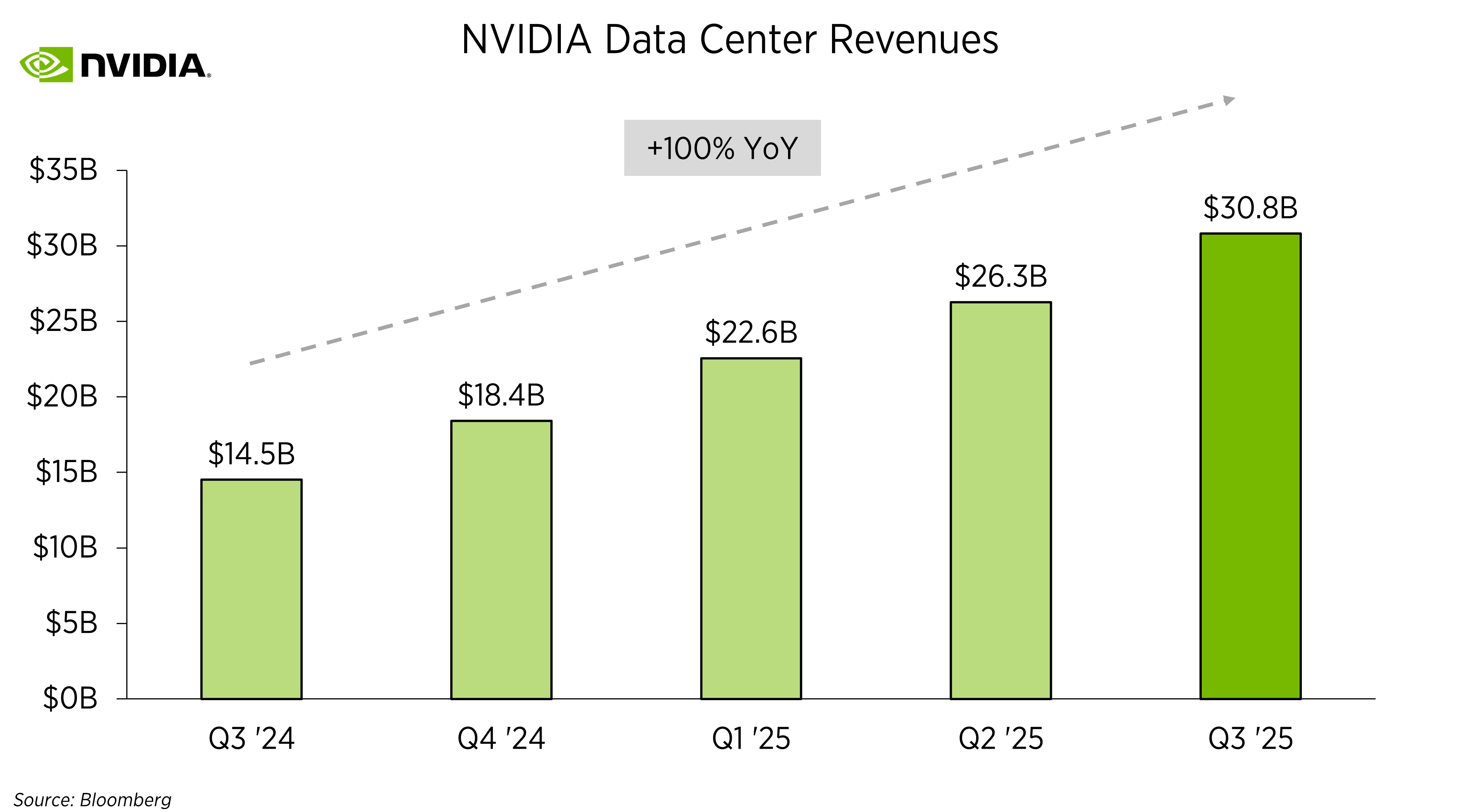
In recent years, the “Data Center” segment has overtaken “Gaming” as NVIDIA’s primary revenue driver. This segment includes sales of the H100 and Blackwell chips used to train Large Language Models (LLMs) like ChatGPT. Investors should look for the year-over-year (YoY) growth percentage in this category. If Data Center revenue growth begins to decelerate, it could indicate that the initial “gold rush” of AI infrastructure is reaching a saturation point.
Gross Margins and Pricing Power
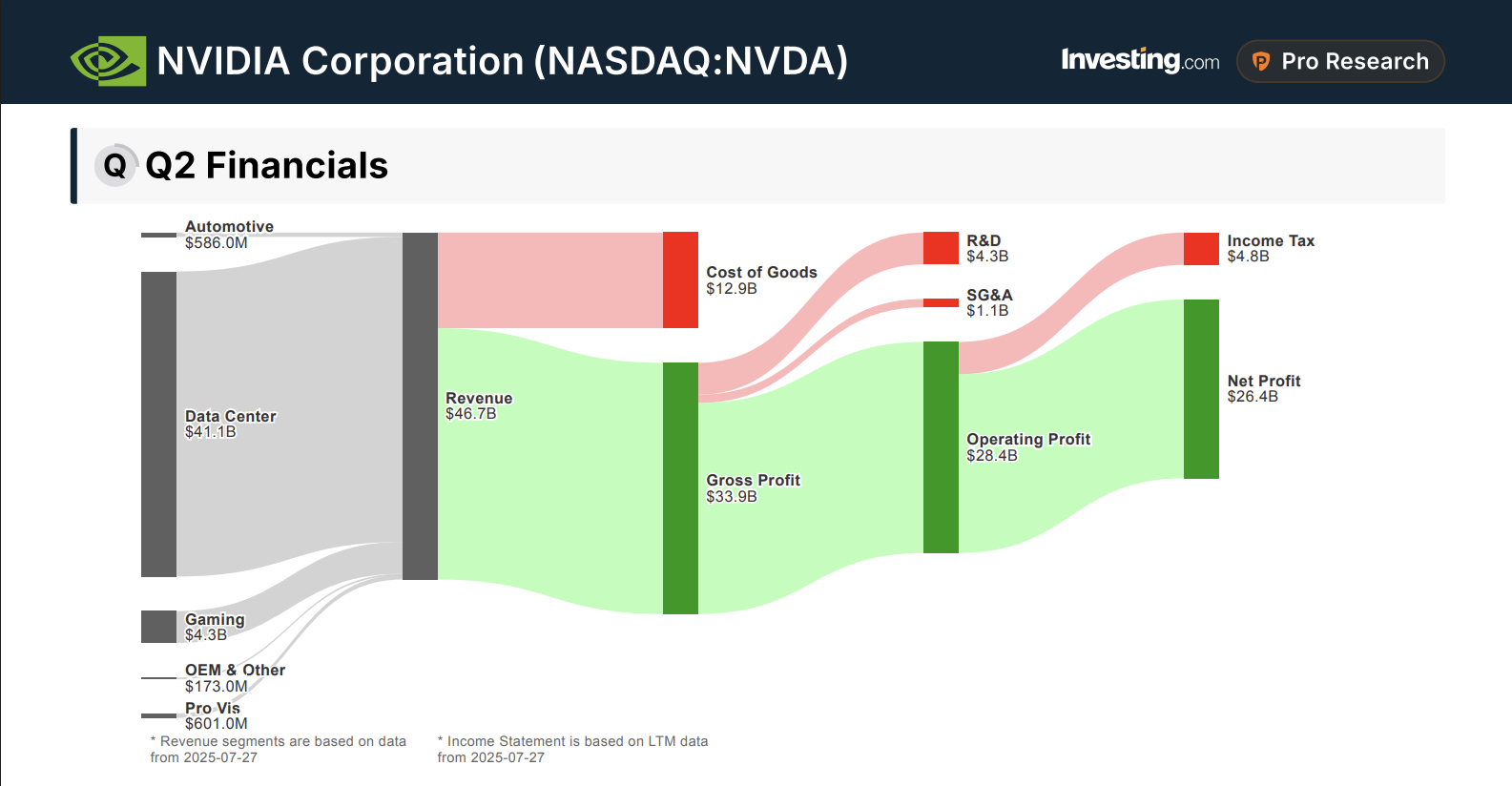
One of NVIDIA’s most impressive feats is its high gross margin, which has recently hovered around 70-75%. This indicates incredible pricing power; NVIDIA can charge a premium because its hardware and software ecosystem (CUDA) have no direct equivalent. If margins begin to compress, it may suggest that competitors like AMD are gaining ground or that production costs are rising faster than NVIDIA can raise prices.
Forward Guidance and the “Book-to-Bill” Ratio
In the world of investing, the past is already priced in. What moves the stock during the earnings call is the “forward guidance.” If NVIDIA beats its Q3 numbers but lowers its expectations for Q4, the stock will likely drop. Additionally, investors look for commentary on the supply chain. Because NVIDIA relies on TSMC for manufacturing, any bottlenecks in chip packaging (CoWoS) can limit NVIDIA’s ability to meet demand, regardless of how many orders they have on the books.
Investment Strategies for Earnings Volatility
Earnings season presents both a risk and an opportunity. Depending on your financial goals, there are different ways to approach the “when” and “how” of NVDA earnings.
The Long-Term “Buy and Hold” Approach
For investors with a multi-year horizon, quarterly earnings are often “noise.” These investors focus on the long-term thesis that AI will continue to permeate every industry. Instead of trying to time the earnings jump, they may use the post-earnings volatility to “Dollar Cost Average” (DCA) into a position. If the stock drops on a “beat and raise” (good news that isn’t good enough for the market), it is often seen by long-termers as a buying opportunity.
Short-Term Trading and Options Strategies
Traders often look at the “implied move” of NVDA stock. Options markets will price in a certain percentage move (e.g., “the market expects an 8% swing in either direction”). Some traders use “Straddles” or “Strangles”—buying both call and put options—to profit from the volatility itself, regardless of whether the stock goes up or down. However, this is a high-risk strategy that requires a deep understanding of “IV Crush” (the rapid drop in option premiums immediately after the news is released).
Risk Management and Position Sizing
Given NVIDIA’s high beta (volatility relative to the market), it is crucial for investors to manage their exposure. Entering an earnings print with a position that is too large can lead to significant emotional and financial stress. Professional wealth managers often recommend that no single stock—even one as successful as NVIDIA—occupies more than 5-10% of a diversified portfolio. Setting “Stop-Loss” orders can also protect capital, though in after-hours trading, these orders may not execute at the desired price if the stock “gaps” down.
The Broader Economic Risks to the NVIDIA Narrative
To be a truly informed investor, one must look beyond the quarterly spreadsheet and consider the external factors that could impact NVIDIA’s financial future.
Geopolitical Tensions and Export Controls
A significant portion of NVIDIA’s revenue historically came from China. However, the U.S. Department of Commerce has imposed strict export controls on high-end AI chips to prevent their use for military purposes. Investors should listen closely during earnings calls for how NVIDIA is navigating these restrictions and whether their “China-specific” chips are gaining traction or if that revenue stream is permanently diminished.
Concentration Risk and Customer Spending
NVIDIA’s success is currently tied to a handful of massive customers: Microsoft, Meta, Alphabet, and Amazon. If these “Hyperscalers” decide to slow down their AI CapEx, or if they successfully develop their own in-house AI chips (like Amazon’s Trainium or Google’s TPU), NVIDIA’s growth could stall. The earnings report is the primary venue where analysts grill management on the diversity of their customer base and the “return on investment” (ROI) their customers are seeing from AI.
Valuation and the “P/E” Ratio Debate
Finally, the “Money” aspect of NVIDIA always comes back to valuation. Is the stock “expensive”? While its Price-to-Earnings (P/E) ratio often looks high, its “Forward P/E” (which accounts for expected future earnings growth) is often more reasonable. The earnings report provides the “E” in the P/E equation. If earnings grow faster than the stock price, NVIDIA can actually become “cheaper” even as its share price hits new all-time highs.
By understanding the “when,” “what,” and “why” of NVIDIA’s earnings, investors can move away from gambling on headlines and toward a disciplined, data-driven strategy. Whether you are a conservative retiree or a growth-oriented trader, the NVIDIA earnings cycle remains the most important narrative in the modern financial markets.
aViewFromTheCave is a participant in the Amazon Services LLC Associates Program, an affiliate advertising program designed to provide a means for sites to earn advertising fees by advertising and linking to Amazon.com. Amazon, the Amazon logo, AmazonSupply, and the AmazonSupply logo are trademarks of Amazon.com, Inc. or its affiliates. As an Amazon Associate we earn affiliate commissions from qualifying purchases.