
The question “what is the price of NVIDIA stock?” is one that resonates far beyond the walls of Wall Street. In the current economic landscape, NVIDIA (NASDAQ: NVDA) has transitioned from a niche manufacturer of gaming hardware to a global bellwether for the artificial intelligence revolution. For the modern investor, the price of NVDA is more than just a numerical value on a trading screen; it is a pulse check on the health of the broader technology sector and a reflection of the market’s appetite for high-growth, high-innovation assets.
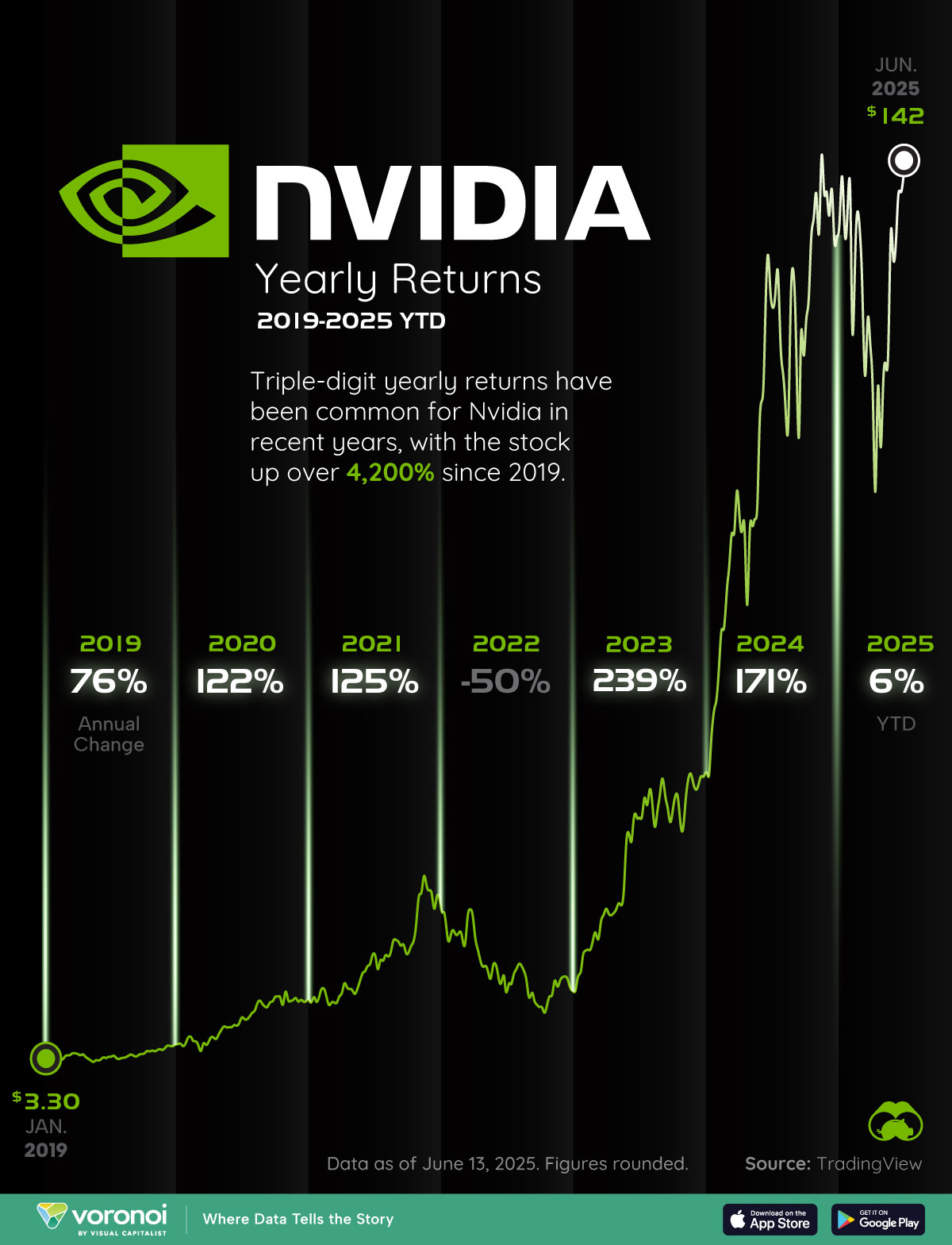
Understanding the price of NVIDIA stock requires a dive into the mechanics of valuation, market sentiment, and the fundamental financial pillars that support its market capitalization. Whether you are a retail investor looking at your first share or a seasoned portfolio manager, the volatility and upward trajectory of this semiconductor giant offer a masterclass in modern investing.
The Fundamentals of Valuation: Why the Price Moves
When looking at the current trading price of NVIDIA, it is essential to distinguish between the nominal price and the intrinsic value. Stock prices do not exist in a vacuum; they are the result of collective market expectations regarding future earnings. NVIDIA’s price has historically been characterized by high premiums, often justified by its dominant market share and explosive revenue growth.
The Impact of Earnings Reports and Guidance
For NVIDIA, the quarterly earnings call is the most significant catalyst for price movement. Because the market “prices in” expected growth, a mere beat on earnings is often not enough to sustain a price surge. Investors look closely at “guidance”—the company’s own projection of future sales. When NVIDIA raises its guidance, it signals that the demand for its H100 and Blackwell chips remains insatiable, often leading to a sharp appreciation in share price. Conversely, any hint of a plateau in data center spending can lead to immediate corrections.
Revenue Diversification and Margin Stability
A key driver of the stock price is NVIDIA’s transition from a hardware-centric model to a platform-based ecosystem. High-margin software services and proprietary networking solutions (like Mellanox) provide a cushion that traditional chipmakers lack. Investors value this stability; as software becomes a larger portion of the revenue mix, the “quality” of the earnings improves, often leading to a higher Price-to-Earnings (P/E) multiple.
Market Drivers: The Forces Shaping NVDA’s Daily Price Action
While company fundamentals provide the foundation, external market forces dictate the daily fluctuations of NVIDIA’s stock price. As a member of the “Magnificent Seven,” NVIDIA’s price is heavily influenced by systemic factors that affect the entire equity market.
The Artificial Intelligence Secular Trend
The most potent driver of NVIDIA’s price over the last 24 months has been the mass adoption of Generative AI. NVIDIA currently holds a near-monopoly on the GPUs required to train large language models (LLMs). As long as tech giants like Microsoft, Alphabet, and Meta continue their “arms race” in AI infrastructure, the demand for NVIDIA’s silicon remains a tailwind for the stock price. The stock price acts as a proxy for AI sentiment; when OpenAI or Google announces a breakthrough, NVIDIA’s stock often reacts positively.
Macroeconomics and Interest Rate Sensitivity
Like all high-growth tech stocks, NVIDIA is sensitive to the Federal Reserve’s monetary policy. Growth stocks are valued based on the present value of future cash flows. When interest rates rise, the “discount rate” applied to those future earnings increases, which can suppress the stock price. Conversely, a pivot toward lower interest rates generally makes the high-growth profile of NVDA more attractive to investors seeking better returns than fixed-income assets can provide.
Supply Chain and Geopolitical Risks
NVIDIA is a “fabless” semiconductor company, meaning it designs its chips but relies on partners like TSMC (Taiwan Semiconductor Manufacturing Company) for production. Consequently, the stock price is sensitive to geopolitical tensions in the Taiwan Strait and US-China trade restrictions. Any regulatory news regarding export bans on high-end AI chips to China typically results in immediate downward pressure on the stock price, as investors recalibrate the company’s total addressable market (TAM).
Analyzing Investment Metrics: Is the Price Right?
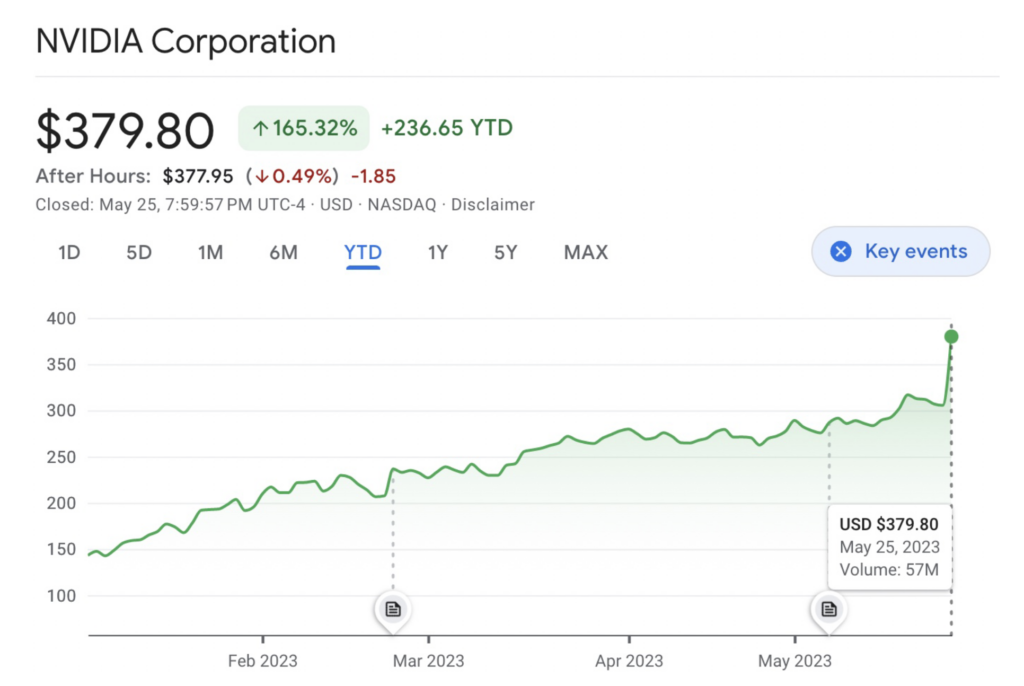
To answer “what is the price of NVIDIA stock” in a meaningful way, an investor must look at valuation metrics. A stock can be “expensive” at $100 and “cheap” at $1,000 depending on the underlying earnings.
The Price-to-Earnings (P/E) Ratio vs. Growth
NVIDIA often trades at a high trailing P/E ratio, which can be a red flag for value investors. However, sophisticated investors prioritize the Forward P/E, which accounts for projected earnings. If NVIDIA’s earnings are expected to double, a high current price might actually represent a bargain on a forward-looking basis. This is often referred to as the PEG ratio (Price/Earnings to Growth). If the PEG ratio remains near 1.0, the stock may be fairly valued despite its nominal price.
Institutional Ownership and Liquidity
The price of NVIDIA is also supported by massive institutional backing. As a staple in the S&P 500 and the Nasdaq-100, NVIDIA is a forced buy for many index funds and ETFs. This institutional “floor” provides liquidity and reduces the likelihood of the stock price collapsing without a fundamental change in the business. When institutional investors increase their “weighting” of NVDA, the resulting demand drives the price upward in a sustained manner.
Stock Splits and Accessibility
NVIDIA has utilized stock splits to keep its nominal share price accessible to retail investors. While a split does not change the fundamental value of the company (it’s like cutting a pizza into more slices), it often increases liquidity and can lead to a short-term psychological boost in the price as more individual investors enter the fray.
Strategic Investing: Incorporating NVIDIA into a Portfolio
Investing in NVIDIA at its current price requires a strategic approach that balances the potential for massive gains against the risks of high volatility.
The Case for Dollar-Cost Averaging (DCA)
Given NVIDIA’s tendency for rapid price swings, many financial advisors suggest Dollar-Cost Averaging. Instead of trying to “time the bottom” or buying a full position at a potential peak, investors commit to buying a fixed dollar amount at regular intervals. This strategy mitigates the risk of a sudden price correction and allows the investor to benefit from the long-term upward trend of the AI sector.
Assessing the Risks of Concentration
Because of NVIDIA’s meteoric rise, it often becomes a disproportionately large part of an investor’s portfolio. While “letting your winners run” is a common adage, financial prudence suggests rebalancing if NVIDIA’s price appreciation leads to excessive concentration. A sudden downturn in the semiconductor cycle or a shift in AI spending could otherwise have a catastrophic impact on an undiversified portfolio.
Long-Term Outlook vs. Short-Term Volatility
The price of NVIDIA stock today is a reflection of today’s news, but its value five years from now will be determined by its ability to maintain its “moat.” Investors must ask: Can competitors like AMD or bespoke silicon from Amazon and Google erode NVIDIA’s dominance? If the answer is no, then short-term price dips may be viewed as buying opportunities. If the answer is yes, then the current price might represent a peak.
Conclusion: The Price of Innovation
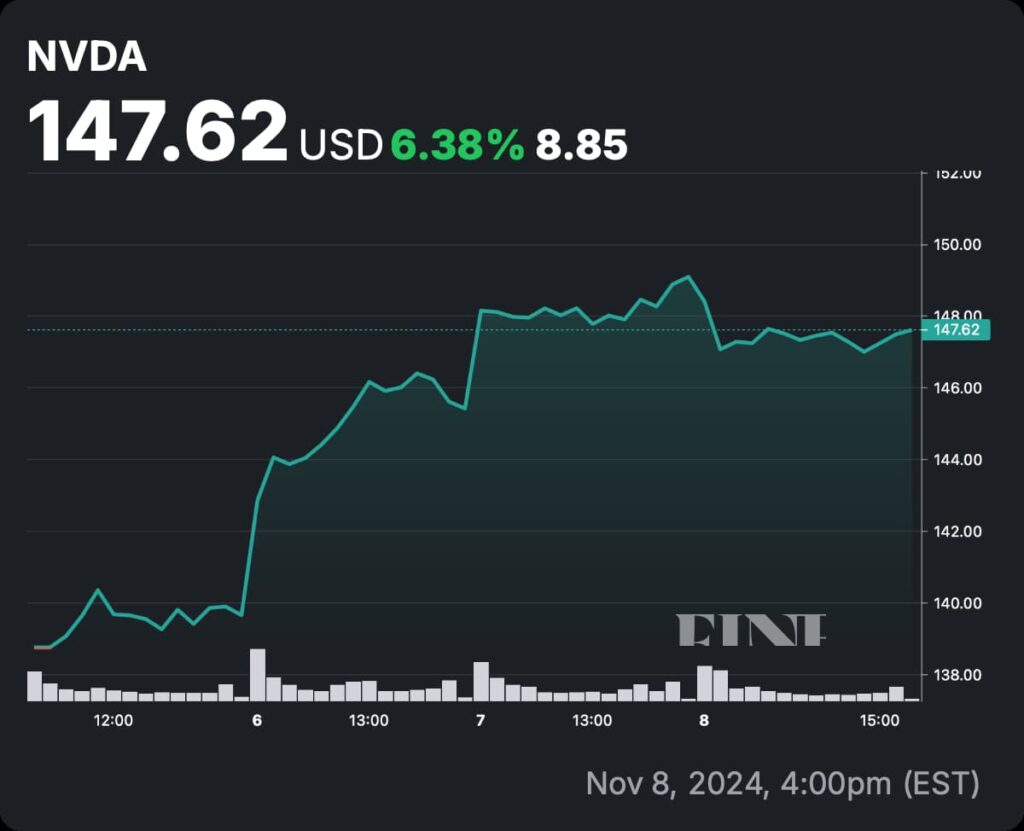
The price of NVIDIA stock is a complex metric that distills global computing demand, monetary policy, and the future of human-machine interaction into a single number. It is a volatile asset, prone to dramatic swings that can test the resolve of any investor. However, for those who look beyond the daily ticker and understand the fundamental drivers—the shift to accelerated computing, the expansion of data center revenue, and the strategic importance of AI—the price of NVIDIA is a reflection of the company’s role as the primary architect of the digital future.
In the world of personal finance and investing, NVIDIA remains a quintessential “growth” story. Its price is high because its potential is immense, but as with any high-reward investment, it requires a disciplined approach, a clear understanding of valuation, and an unwavering eye on the long-term horizon. As the AI era continues to unfold, the price of NVIDIA will undoubtedly remain one of the most watched and debated figures in the financial world.
aViewFromTheCave is a participant in the Amazon Services LLC Associates Program, an affiliate advertising program designed to provide a means for sites to earn advertising fees by advertising and linking to Amazon.com. Amazon, the Amazon logo, AmazonSupply, and the AmazonSupply logo are trademarks of Amazon.com, Inc. or its affiliates. As an Amazon Associate we earn affiliate commissions from qualifying purchases.