
In an era defined by rapid digital transformation, the phrase “what are the facts” has taken on a new level of complexity. We no longer live in a world where information is scarce; rather, we live in an age of information an abundance where the challenge lies in distinguishing verified technical data from speculative hype. As technology permeates every facet of our professional and personal lives, understanding the foundational realities of the tools we use—from generative artificial intelligence to decentralized data structures—is essential for any tech-literate individual.

The following exploration dives deep into the technological landscape to uncover the facts behind the most significant trends shaping our digital future. By stripping away the marketing jargon, we can examine the mechanics of how these systems work and what they truly mean for the evolution of the global tech ecosystem.
The Architecture of Information: Understanding Data Integrity
At the core of every technological advancement is data. When we ask about the “facts” of a system, we are essentially asking about the quality and reliability of the data that fuels it. Data integrity refers to the accuracy, consistency, and reliability of data throughout its entire lifecycle.
From Raw Data to Actionable Intelligence
The journey from a simple “fact” (a data point) to intelligence is complex. Raw data—the bits and bytes collected by sensors, user inputs, and logs—must undergo a rigorous process of cleaning and normalization. In a professional tech environment, “the facts” are only as good as the pipelines that carry them. Data engineering ensures that information remains untainted by “noise” or corruption. Without high-quality data ingestion, the most sophisticated software in the world will produce “hallucinations” or errors, a phenomenon often described by the industry adage: “Garbage in, garbage out.”
The Role of Big Data in Today’s Tech Ecosystem
In the past decade, the volume of data generated globally has grown exponentially. However, the fact remains that volume does not equate to value. Big Data technology—utilizing frameworks like Hadoop or Spark—is designed to parse through trillions of data points to find correlations. The technical reality is that while Big Data can identify what is happening (e.g., a sudden spike in server latency), it requires sophisticated analytics and human oversight to determine why it is happening. Understanding this distinction is vital for developers and stakeholders who rely on data-driven decision-making.
Artificial Intelligence: Demystifying the Black Box
Perhaps no area of technology is shrouded in more mystery and misinformation than Artificial Intelligence (AI). To understand the facts of AI, one must look past the science-fiction narratives and examine the mathematical reality of machine learning.
Generative AI vs. Predictive AI
It is a common misconception that all AI is the same. In fact, the industry is largely split between Generative AI (GenAI) and Predictive AI. Generative AI, such as Large Language Models (LLMs), uses probabilistic mathematics to predict the next word in a sequence, effectively “creating” content based on patterns found in massive datasets. Predictive AI, on the other hand, is used for classification and forecasting, such as detecting credit card fraud or predicting equipment failure in a factory. The fact is that neither system “thinks” in the human sense; they are sophisticated pattern-matching engines that operate on statistical weights.
Common Myths vs. Technical Realities
One of the most persistent myths is that AI possesses “General Intelligence” (AGI)—the ability to learn any task a human can. The technical fact is that we are still in the era of “Narrow AI.” An AI might be able to beat a grandmaster at chess or write a functional Python script, but it cannot navigate a physical room it hasn’t been programmed for or understand the nuance of human emotion without a pre-defined data set. Furthermore, the “black box” problem remains a significant hurdle; often, even the developers cannot explain exactly why a deep-learning neural network arrived at a specific conclusion. Transparency and “Explainable AI” (XAI) are currently the most critical frontiers in tech research.
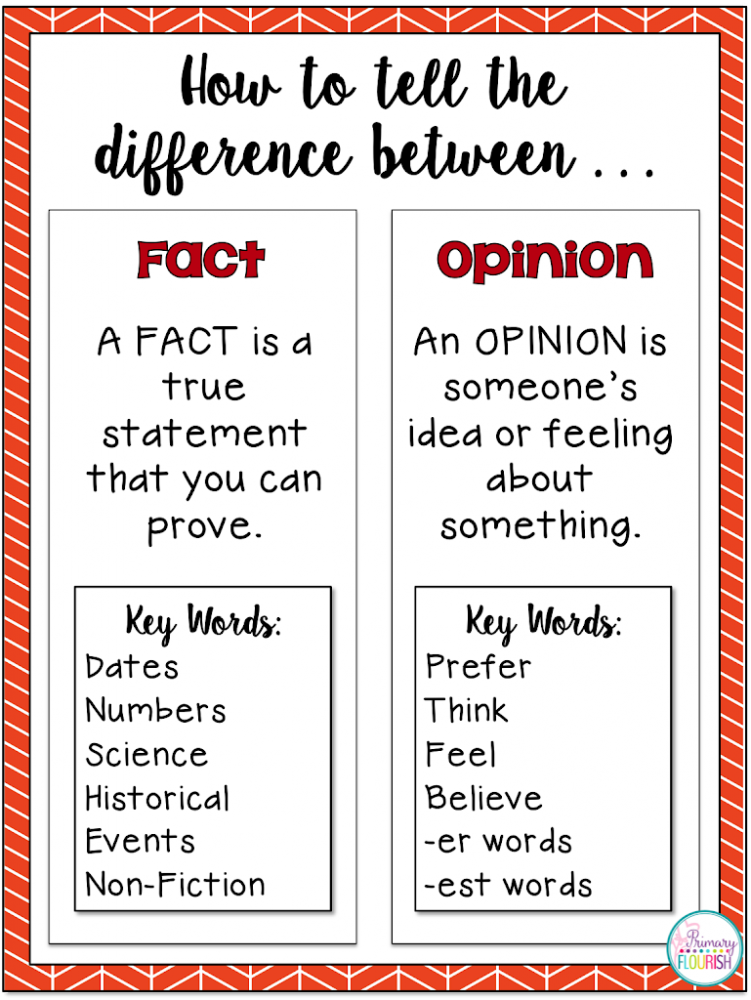
Digital Security and the Truth of Privacy
As our reliance on technology grows, the “facts” regarding our digital security become increasingly sobering. The landscape of cybersecurity is an arms race where the defense must be perfect every time, but an attacker only needs to be successful once.
The Sovereignty of Personal Information
In the modern tech stack, the concept of privacy has shifted from “hiding data” to “controlling data.” The fact is that most free-to-use digital tools are funded by data monetization. This has led to the rise of privacy-enhancing technologies (PETs) like differential privacy and homomorphic encryption. These technologies allow systems to analyze data and extract “facts” or trends without ever actually seeing the underlying personal information. For the end-user, the reality is that complete anonymity is nearly impossible, but data sovereignty—the right to control how your information is utilized—is becoming a standard feature of ethical software design.
Cybersecurity Protocols in an Automated World
Automation is a double-edged sword in security. On one hand, automated security systems can scan millions of lines of code for vulnerabilities in seconds. On the other hand, malicious actors use the same automation to launch sophisticated “Zero Day” attacks. The factual reality of modern security is built on the “Zero Trust” model. This framework operates on the principle of “never trust, always verify.” Every user, device, and application is treated as a potential threat, requiring continuous authentication. This shift from perimeter-based security to identity-based security is the most significant change in the tech industry’s approach to safety in the last twenty years.
The Impact of Emerging Technologies on Society
Technology does not exist in a vacuum; its “facts” are ultimately measured by its impact on the real world. As we look toward the next decade, several emerging technologies are poised to redefine the human experience.
Automation and the Future of Labor
The fact about automation is not that it will necessarily “destroy” jobs, but that it will radically transform the “tasks” associated with those jobs. In tech, we see this with the rise of “Low-Code/No-Code” platforms. These tools allow non-developers to build applications, which technically lowers the barrier to entry but increases the demand for high-level systems architecture and oversight. The reality is a shift toward a “human-in-the-loop” model, where technology handles repetitive computation while humans focus on strategy, empathy, and complex problem-solving.
Ethical Considerations in Algorithm Development
Algorithms now determine everything from who gets a loan to which news stories appear in our feeds. The fact is that algorithms are not inherently neutral; they inherit the biases of their creators and the datasets used to train them. Technical ethics is no longer a “soft” skill—it is a core requirement for software engineering. Organizations are increasingly implementing “Algorithmic Auditing” to ensure that their tech products do not perpetuate systemic biases. Understanding the fact that code has social consequences is the first step toward building a more equitable digital future.
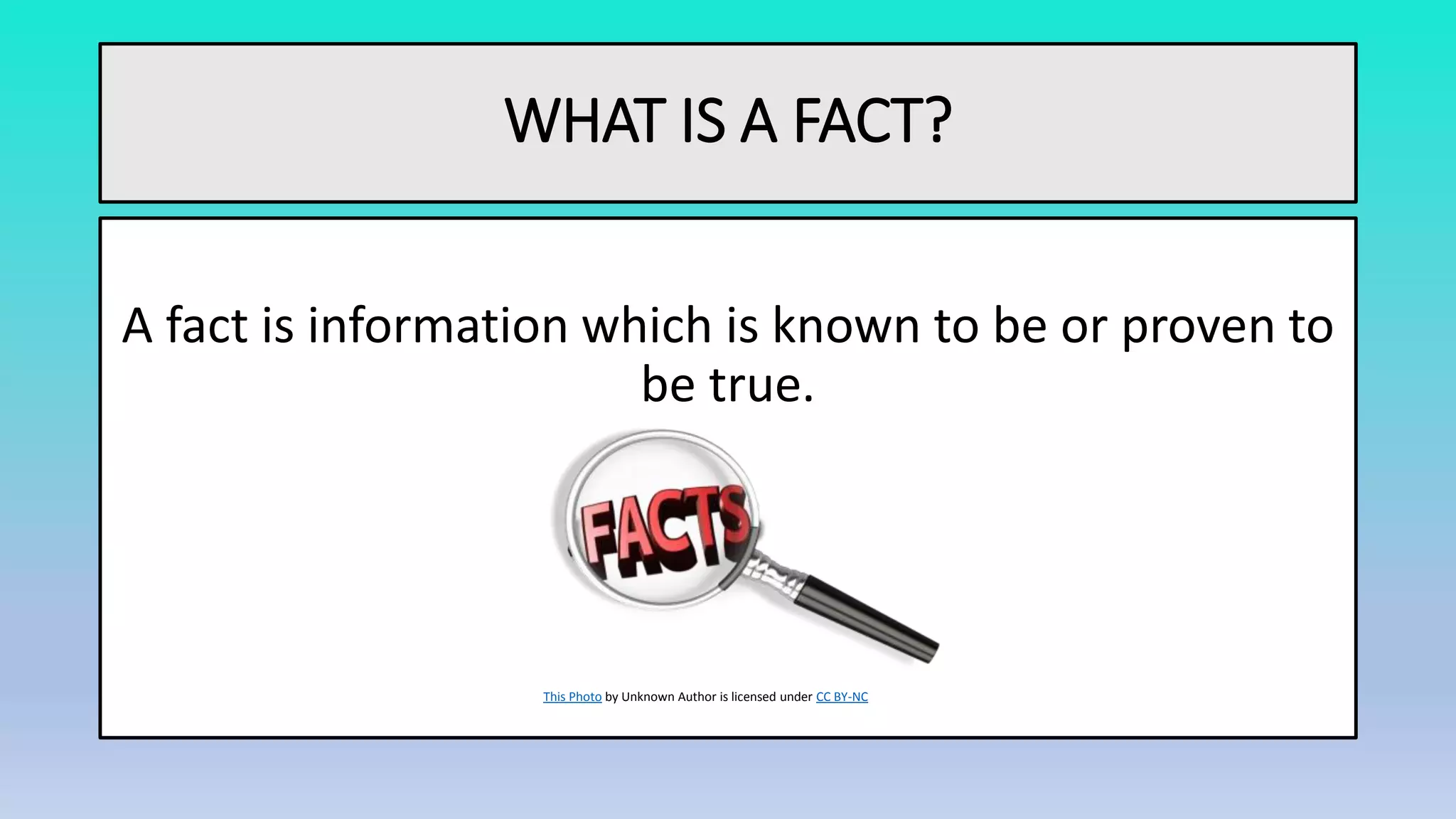
Conclusion: Navigating the Fact-Based Tech Landscape
When we ask “what is the facts” regarding modern technology, the answer is rarely a simple one. The tech world is a tapestry of complex systems, massive datasets, and intricate mathematical models. However, by focusing on data integrity, demystifying the capabilities of AI, prioritizing zero-trust security, and acknowledging the ethical weight of automation, we can form a clearer picture of our digital reality.
Staying informed in this landscape requires a commitment to continuous learning. The “facts” of today—whether it’s the current state of quantum computing or the latest protocol in 5G connectivity—will likely be the foundations for the innovations of tomorrow. In a world of hype, the most valuable tool any professional can possess is the ability to look under the hood of a new technology and understand the technical truths that make it work. As we move forward, the intersection of human ingenuity and technical precision will continue to redefine what is possible, turning the “facts” of the present into the breakthroughs of the future.
aViewFromTheCave is a participant in the Amazon Services LLC Associates Program, an affiliate advertising program designed to provide a means for sites to earn advertising fees by advertising and linking to Amazon.com. Amazon, the Amazon logo, AmazonSupply, and the AmazonSupply logo are trademarks of Amazon.com, Inc. or its affiliates. As an Amazon Associate we earn affiliate commissions from qualifying purchases.