
The financial landscape is currently navigating a period of significant transition, characterized by a complex interplay of macroeconomic indicators, shifting monetary policies, and the rapid evolution of technology-driven growth. To understand what the stock market is doing now, one must look beyond the daily fluctuations of the Dow Jones Industrial Average or the S&P 500. We are witnessing a market that is recalibrating its expectations for the future, balancing the optimism of a “soft landing” against the lingering realities of inflationary pressures and high interest rates.
Decoding Current Market Sentiments and Macroeconomic Drivers
To grasp the current state of the stock market, we must first look at the engine driving the volatility: the Federal Reserve and macroeconomic data. The “higher for longer” narrative regarding interest rates has been the primary theme over the past several quarters. While the market initially hoped for rapid rate cuts, the reality of a resilient labor market and “sticky” inflation has forced a repricing of assets across the board.
Macroeconomic Indicators and Interest Rate Shifts
The market is currently hyper-fixated on data releases—specifically the Consumer Price Index (CPI) and employment reports. When inflation figures come in lower than expected, we see immediate rallies as investors bet on a more accommodative central bank. Conversely, strong labor data often triggers a sell-off, as it suggests the economy might be “too hot,” necessitating maintained high rates to prevent an inflationary spiral. What the market is doing now is attempting to find the “neutral rate”—the sweet spot where the economy grows without sparking excessive inflation.
The Role of Inflationary Pressures
Inflation isn’t just a number; it is a psychological barrier for investors. Currently, the market is grappling with the transition from goods-based inflation to services-based inflation. This shift is crucial because services (like healthcare, insurance, and housing) tend to be more “sticky” and harder to bring down. Investors are monitoring these specific sub-sectors to determine if the downward trend in overall inflation is sustainable or if we are entering a period of prolonged, moderate price increases that will continue to eat into corporate margins.
Sector Performance and the Dynamics of Market Rotation
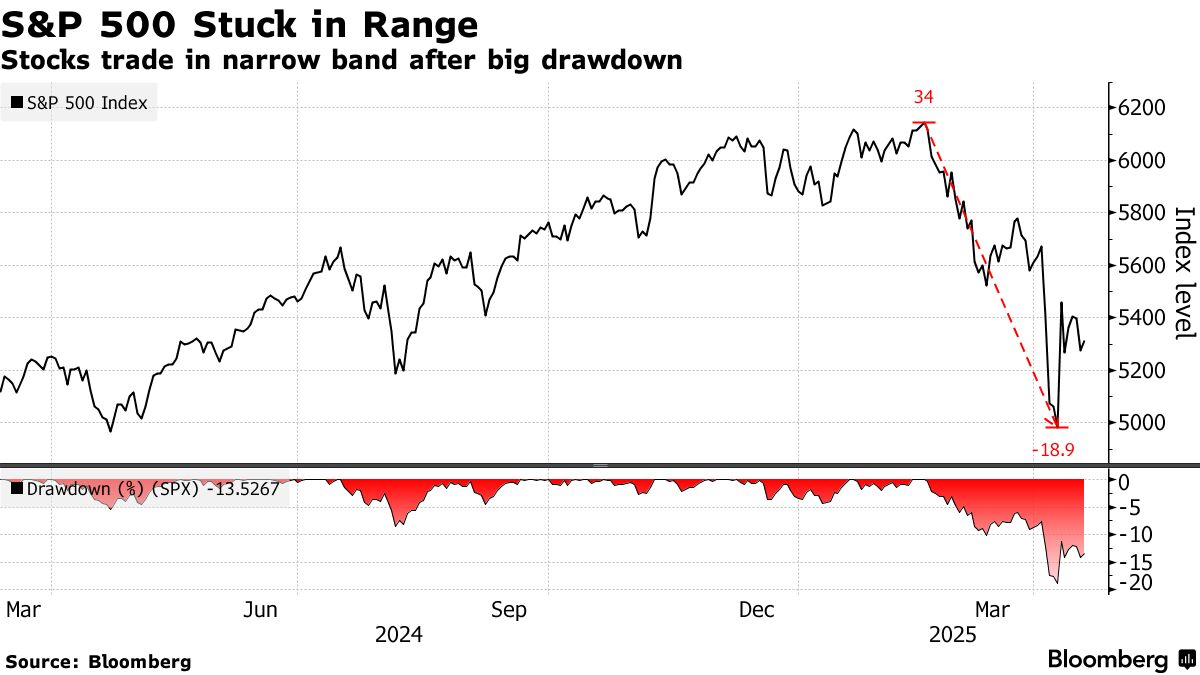
The broader indices often mask the internal struggles and triumphs of individual sectors. What the stock market is doing now is best described as a “bifurcated” environment. While a handful of mega-cap stocks have driven the lion’s share of recent gains, the broader market—often represented by the equal-weighted S&P 500—has shown more modest performance.
Tech’s Resilience and the AI Rally
It is impossible to discuss the current market without mentioning the Artificial Intelligence (AI) boom. Technology stocks, particularly those involved in semiconductor manufacturing and cloud infrastructure, have acted as the market’s primary engine. This isn’t just speculative hype; it is backed by significant capital expenditure from major corporations. However, the market is now entering a phase of “show me the money,” where investors are looking for tangible earnings growth from AI integration rather than just mentions of the technology in earnings calls.
Value vs. Growth: Finding the Balance
For much of the last decade, growth stocks outperformed value. Recently, however, we have seen intermittent rotations into value sectors like energy, financials, and industrials. This happens when investors seek safety in companies with strong cash flows and low price-to-earnings (P/E) ratios amidst uncertainty. What the market is doing now is testing whether these cyclical sectors can sustain a rally if the economy remains resilient, or if growth will continue to dominate in a world where true innovation is scarce.
Technical Analysis and Navigating Market Volatility
Market behavior is not just driven by fundamentals; it is also a product of technical levels and investor psychology. Understanding the “now” requires a look at the charts and the indices that track fear and greed.
Understanding Volatility (VIX) and Market Sentiment
The VIX, often referred to as the “fear gauge,” measures the market’s expectation of 30-day volatility. Currently, the VIX has shown periods of extreme calm followed by sharp, sudden spikes. This indicates a market that is “coiled”—highly sensitive to news cycles. When the VIX is low, it suggests complacency, which often precedes a correction. When it is high, it suggests panic, which can present buying opportunities for the disciplined investor. What the market is doing now is maintaining a state of “cautious optimism,” where any deviation from the expected economic narrative results in swift price adjustments.
Support and Resistance Levels in the Current Climate
From a technical perspective, the market is frequently testing major psychological levels—such as the 4,500 or 5,000 marks on the S&P 500. These levels act as “ceilings” (resistance) and “floors” (support). Currently, we are seeing the market trade within a well-defined range. A breakout above resistance levels usually triggers “fear of missing out” (FOMO) buying, while a drop below support can trigger programmatic selling by algorithmic trading bots. Investors are watching these levels closely to determine if the current trend is a sustainable bull market or a temporary “bear market rally.”
Strategic Moves for the Modern Investor
In a market that feels both expensive and uncertain, the question for the individual investor is how to position their portfolio. The current environment rewards discipline over impulse and diversification over concentration.
Long-term Wealth Building vs. Short-term Tactical Shifts
The stock market is currently rewarding those who can distinguish between “noise” and “signal.” Short-term traders are struggling with the daily volatility driven by headlines, while long-term investors are finding success by staying the course. A key strategy in the current market is “Dollar Cost Averaging” (DCA)—continuing to invest fixed amounts at regular intervals regardless of price. This mitigates the risk of “timing the market” poorly and allows investors to benefit from lower prices during inevitable dips.
The Importance of Diversification in a Changing Landscape
Because a few tech giants have so much influence over the indices, many investors are inadvertently over-concentrated in one sector. What the market is doing now—with its sudden rotations—highlights the necessity of diversification. This includes looking beyond U.S. large-cap stocks into small-cap stocks, international markets, and fixed-income assets like bonds. With interest rates at their highest levels in years, bonds and high-yield savings accounts are finally offering “real” returns, providing a viable alternative to the volatility of the stock market.
Future Outlook and Economic Forecasting
As we look toward the next quarter and beyond, the stock market is essentially a “forward-looking mechanism.” It is already trying to price in what the world will look like six to nine months from today.
Potential Headwinds for the Coming Quarter
Several risks loom on the horizon. Geopolitical tensions can cause sudden shocks to energy prices, which in turn reignites inflation. Additionally, there is the “lag effect” of monetary policy; it often takes 12 to 18 months for interest rate hikes to fully impact the economy. The market is currently watching for signs of a “cracking” consumer—looking at credit card delinquency rates and retail sales data to see if high borrowing costs are finally dampening the American consumer’s appetite for spending.
Opportunities in Emerging Markets and Alternatives
While the U.S. market has been the global leader, many analysts are beginning to look toward emerging markets where valuations are significantly lower. Furthermore, alternative investments, including real estate and private equity, are becoming more attractive as the traditional 60/40 portfolio (60% stocks, 40% bonds) undergoes a transformation. What the stock market is doing now is forcing a reconsideration of traditional wisdom, pushing investors to find growth in corners of the global economy that were previously overlooked during the era of “easy money.”
In summary, the stock market today is a complex machine operating under a new set of rules. The era of zero-percent interest rates is over, and the market is in the process of discovering a “new normal.” For the investor, this means that while the “easy gains” of the post-pandemic recovery may be behind us, the current environment offers a wealth of opportunities for those who understand the macro drivers, respect the technical levels, and maintain a diversified, long-term perspective. The market is doing exactly what it has always done: pricing in risk, rewarding innovation, and testing the patience of those who seek a quick profit.
aViewFromTheCave is a participant in the Amazon Services LLC Associates Program, an affiliate advertising program designed to provide a means for sites to earn advertising fees by advertising and linking to Amazon.com. Amazon, the Amazon logo, AmazonSupply, and the AmazonSupply logo are trademarks of Amazon.com, Inc. or its affiliates. As an Amazon Associate we earn affiliate commissions from qualifying purchases.