
For many, the question “What does the stock market do today?” is a morning ritual, often accompanied by a quick glance at a smartphone app or a financial news ticker. However, the answer is rarely a simple “it went up” or “it went down.” The stock market is a complex, living ecosystem influenced by millions of participants, global events, and psychological shifts. Understanding what the market does on a daily basis requires looking beyond the red and green numbers to grasp the underlying mechanics of finance, the catalysts of movement, and the strategies that seasoned investors use to interpret the noise.
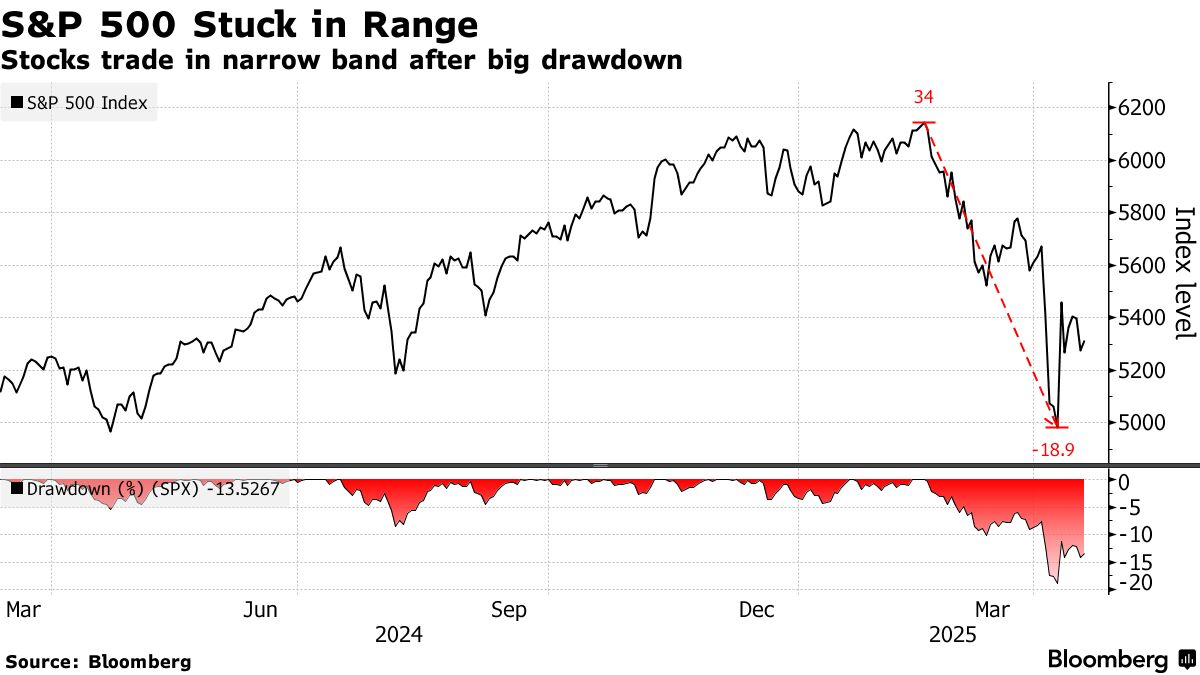
In the realm of personal finance and investing, the daily fluctuations of the market serve as both a challenge and an opportunity. Whether you are a long-term retirement saver or an active trader, understanding the daily pulse of the market is essential for maintaining financial clarity and emotional discipline.
Decoding the Daily Pulse: Market Mechanics and Benchmarks
To understand what the market is doing today, one must first identify which “market” is being referenced. The stock market is not a single entity but a collection of exchanges where shares of publicly held companies are issued and traded.
The Major Indices as Economic Barometers
When news anchors report that “the market is up,” they are usually referring to one of the major indices. The S&P 500, which tracks 500 of the largest U.S. companies, is often considered the best single gauge of large-cap equities. The Dow Jones Industrial Average (DJIA) provides a snapshot of 30 “blue-chip” companies, while the Nasdaq Composite is heavily weighted toward the technology sector. On any given day, these indices might move in different directions. For example, a “rotation” might occur where investors sell high-growth tech stocks (lowering the Nasdaq) to buy more stable industrial stocks (raising the Dow).
Volume and Liquidity: The Invisible Force
What the market “does” is also defined by volume—the number of shares traded. High volume typically indicates strong conviction among investors, whether they are buying or selling. Liquidity, the ease with which assets can be bought or sold without affecting the price, is the lifeblood of the daily market. On days with low liquidity, prices can become exceptionally volatile, leading to “flash crashes” or rapid spikes that don’t necessarily reflect the long-term value of the underlying companies.
The Opening and Closing Bells
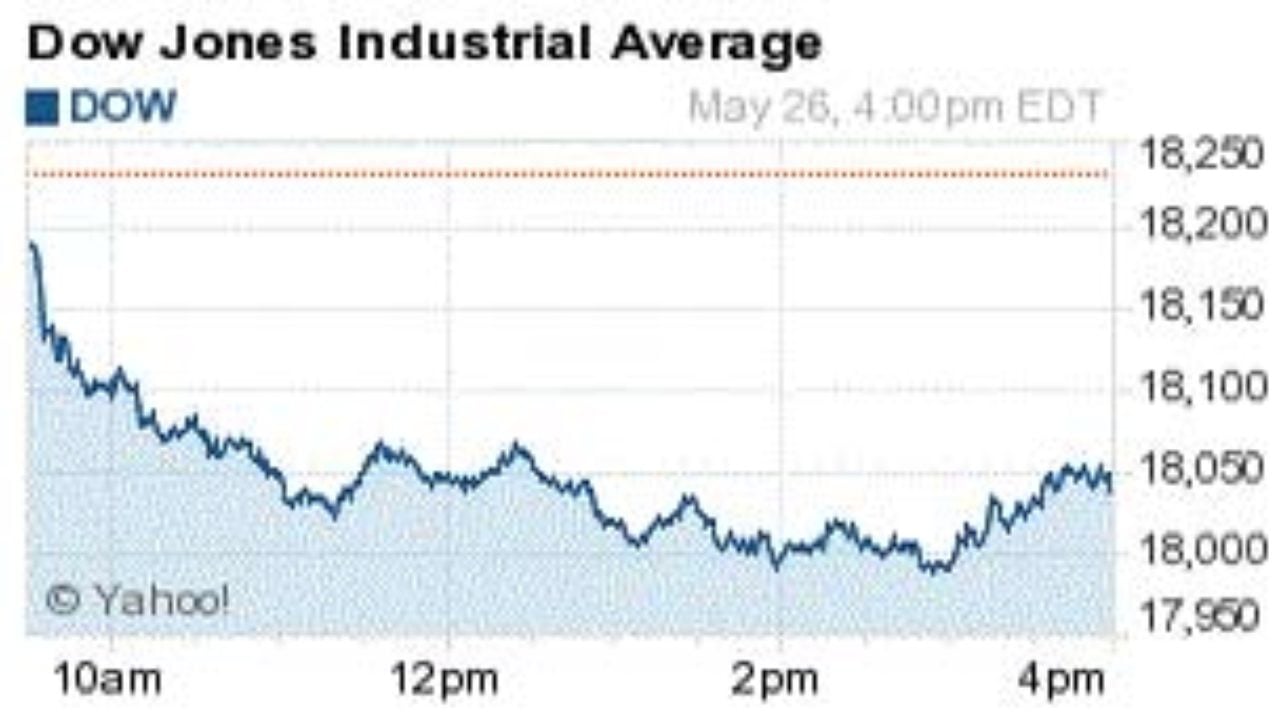
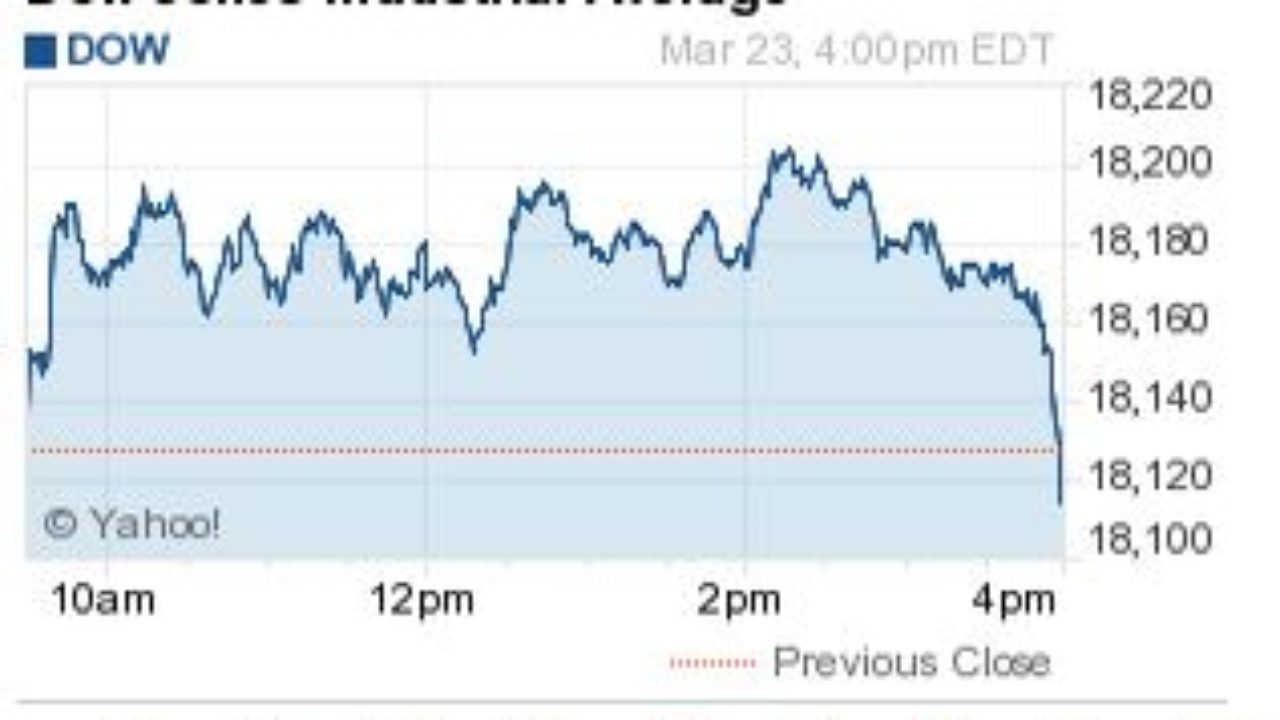
The market often exhibits specific behaviors at different times of the day. The “opening cross” often sees high volatility as orders placed overnight are executed. Mid-day often brings a “lunchtime lull” where trading slows down, followed by a surge of activity in the final hour of trading—often referred to as the “power hour”—as institutional investors square their positions for the day.
Why Markets Move: Identifying the Daily Catalysts
The stock market does not move in a vacuum. Every price tick is a response to new information. Understanding why the market is moving today requires an analysis of several key categories of data.
Macroeconomic Indicators and Central Bank Policy
In the current financial landscape, the Federal Reserve (or other central banks) is perhaps the most significant driver of daily market action. Investors watch for “Fedspeak”—speeches by central bank officials—and economic reports such as the Consumer Price Index (CPI) or employment data. If inflation is higher than expected, the market may drop on fears that interest rates will rise, increasing the cost of borrowing for businesses and consumers.
Corporate Earnings and Growth Forecasts
During “earnings season,” the market’s daily behavior is dominated by individual company reports. When a major player like Apple or Microsoft releases its quarterly results, the impact ripples across the entire sector. However, the market is forward-looking. A company might report record profits, but if its “guidance”—the forecast for future growth—is weak, its stock price (and the broader index) may fall. What the market does today is often an attempt to price in what will happen six months from now.
Geopolitical Events and “Black Swans”
Unexpected news, such as geopolitical tensions, trade disputes, or sudden regulatory changes, can cause immediate shifts in market sentiment. These “Black Swan” events—rare and unpredictable occurrences—test the market’s resilience. On such days, the market often undergoes a “flight to quality,” where investors sell risky assets (stocks) and move into “safe havens” like gold or government bonds.
Understanding Market Sentiment and Psychology
If the market were purely logical, it would only move when new data arrives. However, the market is also a “voting machine” that reflects human emotion—specifically, the tug-of-war between fear and greed.
The Fear and Greed Index
Investor sentiment is a measurable metric. Tools like the VIX (Volatility Index), often called the “Fear Gauge,” measure how much volatility investors expect over the next 30 days. When the VIX is high, the market is “doing” something driven by anxiety and defensive positioning. Conversely, in periods of extreme greed, the market may ignore bad news and continue to climb, creating potential bubbles.
How News Cycles Shape Investor Behavior
The modern 24-hour news cycle and social media have accelerated the speed at which sentiment shifts. A single viral tweet or a breaking headline can trigger a wave of selling or buying. This creates “noise”—short-term fluctuations that have little to do with the fundamental health of a business. Discerning what the market is doing today requires separating this noise from the “signal” of actual economic shifts.
The Momentum Effect
Sometimes, the market moves simply because it is already moving. Momentum is a powerful force in finance. If an index breaks through a key “resistance” level (a price point it previously struggled to exceed), it can trigger a wave of algorithmic buying, pushing prices even higher regardless of the day’s fundamental news.
Strategies for Monitoring the Market Without Overreacting
For the individual investor, the daily movements of the market can be overwhelming. Developing a professional approach to daily monitoring is crucial for long-term financial health.
Distinguishing Between Noise and Signal
The most important skill an investor can develop is the ability to ignore the daily “wiggles” of the chart. If the S&P 500 is down 0.5% today, it is likely noise. If it is down 5% on heavy volume following a major economic shift, it is a signal. Successful investors focus on the “why” behind the move rather than just the “what.” They ask: “Does this change my long-term thesis for why I own this asset?”
The Importance of a Diversified Watchlist
Rather than staring at a single index, a sophisticated investor maintains a diversified watchlist. This might include various asset classes (stocks, bonds, commodities), different sectors (technology, healthcare, energy), and international markets. Watching how these different segments interact provides a clearer picture of what the market is doing. For instance, if stocks are down but small-cap companies are up, it suggests a healthy internal rotation rather than a systemic crash.
Utilizing Stop-Losses and Rebalancing
To manage the stress of daily fluctuations, investors use tools like stop-loss orders—automated instructions to sell a stock if it falls below a certain price. Additionally, some use daily volatility as a cue for “rebalancing.” If a market surge makes your stock portfolio too large relative to your bond holdings, you might sell some stocks to maintain your target asset allocation. In this way, you use what the market does today to reinforce your long-term plan.
The Role of Technology and Modern Tools in Daily Analysis
In the modern era, what the market does today is increasingly dictated by technology. The landscape of finance has moved from the trading floor to the data center.
Algorithmic Trading and High-Frequency Execution
A significant portion of daily trading volume is now driven by algorithms and high-frequency trading (HFT) systems. These programs can execute thousands of trades in a fraction of a second based on mathematical models. This can lead to increased efficiency but also to “liquidity voids” where prices drop rapidly because the machines have stepped out of the market. Understanding that some daily moves are purely technical—driven by computer code rather than human judgment—can help investors stay calm during sudden dips.
Using Modern Financial Tools for Daily Analysis
Today, individual investors have access to the same tools that were once reserved for Wall Street professionals. From real-time data terminals to AI-driven sentiment analysis tools, the ability to track the market’s “behavior” is greater than ever. Apps that aggregate news, provide heat maps of sector performance, and offer technical analysis overlays allow for a more nuanced understanding of daily activity.
The Impact of Retail Trading Platforms
The rise of zero-commission trading platforms has brought a new wave of participants into the market. This “democratization of finance” means that retail sentiment—the collective action of individual investors—can now move the market in ways it couldn’t decades ago. “Meme stocks” and retail-driven rallies are now part of the answer to what the market is doing today, introducing a new layer of complexity to daily price action.
Conclusion: Perspective Is the Ultimate Asset
When you ask, “What does the stock market do today?” remember that the answer is a snapshot of a much larger journey. On any given day, the market is a chaotic mix of economic data, corporate news, human emotion, and algorithmic precision. While it is important to stay informed, the most successful participants in the world of money and investing are those who can observe the daily drama without being consumed by it.
By understanding the mechanics of indices, the catalysts of movement, the psychology of participants, and the influence of technology, you can move from being a reactive observer to an informed strategist. The market will always do something today, but your financial success depends on what you do over the next decade. Professionalism in investing is defined by the ability to see the forest through the trees—recognizing that while the daily ticker is loud, the long-term trend of value creation is the true signal to follow.
aViewFromTheCave is a participant in the Amazon Services LLC Associates Program, an affiliate advertising program designed to provide a means for sites to earn advertising fees by advertising and linking to Amazon.com. Amazon, the Amazon logo, AmazonSupply, and the AmazonSupply logo are trademarks of Amazon.com, Inc. or its affiliates. As an Amazon Associate we earn affiliate commissions from qualifying purchases.