
For veterans, active-duty service members, and eligible surviving spouses, the VA home loan remains one of the most powerful financial instruments available in the modern marketplace. However, understanding the current VA home loan rate is not as simple as looking at a single number on a digital ticker. In the realm of personal finance, the interest rate on a mortgage is the primary lever that determines your long-term wealth accumulation, monthly cash flow, and overall financial stability.
While VA loans are famous for their $0-down-payment requirement, it is the competitive interest rate that often provides the most significant long-term value. To truly master your finances as a homeowner, you must understand how these rates are set, why they fluctuate, and how you can position yourself to secure the most favorable terms possible.
Understanding the Mechanics of VA Loan Interest Rates
A common misconception is that the Department of Veterans Affairs (VA) sets the interest rates for these loans. In reality, the VA provides a government guarantee to private lenders, but it is those private institutions—banks, credit unions, and mortgage companies—that determine the actual interest rates offered to consumers.
The Role of the Federal Reserve and Market Volatility
VA loan rates are deeply intertwined with the broader financial markets. They are influenced heavily by the yields on 10-year Treasury notes and the performance of Mortgage-Backed Securities (MBS). When the Federal Reserve adjusts the federal funds rate to combat inflation or stimulate the economy, there is a ripple effect throughout the mortgage industry.
While the Fed doesn’t directly set mortgage rates, their monetary policy shifts investor sentiment. In a high-inflation environment, investors demand higher yields on mortgage bonds to compensate for the eroding value of money over time. This leads to an upward trend in VA loan rates. Conversely, when the economy cools and inflation stabilizes, rates often trend downward, providing a more favorable environment for veteran borrowers.
How Your Personal Financial Profile Impacts the Rate
Even though VA loans are known for having more lenient credit requirements than conventional or FHA loans, your personal “Money” profile still dictates whether you get the “teaser” rate seen in advertisements or a slightly higher one. Lenders look at several key metrics:
- Credit Score: While the VA doesn’t have a minimum score, most lenders use a “benchmark” (often 580 to 620). A higher score, such as 740 or above, typically unlocks the most competitive rates.
- Debt-to-Income (DTI) Ratio: This measures your ability to manage monthly payments. A lower DTI indicates to the lender that you are a lower-risk borrower, which can sometimes result in better pricing on your interest rate.
- Loan Term: Generally, a 15-year fixed-rate VA loan will carry a lower interest rate than a 30-year fixed-rate loan, though the monthly payments will be higher due to the shorter amortization period.
Why VA Loan Rates Generally Outperform Conventional Mortgages
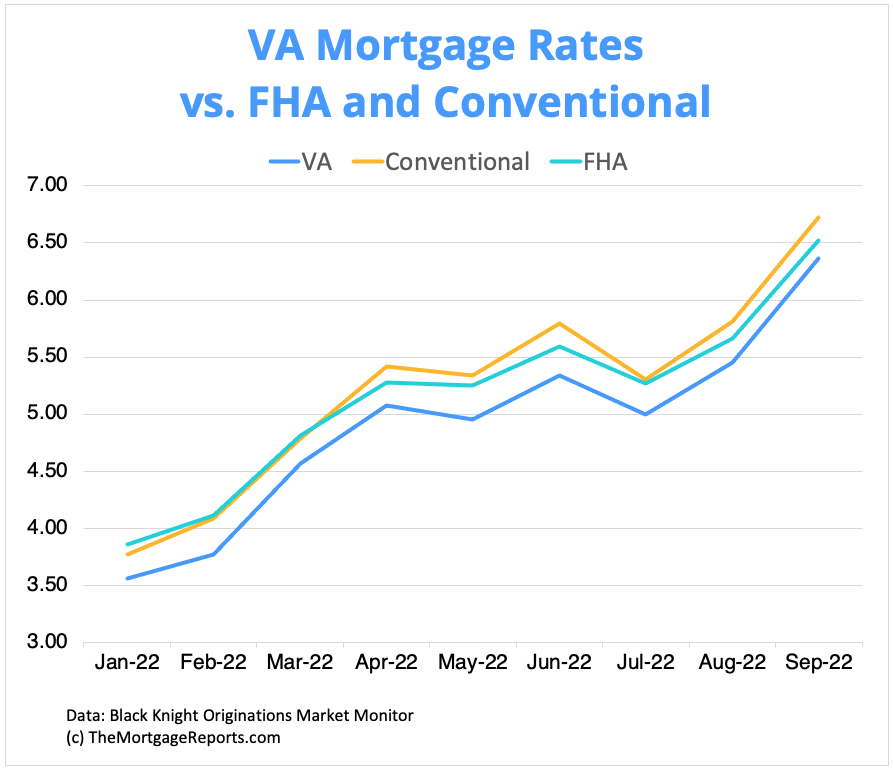
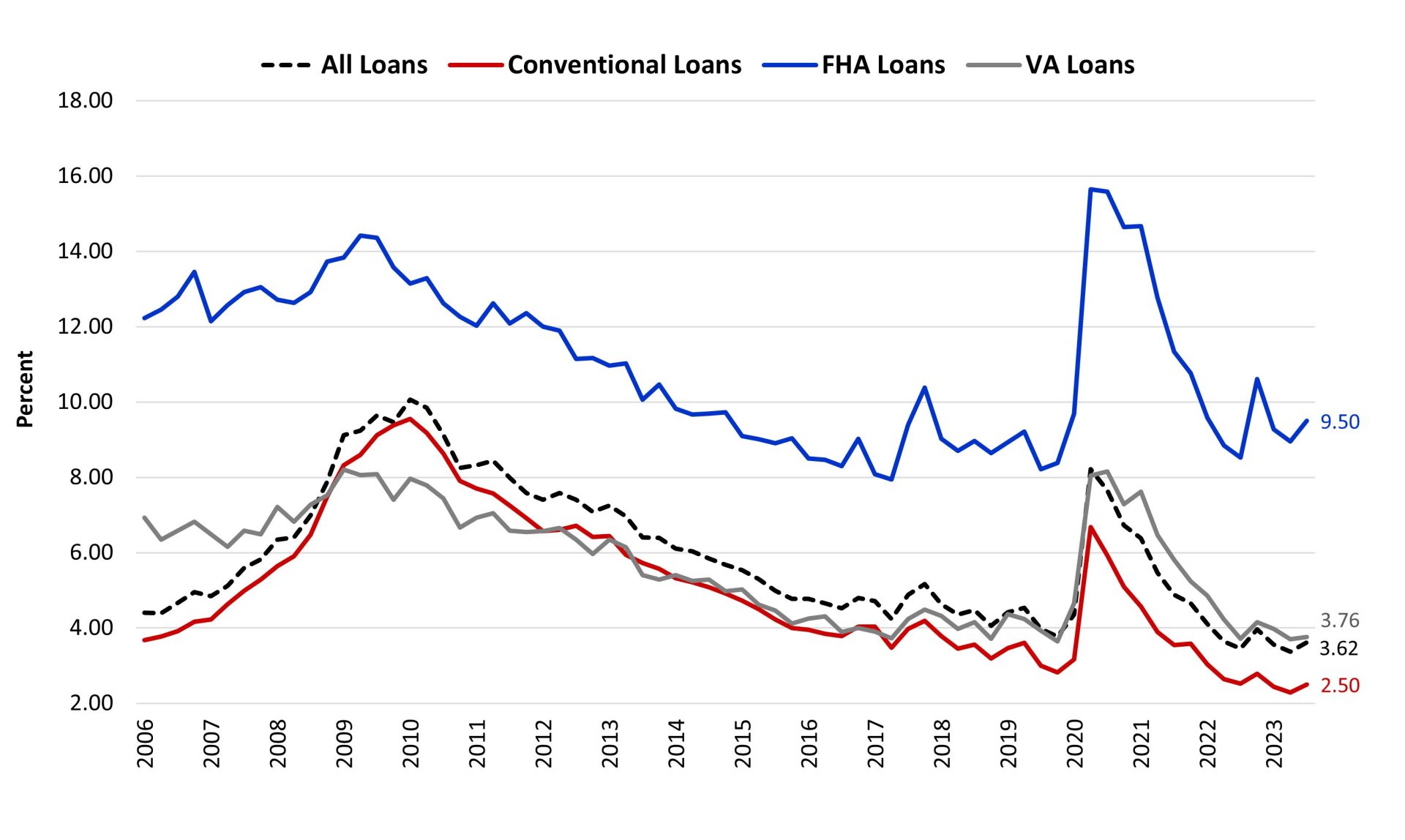
One of the greatest advantages of the VA loan program is that its interest rates are consistently lower than those of conventional loans. According to historical data from Ellie Mae, VA rates typically hover between 0.25% and 0.50% lower than conventional 30-year fixed rates.
The Impact of Government Backing
The primary reason for this rate disparity is the VA guarantee. The federal government pledges to repay the lender a portion of the loan (usually 25%) if the borrower defaults. This “safety net” reduces the risk for the lender significantly. In the world of finance, lower risk almost always translates to lower costs for the consumer. Because the lender has a lower probability of total loss, they can afford to offer a more competitive interest rate.
Low-Interest Thresholds and the Absence of PMI
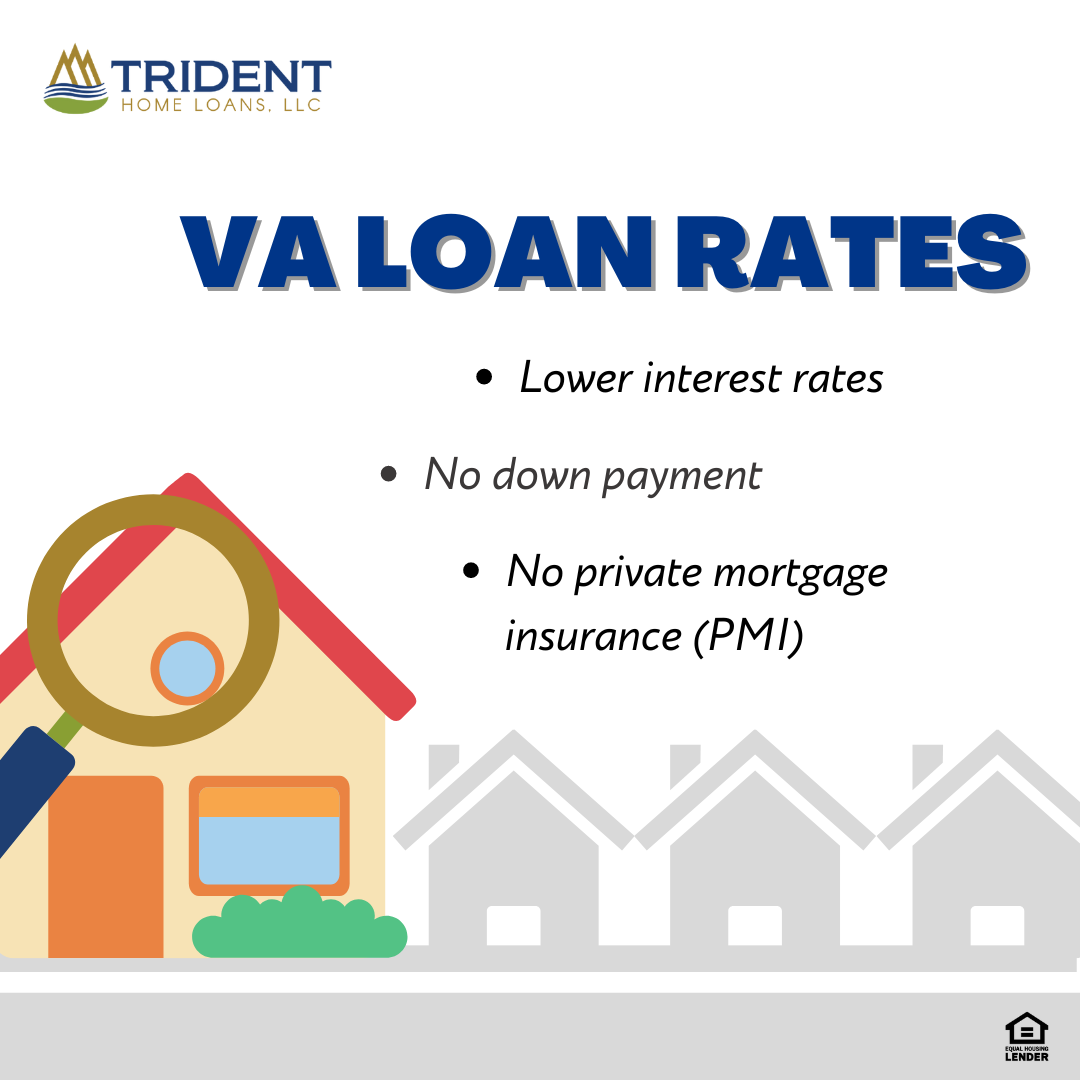
Beyond the nominal interest rate, the VA loan provides a massive “effective” rate benefit by eliminating Private Mortgage Insurance (PMI). In a conventional loan scenario where the borrower puts down less than 20%, they are required to pay PMI, which can add hundreds of dollars to a monthly payment. Because VA loans require no PMI, the “real” cost of borrowing is significantly lower, allowing veterans to divert that saved capital into other investment vehicles or retirement accounts.
Strategic Timing: When to Lock in Your VA Home Loan Rate
In personal finance, timing isn’t everything, but it is a substantial part of the equation. Because mortgage rates can change multiple times in a single day based on economic data releases, knowing when to “lock” your rate is a critical financial decision.
Monitoring the 10-Year Treasury Yield
If you want to track where VA loan rates are headed, keep an eye on the 10-year Treasury yield. Historically, there is a strong correlation between the two. When the yield on the 10-year Treasury rises, VA mortgage rates almost always follow suit. By watching these trends, a savvy borrower can anticipate a rate hike and lock in their current quote before the market shifts.
The Importance of the “Rate Lock” Period
Once you apply for a loan and receive a quote, you have the option to “lock” that rate for a specific period—usually 30, 45, or 60 days. This protects you from market volatility while your loan is being processed. If rates rise during your lock period, you are safe. However, if rates drop significantly, some lenders offer a “float-down” option, allowing you to take advantage of the lower rate for a small fee. Managing this lock is a vital step in optimizing your home purchase as a financial asset.
Maximizing Your Investment: Beyond the Initial Interest Rate
A VA loan is more than just a way to buy a house; it is a tool for long-term wealth creation. To maximize the value of this financial product, you must look beyond the initial interest rate and consider the total cost of capital.
Factoring in the VA Funding Fee
While the VA loan requires no down payment, most borrowers must pay a “VA Funding Fee.” This is a one-time fee paid directly to the Department of Veterans Affairs to help sustain the program. The fee varies based on your service type, whether it’s your first time using the benefit, and whether you are making a down payment. From a financial planning perspective, you must decide whether to pay this fee upfront or roll it into the loan. Rolling it into the loan increases your principal balance and the total interest paid over time, so if you have the cash on hand, paying it upfront can be a smarter long-term money move.
Refinancing Options: IRRRL and Cash-Out Refinancing
The VA program offers unique tools to manage your debt as market conditions change. The Interest Rate Reduction Refinance Loan (IRRRL), also known as a VA Streamline Refinance, is one of the most efficient financial tools available. It allows you to refinance an existing VA loan into a lower interest rate with minimal paperwork and no appraisal.
Additionally, a VA Cash-Out Refinance allows you to tap into your home’s equity to pay off high-interest debt or invest in home improvements. In a strategic financial plan, using a low-interest VA loan to consolidate credit card debt can save a household thousands of dollars in interest payments, dramatically improving their net worth over time.
The Future of VA Loans in an Evolving Financial Environment
As we look toward the future of the housing market, the VA loan remains a cornerstone of financial security for the veteran community. While interest rates may fluctuate based on global economic shifts and domestic policy, the structural advantages of the VA loan are permanent.
Navigating Inflationary Pressures
In an era where inflation can erode purchasing power, a fixed-rate VA loan acts as a powerful hedge. While the cost of goods and services rises, your mortgage payment remains constant. Over a 30-year period, the “real” cost of that mortgage payment actually decreases as inflation devalues the currency, making the low-interest VA loan one of the best “inflation-proof” investments a veteran can make.
Building Long-Term Equity through VA Lending
Ultimately, the goal of understanding the current VA home loan rate is to use that knowledge to build equity. By securing a low rate, minimizing fees, and making consistent payments, veterans can transform a monthly expense into a significant piece of their financial portfolio. Whether you are a first-time homebuyer or a seasoned investor, the VA loan remains the gold standard of mortgage products, offering a path to homeownership that is both accessible and financially superior to almost any other option on the market.
By staying informed on market trends and maintaining a strong personal financial profile, you can ensure that you are not just getting a loan, but are making a strategic move that will benefit your financial health for decades to come.
aViewFromTheCave is a participant in the Amazon Services LLC Associates Program, an affiliate advertising program designed to provide a means for sites to earn advertising fees by advertising and linking to Amazon.com. Amazon, the Amazon logo, AmazonSupply, and the AmazonSupply logo are trademarks of Amazon.com, Inc. or its affiliates. As an Amazon Associate we earn affiliate commissions from qualifying purchases.