
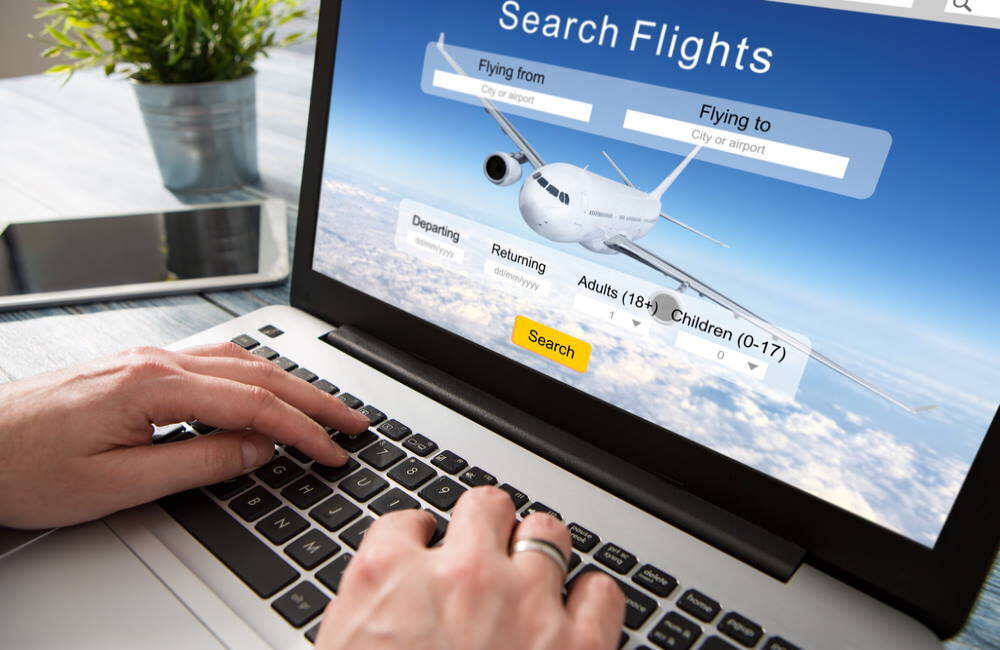
Buying an airline ticket is often one of the most significant discretionary expenses an individual or business owner faces in a fiscal quarter. While most consumers approach the process as a simple search-and-click transaction, the financially savvy traveler views it through the lens of capital allocation, market timing, and asset management. In the modern economy, airfare prices fluctuate with the volatility of a high-growth stock, influenced by algorithmic demand, fuel hedging, and inventory management.
To truly master the art of buying airline tickets within the context of personal and business finance, one must move beyond “travel hacks” and into the realm of financial strategy. This guide explores how to optimize your purchasing power, leverage financial tools, and treat every ticket purchase as a strategic investment.
1. The Macro-Economics of Airfare Timing
In personal finance, timing is everything. Just as an investor looks for a “dip” in the market to buy a stock, a traveler must understand the lifecycle of a fare to maximize their return on investment (ROI). The goal is to minimize the cost-per-mile while maintaining the liquidity of your travel schedule.
The Myth of the “Magic Booking Day”
For years, the personal finance world was filled with advice suggesting that booking on a Tuesday at 3:00 PM would yield the lowest prices. In the contemporary era of AI-driven dynamic pricing, this is largely a fallacy. Modern airline algorithms react to demand in real-time. Instead of looking for a specific day to buy, focus on the “Booking Window.” For domestic travel, the financial sweet spot usually exists between 21 and 60 days before departure. For international routes, the window expands to 3 to 6 months. Purchasing outside these windows often results in a “premium for procrastination” or a “penalty for over-planning.”
Hedging Against Market Volatility
Airlines utilize “yield management” to ensure every seat is sold at the highest possible price the market will bear. To combat this, travelers can use financial tools like “Fare Locks.” Many carriers and third-party financial platforms now allow you to pay a small, non-refundable fee to freeze a price for 72 hours to 14 days. This is essentially an options contract on a flight. If the price goes up, you exercise your option to buy at the locked rate. If the price drops, you let the option expire and buy at the new market rate.
Seasonal Budgeting and Arbitrage
Understanding the “Shoulder Season” is a fundamental principle of financial optimization in travel. By traveling just two weeks outside of peak holiday or summer windows, you can often see a 40% to 60% reduction in ticket costs. This is a form of geographical and temporal arbitrage—extracting the same value from the destination while paying a fraction of the market rate.
2. Leveraging Financial Tools and Credit Arbitrage
In the “Money” niche, credit is not just a way to delay payment; it is a tool for wealth maximization. When buying airline tickets, the method of payment is often more important than the ticket price itself.
The ROI of Premium Travel Credit Cards
For high-net-worth individuals or frequent business travelers, the annual fee of a premium travel card (often ranging from $250 to $695) is a calculated investment. When you buy a ticket with these cards, you are not just purchasing transportation; you are purchasing a suite of financial protections.
- Trip Cancellation Insurance: This effectively acts as a hedge against lost funds if a business deal falls through or an emergency arises.
- Multiplier Effects: Earning 3x to 5x points per dollar spent on airfare creates a “rebate” system. If you spend $10,000 a year on flights and earn 50,000 points (valued at roughly 2 cents per point), you have effectively secured a $1,000 discount on future travel, representing a 10% return on your spending.
Understanding Point Valuations and Transfer Partners
The most advanced financial strategy in airfare involves “Point Arbitrage.” This occurs when the cash price of a ticket is high, but the points price remains low. By transferring flexible credit card points to airline partners, you can often achieve a “Cents Per Point” (CPP) ratio that far exceeds the standard 1-cent-per-point baseline.
For example, a Business Class ticket to London might cost $5,000 cash or 60,000 points. In this scenario, your points are worth 8.3 cents each. This is an exceptional use of “alternative currency” to preserve your cash liquidity.
Buy Now, Pay Later (BNPL) and Opportunity Cost
The rise of BNPL services in the travel sector (like Affirm or Klarna) has introduced a new dynamic to airline ticket purchasing. From a financial perspective, if an airline offers 0% interest financing for six months, it may be mathematically superior to utilize that credit even if you have the cash on hand. This allows you to keep your capital in a high-yield savings account or an index fund, earning interest while paying down the ticket cost with “cheaper” future dollars.

3. Risk Management and Asset Protection
Every airline ticket is a contract of carriage—a financial asset with specific terms and conditions. Treating it as such requires a deep dive into the “fine print” to protect your capital from unforeseen events.
Decoding Fare Classes as Financial Tiers
Airlines categorize seats into “Fare Classes” (denoted by letters like Y, J, or O), which are distinct from “Cabins” (Economy, Business). These classes determine the flexibility of your asset.
- Basic Economy: A “non-refundable/non-changeable” asset. This is a high-risk purchase. If your plans change, the asset value drops to zero.
- Refundable Fares: These carry a premium but act as a liquid asset. If you are unsure of a business trip’s dates, paying the 20% premium for a refundable fare is often cheaper than the 100% loss of a non-refundable one.
The True Cost of Ancillary Fees (Budget Leakage)
Financial planning fails when “leakage” occurs—small, unnoticed expenses that add up. When buying airline tickets, the “headline price” is rarely the “landed cost.” Baggage fees, seat selection, and onboard amenities can increase the total cost of a ticket by 30% or more. A financially disciplined buyer calculates the Total Cost of Ownership (TCO) before clicking buy. Often, a “Full Service” carrier is cheaper than a “Low-Cost Carrier” once the TCO is calculated.
Travel Insurance vs. Credit Card Coverage
Risk management involves identifying overlapping protections. Before purchasing independent travel insurance, audit your existing financial tools. Many high-end credit cards provide primary rental car insurance and trip delay reimbursement. Buying secondary insurance for an airline ticket when you already have primary coverage through your bank is a redundant expense that erodes your net worth.
4. Strategic Purchasing in a Volatile Market
The airline industry is highly sensitive to external economic factors like fuel prices and geopolitical shifts. To buy tickets like a financial professional, one must be aware of these macro trends.
The “Hidden City” and “Throwaway” Ticketing Risks
In the pursuit of “Money” optimization, some travelers use “Hidden City” ticketing (buying a flight with a layover in your actual destination and skipping the second leg). While this can save hundreds of dollars, it is a high-risk financial strategy. Airlines view this as a breach of contract and may seize your frequent flyer miles (a valuable digital asset) or blacklist you. From a long-term branding and financial perspective, the “saved” cash rarely outweighs the loss of the lifetime value of your loyalty account.
Using Fare Tracking as a Passive Income Stream
Various tools now allow you to track a price after you have purchased the ticket. In the event of a price drop, many airlines (particularly in the US) will issue a “Future Travel Credit” for the difference. This is essentially a “dividend” on your purchase. By spending five minutes checking for price drops, you can reclaim capital that can be used for future business or personal expenses.
Currency Devaluation and Booking in Local Markets
For international travel, a sophisticated financial move is to check the price of a ticket in the local currency of the airline’s home country. If the US Dollar is strong against the Euro or the Japanese Yen, booking through the airline’s localized website (e.g., the .jp version of the site) can sometimes result in a lower price due to favorable exchange rates. This is a micro-form of “Forex” trading applied to airfare.

Conclusion: The Flight as a Financial Transaction
Buying airline tickets should never be an emotional or impulsive act. In the broader context of personal finance and money management, it is a task that requires market research, risk assessment, and the strategic use of financial instruments.
By understanding the timing of the airfare market, leveraging the multiplier effects of premium credit cards, and meticulously managing the risks associated with fare classes and ancillary fees, you transform a standard expense into a masterclass in capital efficiency. Whether you are traveling for a side hustle, a corporate merger, or a personal vacation, remember that every dollar saved on the “buy” is a dollar that remains in your investment portfolio, compounding for your future. Travel is an investment in experiences, but the way you pay for it is a reflection of your financial acumen.
aViewFromTheCave is a participant in the Amazon Services LLC Associates Program, an affiliate advertising program designed to provide a means for sites to earn advertising fees by advertising and linking to Amazon.com. Amazon, the Amazon logo, AmazonSupply, and the AmazonSupply logo are trademarks of Amazon.com, Inc. or its affiliates. As an Amazon Associate we earn affiliate commissions from qualifying purchases.