
In the rapidly evolving landscape of digital transformation, few terms have been as polarized as “blockchain.” While it is frequently conflated with the volatile world of cryptocurrency, blockchain is, at its core, a sophisticated architectural framework for data management and security. To understand what blockchain does from a purely technological perspective, one must look past the market fluctuations and examine the structural shift it facilitates: the transition from centralized databases to distributed, immutable ledgers.
As we move deeper into the era of Web3 and automated systems, blockchain serves as the foundational layer that ensures data integrity without the need for a mediating authority. It is a paradigm shift in how we conceive of digital trust, software engineering, and network security.
The Architecture of Trust: How Blockchain Redefines Data Storage
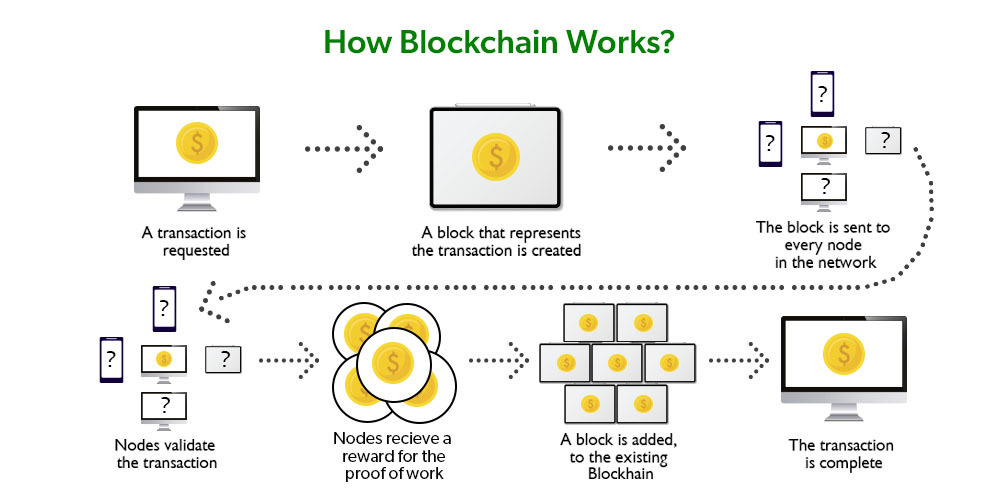
Traditional data storage relies on a client-server model. In this setup, a central authority—be it a bank, a government, or a cloud provider—controls the database. This creates a centralized point of control, which inherently introduces a centralized point of failure. Blockchain disrupts this by introducing a distributed ledger system.
The Distributed Ledger Concept
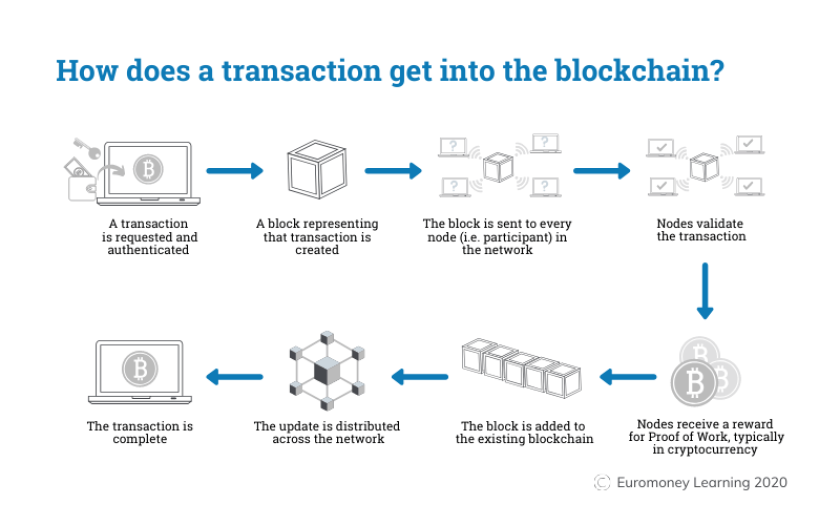
A distributed ledger is a database that is consensually shared and synchronized across multiple nodes (computers) in a network. Unlike a traditional database located at a single site, the blockchain is spread across hundreds or thousands of locations. When a piece of data is entered into the blockchain, every node in the network receives a copy of the update. This synchronization ensures that no single entity can alter the data without the consensus of the rest of the network. This redundancy is the cornerstone of blockchain’s resilience; even if half the network goes offline, the data remains accessible and verified.
Immutable Records and Hashing
What makes blockchain “blocks” so secure is a process known as cryptographic hashing. Each block contains a unique code, called a hash, along with the hash of the previous block in the chain. If a malicious actor attempts to change a single digit of data in a previous block, the hash of that block changes entirely. This creates a “domino effect” where every subsequent block in the chain becomes invalid. This immutability ensures that once data is written to the blockchain, it is computationally nearly impossible to erase or overwrite, providing an audit trail that is permanent and transparent.
Decentralization as a Security Paradigm
From a digital security standpoint, blockchain offers a radical alternative to the “fortress” model of cybersecurity. In the fortress model, organizations build thick firewalls around a central server. If the firewall is breached, the data is compromised. Blockchain assumes that the network is public and potentially hostile, yet it maintains security through its decentralized structure.
Eliminating the Single Point of Failure
By distributing data across a global network, blockchain eliminates the “honey pot” effect. In a centralized system, hackers only need to successfully breach one target to gain access to a massive trove of information. In a decentralized blockchain network, there is no central server to attack. To successfully compromise the network, an attacker would need to gain control of more than 51% of the network’s computing power simultaneously—a feat that is economically and technically unfeasible for large-scale blockchains like Ethereum.
Consensus Mechanisms: Proof of Work vs. Proof of Stake
The “magic” of blockchain security lies in its consensus mechanisms—the protocols that allow nodes to agree on the state of the ledger. Proof of Work (PoW) requires nodes to solve complex mathematical puzzles to validate transactions, a process that requires significant computational energy, making it too expensive to cheat. Modern blockchains are increasingly moving toward Proof of Stake (PoS), where validators are chosen based on the number of tokens they “stake” or lock up as collateral. If they attempt to validate fraudulent data, they lose their stake. These mechanisms ensure that the network remains self-policing and secure without a human administrator.
Smart Contracts: Automating the Digital Economy

Perhaps the most revolutionary technological application of blockchain is the development of smart contracts. These are not “contracts” in the legal sense, but rather self-executing lines of code stored on the blockchain that automatically perform actions when predefined conditions are met.
Programmable Logic on the Chain
Smart contracts allow developers to build decentralized applications (dApps) that function without middlemen. For example, a smart contract can be programmed to release payment to a software developer only after the code has passed an automated security audit and been deployed to a specific server. Because the contract lives on the blockchain, it is transparent and cannot be tampered with by either party. This automation reduces human error, eliminates the need for escrow services, and significantly lowers administrative overhead.
Real-World Applications in Software Development
In the realm of software and IT, smart contracts are being used to manage digital rights, automate supply chain logistics, and even govern decentralized autonomous organizations (DAOs). In a DAO, the “rules” of the organization are written into the code. Proposals are voted on by members, and the smart contracts automatically execute the results—whether that involves distributing funds, changing protocol parameters, or updating software versions. This represents the ultimate evolution of DevOps, where the governance and operation of software are built directly into the infrastructure.
The Intersection of Blockchain, AI, and IoT
As we look toward the future of technology, blockchain does not exist in a vacuum. Its greatest impact will likely be felt when it is integrated with other emerging technologies like Artificial Intelligence (AI) and the Internet of Things (IoT).
Securing the Internet of Things (IoT)
The IoT ecosystem consists of billions of connected devices, many of which have weak security protocols. A compromised smart thermometer could theoretically provide a gateway into a corporate network. Blockchain provides a secure framework for these devices to communicate. By giving each device a unique blockchain-based identity, they can exchange data and verify each other’s legitimacy through the ledger, creating a “mesh” network that is significantly more resistant to botnet attacks and unauthorized access.
Data Integrity in Artificial Intelligence
AI models are only as good as the data they are trained on. One of the biggest risks in modern AI development is “data poisoning,” where training sets are subtly manipulated to produce biased or incorrect results. Blockchain can be used to timestamp and verify the provenance of data used in AI training. By keeping a cryptographic record of where data came from and how it was modified, developers can ensure the integrity of their models. Furthermore, blockchain can facilitate a decentralized marketplace for computing power, allowing AI researchers to “rent” GPU cycles from a global network of providers.
Overcoming Scalability and Technical Hurdles
Despite its potential, blockchain technology is currently in a “broadband” phase—much like the early internet, it faces significant challenges regarding speed and scalability. However, the tech community is rapidly developing solutions to these bottlenecks.
Layer 2 Solutions and Sharding
To handle the massive transaction volumes required for global adoption, developers are building “Layer 2” protocols. These are secondary frameworks built on top of an existing blockchain (Layer 1). They process transactions off-chain and then bundle them together to be settled on the main chain, dramatically increasing speed and reducing costs. Additionally, “sharding” is a technique that breaks the blockchain into smaller, more manageable pieces (shards), allowing nodes to process only a fraction of the total data at a time, which increases the network’s throughput exponentially.
The Move Toward Interoperability
Historically, different blockchains (like Bitcoin, Ethereum, and Solana) were isolated silos that could not communicate with one another. The next frontier in blockchain tech is interoperability—creating “bridges” and cross-chain protocols that allow data and assets to move seamlessly between different networks. This is essential for creating a cohesive “Internet of Blockchains,” where different specialized chains can work together to support complex global systems.
In conclusion, what blockchain “does” is provide a new blueprint for the digital age. It is a technology of coordination and verification. By providing a way to store data that is immutable, decentralized, and programmable, blockchain offers a robust solution to the growing crises of data breaches, systemic mistrust, and inefficient centralization. As the technology matures and its scalability issues are resolved, it will likely become the invisible backbone of our digital infrastructure, powering everything from secure identity management to the autonomous machines of the future.
aViewFromTheCave is a participant in the Amazon Services LLC Associates Program, an affiliate advertising program designed to provide a means for sites to earn advertising fees by advertising and linking to Amazon.com. Amazon, the Amazon logo, AmazonSupply, and the AmazonSupply logo are trademarks of Amazon.com, Inc. or its affiliates. As an Amazon Associate we earn affiliate commissions from qualifying purchases.