
In the modern landscape of personal finance, subscription services have evolved from optional luxuries into recurring line items that demand careful budgetary scrutiny. Among these, Amazon Prime stands as the titan of the industry. For millions of households, the question “how much is Prime a month?” is not just a query about a sticker price, but a foundational assessment of a household’s monthly cash flow. As of 2024, the standard monthly rate for an Amazon Prime membership is $14.99. While this figure may seem nominal in isolation, its integration into a broader financial strategy requires a nuanced understanding of its cost structure, its potential for ROI, and the psychological impact it has on consumer spending habits.
1. Navigating the Pricing Tiers: More Than a Single Number
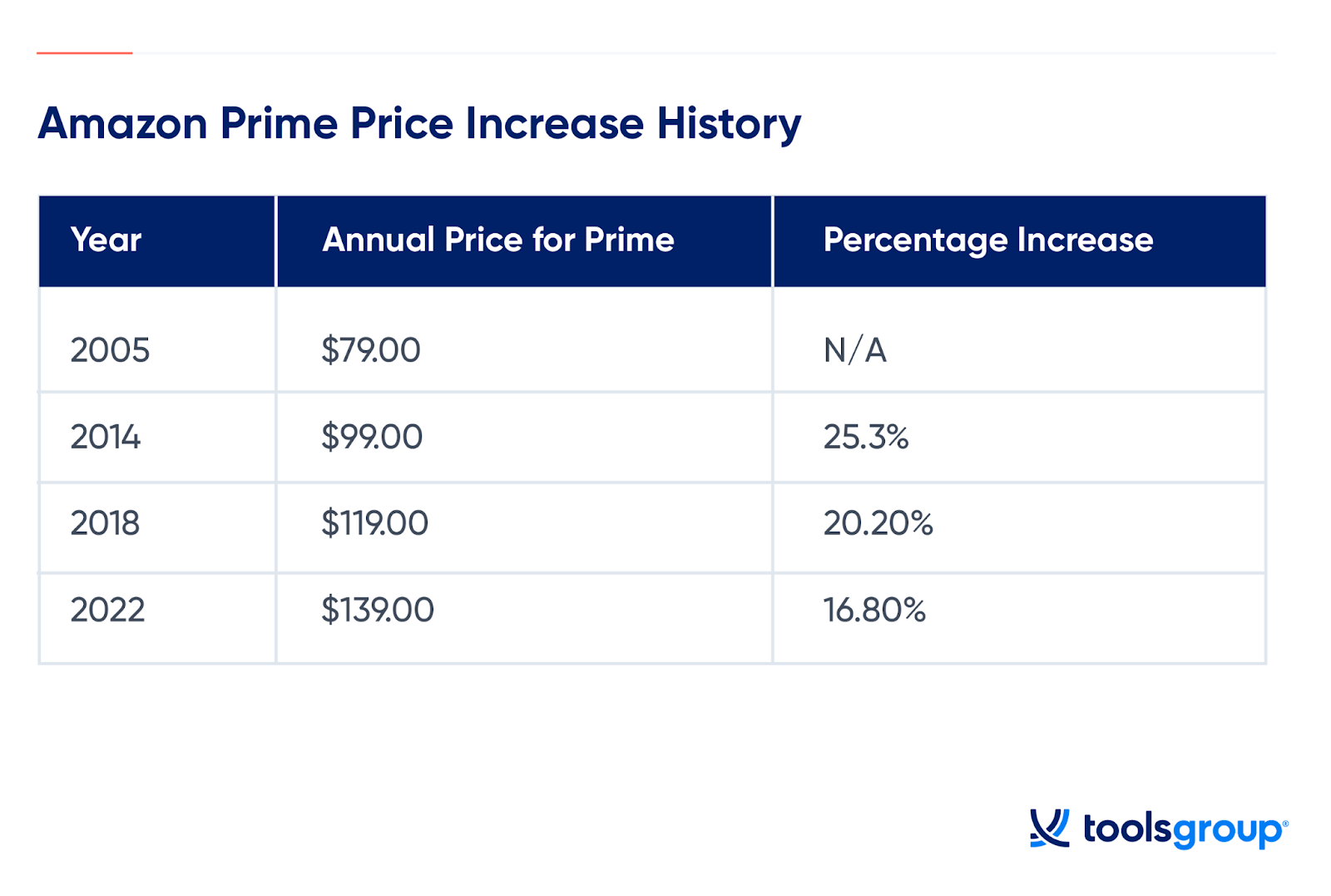
To truly understand the cost of Amazon Prime, one must look beyond the standard $14.99 monthly fee. Amazon has engineered a tiered pricing structure designed to capture different demographic segments, each with its own financial implications.
The Standard Monthly vs. Annual Comparison
While the $14.99 monthly fee offers flexibility for those who do not wish to commit to a full year, it is technically the most expensive way to access the service. The annual membership is priced at $139 per year. From a personal finance perspective, choosing the monthly option results in an annual expenditure of approximately $179.88. This $40.88 “convenience tax” represents a nearly 30% increase in cost. For individuals practicing disciplined budgeting, the annual payment functions as a cost-saving measure that effectively provides nearly three months of the service for free.
Discounted Tiers for Strategic Budgeting
Amazon offers two primary discounted paths that are essential for qualifying households to utilize:
- Prime Student: At $7.49 per month (or $69 per year), this tier provides the same suite of benefits at half the price. For students managing limited income or student loans, this represents a significant reduction in overhead.
- Prime Access: Designed for recipients of qualifying government assistance (such as SNAP or EBT), this tier costs $6.99 per month. This initiative is a critical component of financial inclusion, allowing lower-income households to access the delivery savings and grocery discounts that are often gated behind higher entry costs.
2. The Cost-Benefit Analysis: Calculating the Break-Even Point
In the realm of personal finance, a subscription is only “worth it” if the value derived exceeds the capital Outlay. To determine the ROI of a $14.99 monthly investment, a consumer must perform a rigorous break-even analysis based on their shopping and consumption habits.
Shipping Logistics and Hidden Savings
The primary driver of Prime’s value is free shipping. Without a membership, Amazon typically requires a minimum purchase (often $35) to qualify for free shipping, and standard shipping fees for smaller items can range from $5 to $10. If a consumer makes just two or three small, independent purchases a month that would otherwise incur shipping fees, the $14.99 membership has effectively paid for itself. For those living in urban “food deserts” or rural areas where transportation costs (gas and vehicle wear) are high, the door-to-door delivery model offers a secondary layer of financial relief.
Digital Content Consolidation
From a wealth-management perspective, Amazon Prime serves as an “aggregator.” A standard Prime membership includes Prime Video, Amazon Music Prime, and Prime Reading.
- Prime Video: In a market where standalone streaming services like Netflix or Max cost between $10 and $20 per month, Prime Video can replace a separate subscription, instantly justifying the monthly Prime fee.
- Prime Reading and Music: For those who spend significantly on digital books or music streaming services like Spotify, utilizing the included Prime alternatives can lead to a “subscription cull,” where multiple $10/month fees are eliminated in favor of the single Amazon ecosystem.
3. Maximizing ROI through Integrated Financial Tools
To view Amazon Prime merely as a delivery service is a financial oversight. To get the most out of the $14.99 monthly spend, savvy consumers must leverage the integrated financial products that Amazon offers to its members.

The Amazon Prime Visa and Cash Back Strategies
For those with disciplined credit habits, the Amazon Prime Visa is a powerful tool for offsetting the membership cost. The card offers 5% back on all Amazon.com and Whole Foods Market purchases. For a household that spends $300 a month on Amazon (including groceries and household essentials), the 5% cash back yields $15 monthly. In this scenario, the rewards generated by the credit card completely neutralize the monthly cost of the Prime membership, effectively making the service free while contributing to the user’s net savings.
Subscribe & Save: Automating Discounts
The “Subscribe & Save” program is perhaps the most underrated financial feature of the Prime ecosystem. By committing to recurring deliveries of household essentials (detergent, pet food, toiletries), members can save up to 15% on their total bill. When combined with the free shipping of Prime, this creates a “bulk-buying” advantage without the need for a warehouse club membership fee (like Costco or Sam’s Club), allowing for better cash flow management on a month-to-month basis.
4. The Psychological Trap: When “Free Shipping” Costs Too Much
While the math of Amazon Prime can look stellar on paper, a professional financial analysis must account for the psychological impact of the platform. The “Prime Effect” is a well-documented phenomenon where the removal of friction (one-click ordering and “free” shipping) leads to increased impulse spending.
Overcoming the “Sunk Cost” Fallacy
Many consumers justify unnecessary purchases by telling themselves they need to “get their money’s worth” from their $14.99 monthly fee. This is a classic sunk cost fallacy. If a member buys a $20 item they don’t need simply because the shipping is free, they haven’t “saved” money; they have decreased their net worth by $20. For a Prime membership to be a net positive for your personal finances, it must be used as a tool for planned, necessary expenditures rather than a catalyst for lifestyle creep.
Monitoring “Digital Leakage”
Digital leakage occurs when a consumer pays for a subscription but fails to utilize the perks. If you are paying $14.99 a month but still paying for a separate Spotify account, a separate Netflix account, and only ordering from Amazon once every two months, the service becomes a financial liability. A quarterly audit of your subscription list is essential to ensure that the Prime membership is still serving a functional purpose in your budget.
5. Market Alternatives and the Competitive Landscape
In a diversified financial plan, it is wise to compare Amazon Prime to its competitors to ensure you are receiving the best market value for your dollar.
Walmart+ vs. Amazon Prime
Walmart+ is the most direct competitor, priced at $12.95 per month or $98 per year. For consumers who prioritize grocery savings, Walmart+ often offers lower base prices on goods, though its digital content library (currently centered around Paramount+) may not be as robust as Amazon’s. From a purely financial standpoint, if your household budget is heavily weighted toward groceries rather than general merchandise or tech, the lower annual fee of Walmart+ might be the superior choice.
The “No-Subscription” Model
The most radical financial alternative is to cancel all delivery subscriptions and rely on the “Threshold Model.” By waiting until your Amazon cart hits the $35 minimum for free shipping, you can access the same goods without the $179 annual overhead. This strategy requires patience and planning, but for a minimalist or someone in a “debt-crushing” phase of their financial journey, the $15 monthly savings can be redirected toward high-interest debt or an emergency fund, yielding a much higher long-term financial return than the convenience of two-day shipping.

Conclusion: Is the $14.99 Investment Justified?
The answer to “how much is Prime a month?” is $14.99, but the cost of the service is subjective and dependent on individual financial behavior. For the strategic consumer who utilizes the 5% cash back, consolidates their streaming services, and uses “Subscribe & Save” for essentials, Amazon Prime is a high-yield financial tool that can save a household hundreds of dollars a year. However, for the impulse buyer or the passive subscriber, it can become a silent drain on capital.
Ultimately, Amazon Prime should be viewed not as a mandatory utility, but as a financial product. Like any investment, it requires regular performance reviews. By understanding the pricing tiers, maximizing the integrated rewards, and remaining vigilant against impulse spending, you can ensure that your Prime membership is a bridge to financial efficiency rather than a barrier to your long-term wealth goals.
aViewFromTheCave is a participant in the Amazon Services LLC Associates Program, an affiliate advertising program designed to provide a means for sites to earn advertising fees by advertising and linking to Amazon.com. Amazon, the Amazon logo, AmazonSupply, and the AmazonSupply logo are trademarks of Amazon.com, Inc. or its affiliates. As an Amazon Associate we earn affiliate commissions from qualifying purchases.