
In the modern digital landscape, few services have fundamentally altered consumer behavior as significantly as Amazon Prime. While often simplified as a “shipping membership,” Amazon Prime is, in reality, a sophisticated technological ecosystem that integrates software, cloud computing, artificial intelligence, and logistics hardware. Understanding what is included in Amazon Prime requires a deep dive into how Amazon leverages its massive tech stack to provide a seamless, multi-platform experience.
For the tech-savvy user, a Prime subscription is less about the retail perks and more about access to a suite of digital tools and services that span across entertainment, data storage, and the Internet of Things (IoT). This article explores the technological components that make up the Prime membership, detailing the software architecture and digital innovations that drive its value.

1. Prime Video: Engineering the Future of Streaming Media
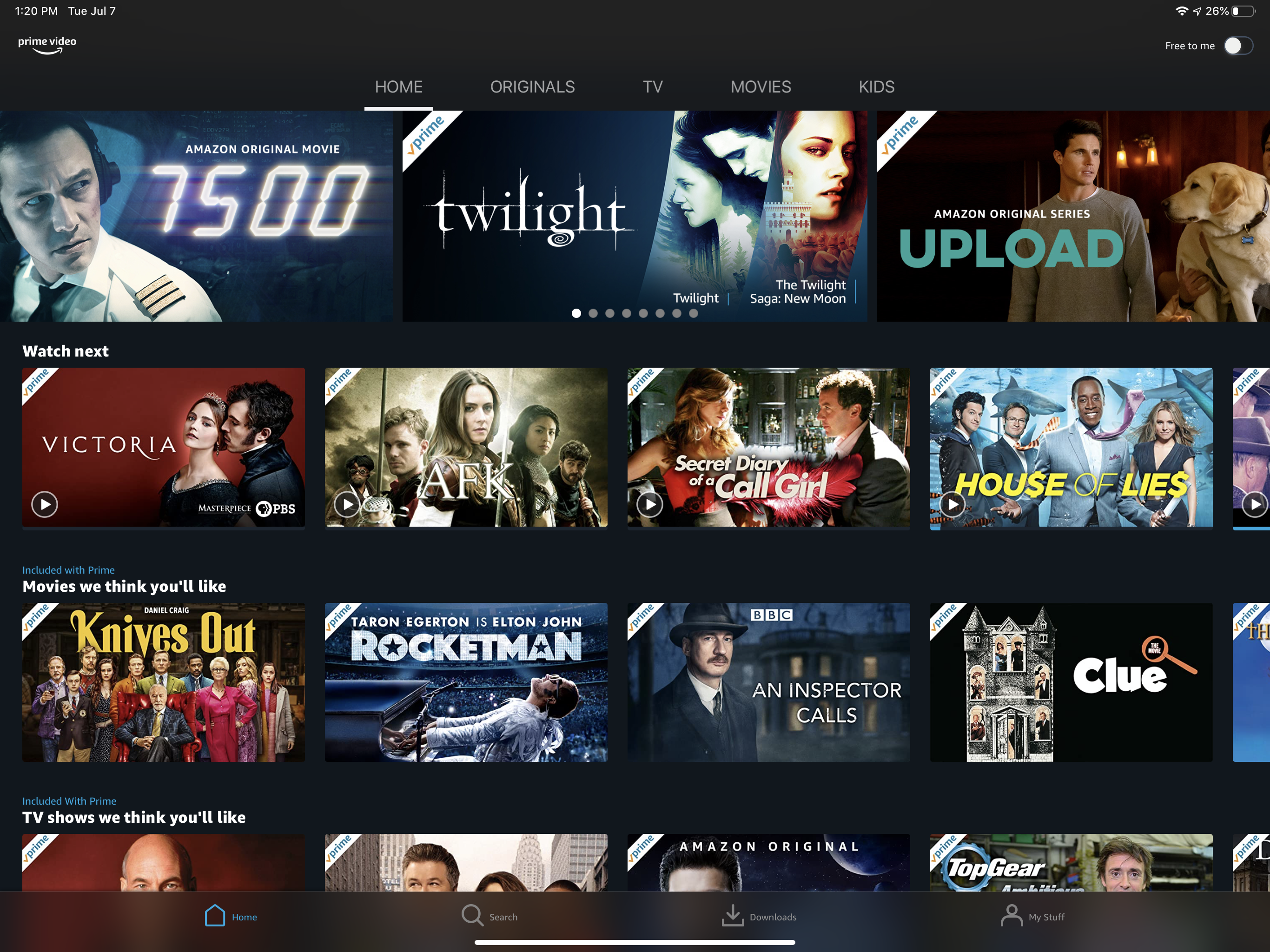
At the heart of the Prime digital offering is Prime Video, a streaming platform that rivals industry leaders through continuous technological evolution. Unlike standard video-on-demand services, Prime Video is built on the robust backbone of Amazon Web Services (AWS), ensuring high availability and low latency across the globe.
High-Definition Playback and Proprietary Codecs
Prime Video supports a wide array of formats, including 4K Ultra HD, High Dynamic Range (HDR), and Dolby Vision. To deliver this content efficiently, Amazon utilizes advanced video compression techniques and adaptive bitrate streaming. This technology monitors a user’s internet connection in real-time, adjusting the data stream to prevent buffering while maintaining the highest possible visual fidelity. The integration of the AV1 codec—a high-efficiency video coding format—allows for better quality at lower bitrates, making high-end cinematography accessible even on restricted bandwidths.
X-Ray Technology and Metadata Integration
One of the most distinctive tech features within Prime Video is “X-Ray,” powered by IMDb (an Amazon subsidiary). While watching a film or series, users can access real-time metadata that identifies actors on screen, lists the background music, and provides trivia. This is achieved through a complex synchronization of time-stamped metadata layered over the video file. It showcases Amazon’s ability to integrate vast databases with user-facing software, creating an interactive viewing experience that traditional broadcast media cannot replicate.
The Evolution of Live Sports Tech
Amazon has increasingly moved into live sports broadcasting, which presents unique technological challenges. To handle the massive concurrent viewership of events like Thursday Night Football, Amazon employs specialized edge computing nodes. These reduce the “broadcast lag” typically found in streaming, bringing the latency down to levels comparable to traditional cable television.
2. Digital Audio and Literature: The Prime Content Stack
Amazon Prime extends its technological reach into the auditory and literary realms, providing a suite of services that utilize cross-platform synchronization and high-fidelity audio processing.
Amazon Music and Spatial Audio
Included with Prime is a tiered access model to Amazon Music. From a technical perspective, the platform has transitioned toward supporting spatial audio and Dolby Atmos. This software-driven audio processing simulates a multi-dimensional soundstage, providing an immersive experience on supported hardware. The app’s recommendation engine uses machine learning algorithms to analyze listening patterns, frequency of skips, and genre preferences to curate “My Mix” stations, demonstrating the power of personalized AI.
Prime Reading and the Kindle Ecosystem
Prime Reading offers a rotating selection of e-books, magazines, and comics. The technology behind this is the Kindle ecosystem’s Whispersync. This proprietary synchronization technology allows users to switch between a physical Kindle device, a smartphone app, and a web browser without losing their place. Whispersync tracks metadata across devices in near real-time via the cloud, illustrating a perfected execution of state-management in distributed software systems.
Audible Integration and Audiobooks
While a full Audible subscription is separate, Prime members often receive access to “Audible Channels” and a selection of free audiobooks. The tech highlight here is the “Immersion Reading” feature, which synchronizes Kindle text with Audible narration. As the narrator speaks, the corresponding text is highlighted on the screen, a feat of precision timing and data alignment that enhances literacy and accessibility.
3. The Gaming and Cloud Infrastructure
Amazon has successfully leveraged its ownership of Twitch and its massive server capacity to include gaming and data management as core pillars of the Prime experience.
Prime Gaming and the Twitch Ecosystem
Prime Gaming (formerly Twitch Prime) provides a bridge between Amazon’s retail side and the massive gaming community. Subscribers receive a free monthly Twitch channel subscription, which utilizes a complex backend to manage micro-transactions and creator payouts. Additionally, Prime Gaming offers “loot” and free games that are delivered through the Amazon Games App. This desktop client serves as a digital distribution platform, managing software licenses, updates, and cloud saves for a global user base.
Amazon Photos: Secure Cloud Storage
Perhaps one of the most underrated technical benefits of Prime is unlimited full-resolution photo storage. Unlike other cloud providers that compress images to save space, Amazon Photos maintains the original file integrity. This service is a direct consumer-facing application of S3 (Simple Storage Service) architecture. The app uses advanced image recognition AI to categorize photos by objects, locations, and even faces, allowing users to search their private libraries using natural language queries—a testament to Amazon’s prowess in computer vision.
4. Logistics as a Tech Platform: More Than Just Shipping
While “free shipping” sounds like a simple business perk, the technology required to fulfill “Same-Day” or “Two-Day” delivery is a marvel of predictive analytics and automated hardware.
Predictive Shipping and Anticipatory Logistics
Amazon utilizes “anticipatory shipping” algorithms, a patented technology that begins moving products toward a geographical region before a customer even clicks “buy.” By analyzing historical data, search trends, and seasonal patterns, the software predicts demand at a granular level. This ensures that the inventory is physically located in a “Last-Mile” fulfillment center, minimizing the distance the data-driven delivery vans must travel.
The Robotics and Fulfillment Interface
Inside the fulfillment centers, Prime orders are processed by a fleet of Kiva robots. These autonomous mobile robots (AMRs) navigate the warehouse floor using computer vision and floor-embedded markers. They bring entire shelves of products to human pickers, significantly reducing the “click-to-ship” cycle time. For the Prime member, this hardware-software integration is what enables the near-instant gratification of modern e-commerce.
Key by Amazon and Secure Access
For Prime members, Amazon offers “Key,” a service that allows delivery drivers to place packages inside a garage, gate, or home. This relies on encrypted smart-lock technology and real-time video verification through Ring or Blink cameras. The tech stack here involves secure API handshakes between the delivery driver’s handheld device and the user’s smart home hardware, ensuring that access is granted only for the specific duration of the delivery.
5. The Smart Home Synergy: Alexa and the IoT
The ultimate expression of the Prime ecosystem is its integration with the smart home. Amazon Prime is designed to be the operating system for a connected household, driven by the Alexa Voice Service (AVS).
Voice Commerce and Natural Language Processing
Prime members can use Alexa-enabled devices (Echo, Fire TV) to reorder household essentials via voice. This involves complex Natural Language Processing (NLP) to distinguish between “add to cart” and “buy now,” while also identifying the specific user’s voice profile to prevent unauthorized purchases. The integration between the Prime account and the Alexa AI creates a frictionless commerce loop that is entirely software-dependent.
Fire TV: The Hub of Digital Consumption
Amazon’s Fire TV hardware acts as the physical interface for many Prime benefits. The Fire OS—a fork of Android—is optimized to prioritize Prime content, using a discovery-focused UI. The technology includes “ASAP” (Advanced Streaming Prediction), which learns a user’s viewing habits and pre-buffers the first few minutes of movies and shows it thinks the user will watch next, virtually eliminating start-up lag.
The Connectivity Layer: Amazon Sidewalk
Prime members with Echo or Ring devices often participate in Amazon Sidewalk, a shared wireless network that uses a small portion of internet bandwidth to create a low-power, long-range mesh network. This allows smart devices to stay connected even beyond the range of home Wi-Fi. It is a bold experiment in community-scale IoT infrastructure, designed to keep the Prime-connected ecosystem online at all times.

Conclusion: The Integrated Future
Amazon Prime is far more than a collection of disparate discounts; it is a meticulously engineered digital framework. By integrating AWS-backed streaming, AI-driven logistics, and sophisticated cloud storage, Amazon has created a service that becomes more valuable the more a user engages with its technological touchpoints.
Whether it is the low-latency streaming of a live football game, the predictive algorithms that ensure a package arrives in hours, or the seamless synchronization of a Kindle book across devices, the “Prime experience” is a testament to the power of a unified tech ecosystem. For the modern consumer, understanding what is included in Amazon Prime is an exercise in seeing how hardware, software, and data science can converge to redefine the boundaries of a subscription service.
aViewFromTheCave is a participant in the Amazon Services LLC Associates Program, an affiliate advertising program designed to provide a means for sites to earn advertising fees by advertising and linking to Amazon.com. Amazon, the Amazon logo, AmazonSupply, and the AmazonSupply logo are trademarks of Amazon.com, Inc. or its affiliates. As an Amazon Associate we earn affiliate commissions from qualifying purchases.