
In the high-stakes world of semiconductor investing, few events carry as much weight as the quarterly earnings report. For shareholders and prospective investors of Advanced Micro Devices, Inc. (AMD), the question of “when” the company reports is often followed by a flurry of activity, technical analysis, and strategic positioning. As a cornerstone of the modern computing and artificial intelligence (AI) landscape, AMD’s financial disclosures serve as a bellwether for the broader tech sector and the global economy.
Understanding the timing, the metrics, and the strategic implications of these reports is essential for anyone looking to navigate the volatile waters of the stock market. This guide delves into the fiscal calendar of AMD, the critical financial indicators to monitor, and how investors can prepare for the inevitable market shifts that accompany these announcements.

The Architecture of the Fiscal Calendar: Understanding the Reporting Cycle
For a multinational corporation like AMD, financial reporting is not a sporadic event but a strictly regulated, cyclical process. The company follows the standard Gregorian calendar for its fiscal year, which concludes on December 31st. Consequently, its reporting cycle is divided into four distinct quarters, each culminating in a comprehensive disclosure of its financial health.
The Standard Quarterly Cadence
Typically, AMD reports its earnings approximately one month after the close of a fiscal quarter. While the specific dates fluctuate slightly each year depending on the day of the week, a historical pattern has emerged that allows investors to anticipate the announcements.
- First Quarter (Q1): Usually reported in late April or early May.
- Second Quarter (Q2): Usually reported in late July or early August.
- Third Quarter (Q3): Usually reported in late October or early November.
- Fourth Quarter and Full Year (Q4): Usually reported in late January or early February.
These reports are traditionally released after the market closes (around 4:15 PM ET), followed by a live conference call with analysts and executives at 5:00 PM ET. This timing allows the market to digest the raw data before the next trading day begins.
The Importance of the “Quiet Period”
In the weeks leading up to an earnings report, AMD enters what is known as a “quiet period.” During this time, federal securities laws and internal corporate policies restrict company executives from discussing the company’s financial performance or outlook with analysts and investors. This period is designed to prevent the selective disclosure of material non-public information. For the savvy investor, this silence is a signal to begin their own due diligence, as the upcoming data will soon provide the only official clarity on the company’s trajectory.
Tracking Official Announcements
While historical patterns provide a roadmap, the definitive source for the earnings date is the AMD Investor Relations website. Usually, two to three weeks before the actual report, AMD will issue a press release officially confirming the date and time of the earnings call. Investors should subscribe to company alerts or monitor financial news terminals to ensure they have the most accurate information, as unforeseen market conditions or internal accounting requirements can occasionally shift the scheduled date.
Key Financial Metrics: What to Watch When the Numbers Drop
When the “when” is established, the focus immediately shifts to the “what.” An earnings report is a dense document filled with balance sheets, cash flow statements, and income statements. However, for most market participants, a few key metrics dictate the immediate movement of the stock price.
Revenue Growth and Segment Breakdown
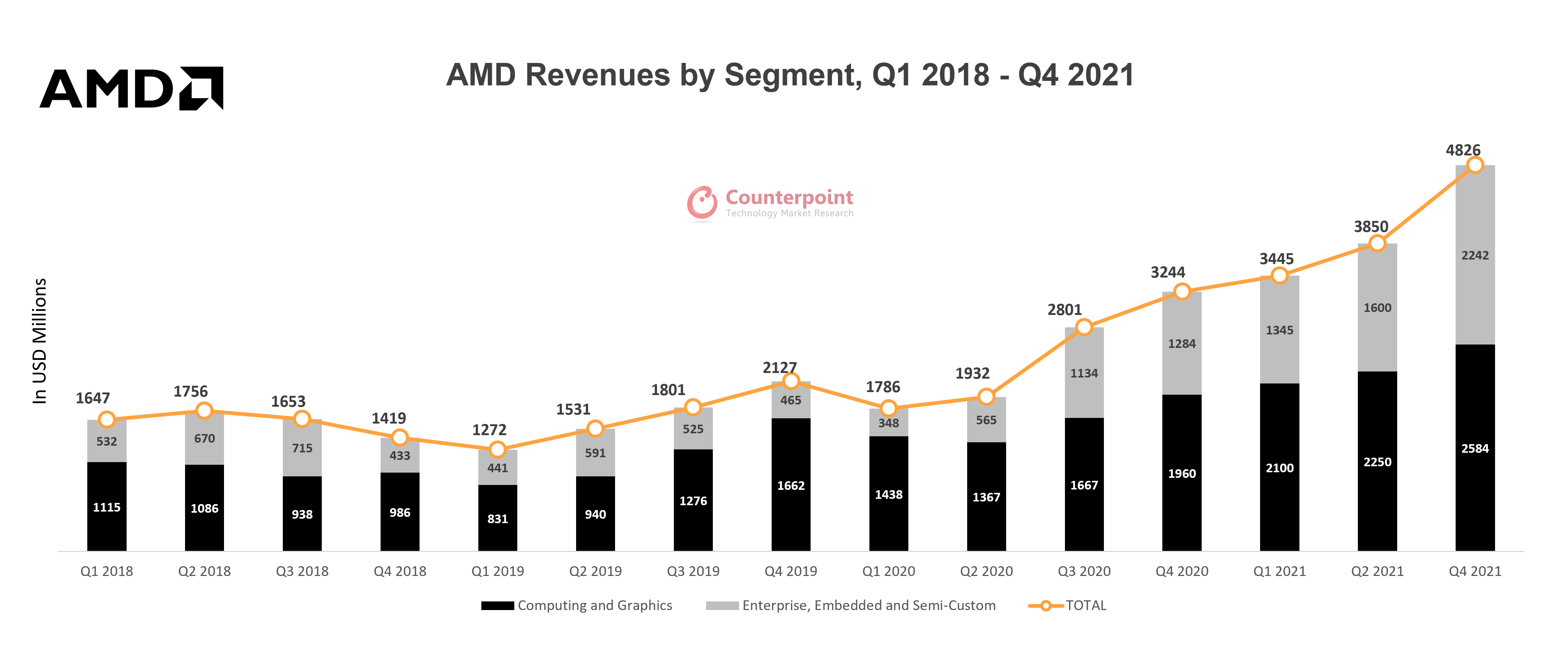
Revenue is the lifeblood of any growth-oriented company. For AMD, investors look not just at the total “top-line” figure, but at how that revenue is distributed across its core business segments:
- Data Center: This is currently the most critical growth engine, encompassing EPYC processors and Instinct AI accelerators. High growth here often leads to a premium stock valuation.
- Client: This includes desktop and laptop processors (Ryzen). This segment reflects the health of the global PC market.
- Gaming: Covering Radeon GPUs and semi-custom console chips (for PlayStation and Xbox).
- Embedded: Following the acquisition of Xilinx, this segment focuses on industrial, automotive, and healthcare applications.
Earnings Per Share (EPS) and Net Income
EPS is perhaps the most scrutinized number in the report. It represents the portion of a company’s profit allocated to each outstanding share of common stock. Investors compare the actual EPS against “analyst estimates”—the average prediction of Wall Street experts. A “beat” (actual EPS higher than estimates) typically drives the stock price up, while a “miss” can lead to a sharp sell-off.
Gross Margin Expansion
In the semiconductor industry, gross margin—the percentage of total sales revenue that the company retains after incurring the direct costs associated with producing the goods—is a vital indicator of competitive advantage. As AMD shifts its product mix toward high-performance AI chips and data center solutions, investors expect to see expanding margins. A shrinking margin can signal pricing pressure from competitors like Intel or Nvidia, or rising manufacturing costs at foundries like TSMC.
Beyond the Balance Sheet: The Role of Guidance and Analyst Calls
While the historical data of the past quarter tells us where AMD has been, the conference call and the “guidance” section tell us where it is going. In many cases, the market reacts more strongly to the future outlook than to the past results.
The Power of Forward-Looking Guidance
Guidance is the company’s own forecast for the upcoming quarter and the full fiscal year. If AMD reports record-breaking profits for Q3 but lowers its guidance for Q4 due to supply chain issues or softening demand, the stock will likely decline. Investors pay close attention to the “Revenue Outlook” and “Non-GAAP Gross Margin Outlook.” In the current economic climate, guidance regarding the ramp-up of AI-related products is the primary driver of AMD’s long-term investment thesis.
Decoding the Conference Call
The earnings call, featuring CEO Dr. Lisa Su and the CFO, provides context that numbers alone cannot convey. During the Q&A session, analysts from major investment banks (such as Goldman Sachs or Morgan Stanley) ask pointed questions about market share gains, technological hurdles, and capital expenditure.
- Tone and Sentiment: Investors listen for the confidence levels of the executives.
- Product Roadmap: Any mentions of “tape-outs” or the successful launch of next-generation Zen architectures or RDNA graphics cards provide a glimpse into the company’s future competitive positioning.
- Inventory Levels: High inventory can suggest overproduction and future price cuts, while low inventory might suggest missed sales opportunities.
The “Whisper Number”
In the days leading up to the report, the financial community often discusses a “whisper number”—an unofficial earnings estimate that traders believe is more accurate than the published analyst consensus. If the official consensus is $0.90 per share but the “whisper” is $0.95, AMD might report $0.92 and still see its stock price fall because it failed to meet the higher, unofficial expectations of the market.
Developing a Financial Strategy for Earnings Season
Earnings season presents both significant risks and substantial opportunities. For the disciplined investor, the period surrounding the “when” of an AMD report requires a clear strategic framework.
Long-Term Investing vs. Short-Term Trading
The way you approach an AMD earnings report should depend on your investment horizon.
- The Long-Term Investor: For those who believe in the multi-year story of AI and high-performance computing, a single quarterly report is just a data point. They may use the volatility following a report to “average down” their position if the price drops despite strong fundamentals.
- The Short-Term Trader: Traders often look to capitalize on “implied volatility.” They might use options strategies, such as straddles or strangles, to profit from a large move in either direction. However, this is high-risk, as “IV crush”—a sharp drop in option premiums immediately after the announcement—can lead to losses even if the trader correctly predicts the direction of the stock.
Risk Management and Diversification
No matter how bullish one might be on AMD, earnings reports are binary events that can result in 10% or 20% swings in price overnight. To manage this risk:
- Avoid Overconcentration: Ensure AMD does not represent an oversized portion of your portfolio going into the report.
- Use Stop-Loss Orders: For those with shorter horizons, stop-loss orders can protect against a catastrophic “miss.”
- Analyze the Peers: Often, the earnings of competitors (like Intel or Nvidia) or suppliers (like TSMC) can provide clues about AMD’s performance before they even report.
The “Buy the Rumor, Sell the News” Phenomenon
Financial markets are forward-looking. Often, if the market expects a great report, the stock price will run up in the weeks prior. Once the great report is released, the price may actually drop as institutional investors “take profits.” This is a classic example of “buying the rumor and selling the news.” Understanding this psychological dynamic is crucial for avoiding the trap of buying at the absolute peak of the earnings hype.
Conclusion: The Strategic Value of Timing
Knowing when AMD reports earnings is more than just marking a date on a calendar; it is about preparing for a critical juncture in your financial journey. These reports provide the transparency necessary to evaluate whether AMD is maintaining its competitive edge, managing its capital efficiently, and capitalizing on the massive shift toward artificial intelligence.
By understanding the reporting cycle, identifying the key metrics that drive value, and maintaining a disciplined strategic approach, investors can transform the volatility of earnings season into a powerful tool for wealth creation. Whether the numbers reflect a triumphant “beat” or a challenging “miss,” the information revealed during these disclosures remains the most potent weapon in an investor’s arsenal. Keep a close watch on the Investor Relations page, prepare your thesis, and stay focused on the long-term financial trajectory of this semiconductor titan.
aViewFromTheCave is a participant in the Amazon Services LLC Associates Program, an affiliate advertising program designed to provide a means for sites to earn advertising fees by advertising and linking to Amazon.com. Amazon, the Amazon logo, AmazonSupply, and the AmazonSupply logo are trademarks of Amazon.com, Inc. or its affiliates. As an Amazon Associate we earn affiliate commissions from qualifying purchases.