
In the modern digital landscape, the question “what food banks are open today?” is no longer answered by a static phone book or a printed flyer. It is a data-driven query that triggers a complex ecosystem of geolocation services, real-time database management, and sophisticated algorithms. As food insecurity continues to affect millions globally, the technology sector has stepped in to bridge the gap between surplus resources and those in immediate need. The transition from manual lists to dynamic, tech-enabled platforms has revolutionized how social services operate, ensuring that the “last mile” of food distribution is as efficient as a commercial supply chain.
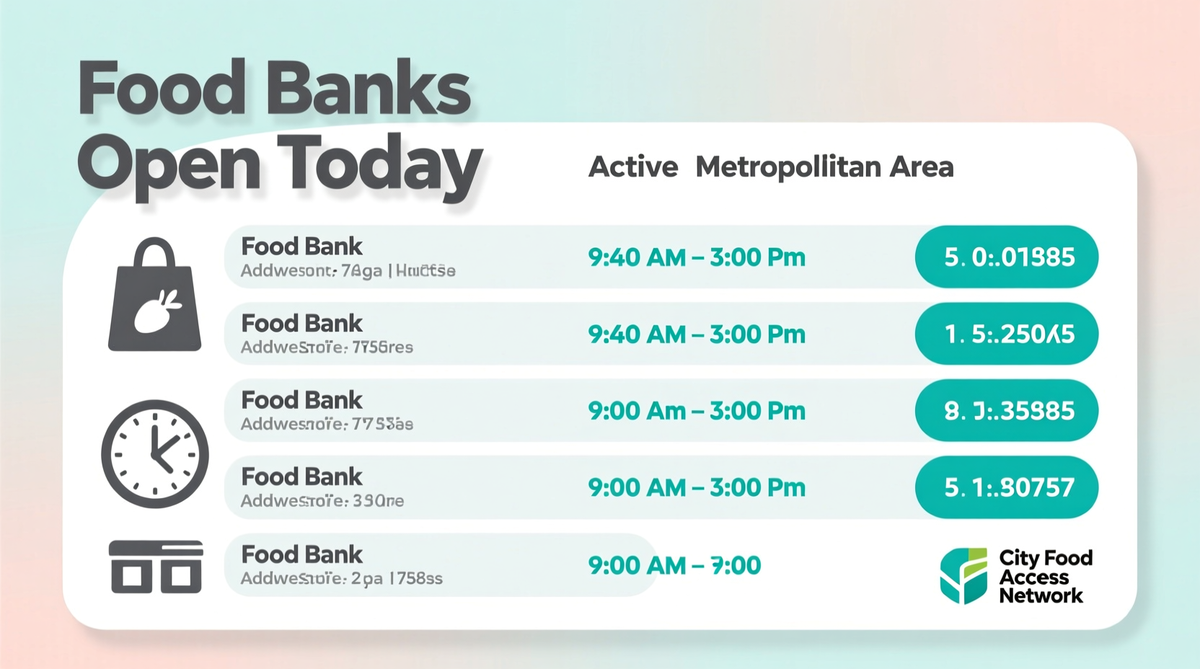
The Digital Infrastructure of Geolocation and Real-Time Accessibility
At the heart of answering which food banks are currently operational lies a robust digital infrastructure. For a user in crisis, the speed and accuracy of this information are critical. Technology providers utilize a combination of Global Positioning System (GPS) data and Application Programming Interfaces (APIs) to provide instant answers.
The Role of Mapping APIs and Local SEO
Search engines like Google and Bing use specialized “Local Business” schema markup to categorize food banks. When a user searches for “food banks open today,” the search engine’s algorithm prioritizes entities that have updated their Google Business Profile. Tech-savvy food pantries now utilize these tools to update their holiday hours or emergency closures in real-time. By leveraging the Google Maps API, developers of third-party hunger-relief apps can overlay this data onto a user-friendly interface, providing turn-by-turn navigation to the nearest open facility.
Synchronized Cloud Databases
The backbone of modern food logistics is the cloud-based database. Organizations like Feeding America have transitioned from localized spreadsheets to centralized cloud environments. These databases allow for “write-once, read-many” functionality. When a warehouse manager updates an operational status in a central hub, that information is instantly pushed to hundreds of connected partner websites and mobile applications. This synchronization ensures that a user looking for help in a remote area sees the same data as a volunteer at a regional distribution center.
The Rise of Specialized Mobile Applications and UX Design
As mobile penetration reaches near-ubiquity, specialized apps have become the primary tool for navigating food scarcity. These platforms are designed with specific user experience (UX) considerations that cater to individuals who may be experiencing high levels of stress or may have limited data plans.
User-Centric Design for Vulnerable Populations
The tech behind apps like FoodFinder or WhyHunger focuses on “low-friction” entry. This means the software is optimized to load quickly on older smartphone models and function even on low-bandwidth 3G connections. The UX design prioritizes large, legible text and intuitive icons, reducing the cognitive load on the user. Features often include “one-tap” calling to verify hours and integrated translation software to support non-native speakers, ensuring that language is not a barrier to accessing nutritional resources.
Crowd-Sourced Data and Community Verification
Drawing inspiration from apps like Waze, several food-relief platforms have integrated community-led verification features. If a user arrives at a food bank and finds it closed despite the “open” status on the app, they can submit a real-time update. This crowd-sourced feedback loop uses basic machine learning to flag inconsistencies. If multiple users report a location as closed, the system automatically updates the status for everyone else, preventing others from making a wasted trip—a critical tech intervention for those with limited transportation funds.

AI and Predictive Logistics in Hunger Relief
Artificial Intelligence (AI) is transforming the question of “what is open” into “what will be open and available.” Predictive analytics are now being used to forecast demand and manage the volatility of food pantry schedules.
Managing Seasonal and Emergency Schedules
One of the greatest challenges in food banking is the fluctuation of volunteer availability, which often dictates opening hours. AI-driven management software can now analyze historical volunteer data to predict potential staffing shortages. If the system detects a high probability that a pantry cannot staff its Saturday shift, it can proactively alert administrators to adjust the “open” status on digital platforms or trigger an automated social media post to recruit emergency volunteers. This level of automation prevents the “closed doors” syndrome that can be devastating for those relying on these services.
Inventory-Aware Search Results
The next frontier in this niche is “inventory-aware” search. Leading tech innovators are working on integrating Warehouse Management Systems (WMS) with public-facing search tools. In the future, a search for “food banks open today” might not only provide the hours but also a real-time inventory count. Using Internet of Things (IoT) sensors and smart scales, pantries can broadcast what items they have in stock—such as fresh produce or baby formula—allowing users to choose the location that best meets their specific nutritional or family needs.
Digital Security and Privacy in Social Service Technology
While the goal is to make food banks as visible as possible, the tech industry must also grapple with the sensitive nature of the data involved. Protecting the privacy of individuals seeking food assistance is a paramount technical challenge.
Data Anonymization and Protection
When a user searches for a food bank via an app, they are often sharing their precise location and, potentially, their identity. Tech developers in this space must adhere to rigorous data protection standards, such as GDPR or HIPAA-like protocols for social services. Professional tech implementations use data anonymization to track high-level trends—such as “which zip codes have the highest demand”—without compromising the identity of any single user. This allows for better resource allocation by city planners while maintaining the dignity and safety of the recipients.
Ensuring Low-Bandwidth and Offline Accessibility
Digital equity is a major concern in the tech-for-good space. Developers are increasingly utilizing Progressive Web Apps (PWAs) that allow users to save information offline. If a user has a moment of Wi-Fi access at a public library, the PWA can download the locations and hours of food banks for the entire week. This “offline-first” tech strategy ensures that even if a user loses cellular service, they still have the information needed to find food, effectively bridging the digital divide through smart software engineering.

Conclusion: The Future of Interconnected Aid
The question “what food banks are open today?” serves as a powerful case study for how technology can be leveraged for social good. By moving beyond static lists and embracing real-time data, AI-driven logistics, and secure, user-centric mobile design, the tech sector has created a more resilient and accessible safety net.
As we look forward, the integration of blockchain for transparent supply chains and 5G for even faster data relay will continue to refine these systems. The goal is a seamless digital ecosystem where no individual ever arrives at a closed door. In this niche, the “product” isn’t just software—it is the efficient, dignified, and timely delivery of a human right. Through continuous innovation and a commitment to digital accessibility, technology is ensuring that help is always just a click away.
aViewFromTheCave is a participant in the Amazon Services LLC Associates Program, an affiliate advertising program designed to provide a means for sites to earn advertising fees by advertising and linking to Amazon.com. Amazon, the Amazon logo, AmazonSupply, and the AmazonSupply logo are trademarks of Amazon.com, Inc. or its affiliates. As an Amazon Associate we earn affiliate commissions from qualifying purchases.