
When most people ask, “What does Amazon do?” the immediate response usually centers on the brown boxes arriving at front doors. However, to view Amazon merely as a digital retailer is to miss the true essence of the company. At its core, Amazon is a global technology conglomerate that builds the foundational infrastructure for the modern internet, pioneers cutting-edge artificial intelligence, and redefines the limits of robotics and autonomous systems.
From the complex algorithms governing its global supply chain to the vast server farms that power a significant portion of the web, Amazon’s primary output is innovation. This article explores the technological pillars that define Amazon today, focusing on its role as a leader in software, hardware, and cloud computing.
The Backbone of the Modern Internet: Amazon Web Services (AWS)
If Amazon’s retail arm is its most visible face, Amazon Web Services (AWS) is its most powerful engine. AWS is the world’s most comprehensive and broadly adopted cloud platform, offering over 200 fully featured services from data centers globally. It has fundamentally changed how software is built, deployed, and scaled.
Infrastructure as a Service (IaaS) and Global Connectivity
AWS pioneered the concept of Infrastructure as a Service (IaaS). Before AWS, companies had to invest millions in physical servers and data centers. Amazon democratized access to computing power by allowing businesses to rent virtualized hardware. Through services like Amazon EC2 (Elastic Compute Cloud) and Amazon S3 (Simple Storage Service), developers can spin up thousands of servers in minutes. This technological shift enabled the “startup explosion” of the last decade, providing the same high-level infrastructure to a two-person team that was previously only available to Fortune 500 companies.
The Shift to Serverless Computing and Edge Tech
Amazon continues to push the boundaries of cloud architecture through “Serverless” computing, primarily via AWS Lambda. This technology allows developers to run code without provisioning or managing servers; the cloud provider automatically handles the computing resources. This “event-driven” architecture increases efficiency and reduces costs. Furthermore, Amazon is moving the cloud closer to the user with “Edge Computing.” By utilizing AWS Wavelength and AWS Outposts, the company is integrating cloud services into 5G networks, reducing latency for applications like autonomous vehicles, high-speed gaming, and real-time medical imaging.
Artificial Intelligence and Machine Learning at Scale
Amazon has been an “AI-first” company long before generative AI became a household term. The company uses machine learning (ML) to power everything from its recommendation engine to its demand forecasting models. However, its greatest impact lies in how it packages these internal tools for the broader tech ecosystem.
Alexa and the Evolution of Ambient Intelligence
Alexa, Amazon’s voice-controlled AI, represents one of the most significant deployments of natural language processing (NLP) in history. Alexa’s technology involves a complex stack of signal processing, acoustic modeling, and neural text-to-speech. Amazon’s goal with Alexa is “Ambient Intelligence”—the idea that technology should be there when you need it and disappear when you don’t. By integrating AI into Echo devices, smart displays, and even wearable tech, Amazon is refining how humans interact with software through voice and gesture rather than keyboards and screens.
Empowering Developers with SageMaker and Bedrock
For the professional tech community, Amazon provides the tools to build the next generation of AI. Amazon SageMaker is a fully managed service that provides every developer and data scientist with the ability to build, train, and deploy machine learning models quickly. More recently, in the race for Generative AI, Amazon introduced Amazon Bedrock. This service allows tech companies to build and scale generative AI applications using foundational models (FMs) via an API. By offering a choice of models from leading AI startups and Amazon’s own Titan models, they are positioning themselves as the “neutral” infrastructure layer of the AI revolution.

The Logistics Engine: Robotics and Autonomous Systems
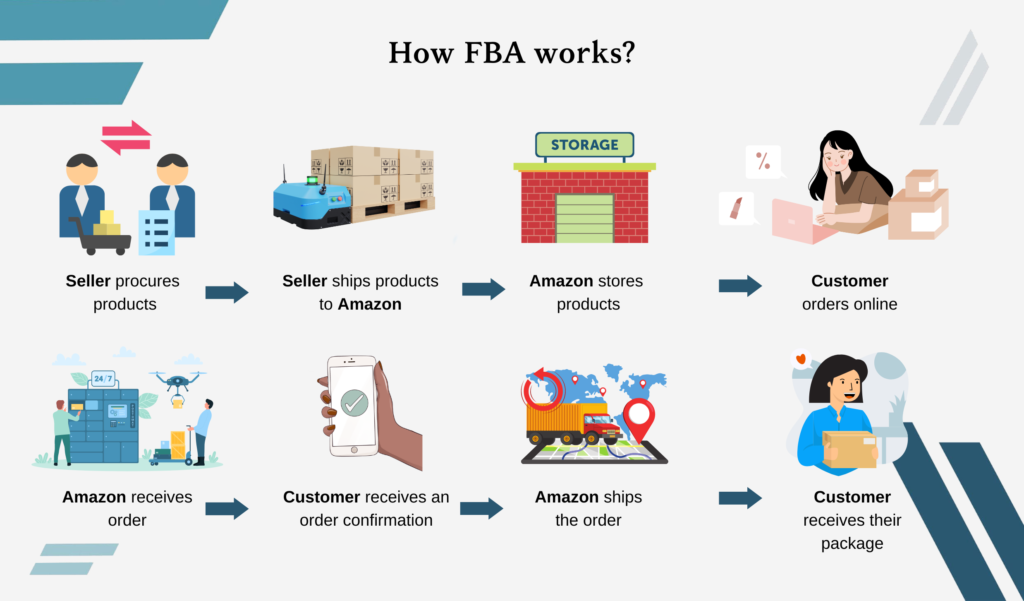
One of the most impressive technological feats Amazon performs is the orchestration of its fulfillment network. This isn’t just logistics; it is an immense, real-world application of robotics, computer vision, and autonomous software.
Warehouse Automation and Proteus
Inside Amazon’s fulfillment centers, thousands of robots work alongside humans. Amazon Robotics (formerly Kiva Systems) has developed a fleet of autonomous mobile robots (AMRs) that move heavy shelves to human pickers. Recently, Amazon unveiled Proteus, its first fully autonomous mobile robot that can navigate around employees safely without being confined to caged areas. These robots utilize advanced LiDAR and computer vision to perceive their environment in 3D, making real-time decisions to avoid obstacles and optimize paths.
The Future of Delivery: Drones and Sidewalk Robots
The “last mile” of delivery is the most technologically challenging. Amazon’s Prime Air program is a dedicated effort to use autonomous drones to deliver packages to customers in 30 minutes or less. These drones are not remotely piloted; they are sophisticated autonomous aircraft equipped with “sense-and-avoid” technology. This ensures they can detect and navigate around chimneys, power lines, and even pets in a backyard. Similarly, the development of Amazon Scout—a fully electric, autonomous delivery system designed to roll along sidewalks—highlights the company’s investment in terrestrial autonomous navigation software.
Consumer Electronics and the Ambient Intelligence Ecosystem
Amazon’s foray into hardware serves as the physical interface for its software services. Each device is designed to be a gateway into the Amazon ecosystem, utilizing proprietary software to create a seamless user experience.
Kindle, Fire, and Echo: Hardware Integrated with Software
The Kindle was a revolutionary piece of hardware because of its E-ink technology, which mimicked the reflective properties of paper while using minimal power. Today, Amazon’s hardware portfolio has expanded to include Fire Tablets and Fire TV. These devices run on Fire OS, a proprietary Android-based operating system that integrates deeply with Amazon’s cloud services. The Echo line of products serves as the hardware manifestation of Alexa, utilizing advanced microphone arrays and beamforming technology to isolate human voices in noisy environments.
Digital Security and the Ring/Blink Ecosystem
Amazon has also become a leader in digital and physical security technology through its acquisitions of Ring and Blink. These systems are more than just cameras; they are IoT (Internet of Things) nodes that utilize computer vision to distinguish between a swaying tree branch and a person at the door. Through the “Sidewalk” protocol—a shared, low-bandwidth network—Amazon has created a technological framework that helps devices work better together and stay connected even beyond the range of home Wi-Fi. This network-layer innovation is a testament to Amazon’s focus on the underlying connectivity that makes smart homes possible.
Conclusion: From Online Bookstore to Global Tech Orchestrator
To understand what Amazon does, one must look past the storefront and into the code, the silicon, and the steel. Amazon is a company that builds the tools of the future. It provides the computational power that fuels modern enterprise, the artificial intelligence that interprets our world, and the robotic systems that bridge the gap between digital orders and physical reality.
Whether it is through the democratization of high-end computing via AWS, the advancement of natural language processing with Alexa, or the development of autonomous delivery drones, Amazon’s primary function is to solve complex engineering problems at an unprecedented scale. As we move further into the decade, Amazon’s role as a tech orchestrator will only grow, continuing to blur the lines between the digital and physical worlds through relentless technological innovation. In short, Amazon does not just sell products; it builds the technological framework upon which the 21st-century economy runs.
aViewFromTheCave is a participant in the Amazon Services LLC Associates Program, an affiliate advertising program designed to provide a means for sites to earn advertising fees by advertising and linking to Amazon.com. Amazon, the Amazon logo, AmazonSupply, and the AmazonSupply logo are trademarks of Amazon.com, Inc. or its affiliates. As an Amazon Associate we earn affiliate commissions from qualifying purchases.