
For most consumers, purchasing a vehicle represents the second-largest financial commitment they will make, trailing only the purchase of a home. While the sticker price of the car often dominates the negotiation, the most critical factor in the long-term cost of vehicle ownership is the car loan interest rate. Understanding what a car loan interest rate is, how it is calculated, and what factors influence the rate you are offered is essential for maintaining a healthy financial profile.
In its simplest form, a car loan interest rate is the cost you pay to a lender for the privilege of borrowing money to purchase a vehicle. This rate is expressed as a percentage of the total loan amount. However, navigating the world of auto finance requires a deeper look into the mechanics of lending, the impact of your personal financial history, and the broader economic environment.

The Fundamentals of Car Loan Interest Rates
To master your personal finances, you must first understand the technical components of the debt you are assuming. Not all interest rates are created equal, and the terminology used by lenders can often be confusing for the average borrower.
Interest Rate vs. Annual Percentage Rate (APR)
One of the most common points of confusion in car financing is the difference between the base interest rate and the Annual Percentage Rate (APR). The interest rate refers strictly to the cost of borrowing the principal amount. The APR, however, is a more inclusive figure. It encompasses the interest rate plus any additional fees or costs associated with the loan, such as origination fees, documentation fees, or loan processing charges. When comparing offers from different lenders, the APR is the most accurate metric for determining the true cost of the loan.
Fixed vs. Variable Interest Rates
In the realm of auto loans, the majority of products feature a fixed interest rate. This means the rate remains constant throughout the entire life of the loan, ensuring that your monthly principal and interest payment stays the same. Variable rates, while more common in mortgages or student loans, are occasionally offered in the auto market. These rates fluctuate based on an underlying financial index. While they may start lower than fixed rates, they carry the risk of increasing over time, which can destabilize a monthly budget.
Simple Interest Calculations
Most car loans utilize a simple interest formula. Under this model, interest is calculated based on the outstanding principal balance on the day the payment is due. This is a significant advantage for the borrower; it means that if you pay more than the minimum monthly requirement or pay off the loan early, you reduce the total interest paid over the life of the loan. Understanding this allows savvy consumers to use “amortization” to their advantage, paying down the debt faster to save money.
Key Factors That Influence Your Specific Interest Rate
Lenders do not offer a single flat rate to every customer. Instead, they use “risk-based pricing” to determine the interest rate for each individual applicant. By understanding these factors, you can take steps to improve your financial standing before walking into a dealership or bank.
The Power of the Credit Score
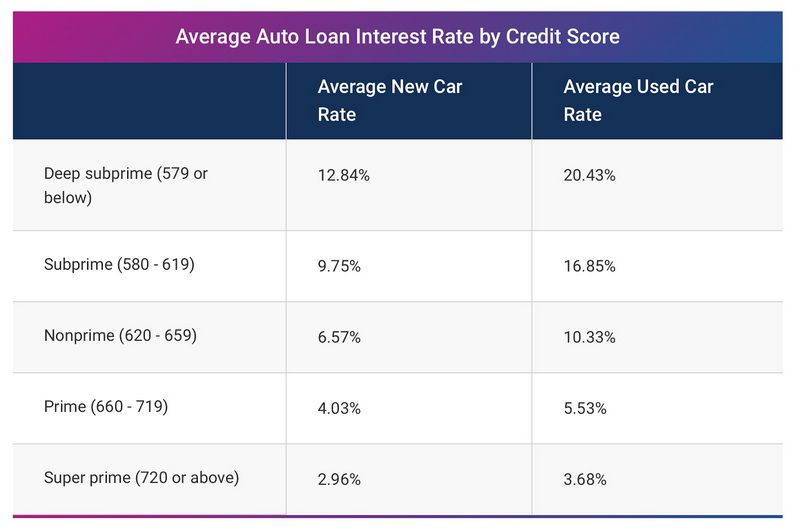
Your credit score is the single most influential factor in determining your car loan interest rate. Lenders view your credit score as a numerical representation of your reliability as a borrower. Those with “prime” or “super-prime” scores (typically 720 and above) are offered the lowest rates because they represent a low risk of default. Conversely, “subprime” borrowers may face significantly higher rates to compensate the lender for the increased risk of non-payment. Even a 50-point difference in your credit score can result in thousands of dollars in extra interest over the life of a five-year loan.
Loan Term Length and Down Payment
The structure of the loan itself dictates the rate. Generally, shorter loan terms (36 to 48 months) carry lower interest rates than longer terms (72 to 84 months). While a longer term lowers the monthly payment, it increases the lender’s risk over time, leading to a higher rate. Additionally, the size of your down payment—and the resulting Loan-to-Value (LTV) ratio—matters. Putting more money down reduces the lender’s exposure. If you have significant equity in the vehicle from day one, you are more likely to secure a competitive rate.
Vehicle Age and Condition
Interest rates vary depending on whether you are purchasing a new or used vehicle. New cars typically qualify for lower interest rates, sometimes as low as 0% during manufacturer promotional periods. This is because new cars have a higher resale value and are easier for a bank to value as collateral. Used cars, while cheaper in total price, often come with higher interest rates because their market value is more volatile and the risk of mechanical failure (which might lead a borrower to stop making payments) is higher.
The Impact of Economic Trends on Auto Lending
Your personal financial health is only one side of the coin. The broader economic landscape dictates the “floor” for interest rates across the entire country.
Central Bank Policy and the Prime Rate
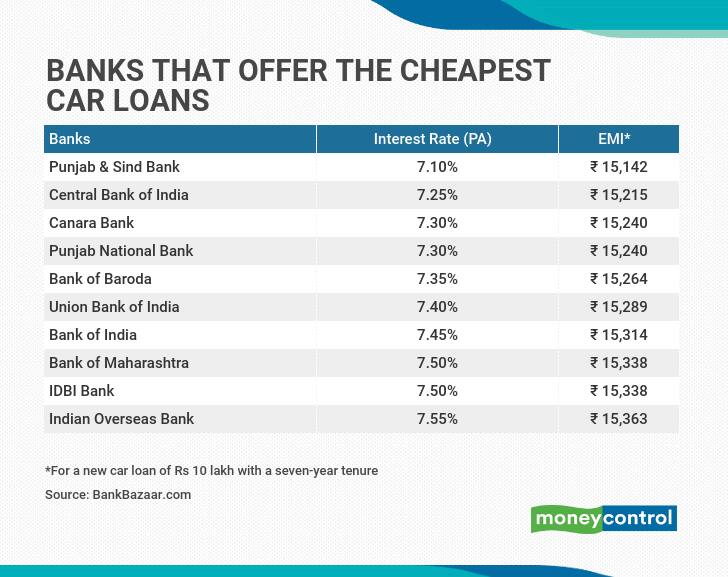
In the United States, the Federal Reserve’s decisions regarding the federal funds rate have a direct “trickle-down” effect on car loan rates. When the central bank raises interest rates to combat inflation, it becomes more expensive for banks to borrow money. To maintain their profit margins, banks pass these costs on to consumers in the form of higher APRs on auto loans. Monitoring the economic cycle can help you time your purchase; buying during a period of low-interest-rate policy can save you a substantial amount of money.
Inflation and Market Competition
Inflation impacts the purchasing power of the dollar, which in turn affects how lenders price their products. In high-inflation environments, lenders demand higher interest rates to ensure that the money they are paid back in the future maintains its value. Furthermore, the level of competition among financial institutions—banks, credit unions, and online lenders—can drive rates down. In a healthy economy, these institutions compete for your business, often resulting in “rate wars” that benefit the consumer.
Strategies to Secure the Lowest Possible Rate
Securing a favorable car loan rate is not a matter of luck; it is a result of strategic planning and financial due diligence.
The Importance of Comparison Shopping
One of the most common financial mistakes consumers make is accepting the financing offered by the car dealership without checking other options. Dealerships often act as intermediaries, sending your application to various lenders and then adding a “markup” to the interest rate for their profit. To avoid this, you should shop for financing independently. Check with local credit unions, which are member-owned and often offer the lowest rates in the market. Big national banks and online-only lenders are also worth investigating to establish a baseline for what you should be paying.
Getting Pre-Approved
A pre-approval is a powerful tool in the car-buying process. By securing a pre-approved loan from your bank or credit union before you visit the dealership, you effectively become a “cash buyer” in the eyes of the salesperson. This allows you to focus exclusively on the price of the car rather than the monthly payment. Furthermore, it forces the dealership’s finance office to beat your existing rate if they want your financing business, often leading to a better deal than you would have received otherwise.
Improving Your Debt-to-Income (DTI) Ratio
Before applying for a loan, take a look at your Debt-to-Income ratio. This is the percentage of your gross monthly income that goes toward paying debts. Lenders prefer a DTI below 36%. If your DTI is high, a lender may view you as overextended and charge a higher interest rate to mitigate the risk. Paying down small credit card balances or pausing other large purchases before applying for a car loan can improve your DTI and help you qualify for a more favorable tier of interest.
Calculating the Long-Term Cost of Your Car Loan
To truly understand a car loan interest rate, you must look beyond the monthly payment and calculate the total interest paid over the life of the loan. This perspective is vital for long-term wealth building.
The Danger of “Monthly Payment” Focusing
Dealerships often ask, “What monthly payment are you looking for?” This is a psychological tactic designed to steer you toward longer loan terms. For example, a $30,000 loan at 5% interest over 60 months results in a monthly payment of roughly $566 and a total interest cost of $3,968. If the term is extended to 84 months to lower the payment to $424, the total interest jumps to $5,650. By focusing on the interest rate and the total cost rather than the monthly payment, you protect your future self from unnecessary debt.
Using Financial Tools
In the digital age, there is no excuse for not knowing your numbers. Use online amortization calculators to model different scenarios. Input various interest rates, down payment amounts, and loan terms to see how they impact the final price of the car. These tools empower you to make data-driven decisions rather than emotional ones. Understanding the math behind the loan ensures that you stay in control of your financial destiny.
In conclusion, a car loan interest rate is more than just a percentage; it is a reflection of your financial health, the state of the global economy, and your ability to negotiate. By maintaining a strong credit score, understanding the difference between APR and interest, and shopping around for the best possible terms, you can ensure that your vehicle remains an asset that facilitates your life rather than a debt burden that hinders your financial growth. Being an informed borrower is the first step toward achieving lasting financial stability.
aViewFromTheCave is a participant in the Amazon Services LLC Associates Program, an affiliate advertising program designed to provide a means for sites to earn advertising fees by advertising and linking to Amazon.com. Amazon, the Amazon logo, AmazonSupply, and the AmazonSupply logo are trademarks of Amazon.com, Inc. or its affiliates. As an Amazon Associate we earn affiliate commissions from qualifying purchases.