
In the world of personal and business finance, interest is the primary cost of capital. Whether you are financing a new home, purchasing a vehicle, or seeking a line of credit to expand a small business, understanding how to calculate loan interest is a fundamental skill. It transforms a vague monthly obligation into a transparent financial strategy. Without this knowledge, borrowers often find themselves overwhelmed by “hidden” costs or stuck in repayment schedules that favor the lender far more than the borrower.
This guide provides a deep dive into the mechanics of interest. We will explore the different types of interest calculations, from simple to compound, and examine the critical variables—such as the Annual Percentage Rate (APR) and amortization schedules—that dictate the true cost of your debt. By mastering these calculations, you gain the power to make informed decisions, compare financial products effectively, and ultimately save thousands of dollars over the life of a loan.
1. The Fundamentals of Loan Interest and Borrowing
Before diving into complex formulas, it is essential to understand the basic components that make up a loan. Interest is essentially the “rent” you pay to use someone else’s money. Lenders take on risk by parting with their capital, and interest serves as their compensation for that risk and the opportunity cost of not using those funds elsewhere.
Defining the Core Variables
Every interest calculation relies on four primary variables:
- Principal (P): The original amount of money borrowed or the remaining balance of the loan.
- Interest Rate (r): The percentage of the principal charged as interest, usually expressed as an annual figure.
- Time/Term (t): The duration over which the loan must be repaid, typically measured in years or months.
- Frequency of Compounding (n): How often the interest is calculated and added back to the principal (daily, monthly, or annually).
The Difference Between Simple and Compound Interest
The most significant distinction in the financial world is between simple and compound interest. Simple interest is calculated solely on the principal amount. In contrast, compound interest is calculated on the principal plus any interest that has already accumulated. While simple interest is common in short-term personal loans or certain consumer credit products, most long-term financial instruments—like mortgages and credit cards—rely on compounding, which can significantly accelerate the total cost if not managed carefully.
The Role of the Annual Percentage Rate (APR)
Many borrowers confuse the “interest rate” with the “APR.” While the interest rate tells you the cost of the principal, the APR provides a more holistic view. The APR includes the interest rate plus any additional fees, such as origination fees, closing costs, or mortgage insurance. When calculating the cost of a loan, always use the APR to understand the “true” interest you are paying to the institution.
2. Calculating Simple Interest: The Direct Approach
Simple interest is the easiest method to understand and calculate. It is most frequently used for short-term loans, certain types of auto loans, and private lending agreements between individuals. Because the interest does not “snowball,” the math is linear and predictable.
The Simple Interest Formula
The formula for simple interest is:
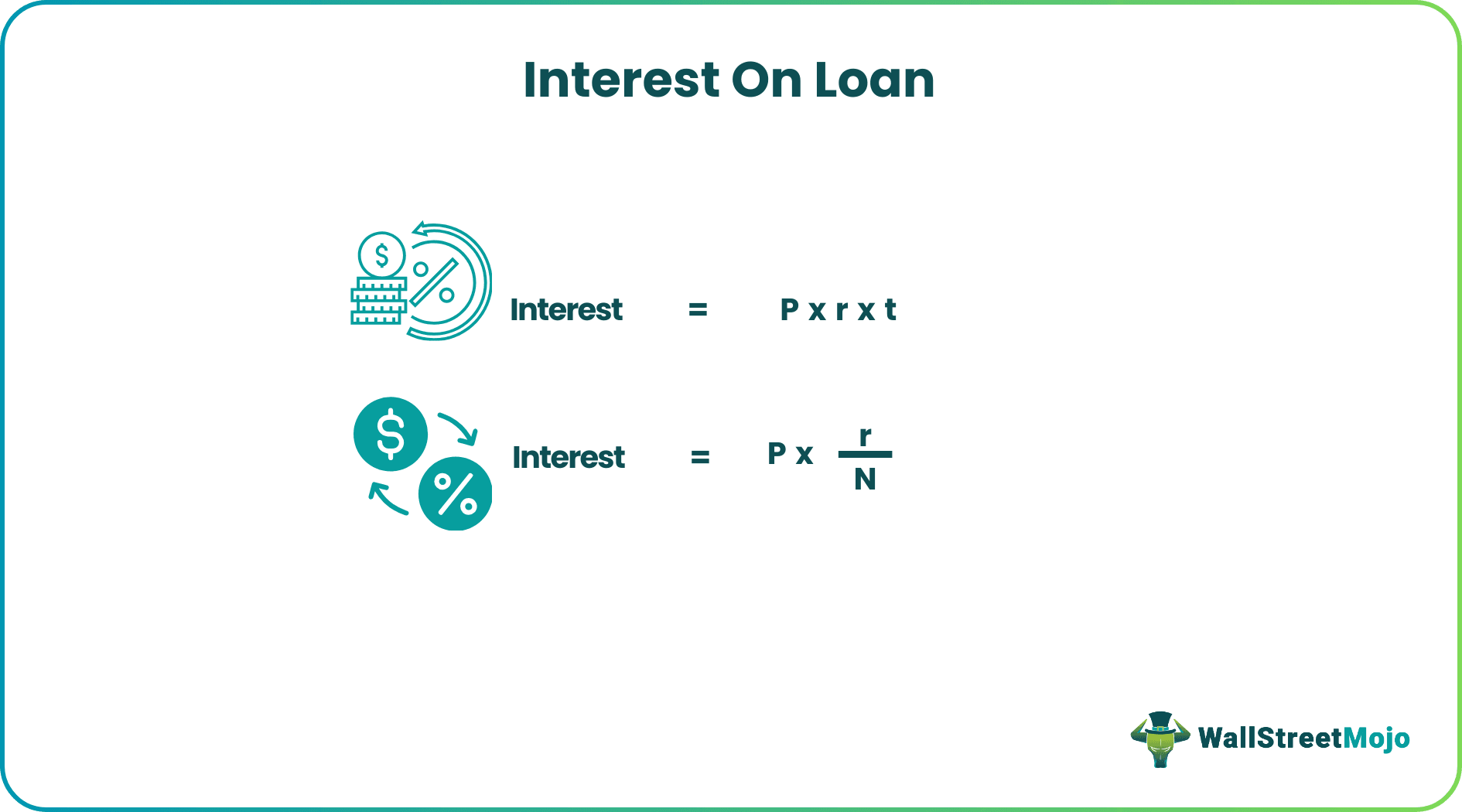
Interest = Principal × Annual Interest Rate × Time
(I = P × r × t)
For example, if you borrow $10,000 for a business equipment upgrade at a 5% simple annual interest rate for 3 years, the calculation would be:
$10,000 × 0.05 × 3 = $1,500.
Your total repayment would be $11,500.
Calculating Interest for Periods Less Than a Year
When dealing with loans that last only a few months, you must convert the time variable into a fraction of a year. If you take out a $5,000 loan at a 6% interest rate for 6 months, the “t” in your formula would be 0.5 (6/12 months).
$5,000 × 0.06 × 0.5 = $150.
This granularity is vital for short-term “bridge” loans or emergency credit lines where the duration is measured in days or weeks.
Pros and Cons of Simple Interest Loans
From a borrower’s perspective, simple interest is generally more favorable than compound interest. It is transparent and does not penalize you as heavily for carrying a balance over time. However, simple interest loans are becoming rarer in traditional banking as lenders seek to maximize their returns through compounding. If you find a simple interest product, it often allows for easier “early payoff” strategies, as every extra dollar paid goes directly toward reducing the principal rather than battling accrued interest.
3. The Mechanics of Compounding and Amortization
Most modern debt—including mortgages, student loans, and credit cards—uses compound interest. Understanding how this works is critical because it explains why, in the early years of a 30-year mortgage, your balance seems to barely move despite making large monthly payments.
The Compound Interest Formula
The standard formula for compound interest (to find the total amount owed) is:
A = P(1 + r/n)^(nt)
- A = The total amount (Principal + Interest)
- P = Principal
- r = Annual interest rate (decimal)
- n = Number of times interest compounds per year
- t = Number of years

If you have a $1,000 credit card balance at an 18% interest rate compounded monthly (n=12), and you don’t make any payments for a year:
A = 1000(1 + 0.18/12)^(12*1)
A = 1000(1.015)^12
A ≈ $1,195.62
In this case, you paid $195.62 in interest. If it were simple interest, you would have only paid $180. The “extra” $15.62 is the result of interest being charged on previous interest.
Understanding the Amortization Schedule
Amortization is the process of spreading out a loan into a series of fixed payments. While the monthly payment remains the same, the ratio of interest to principal changes over time. In the beginning, a vast majority of your payment goes toward interest because the principal balance is at its highest. As you pay down the principal, the interest charge (which is a percentage of that principal) decreases, allowing more of your monthly payment to “attack” the debt itself.
Using the Monthly Payment Formula
To calculate a fixed monthly payment for an amortized loan, the formula is more complex:
M = P [ i(1 + i)^n ] / [ (1 + i)^n – 1 ]
- M = Monthly payment
- P = Principal loan amount
- i = Monthly interest rate (Annual rate divided by 12)
- n = Total number of months (years multiplied by 12)
While most people use online calculators for this, knowing the math behind it allows you to see how sensitive your monthly payment is to even a 0.5% change in interest rates.
4. Factors That Influence Your Interest Rates and Total Costs
Calculating interest is the mathematical part; understanding why you are being charged a specific rate is the strategic part of personal finance. Lenders do not offer the same rates to everyone. Your “cost of money” is determined by a variety of economic and personal factors.
Credit Score and Risk Profile
Your credit score is the most significant factor in determining your interest rate. Lenders view a high credit score as a sign of low risk. For a $300,000 mortgage, a borrower with a 760 score might receive a 6% rate, while a borrower with a 620 score might be offered 7.5%. Over 30 years, that 1.5% difference results in over $100,000 in additional interest payments. Calculating the “cost of a bad credit score” is often the best motivation for financial repair.
Fixed vs. Variable Interest Rates
When calculating interest, you must know if your rate is fixed or variable.
- Fixed Rates: The interest rate remains the same for the life of the loan. This provides stability and makes it easy to calculate your total long-term cost.
- Variable/Adjustable Rates: These rates are tied to an index (like the Prime Rate). If the index goes up, your interest rate and monthly payment go up. While variable rates often start lower than fixed rates, they carry the risk of becoming significantly more expensive if the economy enters an inflationary period.
Loan Term and Total Interest Paid
There is a direct trade-off between your monthly payment and the total interest paid over time. A 15-year mortgage will have a higher monthly payment than a 30-year mortgage, but because the principal is paid down faster and the interest has less time to compound, you will pay significantly less in total interest. When calculating your loan, always look at the “Total Cost of Loan” figure, not just the “Monthly Payment” figure.
5. Strategic Management: How to Reduce Interest Expenses
Once you know how to calculate interest, you can use that knowledge to minimize the amount of money leaving your pocket. Financial literacy is not just about counting money; it is about keeping more of it.
The Power of Principal-Only Payments
Most loans allow you to make extra payments. If you specify that these payments should be applied to the principal only, you are effectively shrinking the base upon which interest is calculated for all future months. By paying just an extra $100 a month on a standard mortgage, you can often shave years off the loan term and save tens of thousands in interest.
Refinancing and Consolidation
By keeping an eye on market interest rates, you can identify opportunities to refinance. If you calculate that you are currently paying 12% on a personal loan but your credit has improved enough to qualify for a 7% loan, refinancing allows you to “buy back” your debt at a cheaper rate. Similarly, debt consolidation involves taking out a single lower-interest loan to pay off multiple high-interest debts (like credit cards), effectively stopping the high-velocity compounding of high-interest debt.
Choosing the Right Frequency
If given the choice, look for loans that calculate interest daily but allow for monthly payments, or those that don’t penalize for bi-weekly payments. Making half of your monthly payment every two weeks results in 26 half-payments (or 13 full payments) per year. That one extra payment per year, combined with the fact that interest has less time to accrue between payments, can drastically reduce your interest burden over the long haul.

Conclusion
Calculating loan interest is more than a mathematical exercise; it is a vital component of a healthy financial life. By understanding the difference between simple and compound interest, recognizing the impact of APR, and learning how amortization schedules work, you move from being a passive borrower to an active manager of your capital.
The ability to run these numbers allows you to see through marketing gimmicks and focus on the true cost of borrowing. Whether you are looking to pay off debt faster or are considering a new investment, the math remains the same: the less you pay in interest, the more wealth you can build for your future. Always run the numbers before signing the contract, and remember that in the world of finance, knowledge is the only asset that pays interest instead of charging it.
aViewFromTheCave is a participant in the Amazon Services LLC Associates Program, an affiliate advertising program designed to provide a means for sites to earn advertising fees by advertising and linking to Amazon.com. Amazon, the Amazon logo, AmazonSupply, and the AmazonSupply logo are trademarks of Amazon.com, Inc. or its affiliates. As an Amazon Associate we earn affiliate commissions from qualifying purchases.