
Purchasing a vehicle is often the second-largest financial commitment a person makes, surpassed only by the purchase of a home. Yet, many consumers walk into a dealership with only a vague idea of what they can afford, often falling into the trap of negotiating based on a monthly payment figure rather than the total cost of the loan. Understanding how to figure a car payment is not just a mathematical exercise; it is a fundamental pillar of personal finance that ensures your mobility does not come at the expense of your long-term wealth.

To truly master your car payment, you must look beyond the sticker price. You need to understand the interplay between principal, interest rates, and loan terms, while also accounting for the hidden costs that accompany vehicle ownership. By the end of this guide, you will have the financial literacy required to calculate your payments with precision and negotiate from a position of strength.
1. The Anatomy of a Car Payment: Understanding the Components
Before you can calculate a payment, you must understand the variables that dictate the final number. A car payment is not a flat fee; it is a structured repayment of debt that includes both the original amount borrowed and the cost of borrowing that money.
The Principal Amount
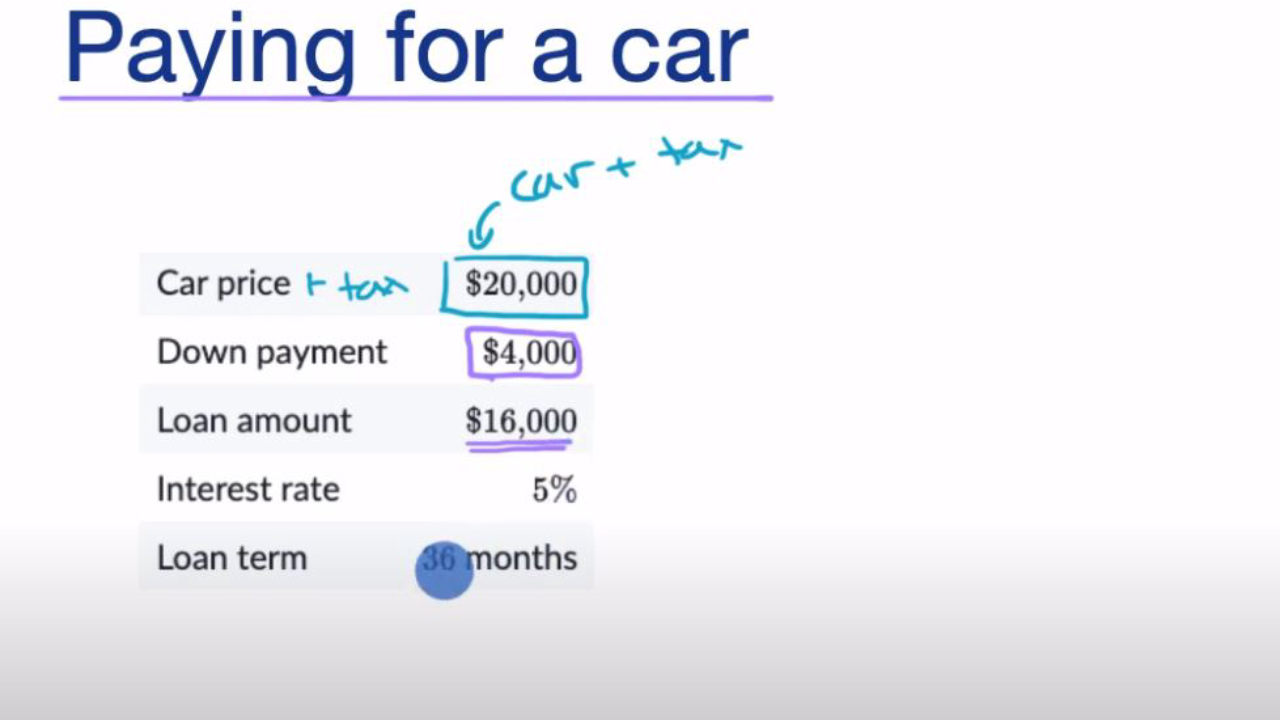
The principal is the total amount of money you are borrowing from a lender to cover the purchase price of the vehicle. This is not necessarily the MSRP (Manufacturer’s Suggested Retail Price). The principal is calculated by taking the agreed-upon purchase price and adding sales tax, registration fees, and documentation fees, then subtracting your down payment and any trade-in equity. For a healthy financial profile, your goal should always be to keep the principal as low as possible through aggressive negotiation and a substantial down payment.
The Annual Percentage Rate (APR)
The APR is the interest rate you pay on the loan, expressed as a yearly percentage. In the world of personal finance, your APR is the most significant indicator of your creditworthiness. Lenders determine this rate based on your credit score, the age of the vehicle, and current market conditions. Even a 1% or 2% difference in APR can result in thousands of dollars in additional interest over the life of the loan. Understanding how interest compounds—usually daily or monthly on the declining balance—is crucial to seeing why high-interest debt is a wealth-killer.
The Loan Term
The loan term is the duration over which you agree to repay the loan, typically measured in months. Common terms range from 36 to 72 months, though 84-month loans are becoming increasingly common. While a longer term lowers your monthly payment, it significantly increases the total interest paid and raises the risk of becoming “upside down” on your loan—where you owe more than the car is worth.
2. The Mathematics of Calculation: Manual and Digital Methods
Once you have identified the principal, interest rate, and term, you can move toward the actual calculation. While most people rely on digital tools, understanding the underlying math provides a deeper insight into how your money is being allocated between interest and principal.
Using the Amortization Formula
If you want to figure your car payment manually, you use the standard amortization formula. The formula is:
M = P [ i(1 + i)^n ] / [ (1 + i)^n – 1 ]
Where:
- M = Total monthly payment
- P = Principal loan amount
- i = Monthly interest rate (Annual Rate divided by 12)
- n = Number of months (loan term)
By working through this equation, you can see how the “i” variable (interest) compounds against the “n” variable (time). This formula illustrates why front-loading your payments or choosing a shorter term drastically reduces the total cost of the loan.
Leveraging Financial Calculators
In the modern era, you don’t need a degree in finance to get an exact number. Numerous online financial tools and mobile apps allow you to input your variables to see instant results. When using these tools, it is vital to utilize an “amortization schedule” feature. This schedule shows you exactly how much of each monthly payment goes toward interest versus principal. In the early stages of a loan, a larger portion of your payment goes to interest; as the principal decreases, more of your money goes toward paying off the car itself.
Factoring in Sales Tax and Hidden Fees
A common mistake in car payment calculation is forgetting the “out-the-door” costs. Sales tax can add 5% to 10% to the purchase price depending on your jurisdiction. Dealer fees, such as “destination charges” or “documentation fees,” can add another $500 to $1,500. When figuring your payment, always add roughly 10% to the vehicle’s price to account for these variables if you plan on financing them.

3. Strategic Approaches to Lowering Your Monthly Obligation
Figuring out your car payment is only the first step. The second step is optimizing those variables to fit your financial strategy. There are three primary levers you can pull to make a car payment more manageable and less expensive in the long run.
The Power of the Down Payment
The down payment is your most effective tool in personal finance for reducing debt. A standard recommendation is to put down at least 20% of the vehicle’s purchase price. This serves two purposes: it reduces the principal (and thus the interest paid), and it provides a buffer against depreciation. Since cars lose value the moment they leave the lot, a 20% down payment ensures you maintain positive equity in the asset.
Optimizing Your Credit Profile
Because the APR is a primary driver of your monthly payment, improving your credit score before applying for a loan can save you a fortune. If your credit score is in the “fair” range (600–660), you might pay an APR of 10% or more. If you can move into the “excellent” range (750+), that rate could drop to 4% or 5%. Before figuring your car payment, check your credit report for errors and pay down revolving debt to ensure you qualify for the lowest possible rate.
Considering Trade-In Equity
If you currently own a vehicle, its trade-in value acts as a “cash equivalent” in your calculation. In many states, the value of your trade-in is subtracted from the purchase price of the new car before sales tax is calculated. This creates a double benefit: it lowers your principal and reduces your tax liability. Always research your current car’s “wholesale” or “trade-in” value via independent valuation sites before entering negotiations.
4. Beyond the Payment: The Total Cost of Ownership (TCO)
A dangerous mistake in personal finance is equating the “car payment” with the “cost of the car.” To truly figure out if a vehicle fits your budget, you must calculate the Total Cost of Ownership (TCO).
Insurance, Maintenance, and Fuel
Your monthly car payment is just the “rent” you pay to the bank for the money you borrowed. You must also account for:
- Insurance: Newer cars, especially those under a lien, require comprehensive and collision coverage, which can be expensive.
- Maintenance: Every vehicle has a predictable maintenance schedule. Factor in the cost of tires, oil changes, and unexpected repairs.
- Fuel/Energy: Whether you are buying gasoline or paying for electricity for an EV, this is a recurring monthly cost that must be added to your car payment.
The Impact of Depreciation
While not a monthly “bill,” depreciation is a real financial cost. If you buy a $40,000 car and it is worth $20,000 after three years, you have “spent” $20,000 in wealth regardless of what your monthly payment was. When figuring your car payment, consider the resale value of the brand and model. Choosing a vehicle with high value retention is a savvy move for long-term financial health.
5. The 20/4/10 Rule: A Benchmark for Affordability
If you are struggling to figure out what a reasonable car payment looks like for your income level, financial experts often point to the “20/4/10 Rule.” This framework provides a guardrail to prevent “lifestyle creep” from sabotaging your ability to invest and save for retirement.
Breaking Down the Rule
- 20% Down: You should be able to afford a 20% down payment in cash. This proves you have the financial discipline to save and protects you from negative equity.
- 4-Year Term: You should finance the car for no more than four years (48 months). If you need 72 or 84 months to make the payment “affordable,” the car is likely out of your price range.
- 10% of Income: Your total transportation costs—including the loan payment, insurance, and fuel—should not exceed 10% of your gross monthly income.
Aligning Payments with Financial Goals
Ultimately, figuring your car payment is about alignment. Every dollar that goes toward a depreciating asset like a car is a dollar that isn’t going into a high-yield savings account, an index fund, or a retirement 401(k). By calculating your payment with precision and sticking to strict affordability rules, you ensure that your vehicle remains a tool for your life rather than a burden on your future.
In conclusion, mastering your car payment requires a blend of mathematical calculation, credit management, and disciplined budgeting. By understanding the principal, interest, and term, and by looking at the total cost of ownership rather than just the monthly bill, you can make an informed financial decision that supports your overall wealth-building journey.
aViewFromTheCave is a participant in the Amazon Services LLC Associates Program, an affiliate advertising program designed to provide a means for sites to earn advertising fees by advertising and linking to Amazon.com. Amazon, the Amazon logo, AmazonSupply, and the AmazonSupply logo are trademarks of Amazon.com, Inc. or its affiliates. As an Amazon Associate we earn affiliate commissions from qualifying purchases.