
In the world of traditional finance, the distribution of wealth is often shielded behind layers of private banking and offshore entities. However, the advent of Bitcoin introduced a revolutionary concept: a public, immutable ledger where every transaction and balance is visible to anyone with an internet connection. While the identities behind Bitcoin addresses are pseudonymous, the concentration of “digital gold” is a subject of intense fascination for investors, analysts, and financial institutions alike.
Understanding who holds the most Bitcoin is not merely a matter of curiosity; it is a fundamental aspect of market analysis. The concentration of supply—often referred to as “whales”—can significantly influence market liquidity, volatility, and the long-term price trajectory of the asset. As Bitcoin matures from a niche experiment into a global macro-asset, the “who’s who” of holders has shifted from cypherpunks and early adopters to Fortune 500 companies and sovereign nation-states.
Institutional Giants: The Corporate Treasury Revolution
The narrative of Bitcoin as an institutional-grade asset began in earnest around 2020. Before this era, corporations viewed Bitcoin with skepticism. Today, some of the world’s most prominent firms have replaced a portion of their cash reserves with Bitcoin, viewing it as a superior store of value in an era of fiat currency debasement.
MicroStrategy: The Pioneer of the Bitcoin Standard
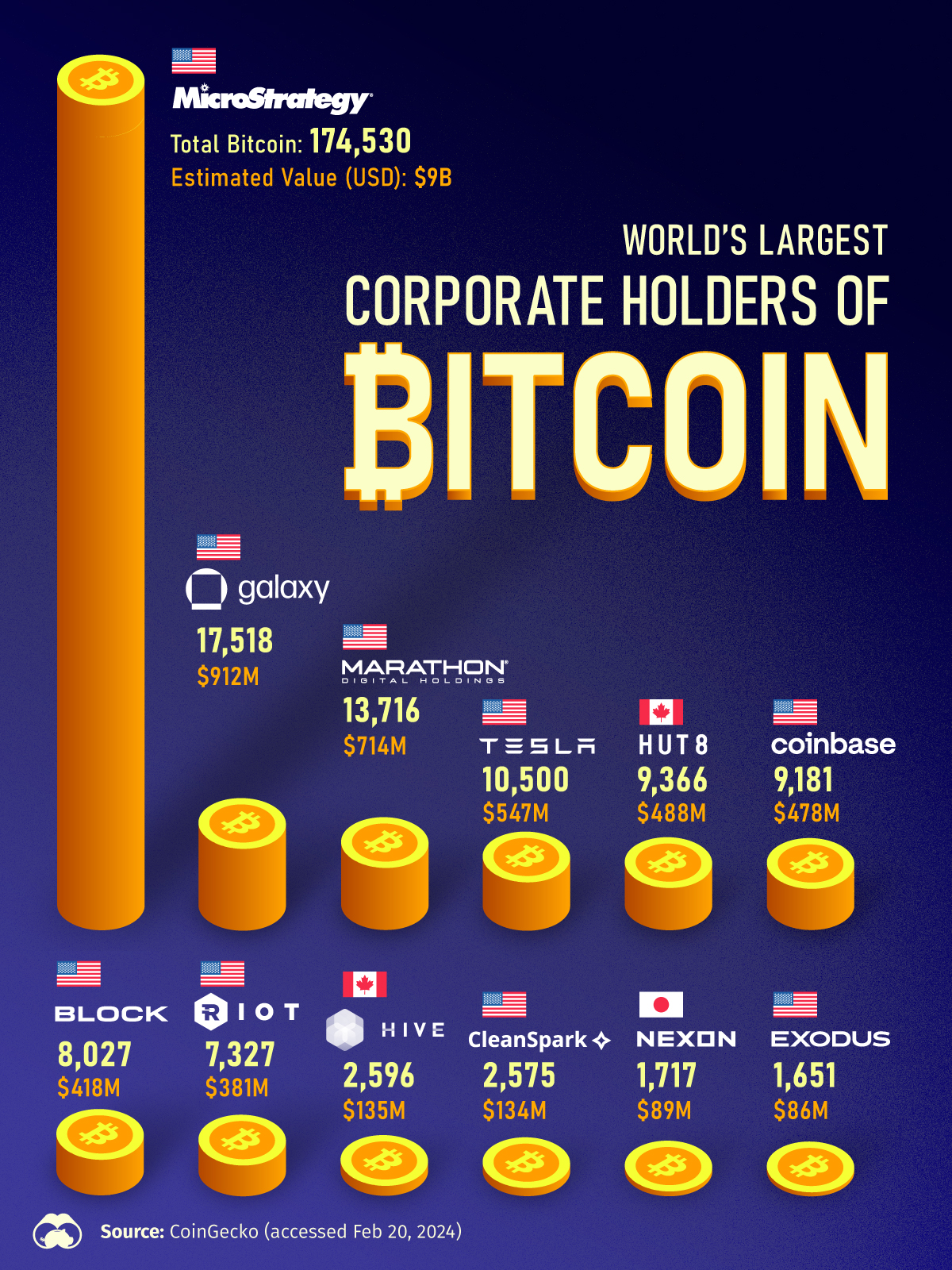
MicroStrategy, a business intelligence firm led by its founder Michael Saylor, stands as the largest corporate holder of Bitcoin in the world. As of early 2024, the company holds over 1% of the total 21 million Bitcoin supply that will ever exist. Unlike other firms that dabble in the asset, MicroStrategy has adopted a “Bitcoin Standard,” using both its operational cash flow and debt issuance to aggressively accumulate the cryptocurrency. For investors, MicroStrategy has become a proxy for Bitcoin exposure within the traditional stock market, demonstrating a conviction that Bitcoin is the ultimate “apex property.”
Tesla and Square (Block): Tech Giants Diversifying Reserves
While MicroStrategy leads the pack, other major tech-driven firms have followed suit. Elon Musk’s Tesla made headlines in 2021 by purchasing $1.5 billion worth of Bitcoin, signaling a massive shift in corporate sentiment. Although Tesla has sold portions of its holdings for liquidity reasons, it remains a significant whale. Similarly, Block Inc. (formerly Square), led by Jack Dorsey, has integrated Bitcoin into its balance sheet, viewing it as a foundational tool for global economic empowerment. These holdings represent a strategic hedge against inflation and a bet on the future of digital payments.
Bitcoin Mining Companies: The Producers as Holders
Publicly traded Bitcoin mining companies, such as Marathon Digital Holdings and Riot Platforms, represent a unique class of holders. These entities “produce” Bitcoin and often choose to “HODL” (Hold On for Dear Life) their rewards rather than selling them immediately to cover operational costs. This strategy allows them to capitalize on price appreciation, making them some of the most significant institutional holders in the ecosystem.
Nation-States and Sovereign Wealth: Bitcoin as a Strategic Asset
The entry of nation-states into the Bitcoin market marks the final stage of institutional adoption. When governments begin to accumulate an asset, it transitions from a speculative investment to a strategic reserve.
The United States Government: The Accidental Whale
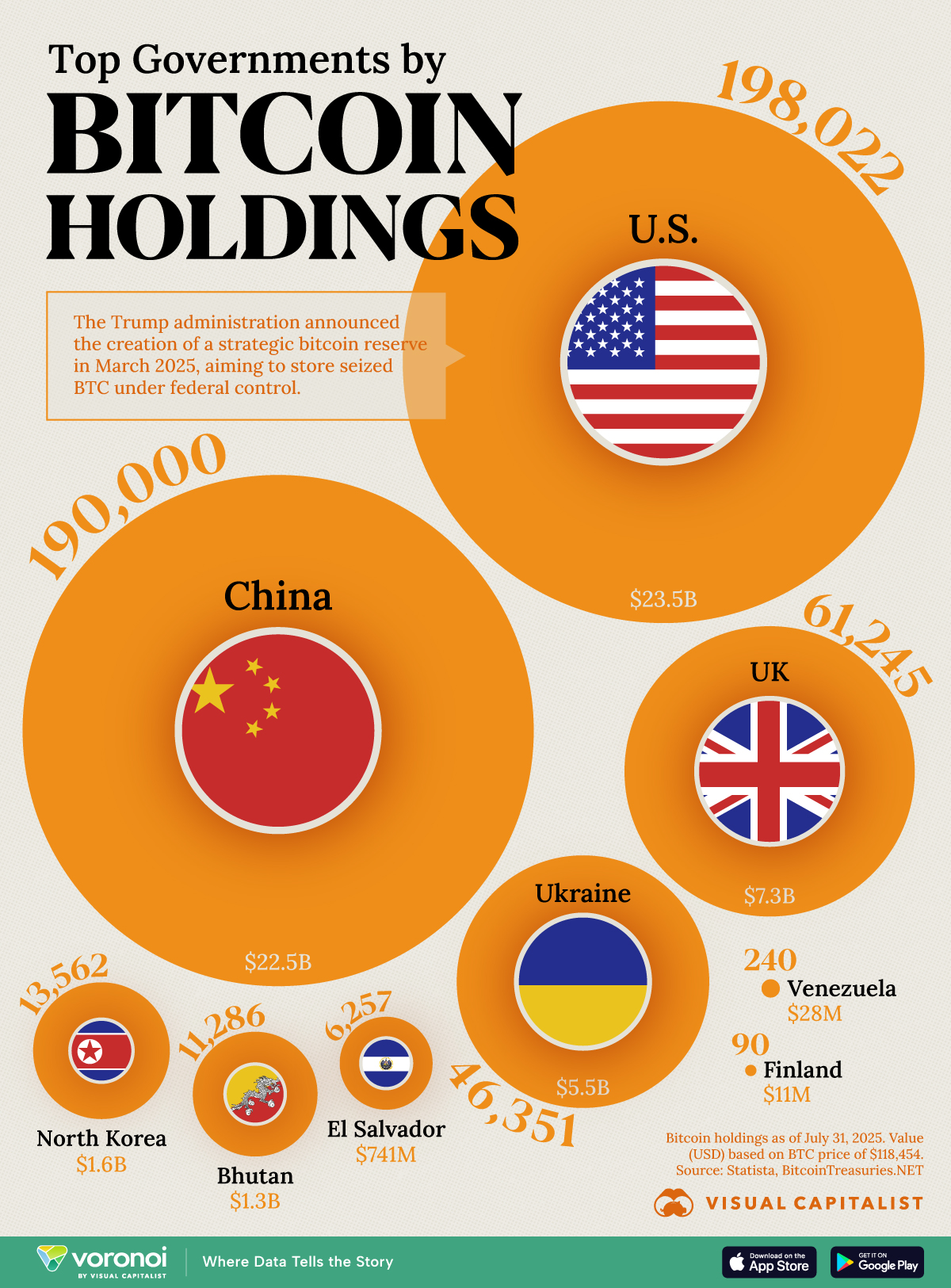
Perhaps surprisingly, the United States government is one of the largest holders of Bitcoin globally. However, unlike MicroStrategy, the U.S. did not buy its Bitcoin on the open market. Instead, its vast reserves—estimated to be upwards of 200,000 BTC—have been amassed through law enforcement seizures related to cybercrime, darknet markets (like Silk Road), and exchange hacks (like Bitfinex). How the U.S. government manages these holdings—whether they auction them off or hold them as a strategic reserve—is a major point of interest for the global financial markets.
El Salvador: The Sovereign Pioneer
In 2021, El Salvador became the first country in the world to adopt Bitcoin as legal tender. Under the leadership of President Nayib Bukele, the country has consistently purchased Bitcoin for its national treasury. While El Salvador’s total holdings are smaller than those of the U.S. government, its commitment is ideological and strategic. By integrating Bitcoin into its economy, El Salvador seeks to achieve financial independence and attract foreign investment, positioning itself as a hub for the burgeoning digital economy.
China and the Question of Seized Billions
Similar to the United States, the Chinese government holds a massive amount of Bitcoin seized during the crackdown on the PlusToken Ponzi scheme in 2019. Reports suggest the Chinese state could hold nearly 190,000 BTC. Unlike El Salvador, China has taken a restrictive stance on cryptocurrency trading and mining within its borders, creating a paradox where the state is a massive holder of an asset it publicly discourages.
The Enigma of Satoshi Nakamoto and Early Individual Whales
Despite the rise of institutions and governments, the largest single “entity” in the Bitcoin ecosystem remains its anonymous creator.
Satoshi Nakamoto: The Million-BTC Genesis
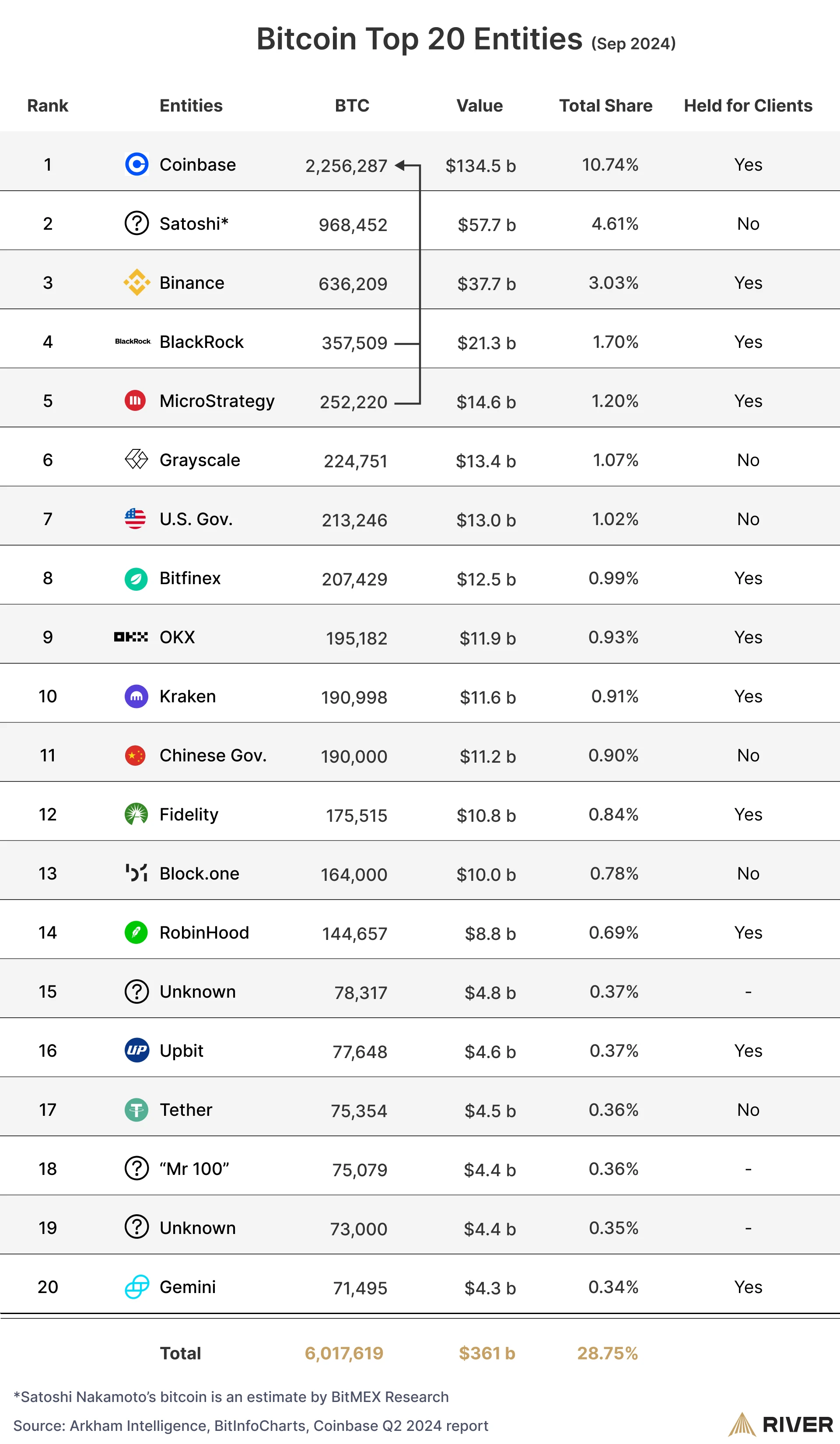
The mystery of Satoshi Nakamoto is central to the Bitcoin story. It is estimated that Nakamoto mined approximately 1.1 million Bitcoin in the earliest days of the network. These coins, spread across thousands of addresses, have never been moved. At current market prices, Satoshi is one of the wealthiest individuals on the planet. However, because these coins have remained dormant for over a decade, many analysts treat them as “lost” or burned. Should these coins ever move, it would constitute one of the most significant events in financial history, potentially causing massive market ripples.
The Winklevoss Twins and Early Adopters
Cameron and Tyler Winklevoss, famous for their early involvement with Facebook, became some of the first high-profile Bitcoin billionaires. After a significant legal settlement, they invested a large portion of their wealth into Bitcoin when it was trading in the double digits. Today, they are not only holders but also infrastructure builders through their exchange, Gemini. Other early adopters, such as venture capitalist Tim Draper (who purchased 30,000 BTC from a U.S. Marshals auction), represent the “old guard” of individual whales who recognized the value of scarcity long before Wall Street.
The “Lost” Bitcoin: Dormant Wealth
A significant portion of the Bitcoin supply—estimated between 3 and 4 million BTC—is considered lost forever. These are coins held in wallets where the private keys have been forgotten, or the owners have passed away without leaving instructions. While these “holders” are technically the largest block after Satoshi, their absence from the circulating supply effectively increases the scarcity and value of the remaining Bitcoin for everyone else.
Exchange Reserves and the Custodial Landscape
When looking at “rich lists” of Bitcoin addresses, the top spots are almost always occupied by centralized exchanges. However, it is vital to distinguish between who controls the keys and who owns the value.
Centralized Exchanges (CEX) as Custodians
Binance, Coinbase, Bitfinex, and Kraken hold hundreds of thousands of Bitcoin in their cold storage wallets. For instance, Binance’s cold wallets often hold upwards of 600,000 BTC. While these exchanges are the “holders” of record on the blockchain, the vast majority of these funds belong to millions of individual retail and institutional customers. This concentration of funds makes exchanges primary targets for hackers and necessitates the highest levels of digital security and insurance.
The Rise of Spot ETFs
With the approval of Spot Bitcoin ETFs in the United States in early 2024, a new type of holder has emerged: the ETF issuer. Firms like BlackRock (iShares) and Fidelity have rapidly accumulated billions of dollars worth of Bitcoin to back their shares. These institutions are now among the fastest-growing whales in existence. While the ETF shareholders own the economic interest, BlackRock and its custodians (like Coinbase) hold the actual private keys, further centralizing the physical custody of Bitcoin.
Why Distribution Matters for Your Investment Strategy
For the savvy investor, tracking the distribution of Bitcoin provides vital clues about the health of the market. The shift from “weak hands” (speculators) to “strong hands” (long-term institutional holders) is generally viewed as a bullish signal.
Impact on Market Liquidity and Volatility
When a significant portion of the Bitcoin supply is held by long-term entities like MicroStrategy or El Salvador, the “available” supply on exchanges decreases. This phenomenon, known as a supply shock, can lead to rapid price increases when demand spikes. Conversely, if a major whale—such as the U.S. government—decides to liquidate its holdings, it can create temporary downward pressure on the price.
The Institutionalization of Bitcoin
The transition of Bitcoin from an “Internet currency” to a “Corporate Reserve Asset” has matured the market. With more regulated entities holding the asset, the infrastructure for lending, borrowing, and hedging has improved. For personal finance and business strategy, this means Bitcoin is becoming less of a gamble and more of a legitimate component of a diversified portfolio. The concentration of wealth in the hands of entities with “diamond hands” (long-term conviction) suggests that Bitcoin is being viewed less as a trading vehicle and more as the foundation of a new global financial system.
In conclusion, while the identity of the very largest holder—Satoshi Nakamoto—remains a mystery, the modern landscape of Bitcoin ownership is increasingly dominated by transparent, regulated, and highly strategic players. As more corporations and nations join the ranks of these digital titans, the story of “who holds the most Bitcoin” will continue to be the story of the fundamental transformation of money itself.
aViewFromTheCave is a participant in the Amazon Services LLC Associates Program, an affiliate advertising program designed to provide a means for sites to earn advertising fees by advertising and linking to Amazon.com. Amazon, the Amazon logo, AmazonSupply, and the AmazonSupply logo are trademarks of Amazon.com, Inc. or its affiliates. As an Amazon Associate we earn affiliate commissions from qualifying purchases.