
In the rapidly evolving landscape of global finance, few metrics are as frequently cited yet as frequently misunderstood as “market capitalization.” When applied to Bitcoin—the world’s first and largest cryptocurrency—market cap serves as the primary yardstick for measuring its growth, stability, and relative standing against traditional asset classes like gold, stocks, and fiat currencies. For the modern investor, understanding Bitcoin’s market cap is not just a mathematical exercise; it is a fundamental requirement for navigating the volatile waters of digital asset investing.
The Fundamentals: How Bitcoin’s Market Cap is Calculated
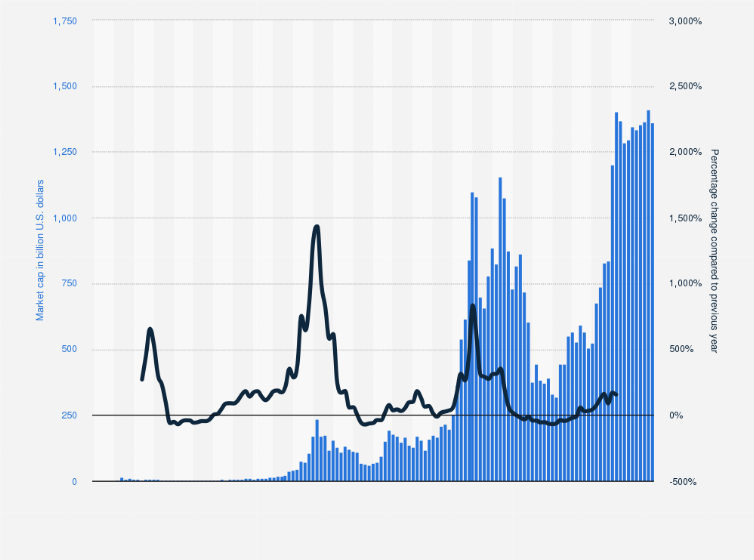
At its core, the concept of market capitalization in the crypto space is borrowed from the world of equities. In the stock market, market cap is the total value of all a company’s shares. For Bitcoin, the formula is strikingly simple: Current Price x Circulating Supply.
Current Price vs. Circulating Supply
The price of a single Bitcoin is determined by the continuous interplay of supply and demand across global exchanges. However, looking at the price in isolation can be deceptive. A high unit price does not necessarily mean an asset is “expensive” in terms of total value, just as a low unit price doesn’t make an asset a “bargain.”
The circulating supply refers to the number of Bitcoins that have already been mined and are currently available in the ecosystem. Unlike fiat currencies, which can be printed at the discretion of central banks, Bitcoin’s supply is governed by an immutable code. As of today, over 19.7 million Bitcoins are in circulation. When you multiply this number by the current trading price, you arrive at the market cap—a figure that represents the total dollar value of the entire Bitcoin network.
The Impact of the Hard Cap (21 Million)
One of the most critical factors for any financial analyst to consider is Bitcoin’s “hard cap.” Satoshi Nakamoto, the anonymous creator of Bitcoin, programmed the network to ensure that only 21 million Bitcoins will ever exist. This scarcity is a cornerstone of Bitcoin’s value proposition as “digital gold.”
As we approach this limit through the process of mining and “halving” events (which occur roughly every four years), the growth of the circulating supply slows down. For investors, this means that the market cap will increasingly be driven by price appreciation rather than the introduction of new supply. Understanding this finite limit is essential for long-term financial planning and assessing Bitcoin’s potential for inflation-hedging.
Bitcoin vs. Traditional Assets: Putting the Numbers in Context
To truly grasp the scale of Bitcoin’s market cap, one must compare it to established financial benchmarks. In the “Money” niche, relativity is everything. A $1 trillion market cap sounds astronomical, but where does it sit in the global hierarchy of wealth?
Bitcoin vs. Gold: The Digital Gold Narrative
For centuries, gold has been the premier store of value for the human race, with a total market capitalization estimated at approximately $14 trillion. When Bitcoin’s market cap reached the $1 trillion milestone, it sparked intense debate among institutional investors. If Bitcoin is indeed “Gold 2.0″—offering the same scarcity but with superior portability and divisibility—its market cap has significant room to grow.
Investors often look at the “Gold-to-Bitcoin” ratio to determine if the digital asset is undervalued. If Bitcoin were to match the market cap of gold, the price per coin would need to exceed $700,000. This comparison provides a macro-perspective that helps investors look past daily price volatility.
Comparing Crypto Market Cap to Major S&P 500 Companies
Another helpful lens is the comparison with “Magnificent Seven” tech giants like Apple, Microsoft, and Nvidia. At various points in its history, Bitcoin’s market cap has surpassed that of Visa, JPMorgan Chase, and even Tesla.
When Bitcoin’s market cap rivals that of the world’s most profitable corporations, it signals a shift in the financial paradigm. It moves from being a speculative “side hustle” for retail traders to a legitimate institutional asset class. For a personal finance enthusiast, seeing Bitcoin maintain a market cap in the top tier of global assets provides a layer of psychological support regarding the asset’s “staying power.”
Why Market Cap Matters to Your Investment Portfolio
For the individual investor, market cap is more than just a headline; it is a tool for risk management and asset allocation. In the world of online income and investing, understanding the “weight” of an asset can prevent costly mistakes.
Market Cap as a Risk Indicator
Generally, in the financial world, a larger market cap implies lower volatility. While Bitcoin is still volatile compared to the S&P 500, its massive market cap makes it significantly more stable than “altcoins” (alternative cryptocurrencies) with smaller valuations.
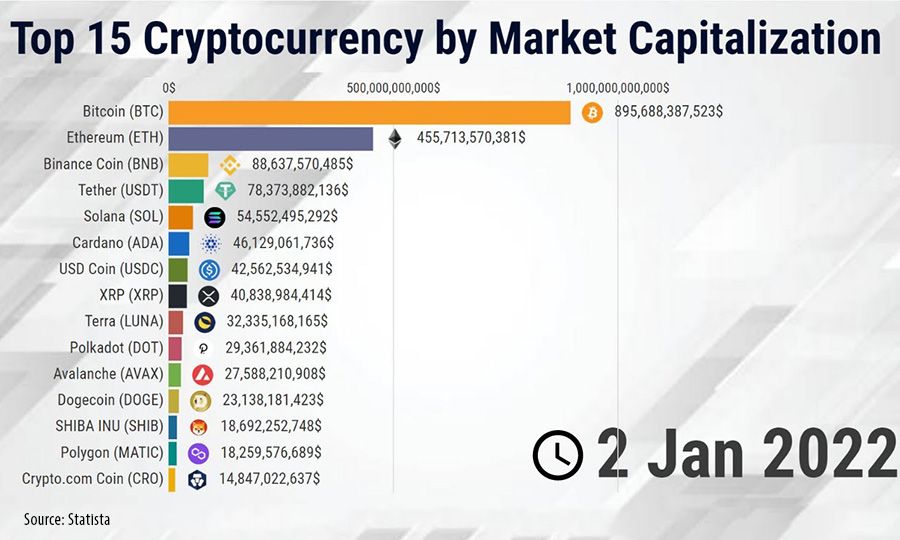
A high market cap means that it takes much more capital to move the price significantly. For a portfolio manager, Bitcoin often serves as the “large-cap” anchor of a digital asset strategy, providing exposure to the crypto market while mitigating the extreme “pump and dump” risks associated with small-cap tokens.
Understanding Fully Diluted Valuation (FDV)
A sophisticated financial tool often used by professional traders is the Fully Diluted Valuation. While the market cap tells you the value of currently available coins, the FDV tells you what the market cap would be if all 21 million Bitcoins were in circulation at today’s price.
In the case of Bitcoin, the difference between the current market cap and the FDV is relatively small because more than 93% of the supply has already been mined. However, for newer crypto projects, the FDV can be many times higher than the current market cap, signaling a risk of “supply inflation” that could devalue the holdings of early investors. Comparing these two metrics is a hallmark of a disciplined investor.
Market Dynamics: Factors that Influence Bitcoin’s Valuation
Bitcoin’s market cap does not exist in a vacuum. It is a living reflection of global liquidity, regulatory shifts, and technological adoption. To predict where the market cap is going, one must monitor specific financial catalysts.
Institutional Adoption and Spot ETFs
The introduction of Bitcoin Spot ETFs (Exchange-Traded Funds) in the United States marked a turning point for Bitcoin’s market cap. By allowing traditional brokerage accounts to buy Bitcoin, a massive “wall of money” from pension funds and 401(k)s began flowing into the asset.
This institutional inflow provides a “floor” for the market cap. When companies like BlackRock or Fidelity include Bitcoin in their offerings, it adds a layer of legitimacy and liquidity that was previously missing. For those focused on business finance and side hustles, this institutionalization makes Bitcoin a more predictable component of a long-term wealth-building strategy.
The Halving Cycle and Supply Scarcity
Every four years, the reward for mining Bitcoin is cut in half. Historically, these “halving” events have preceded massive surges in market cap. From an economic perspective, this is a simple supply-side shock: if demand remains constant or increases while the rate of new supply decreases, the price—and consequently the market cap—must rise. Understanding these cycles is critical for anyone looking to time their entries or exits in the market for maximum financial gain.
The Nuances of Crypto Valuation: Beyond the Surface
To be a truly “pro” investor in the money niche, one must understand that the basic market cap formula has its flaws. There are nuances to Bitcoin’s valuation that don’t exist in traditional stock market cap calculations.
Lost Coins and Burned Addresses
A significant portion of Bitcoin’s circulating supply—estimated by some firms like Chainalysis to be as high as 3 to 4 million coins—is likely lost forever. These are coins stored on hard drives in landfills, or in wallets where the private keys have been forgotten.
Because these coins are still counted in the “circulating supply” but can never be sold, the “effective” market cap is actually lower than the “nominal” market cap. This creates a hidden scarcity that can lead to more explosive price movements than traditional financial models might predict.
Market Cap vs. Realized Cap
Financial analysts often prefer a metric called “Realized Cap.” While the standard market cap values every coin at the current market price, the Realized Cap values each coin at the price it was last moved on the blockchain.
If the Market Cap is significantly higher than the Realized Cap, it suggests that many investors are sitting on large unrealized profits, which could lead to a sell-off. Conversely, if the two metrics are close together, it suggests the market is in a period of accumulation. For the serious investor, monitoring the gap between these two figures is a powerful way to gauge market sentiment and financial health.
Conclusion: The Future of Bitcoin’s Market Valuation
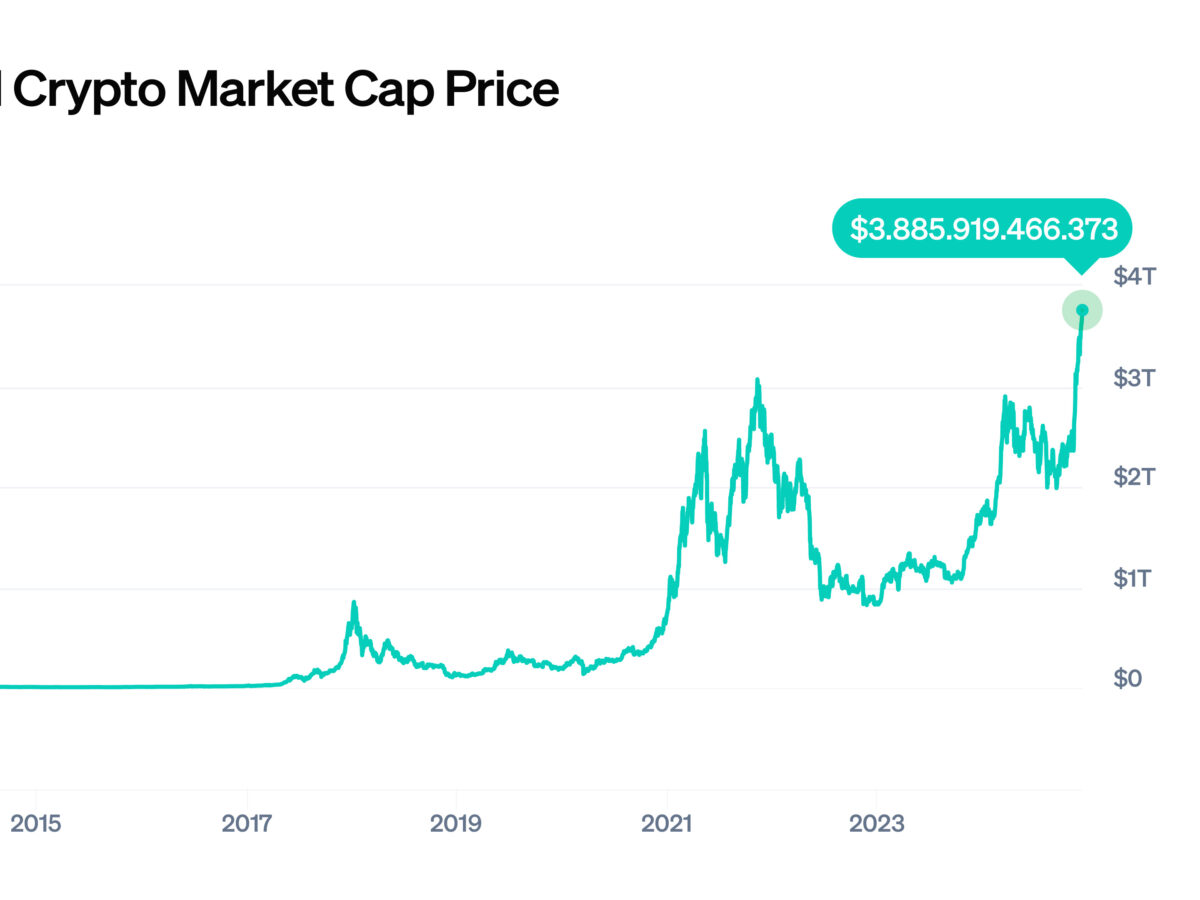
As we look toward the future, Bitcoin’s market cap remains the ultimate indicator of the “Great Monetary Transition.” Whether it continues to eat into the market share of gold or eventually challenges the dominance of major fiat currencies remains the trillion-dollar question.
For the investor, the takeaway is clear: Market cap is not just a number on a screen; it is a reflection of global trust, a measure of risk, and a roadmap for potential growth. By understanding how this figure is calculated, how it compares to traditional assets, and the nuances that lie beneath the surface, you can move from being a spectator to a strategic participant in the new era of digital finance. In the world of money, knowledge is the only asset that truly compounds, and understanding Bitcoin’s market cap is the first step toward mastering the future of wealth.
aViewFromTheCave is a participant in the Amazon Services LLC Associates Program, an affiliate advertising program designed to provide a means for sites to earn advertising fees by advertising and linking to Amazon.com. Amazon, the Amazon logo, AmazonSupply, and the AmazonSupply logo are trademarks of Amazon.com, Inc. or its affiliates. As an Amazon Associate we earn affiliate commissions from qualifying purchases.