
Since its inception in 2009, Bitcoin has remained one of the most polarizing assets in the financial world. To the casual observer, its value is often equated strictly with its current market price—a number that fluctuates wildly on cryptocurrency exchanges. However, for the serious investor, economist, or financial strategist, the question “What is Bitcoin’s value?” goes far deeper than a ticker symbol.
Understanding Bitcoin’s value requires a shift in perspective from traditional fiat currency toward a new paradigm of digital-native property. Its value is derived from a unique combination of mathematical scarcity, decentralized security, and its emerging role as a global, permissionless store of value. This article explores the multi-faceted nature of Bitcoin’s financial worth and why it has become a cornerstone of the modern alternative investment landscape.
Understanding the Dual Nature of Bitcoin’s Financial Value
To grasp why Bitcoin holds value, one must first distinguish between “price” and “intrinsic value.” In traditional finance, an asset’s value is often calculated via discounted cash flows or physical utility. Bitcoin, however, produces no yield and has no physical form, leading some to dismiss it. Yet, its value lies in its properties as a monetary protocol.
Market Price vs. Intrinsic Utility
The market price of Bitcoin is determined by the simple law of supply and demand. Because the supply is fixed, any increase in demand results in a price surge. However, its intrinsic utility—the “value” it provides to the user—is found in its ability to move large sums of wealth across borders without a central intermediary. In a world where banking systems can be slow, expensive, or restrictive, the ability to settle billions of dollars in minutes for a nominal fee represents a profound financial breakthrough.
The Role of Decentralization in Asset Valuation
In traditional banking, value is guarded by institutions (banks and central authorities). Bitcoin’s value is partially derived from its “trustlessness.” Because the network is distributed across thousands of independent nodes globally, no single government or corporation can seize the assets or alter the ledger. This decentralization provides a “censorship-resistance premium.” For investors in unstable economies or those seeking to hedge against institutional failure, this security feature is the primary driver of Bitcoin’s financial worth.
Bitcoin as “Digital Gold”: The Store of Value Proposition
The most common framework for valuing Bitcoin is comparing it to gold. For centuries, gold has been the premier “store of value” because it is difficult to find and impossible to manufacture. Bitcoin was intentionally designed to mimic and improve upon these characteristics in a digital format.
Scarcity and the 21 Million Cap
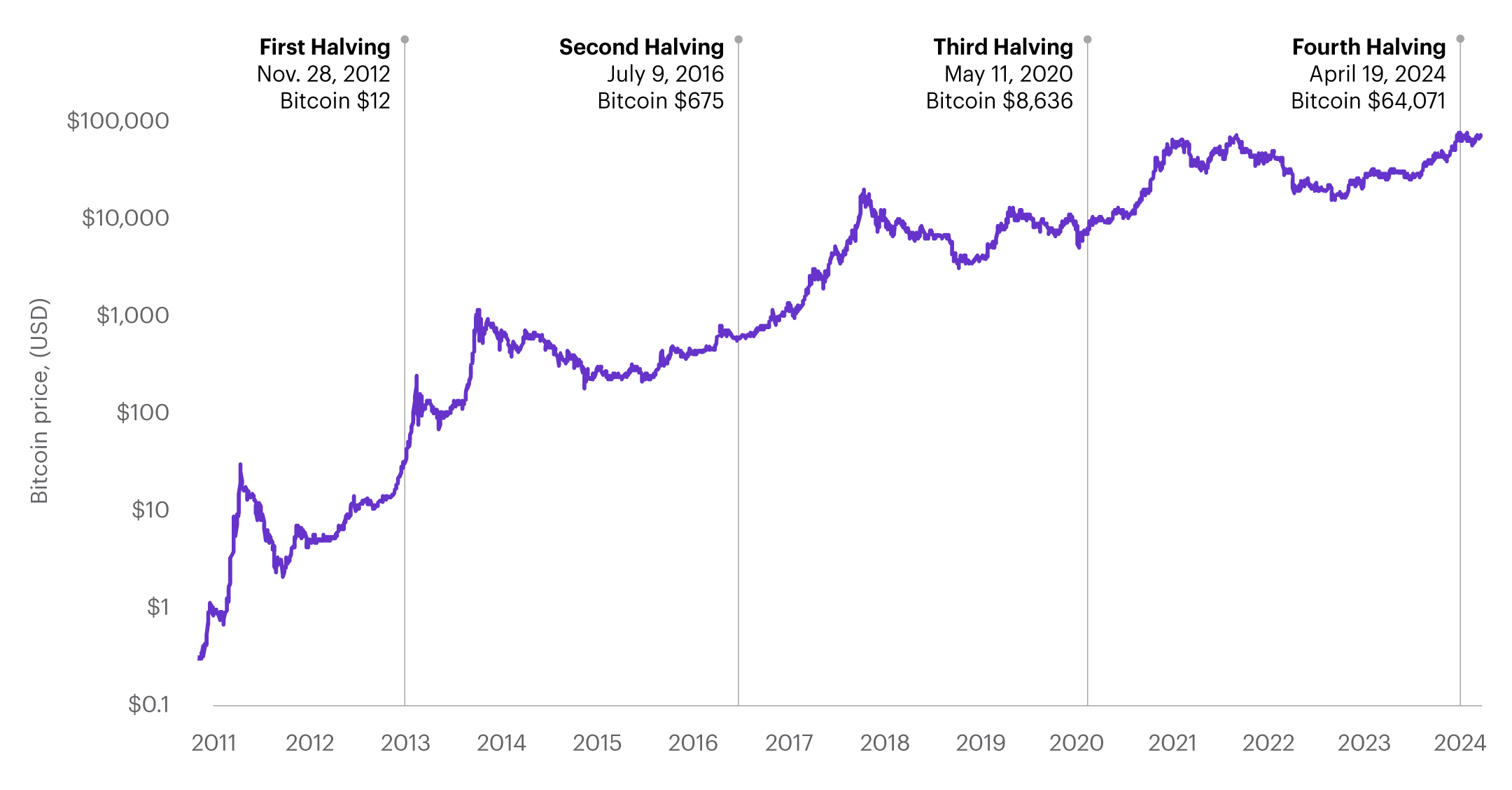
Unlike fiat currencies (USD, EUR, JPY), which can be printed in infinite quantities by central banks, Bitcoin has a hard-coded supply limit of 21 million coins. This absolute scarcity is enforced by the network’s consensus rules. As of today, over 19 million bitcoins have been mined, with the issuance rate slowing down every four years through an event known as “the halving.” From a personal finance perspective, this makes Bitcoin a deflationary asset, contrasting sharply with the inflationary nature of modern cash.
Durability and Portability in the Digital Age
While gold is heavy, difficult to transport, and requires expensive third-party verification, Bitcoin is weightless and can be sent anywhere in the world instantly. You can carry $1 billion worth of Bitcoin on a simple thumb drive or memorize a 12-word recovery phrase. This portability, combined with the fact that Bitcoin cannot “rot” or be chemically degraded, makes it a superior form of “money” for a digitized global economy. The value lies in the marriage of gold-like scarcity with internet-speed mobility.
Macroeconomic Drivers Influencing Market Valuation

Bitcoin does not exist in a vacuum; its value is highly sensitive to the broader macroeconomic environment. As global debt levels rise and traditional currencies lose purchasing power, the “value proposition” of a non-sovereign digital asset becomes increasingly attractive to both retail and institutional investors.
Institutional Adoption and Wall Street’s Entry
For the first decade of its existence, Bitcoin was primarily a retail-driven asset. However, the narrative shifted significantly with the entry of institutional giants. The approval of Spot Bitcoin ETFs (Exchange-Traded Funds) by major financial regulators marked a turning point. When firms like BlackRock and Fidelity began offering Bitcoin to their clients, it validated the asset’s place in a diversified portfolio. This institutional “stamp of approval” has brought massive liquidity to the market, stabilizing the asset and driving long-term value through increased capital inflows.
Inflation Hedging and Global Monetary Policy
When central banks engage in quantitative easing (printing money) to stimulate the economy, the value of the currency in circulation typically drops. Investors look for “hard assets” to protect their wealth from this debasement. Traditionally, they turned to real estate or gold. Today, Bitcoin is increasingly viewed as the “fastest horse in the race” against inflation. Because its supply cannot be manipulated by any central bank, it serves as a financial insurance policy against the mismanagement of national economies.
Measuring Value through Network Effects and Metcalfe’s Law
In the world of technology and finance, the value of a network is often proportional to the square of the number of its users. This is known as Metcalfe’s Law. This principle is vital when evaluating Bitcoin, as its value is intrinsically tied to how many people use it, hold it, and accept it.
User Growth and Transaction Volume
As the number of active wallets and daily transactions grows, the utility of the network increases. Each new participant adds to the liquidity and security of the ecosystem. Financial analysts track “on-chain data”—such as the number of “HODLers” (long-term investors) and the volume of settled transactions—to determine if the current market price is supported by actual network activity. A growing user base suggests a growing fundamental value, regardless of short-term price volatility.
The Security of the Hash Rate
Bitcoin’s value is also backed by the massive amount of computational power protecting the network, known as the “hash rate.” Miners spend billions of dollars on hardware and electricity to secure the ledger. This “unforgeable costliness” means that to attack or subvert the Bitcoin network, an adversary would need to spend more money than any entity on Earth currently possesses. The higher the hash rate, the more secure the network, and the more valuable the “digital space” on that network becomes for storing wealth.
The Future Outlook: Risks and Valuation Models
Predicting the future value of Bitcoin involves weighing its immense potential against significant risks. While many see it as a trillion-dollar asset class in the making, its path is rarely a straight line.
Regulatory Frameworks and Market Stability
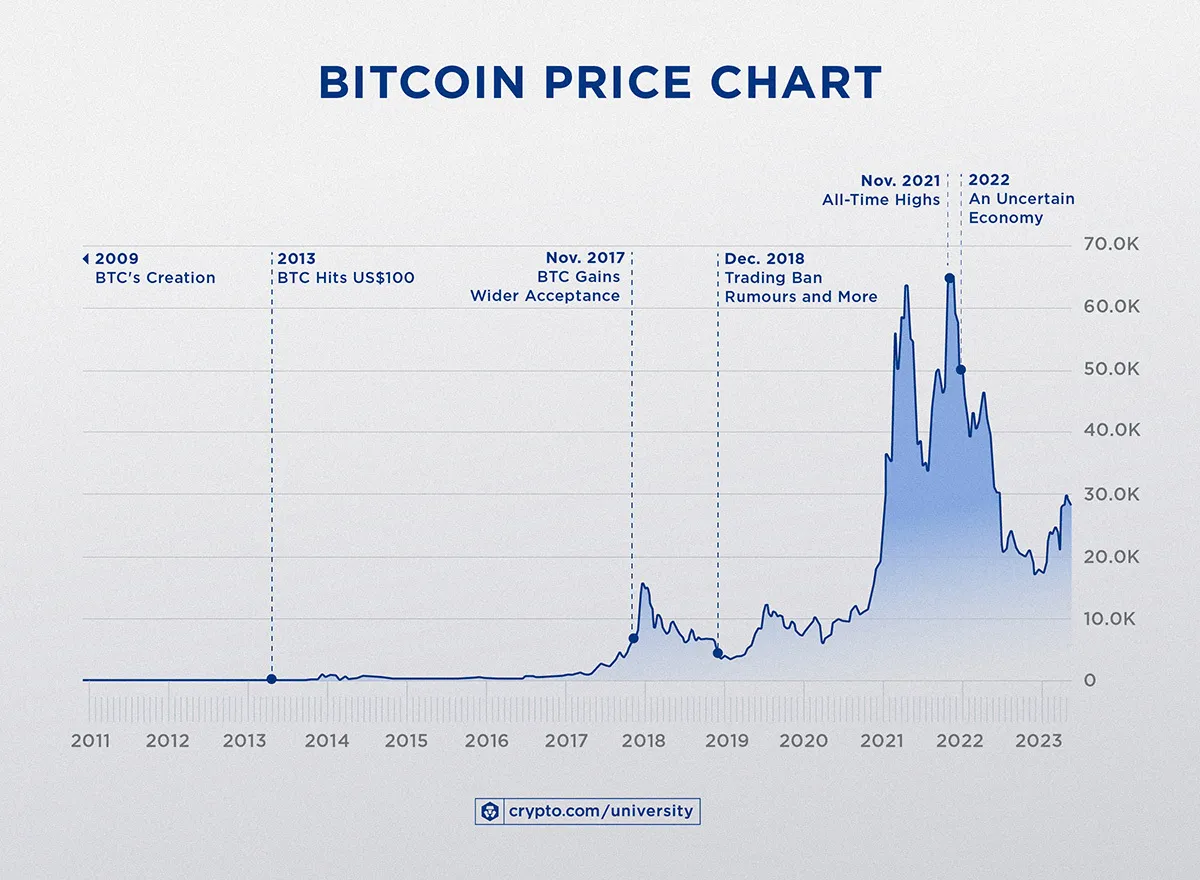
One of the primary “value depressors” for Bitcoin has historically been regulatory uncertainty. As governments around the world work to define how Bitcoin should be taxed and traded, the market experiences periods of fear. However, clear regulation—even if strict—often adds value in the long term because it provides a safe legal framework for large corporations and pension funds to enter the market. The transition from a “frontier market” to a “regulated financial market” is a key component of Bitcoin’s maturing value.
The Stock-to-Flow Model and Long-term Projections
Many investors use the Stock-to-Flow (S2F) model to quantify Bitcoin’s value. This model measures the existing supply (stock) against the annual production (flow). Assets with high S2F ratios, like gold, are historically used as money because their supply is hard to increase. Bitcoin’s S2F ratio doubles every four years after each halving, making it mathematically the “hardest” money ever created. While models are not guarantees, they provide a logical framework for why Bitcoin may continue to capture a larger share of the global wealth currently held in fiat, gold, and offshore banking.
In summary, Bitcoin’s value is not merely a reflection of speculative trading. It is a composite of its technological breakthrough in scarcity, its role as a hedge against monetary expansion, and the growing strength of its global, decentralized network. For the modern investor, understanding these pillars of value is essential to navigating the future of finance.
aViewFromTheCave is a participant in the Amazon Services LLC Associates Program, an affiliate advertising program designed to provide a means for sites to earn advertising fees by advertising and linking to Amazon.com. Amazon, the Amazon logo, AmazonSupply, and the AmazonSupply logo are trademarks of Amazon.com, Inc. or its affiliates. As an Amazon Associate we earn affiliate commissions from qualifying purchases.