
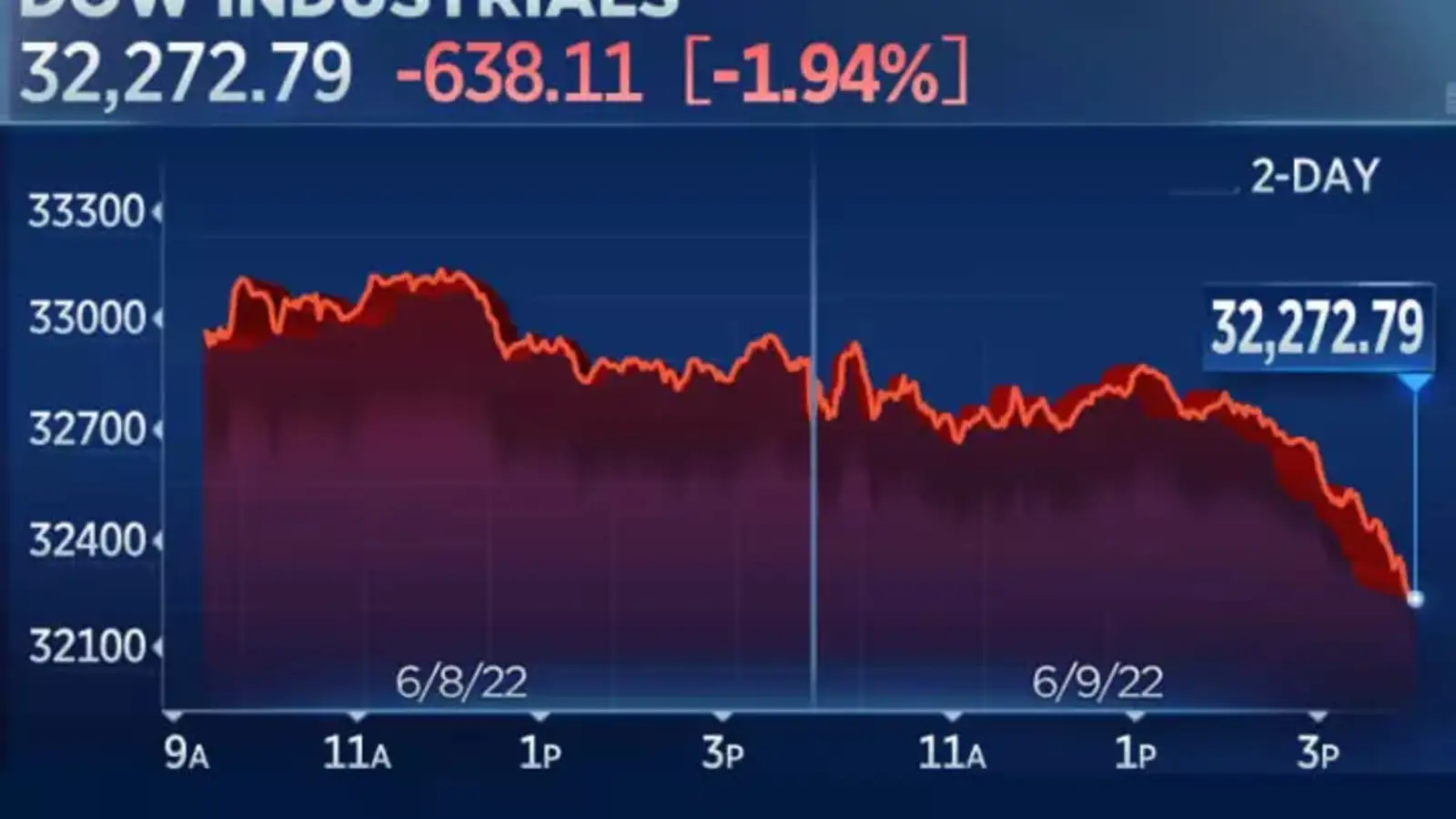
The Dow Jones Industrial Average (DJIA) remains one of the most watched barometers of the American economy. Comprising 30 prominent “blue-chip” companies, it serves as a snapshot of industrial strength and corporate health. However, when the “Dow is down,” it often triggers a wave of anxiety for retail investors and institutional fund managers alike. Understanding why the Dow is falling today requires a multi-faceted look at macroeconomic policy, corporate performance, and the psychological state of the global markets.
Market fluctuations are rarely the result of a single event; rather, they are the culmination of several overlapping factors. From shifts in central bank policy to geopolitical instability, the reasons for a downward trend can be complex. In this analysis, we will explore the primary catalysts that drive the Dow lower and what these movements mean for your financial portfolio.
Macroeconomic Pressures: Inflation and the Federal Reserve’s Stance
The most significant driver of market movement in the modern era is the direction of interest rates, dictated by the Federal Reserve. Because the Dow consists of massive, capital-intensive corporations, any change in the cost of borrowing has an immediate impact on their bottom line.
The Persistence of “Sticky” Inflation
Inflation is the natural enemy of the stock market. When the Consumer Price Index (CPI) or the Personal Consumption Expenditures (PCE) price index shows that inflation is remaining higher than the Federal Reserve’s 2% target, investors begin to price in a “hawkish” response. High inflation erodes the purchasing power of consumers, leading to lower sales volumes for the consumer-facing companies in the Dow, such as Walmart or Coca-Cola. When investors see that inflation is not cooling as quickly as expected, the Dow often falls in anticipation of tighter economic conditions.
Interest Rate Projections and “Higher for Longer” Sentiment
For much of the past decade, investors were accustomed to “easy money”—low interest rates that fueled expansion and high stock valuations. When the Federal Reserve maintains a “higher for longer” stance on interest rates, it creates a twofold problem for the Dow. First, it increases the discount rate used to value future cash flows, making stocks less attractive relative to “risk-free” assets like U.S. Treasuries. Second, it increases the interest expense on corporate debt. If today’s economic data suggests that rate cuts are being pushed further into the future, the Dow reacts negatively as the era of cheap capital remains out of reach.
Corporate Earnings and Growth Deceleration
While macroeconomics sets the stage, the individual performance of the 30 companies within the Dow provides the script. Because the Dow is a price-weighted index, a significant drop in a high-priced stock like UnitedHealth Group or Goldman Sachs can pull the entire average down, regardless of how the other 29 companies are performing.
Disappointing Guidance from Blue-Chip Giants
The stock market is forward-looking. A company might report record-breaking profits for the previous quarter, but if their “guidance”—their prediction for future earnings—is weak, the stock price will tumble. When several Dow components warn of slowing demand, rising labor costs, or compressed margins, it signals to the market that the “earnings engine” of the U.S. economy is sputtering. Investors sell off positions today to avoid the projected losses of tomorrow.
The Shift from Growth to Value Stability
During periods of economic uncertainty, there is often a rotation out of the Dow’s industrial and discretionary stocks and into more defensive sectors. However, if the Dow is falling while the Nasdaq (tech-heavy) is rising, it indicates a specific lack of confidence in traditional industrial growth. Conversely, if the entire market is falling, it suggests a systemic “risk-off” environment where investors are liquidating equities in favor of cash or gold.
Global Geopolitics and Supply Chain Disruptions
The companies in the Dow Jones Industrial Average are global entities. They rely on international trade, overseas manufacturing, and global stability to maintain their profit margins. When the geopolitical landscape shifts, the Dow is often the first to feel the tremors.
Regional Conflicts and Energy Prices
Energy costs are a major input for almost every industrial company. When geopolitical tensions rise in oil-producing regions, energy prices typically spike. For Dow components like 3M, Boeing, or Caterpillar, higher energy prices mean higher manufacturing and shipping costs. Unless these companies can pass those costs directly to the consumer—which is difficult in a high-inflation environment—their margins shrink, and their stock prices fall.
International Trade Tensions and Manufacturing Output
The Dow is heavily weighted toward manufacturing and international commerce. Trade disputes, tariffs, or “deglobalization” trends can disrupt the complex supply chains these companies have spent decades building. If today’s news involves new trade barriers or diplomatic friction between major economies (such as the U.S. and China), the Dow often falls as investors weigh the potential for increased costs and decreased access to foreign markets.
Technical Market Factors and Investor Psychology
Not every market drop is rooted in a fundamental economic change. Sometimes, the Dow falls because of the internal mechanics of the stock market itself and the psychological triggers of the people (and algorithms) trading within it.
Breaching Key Support Levels
Traders often look at “technical levels”—specific price points like the 50-day or 200-day moving averages. If the Dow falls below one of these psychological support levels, it can trigger automated “sell” orders from high-frequency trading algorithms. This creates a cascading effect: the initial drop triggers the bots, which sell more, which drops the price further, eventually leading human investors to panic-sell to “protect their gains.”
The Role of Algorithmic Trading and Profit-Taking
In a modern market, a significant percentage of daily volume is driven by algorithms. These programs are designed to react to keywords in news headlines or sudden spikes in volatility (the VIX). If a news report contains words like “recession,” “default,” or “missed expectations,” algorithms can dump thousands of shares in milliseconds. Additionally, after a period of sustained market growth, many institutional investors engage in “profit-taking,” selling their winning positions to lock in gains, which naturally creates downward pressure on the index.
Strategic Considerations for Long-Term Investors
When the Dow is falling, it is easy to succumb to the “recency bias”—the belief that because the market is falling today, it will continue to fall indefinitely. However, for those focused on long-term wealth creation, these periods of volatility are often where the most significant opportunities are found.
Diversification as a Hedge Against Dow Volatility
Relying solely on the Dow Jones Industrial Average can be risky due to its limited scope of only 30 companies. A robust financial strategy involves diversification across the S&P 500, international markets, and various asset classes like real estate or fixed income. When the Dow falls due to specific industrial or domestic concerns, a diversified portfolio can help mitigate the impact. Understanding that the Dow is a narrow slice of the market helps keep today’s “red” screen in perspective.

Finding Opportunity in Market Retracements
Historically, every major decline in the Dow has eventually been followed by a recovery and new all-time highs. For the disciplined investor, a falling Dow represents a “sale” on the world’s most successful companies. By employing strategies like Dollar-Cost Averaging (DCA), investors can buy more shares when prices are low, lowering their average cost basis over time.
Instead of asking “Why is the Dow falling?” with a sense of dread, the seasoned investor asks the question to identify which sectors are being unfairly punished by the general market sentiment. If the fundamentals of the underlying companies remain strong, a falling index is often a temporary setback in a long-term trajectory of growth.
In conclusion, the Dow’s movement today is likely a combination of interest rate anxiety, corporate earnings caution, and technical triggers. While a falling market is never comfortable, it is a natural and necessary part of the economic cycle. By staying informed on the macroeconomic drivers and maintaining a long-term perspective, you can navigate these periods of volatility with confidence and strategic clarity.
aViewFromTheCave is a participant in the Amazon Services LLC Associates Program, an affiliate advertising program designed to provide a means for sites to earn advertising fees by advertising and linking to Amazon.com. Amazon, the Amazon logo, AmazonSupply, and the AmazonSupply logo are trademarks of Amazon.com, Inc. or its affiliates. As an Amazon Associate we earn affiliate commissions from qualifying purchases.