
For most individuals, a vehicle represents the second-largest financial investment they will make, trailing only the purchase of a home. Yet, unlike real estate, which historically appreciates over time, a car is a rapidly depreciating asset. Understanding the trade-in value of your car is not merely a matter of curiosity; it is a critical component of personal finance management. Whether you are looking to lower your monthly payments, upgrade to a more fuel-efficient model, or liquidate an asset to bolster your investment portfolio, knowing exactly what your vehicle is worth in the current market is the foundation of a sound financial decision.
Understanding the Financial Mechanics of Vehicle Depreciation
To accurately assess the trade-in value of a car, one must first grasp the economic concept of depreciation. Depreciation is the difference between the amount you paid for the vehicle and the amount you can get when you sell or trade it in. In the realm of personal finance, minimizing this gap is the key to maintaining a healthy net worth.
The “Drive-Off” Effect: How New Cars Lose Value Instantly
It is a well-known financial adage that a new car loses a significant portion of its value the moment it is driven off the dealership lot. On average, a new vehicle loses about 20% of its value within the first year. From a financial perspective, this “instant” depreciation is a result of the shift from a retail valuation to a wholesale valuation. When you buy a car, you pay the retail price; when you trade it in, the dealer offers you the wholesale price. Understanding this spread is essential for anyone looking to trade in a relatively new vehicle.
Market Volatility and Its Impact on Residual Value
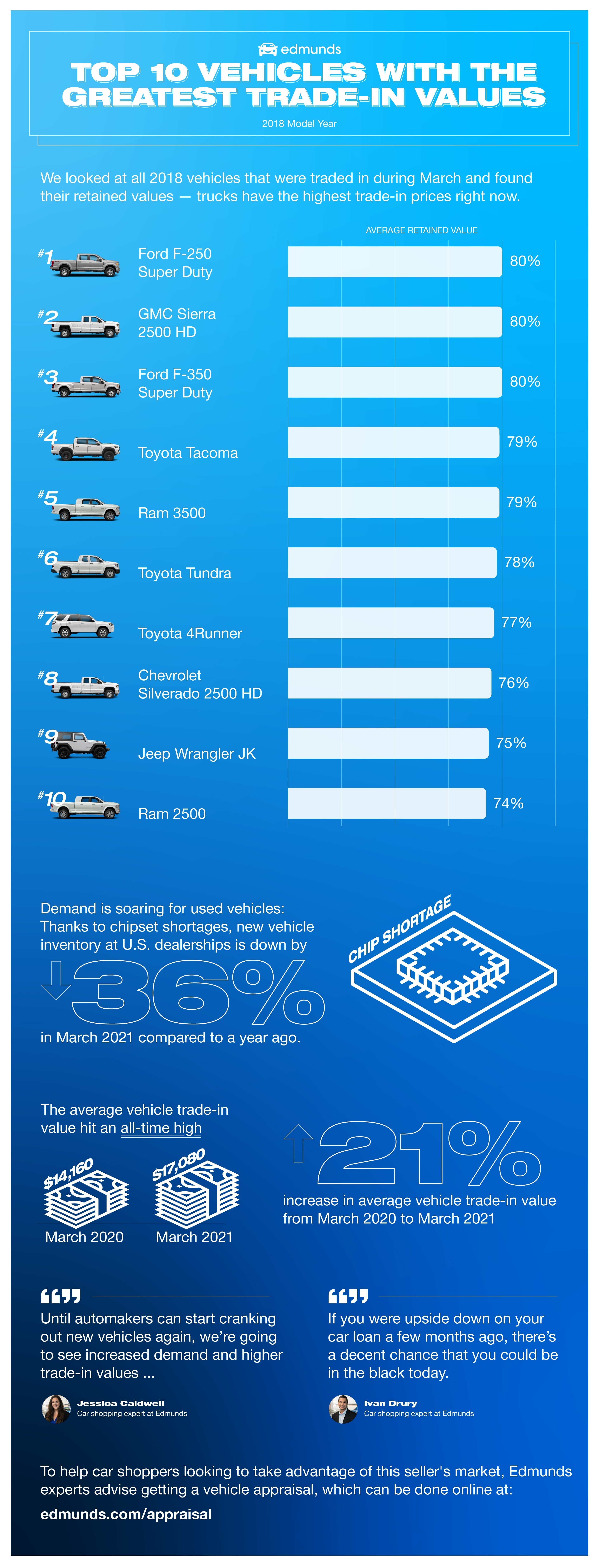
In recent years, the used car market has experienced unprecedented volatility. Disruptions in global supply chains and shifts in consumer demand have caused used car prices to fluctuate wildly. From a money management standpoint, this means that “book values” (the estimated values found in guides) may lag behind real-world market conditions. Factors such as the rise of electric vehicles (EVs) and fluctuating fuel prices can significantly impact the residual value of specific makes and models. For instance, a spike in gas prices typically increases the trade-in value of hybrids while depressing the value of large, gas-guzzling SUVs.
The Role of Mileage and Maintenance Records in Financial Appraisal
Mileage is often the single most significant variable in the valuation equation. From an actuarial standpoint, every mile driven represents a marginal decrease in the remaining life of the vehicle’s components. Most valuation models use “mileage bands”—for example, a car with 29,000 miles is often valued significantly higher than the same car with 31,000 miles, simply because it crosses a psychological and mechanical threshold. Furthermore, meticulous maintenance records act as “financial insurance” for your trade-in value. A vehicle with a documented service history suggests lower future liability for the dealer, which can translate into a higher trade-in offer.
Tools and Methodology for Precise Valuation
In the digital age, determining the value of your automotive asset has become more transparent, but it requires a disciplined approach to data. To get an accurate figure, you must look beyond a single source and understand the methodologies used by different valuation platforms.
Leveraging Independent Valuation Platforms
Platforms such as Kelly Blue Book (KBB), Edmunds, and NADA (National Automobile Dealers Association) are the “Big Three” of automotive valuation. KBB is widely used by consumers and is excellent for establishing a baseline for “Fair Market Value.” NADA guides are often favored by lenders and insurance companies because they focus more heavily on wholesale and auction data. For a savvy car owner, checking all three provides a “valuation range” rather than a single number, which is a much more realistic way to view an asset.
The Difference Between Trade-In Value, Private Party Value, and Retail Price
One of the most common financial mistakes car owners make is confusing these three distinct figures.
- Trade-In Value: This is the wholesale price a dealer is willing to pay. It is the lowest of the three because the dealer must account for reconditioning costs and a profit margin.
- Private Party Value: This is what you could expect to get if you sold the car yourself to another individual. It is generally 10% to 15% higher than trade-in value.
- Retail Price: This is what a dealer would list the car for on their lot.
From a financial planning perspective, you must decide if the “premium” of a private sale justifies the “cost” of your time and the potential risks involved in a private transaction.

Regional Economic Factors: Why Your Zip Code Affects the Price
Automotive value is not uniform across the country. Economics 101 dictates that price is a function of supply and demand, and demand is highly regional. A four-wheel-drive truck will command a higher trade-in value in the mountainous regions of Colorado than it will in the flatlands of Florida. Conversely, a convertible will see a value premium in sunnier climates. When using online valuation tools, always ensure you are inputting your specific zip code to account for these regional market variations.
Strategies to Optimize Your Trade-In ROI
Maximizing the trade-in value of your car is akin to “staging” a house before a sale. Small, strategic investments can lead to a disproportionately high return on investment (ROI).
Pre-Appraisal Prep: Small Investments for Larger Returns
Before taking your car to a dealership for an appraisal, consider its “curb appeal.” A professional detail, which might cost $150 to $300, can often add $500 to $1,000 to a trade-in offer. Dealers are looking at how much work they will have to put into the car before they can sell it. If the car is spotless, it signals to the appraiser that the vehicle has been well-maintained, reducing their perceived risk. Addressing small “eyesore” issues—like a cracked windshield or a missing hubcap—can also prevent a dealer from “nickel-and-diming” your offer.
Timing the Market: Seasonal Trends and Tax Refund Impact
There are optimal times of the year to trade in a vehicle. Historically, the spring is a “seller’s market” in the automotive world. As tax refunds hit bank accounts, more buyers enter the used car market, increasing demand and, consequently, trade-in values. Conversely, the end of the calendar year is often the best time to buy a new car but can be a tougher time to get a high trade-in value, as dealerships are often overstocked with trade-ins from holiday promotions.
The Art of Negotiation: Separating the Trade-In from the Purchase
A common tactic used by dealerships is to “shell game” the numbers. They may offer you a high trade-in value but refuse to budge on the sticker price of the new car, or vice-versa. From a wealth-management perspective, you should treat the trade-in and the new purchase as two entirely separate transactions. Establish the purchase price of the new vehicle first, and only once that is finalized, introduce the trade-in. This ensures that the equity in your old car isn’t being used to mask a poor deal on the new one.
The Financial Implications of Trading In vs. Selling Privately
The decision to trade in a car versus selling it privately is a classic study in opportunity cost and tax strategy.
Tax Advantages of Trading In: The Hidden Savings
In many jurisdictions, there is a significant tax incentive to trade in your vehicle at a dealership. Most states only charge sales tax on the difference between the price of the new car and the value of the trade-in. For example, if you are buying a $40,000 car and trading in a car worth $20,000, you only pay sales tax on the $20,000 difference. If your state sales tax is 8%, that is a $1,600 savings. To get the same net financial result from a private sale, you would need to sell the car for $21,600. Always calculate the “tax-adjusted trade-in value” before deciding to sell privately.
Opportunity Cost: Valuing Your Time vs. the Private Sale Premium
Selling a car privately requires listing the vehicle, responding to inquiries, vetting potential buyers, and handling the legal paperwork. For a high-earning professional or a busy entrepreneur, the time required to earn an extra $2,000 on a private sale might actually represent a net loss when considering their hourly rate. Trading in a car is a “frictionless” transaction that takes place in a matter of hours, providing immediate liquidity that can be applied to the new purchase.

Managing Negative Equity and the “Upside Down” Loan Scenario
One of the most dangerous financial positions to be in is having “negative equity”—meaning you owe more on your car loan than the car is worth. If your trade-in value is $15,000 but your loan balance is $18,000, you are “$3,000 underwater.” Dealers will often offer to “roll” this negative equity into your new car loan. From a personal finance standpoint, this is a precarious move, as it compounds your interest payments and puts you even deeper into negative equity on the next vehicle. In such cases, the best financial move is often to delay the trade-in until the loan balance is at least equal to the trade-in value.
In conclusion, the trade-in value of your car is a dynamic figure influenced by depreciation, market trends, and regional demand. By utilizing professional valuation tools, timing your transaction strategically, and understanding the tax implications, you can transform the process from a simple “car swap” into a sophisticated financial maneuver that preserves your capital and optimizes your automotive investment.
aViewFromTheCave is a participant in the Amazon Services LLC Associates Program, an affiliate advertising program designed to provide a means for sites to earn advertising fees by advertising and linking to Amazon.com. Amazon, the Amazon logo, AmazonSupply, and the AmazonSupply logo are trademarks of Amazon.com, Inc. or its affiliates. As an Amazon Associate we earn affiliate commissions from qualifying purchases.