
In the modern landscape of remote and hybrid work, the question “how much is Zoom?” is rarely about a single price point. Since its meteoric rise to becoming a household name, Zoom Video Communications has evolved from a simple video conferencing app into a sophisticated, unified communications platform (UCaaS). Today, the cost of Zoom is tied directly to the level of technical integration, AI capability, and administrative control a user or organization requires.
Choosing the right Zoom plan requires a deep dive into the technical specifications and the “Zoom One” ecosystem. This guide explores the pricing tiers through a technical lens, helping you understand not just the cost, but the software infrastructure you are investing in.
The Evolution of Zoom: From Simple Video Calls to an AI-Powered Workspace
To understand the current pricing structure, one must understand the shift toward “Zoom One.” Zoom One is the company’s bundled offering that combines chat, phone, meetings, whiteboard, and AI into a single interface. The goal is to reduce “app fatigue” by providing a centralized tech stack.
The Core Architecture of Zoom One
The Zoom One architecture is built on a proprietary multimedia routing technology that prioritizes low latency and high-quality video even in low-bandwidth environments. When you pay for a higher tier, you aren’t just paying for “more minutes”; you are paying for increased access to the Zoom cloud infrastructure, expanded storage for cloud recordings, and more robust API permissions for third-party integrations.
How AI Companion is Redefining Meeting Productivity
One of the most significant technical additions to Zoom’s value proposition is the Zoom AI Companion. Unlike many competitors who charge a premium per-user fee for AI features, Zoom has integrated its generative AI capabilities into most paid plans at no additional cost. This technical layer uses large language models (LLMs) to provide automated meeting summaries, compose chat responses, and highlight key action items. For a technical team, this means the “cost” of the software now includes a built-in productivity engine that automates documentation.
Decoding the Tiers: Which Plan Fits Your Technical Workflow?
Zoom’s pricing is divided into several distinct tiers, each designed for different scales of deployment. Understanding the technical limitations and “ceilings” of each tier is vital for long-term planning.
The Basic (Free) Plan: Limits and Capabilities
The Free tier is the entry point into the ecosystem. While it offers high-definition video and audio, it is strictly capped.
- Duration Limits: Meetings are limited to 40 minutes.
- Technical Constraints: You lack cloud recording capabilities, meaning all recordings must be stored locally on your hardware.
- Collaboration Tools: You get access to a basic version of the Zoom Whiteboard and Team Chat, but you lose out on advanced administrative controls and reporting.
Zoom Pro and Business: Scaling for Professional Teams
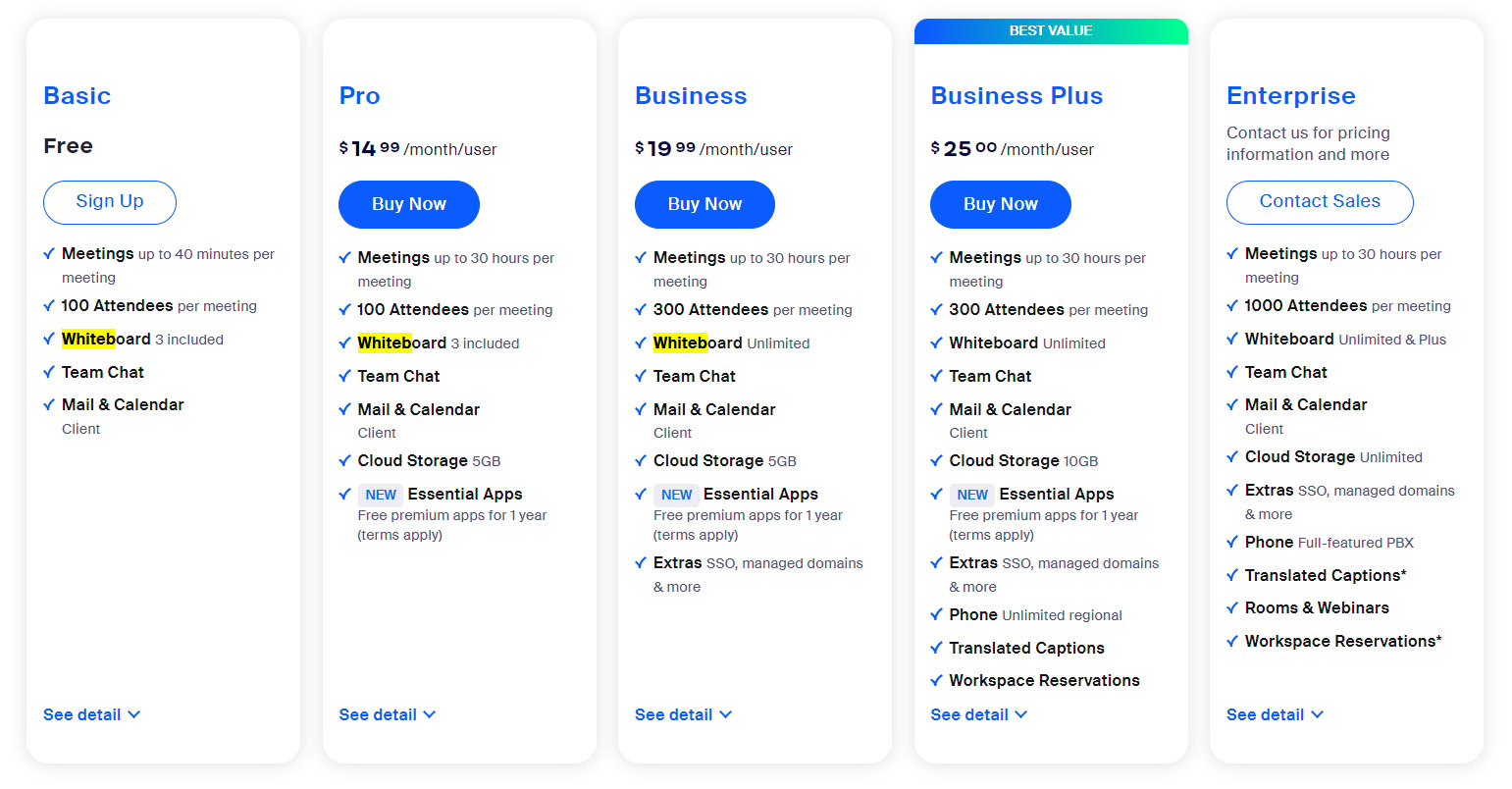
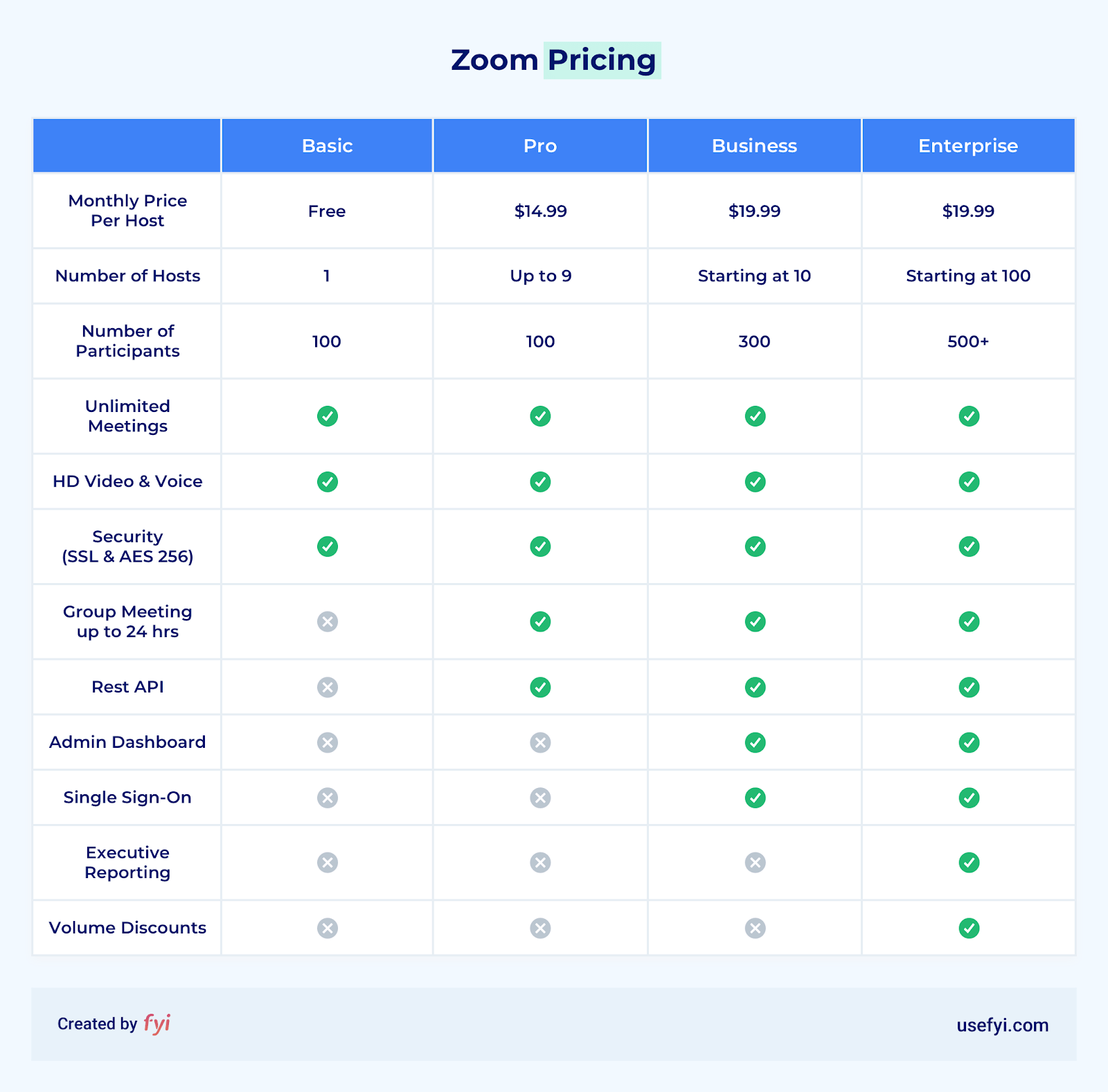
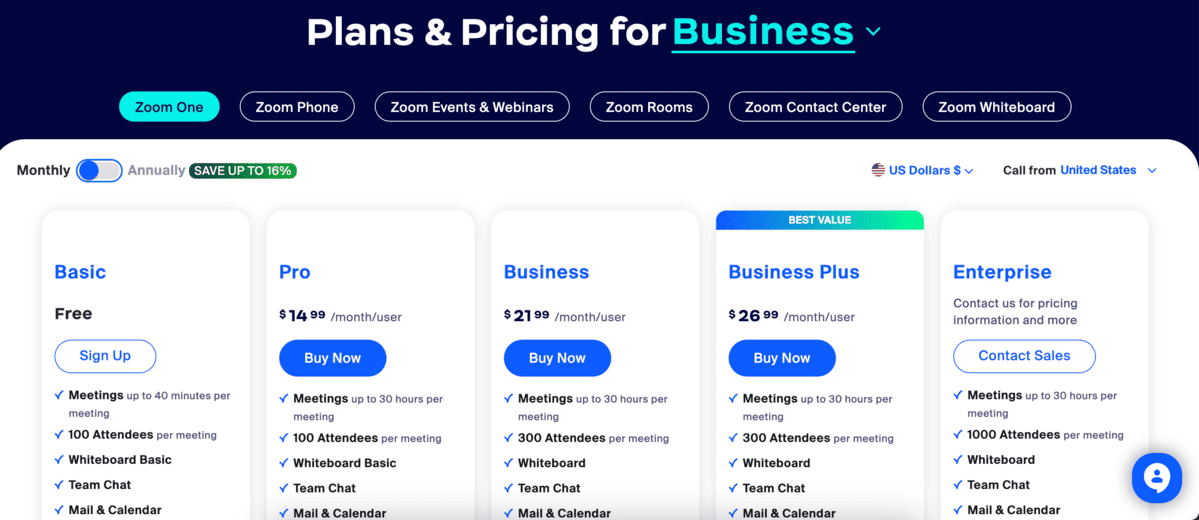
The Pro Plan (approx. $149.90/year/user) is designed for small teams and power users. It removes the 40-minute limit and provides 5GB of cloud storage.
The Business Plan (approx. $199.90/year/user) is where the technical features become more enterprise-ready. It allows for up to 300 participants and, more importantly, offers Single Sign-On (SSO). From a digital security and IT management perspective, SSO is a critical feature that allows organizations to manage user access via their existing identity providers like Okta or Azure AD.
Enterprise Solutions: Managing High-Volume Infrastructure
For massive organizations, Zoom Enterprise provides the highest level of technical support and capacity. These plans often require custom quoting but typically support up to 1,000 participants. The Enterprise tier includes unlimited cloud storage and full-stack “Executive Business Reviews,” which analyze usage telemetry to help IT departments optimize their network performance for video traffic.
Specialized Tech Modules: Beyond Standard Video Conferencing
When calculating “how much is Zoom,” businesses often need to look beyond the standard meeting license. Zoom has branched into specialized software modules that solve specific organizational challenges.
Zoom Phone and Contact Center Integration
Zoom Phone is a cloud-based PBX (Private Branch Exchange) system. Instead of maintaining physical phone lines, organizations can run their entire telephony stack through the Zoom app. This uses VoIP (Voice over IP) technology that integrates directly with the meeting client. Pricing for Zoom Phone is typically structured as a per-user monthly add-on or as part of a “Zoom One Business Plus” bundle.
Zoom Rooms: The Hardware-Software Synergy
Zoom Rooms is the software-defined gallery space for conference rooms. Unlike the desktop app, Zoom Rooms is designed to run on dedicated hardware (like Neat, Poly, or Logitech appliances). The cost here is two-fold: the software license (approx. $499/year/room) and the hardware investment. Technically, Zoom Rooms utilizes “ultrasonic proximity detection” to allow users to start meetings from their personal devices without touching shared surfaces.
Zoom Events and Webinars: Technical Requirements for Mass Broadcasting
For those looking to host virtual conferences, Zoom Webinars and Zoom Events provide the technical backend for one-to-many communication. These licenses are priced based on the number of attendees (ranging from 500 to 10,000+). Technically, these sessions differ from “Meetings” because they utilize a different stream routing protocol that prioritizes the host’s video feed and limits interactive data packets from attendees to prevent lag.
Digital Security and Privacy in the Zoom Ecosystem
A significant portion of what you pay for in a Zoom subscription goes toward the maintenance of a global security infrastructure. For many tech-driven companies, security is the primary factor in choosing a paid tier over a free one.
End-to-End Encryption (E2EE) Implementation
Zoom offers End-to-End Encryption for both free and paid users, but the management of encryption keys is more sophisticated in higher tiers. E2EE ensures that the communication between participants is encrypted using cryptographic keys known only to the devices of those participants. This means neither Zoom’s servers nor any third party can access the raw video/audio data.
Admin Controls and Data Residency Compliance
In the Business and Enterprise tiers, IT administrators gain access to “Data Residency” controls. This allows a company to specify which global data centers its real-time meeting traffic should flow through. For companies operating under strict GDPR or CCPA frameworks, this technical control is a non-negotiable requirement that justifies the cost of the premium tiers. Additionally, paid plans offer advanced dashboard analytics, allowing IT teams to monitor packet loss, jitter, and latency across the entire organization in real-time.
Evaluating the ROI: Is the Tech Investment Worth It?
When determining the value of Zoom, one must look at how the software integrates with the rest of the professional tech stack. A tool that exists in a vacuum is rarely worth the subscription fee.
Integration with Third-Party Software (Slack, Salesforce, Microsoft)
Zoom’s App Marketplace features over 2,500 integrations. For a sales team, the integration with Salesforce—where Zoom can automatically log meeting recordings and AI-generated summaries into the CRM—represents a massive saving in human labor. From a technical standpoint, Zoom’s robust API and Webhooks allow developers to build custom workflows, making it a “platform” rather than just an “app.”
Future-Proofing with Zoom’s Development Roadmap
Finally, the cost of Zoom covers the continuous deployment of new features. The company has heavily invested in “Workvivo” (an employee engagement platform) and specialized AI tools for sales (Zoom Revenue Accelerator). By subscribing to the Zoom ecosystem, organizations are essentially outsourcing their communication R&D to a company that is at the forefront of the UCaaS industry.
In conclusion, “how much is Zoom” is a question of scale and technical necessity. While a solo freelancer may find the $150/year Pro plan sufficient, a global enterprise will look toward the Zoom One bundles to consolidate their phone, meeting, and AI needs into a single, secure, and manageable technical infrastructure. The true value lies not in the video call itself, but in the AI-driven productivity and the enterprise-grade security that sits beneath the surface of the interface.
aViewFromTheCave is a participant in the Amazon Services LLC Associates Program, an affiliate advertising program designed to provide a means for sites to earn advertising fees by advertising and linking to Amazon.com. Amazon, the Amazon logo, AmazonSupply, and the AmazonSupply logo are trademarks of Amazon.com, Inc. or its affiliates. As an Amazon Associate we earn affiliate commissions from qualifying purchases.