
To ask “who owns Google” is to peel back the layers of one of the most sophisticated corporate structures in modern financial history. While the name “Google” is synonymous with the internet itself, the entity that owns the search engine, YouTube, and Android is actually a multinational conglomerate known as Alphabet Inc. Since its massive restructuring in 2015, Google has operated as a subsidiary, meaning its ownership is distributed across thousands of institutional investors, individual shareholders, and the original founders who still maintain a vice-grip on the company’s direction.

Understanding the ownership of Google requires a foray into the world of high-stakes finance, stock classifications, and the strategic maneuvers of Silicon Valley elite. It is not a simple matter of a single person sitting at the top of a pyramid; rather, it is a complex web of equity and voting power.
The Evolution from Google to Alphabet Inc.
In 2015, Larry Page and Sergey Brin announced a radical transformation of their business. They created Alphabet Inc., a parent company designed to house Google alongside its more experimental ventures, such as Waymo (autonomous vehicles) and Verily (life sciences). This move was primarily a financial one, aimed at providing greater transparency to Wall Street and allowing the core “Google” business—which generates the lion’s share of revenue—to be managed separately from the high-risk “Other Bets.”
The 2015 Restructuring
Before 2015, Google was a singular entity that balanced search engine optimization and advertising with experimental moonshots. Investors often found it difficult to parse how much money was being diverted from the profitable search business into unproven technologies. By forming Alphabet, the company separated its financial reporting. Today, when you “buy Google,” you are technically purchasing shares of Alphabet Inc. This structure protects the core assets while allowing the conglomerate to acquire or spin off smaller companies without disrupting the primary revenue stream.
How Alphabet Functions as a Parent Company
Alphabet operates as a holding company. Under this umbrella, Google remains the dominant child, encompassing Search, Ads, Maps, YouTube, and the Google Cloud Platform. From a financial perspective, Google’s ownership is synonymous with Alphabet’s ownership. The parent company’s board of directors oversees the capital allocation across all subsidiaries, ensuring that the profits from the search engine are strategically reinvested into future-leaning technologies or returned to shareholders through buybacks.
The Power Dynamics: Larry Page and Sergey Brin
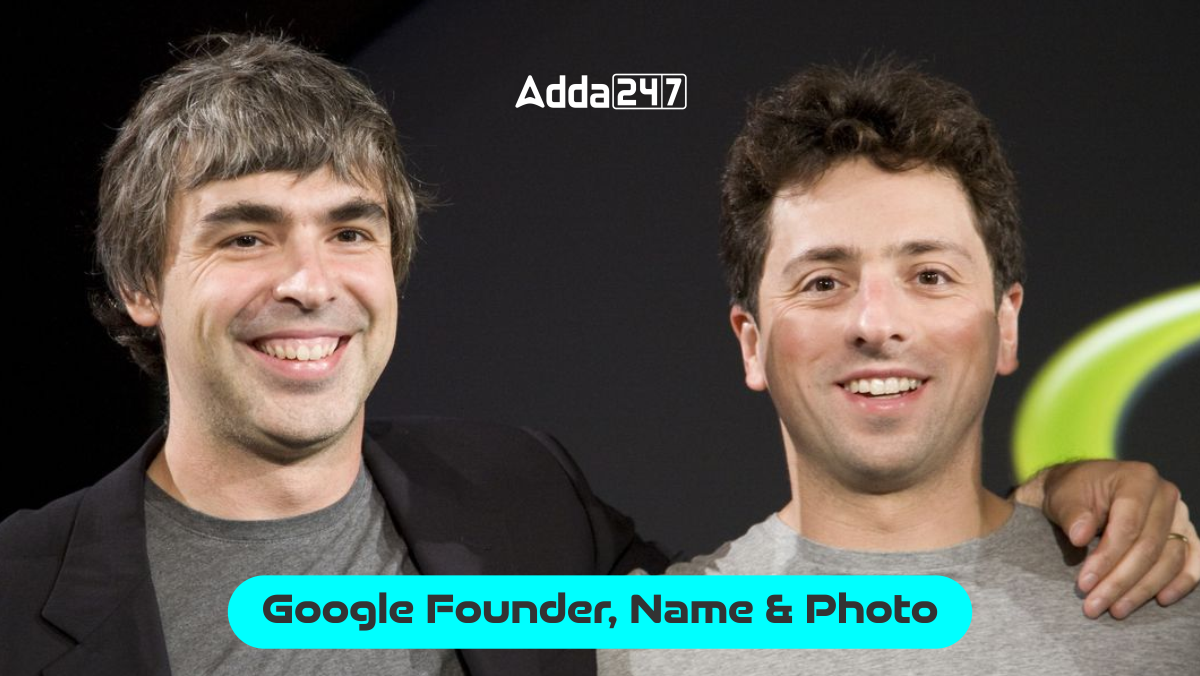
While the public can buy and sell Google stock daily, the question of “control” is distinct from the question of “equity.” In the world of business finance, ownership is often measured by voting power rather than just the number of shares held. This is where the founders, Larry Page and Sergey Brin, remain the most influential figures in the company.
Founders’ Control and Class B Shares
Google’s initial public offering (IPO) in 2004 utilized a dual-class share structure, a move that was controversial at the time but has since been mimicked by other tech giants like Meta. The founders created “Class B” shares, which are not traded on public exchanges. These shares carry ten votes each, whereas the “Class A” shares sold to the public carry only one vote each. Even though Page and Brin have stepped back from day-to-day operations—handing the reins to CEO Sundar Pichai—they still own the majority of these super-voting shares.
The Voting Power Discrepancy
As of recent filings, Larry Page and Sergey Brin collectively own roughly 11% to 12% of Alphabet’s total outstanding equity. However, because of the Class B structure, they control over 50% of the total voting power. This means that on any major corporate decision—such as electing board members, approving mergers, or changing corporate policy—the founders have the final say. Effectively, while the “owners” are the millions of people who hold stock, the “controllers” remain the founders. This concentration of power is a safeguard intended to prevent short-term market pressures from derailing the company’s long-term vision.
Institutional Investors: The Silent Giants
If you look at the list of the largest shareholders of Alphabet Inc., you won’t find a single billionaire’s name at the very top. Instead, you will find the names of massive financial institutions. These entities hold the stock on behalf of millions of individual investors, pension funds, and retirement accounts.

Vanguard, BlackRock, and State Street
The “Big Three” asset managers—Vanguard Group, BlackRock, and State Street Global Advisors—are the largest institutional owners of Google. Vanguard typically holds around 7% to 8% of the company, while BlackRock follows closely with approximately 6%. These institutions do not manage the company, but their influence is felt through proxy voting and their sheer scale. Because Alphabet is a staple of the S&P 500 and various NASDAQ indices, any index fund or ETF that tracks the tech sector must, by definition, own a significant portion of Google.
The Role of Mutual Funds and ETFs
For the average person, owning Google happens indirectly. If you have a 401(k) or a retirement portfolio, you are likely a fractional owner of Google. Mutual funds like the Fidelity Contrafund or the T. Rowe Price Blue Chip Growth Fund hold billions of dollars worth of Alphabet stock. This institutional ownership provides the stock with a level of stability, as these large entities tend to hold shares for the long term, unlike high-frequency retail traders.
Understanding Alphabet’s Stock Classes (GOOG vs. GOOGL)
For an investor looking to claim their piece of Google, the stock market offers two distinct paths. If you look up Google on a trading app, you will see two different tickers: GOOG and GOOGL. Understanding the difference between these is essential to understanding how ownership is distributed among the public.
Class A vs. Class C Shares
- GOOGL (Class A): These are common shares that come with one vote per share. These are the shares typically held by institutional investors and retail traders who want a theoretical say in corporate governance.
- GOOG (Class C): These shares were created during a 2014 stock split. They carry zero voting rights. They were designed to allow the company to issue stock for employee compensation and acquisitions without diluting the voting power of the founders.
Why the Distinction Matters for Investors
From a purely financial standpoint, both share classes generally trade at similar prices and represent the same economic interest in the company’s earnings. However, the existence of Class C (non-voting) shares is a testament to the founders’ desire to maintain control. By issuing non-voting shares, Alphabet can raise capital or reward executives with equity while ensuring that the core decision-making power never leaves the hands of Larry Page and Sergey Brin. For the retail investor, the choice between GOOG and GOOGL is often a matter of preference regarding whether they value a symbolic vote.
Individual Stakeholders and Executive Ownership
Beyond the founders and the massive institutions, a significant portion of Google is owned by its top executives and board members. This alignment of interest is a standard practice in corporate finance, ensuring that those running the company have “skin in the game.”
Sundar Pichai’s Equity and Role
Sundar Pichai, the CEO of both Google and Alphabet, is one of the most prominent individual shareholders outside of the founders. Over the years, Pichai has been granted hundreds of millions of dollars in restricted stock units (RSUs) as part of his compensation package. While his ownership percentage is a fraction of a percent compared to the founders, his net worth is intrinsically tied to Alphabet’s performance. His leadership is evaluated by the board, which represents the interests of all shareholders, including the institutional giants mentioned earlier.
Insider Trading and Board Influence
Other key figures, such as Ruth Porat (President and Chief Investment Officer) and members of the Board of Directors, hold significant amounts of stock. The board serves as a bridge between the shareholders and the executive team. They are responsible for ensuring that the company remains profitable and compliant with financial regulations. While the founders hold the voting power, the board provides the fiduciary oversight required for a publicly traded company.
Conclusion: Who Really Owns the Search Giant?
In the final analysis, the “owner” of Google is a multifaceted concept. If you define ownership by equity, the owners are the institutional investors like Vanguard and BlackRock, along with millions of individual stockholders worldwide. If you define ownership by control, the owners are Larry Page and Sergey Brin, whose Class B shares allow them to outvote the rest of the world combined.
Financially, Google (Alphabet Inc.) is a public company, meaning it belongs to the market. It is a pillar of the global economy, held in retirement accounts and sovereign wealth funds. Yet, its governance remains a private fortress, shielded by a dual-class share structure that ensures its creators maintain its trajectory. For the modern investor, owning Google is not just about owning a search engine; it is about holding a stake in a diversified financial engine that dominates the digital age.
aViewFromTheCave is a participant in the Amazon Services LLC Associates Program, an affiliate advertising program designed to provide a means for sites to earn advertising fees by advertising and linking to Amazon.com. Amazon, the Amazon logo, AmazonSupply, and the AmazonSupply logo are trademarks of Amazon.com, Inc. or its affiliates. As an Amazon Associate we earn affiliate commissions from qualifying purchases.