
JPMorgan Chase & Co. stands as a monolith in the global financial landscape. As the largest bank in the United States and one of the most significant financial institutions in the world, its influence stretches from the local mortgage markets of middle America to the complex derivatives desks of London and Hong Kong. Yet, for a firm that manages trillions of dollars in assets, a common question remains for many investors and observers: Who actually owns JPMorgan?
Unlike the days of the early 20th century when the bank was effectively the personal instrument of J.P. Morgan himself, today’s entity is a massive, publicly-traded corporation. Ownership is not held by a single dynasty or a shadowy figure in a boardroom; instead, it is distributed among millions of individual and institutional investors. Understanding this ownership structure is essential for any student of finance, as it reveals the inner workings of modern capitalism and the concentrated power of institutional asset management.
The Institutional Powerhouses: Who Truly Holds the Reins?
In the modern financial era, the “owners” of the world’s largest companies are rarely individuals. Instead, they are institutional investors—massive organizations that manage money on behalf of others. For JPMorgan Chase (NYSE: JPM), these institutions hold the overwhelming majority of the company’s outstanding shares.
The Rise of the “Big Three” Asset Managers
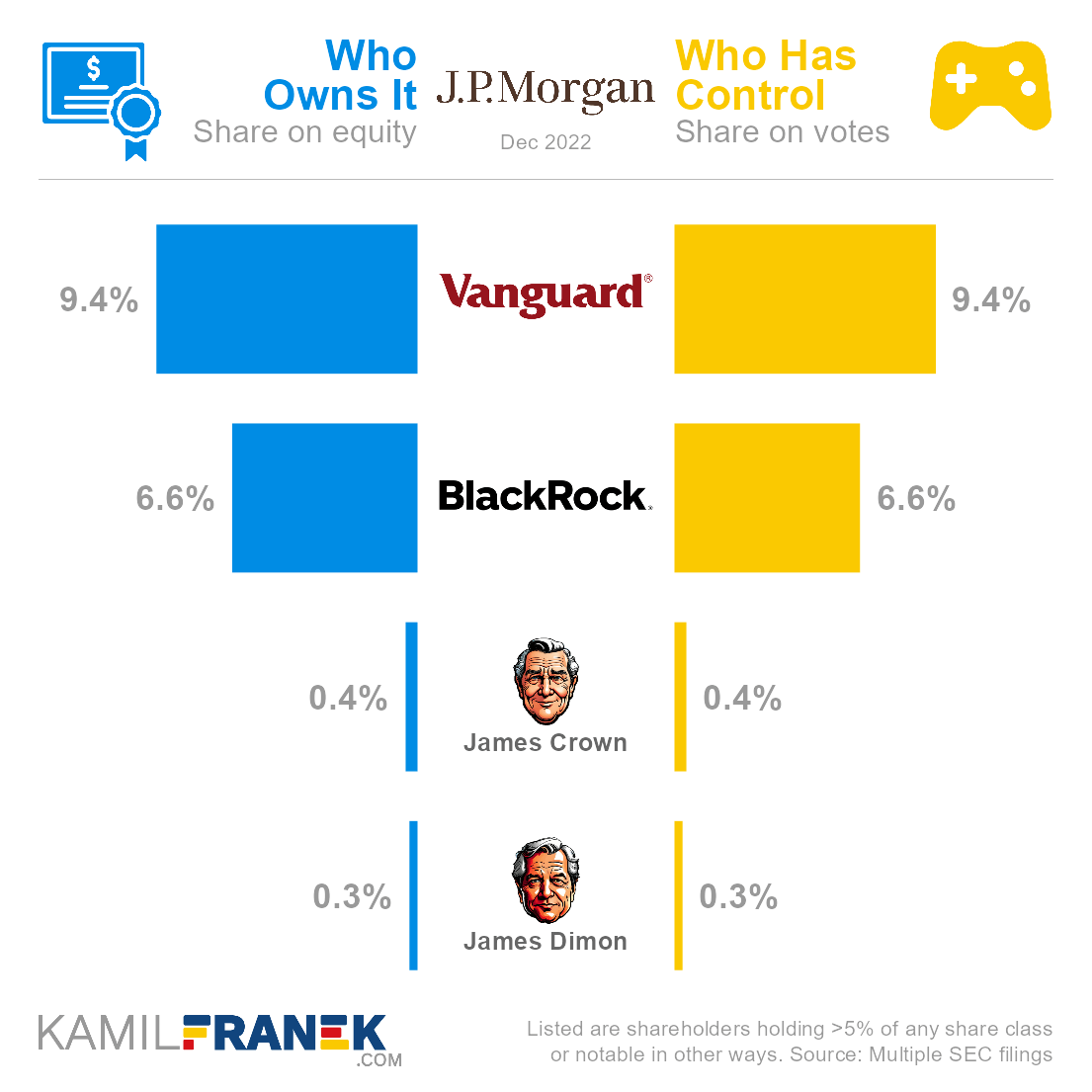
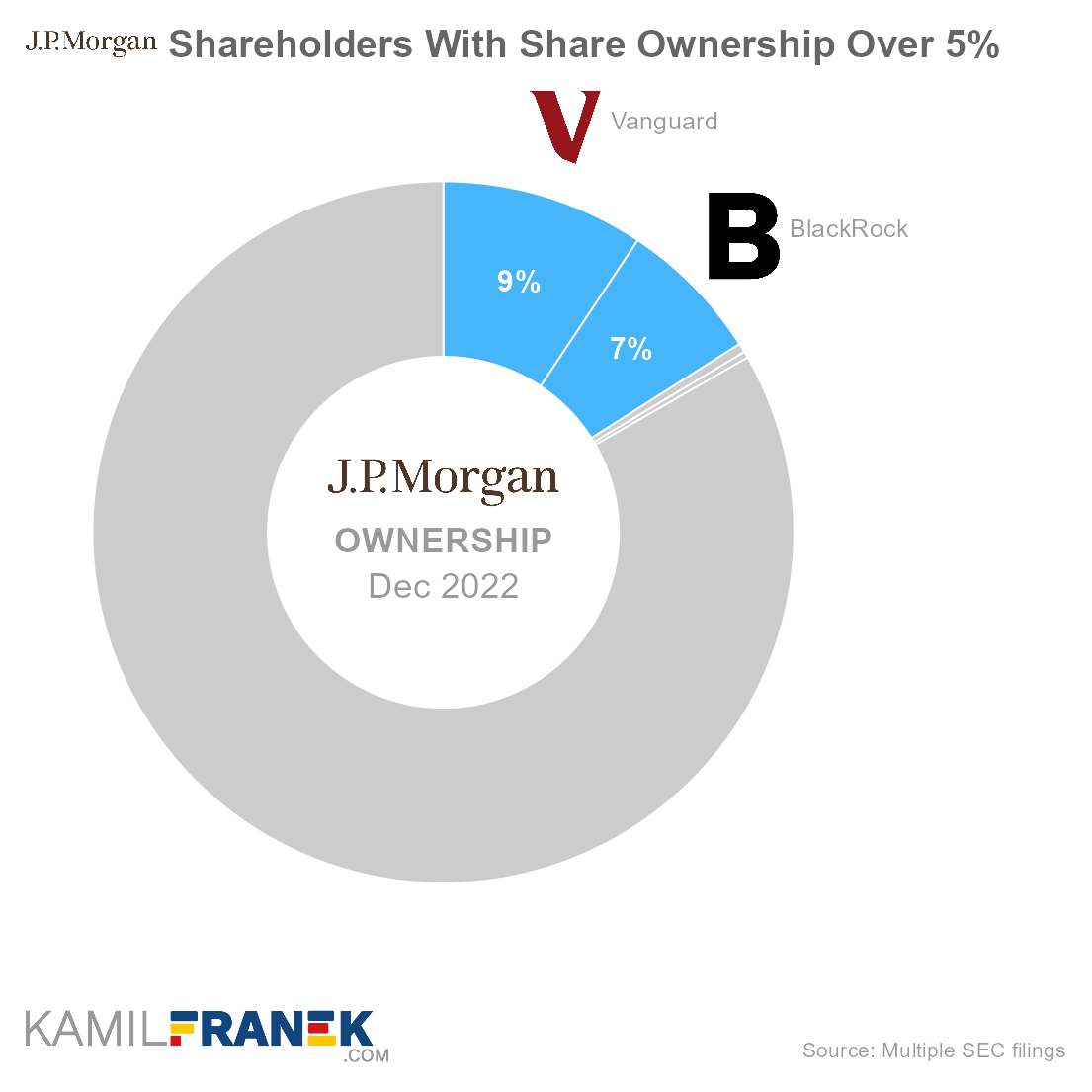
The most significant players in the ownership of JPMorgan are the “Big Three” of the asset management world: The Vanguard Group, BlackRock, and State Street Corporation. As of recent filings, these three entities combined often control upwards of 18% to 20% of the total shares outstanding.
The Vanguard Group typically holds the top spot, often owning roughly 8% to 9% of the bank. BlackRock, the world’s largest asset manager, follows closely behind. It is important to note that while these firms are listed as the owners, they are acting as fiduciaries. The actual economic interest belongs to the millions of people who own shares in Vanguard or BlackRock mutual funds and ETFs. When you buy a S&P 500 index fund, you are, in a small way, a partial owner of JPMorgan.
Pension Funds and Insurance Companies
Beyond the headline names, a significant portion of JPMorgan is owned by public and private pension funds. Organizations like the California Public Employees’ Retirement System (CalPERS) or the various teachers’ retirement funds across the globe hold JPM stock to provide long-term stability and dividends for their retirees. Similarly, large insurance companies hold shares as part of their capital reserves, viewing the bank as a “blue-chip” cornerstone of a diversified portfolio.
The Role of Proxy Voting
Institutional ownership isn’t just about collecting dividends; it’s about power. These massive shareholders exert influence through proxy voting. During annual general meetings, firms like BlackRock and Vanguard vote on board appointments, executive compensation, and environmental or social proposals. While they rarely interfere in day-to-day operations, their collective voice can steer the long-term strategic direction of the bank, making them the ultimate arbiters of corporate governance.
Executive Ownership and the Role of Jamie Dimon
While institutional giants own the largest blocks of stock, the people who run the bank also have “skin in the game.” In the world of corporate finance, internal ownership is often viewed as a positive sign, as it aligns the interests of management with those of the shareholders.
Jamie Dimon’s Personal Stake
Jamie Dimon, the long-standing Chairman and CEO of JPMorgan Chase, is one of the few “celebrity” bankers of the 21st century. Unlike many of his peers, Dimon has amassed a significant personal fortune through his tenure at the bank, much of it held in JPM stock. While his ownership percentage is a fraction of a percent (typically around 0.15% to 0.20% of total shares), in dollar terms, this represents hundreds of millions—and sometimes billions—of dollars.
Dimon has famously been a “net buyer” of his own company’s stock, particularly during market downturns. This reinforces investor confidence, signaling that the leadership believes in the intrinsic value of the firm.
Management and Board Equity
Beyond the CEO, other members of the “Operating Committee” and the Board of Directors are required to hold substantial amounts of stock. This is part of a broader trend in business finance to move away from pure cash salaries toward equity-based compensation. By granting restricted stock units (RSUs) and performance-based shares, the bank ensures that if the shareholders suffer due to poor management, the executives suffer financially as well.
The Insider Influence
While “insiders” (officers and directors) own less than 1% of the company collectively, their influence is disproportionate. They control the narrative, the strategy, and the operational execution. In a company with a market capitalization exceeding $500 billion, even a 0.5% stake is a massive concentration of wealth that ensures the leadership remains focused on maintaining the bank’s dominant market position and dividend-paying capacity.
Understanding the Publicly Traded Structure
To answer “who owns JPMorgan,” one must look at the mechanics of its public listing on the New York Stock Exchange. JPMorgan is a C-Corporation, meaning it is a legal entity entirely separate from its owners.
Shares Outstanding and Market Capitalization
Ownership of the bank is divided into billions of individual shares. As of current market data, there are approximately 2.8 billion shares of JPM outstanding. “Market Capitalization” is the total value of these shares. Because the stock price fluctuates daily based on earnings reports, interest rate changes, and global economic news, the “value” of the owners’ stake is constantly in flux.
This public structure allows for high liquidity. Anyone with a brokerage account and a few hundred dollars can become an owner of JPMorgan. This democratization of ownership is a hallmark of the American financial system, even if the “voting power” remains concentrated in the hands of the aforementioned institutional giants.
Dividend Policy and Shareholder Value
For many owners, the primary motivation for holding JPM stock is the dividend. JPMorgan is known for its robust capital return program. After passing the Federal Reserve’s annual “stress tests,” the bank typically announces dividend increases and share buyback programs.
Share buybacks are a unique way of altering ownership. When the bank buys its own shares back from the open market and retires them, the remaining shareholders—whether they are a retail investor in Ohio or a pension fund in Norway—suddenly own a larger percentage of the company. This “concentration of equity” is a key tool in business finance used to drive up the value of individual shares.
The Ticker Symbol JPM
The ticker symbol “JPM” represents the ownership unit. It is one of the most heavily traded stocks in the world. Its performance is often seen as a bellwether for the health of the entire U.S. economy. When JPM reports strong earnings, it usually signals that consumers are spending and businesses are borrowing, which reflects well on the diversified group of people and entities that own the stock.
The Global Impact of JPMorgan’s Ownership
Who owns JPMorgan matters because of the bank’s status as a Systemically Important Financial Institution (SIFI), often referred to as “Too Big to Fail.” The ownership structure has implications that go far beyond simple profit and loss.
A Global Shareholder Base
While the largest institutions are U.S.-based, the ownership of JPMorgan is truly international. Sovereign wealth funds from the Middle East, private equity groups in Europe, and individual investors in Asia all hold JPM in their portfolios. This globalized ownership ensures that the bank operates with an international perspective, catering to global markets and cross-border trade.
Regulatory Oversight and Ownership Restrictions
Because JPMorgan is a bank, ownership is subject to strict regulatory scrutiny. Under the Bank Holding Company Act, any entity looking to acquire a “controlling interest” (generally defined as 25% or more of voting shares, or even 10% in some cases) must receive approval from the Federal Reserve. This prevents any single hostile actor or foreign government from unilaterally taking over the bank, ensuring that its ownership remains fragmented and stable.
The Responsibility of Ownership
In recent years, the concept of “stakeholder capitalism” has complicated the traditional view of ownership. While the shareholders are the legal owners, the bank’s leadership increasingly acknowledges responsibility to employees, customers, and the communities it serves. However, from a strictly financial and legal standpoint, the fiduciary duty of the Board remains to the shareholders—those millions of individuals and institutions that hold JPM stock.

Conclusion: A Collective Ownership Model
In summary, no single person “owns” JPMorgan. The days of John Pierpont Morgan’s singular rule are over. Today, the bank is owned by the “everyman” through their pension funds, the “giant” through asset management firms like Vanguard and BlackRock, and the “insider” through executive compensation packages.
This distributed ownership model is what allows JPMorgan Chase to command such a massive presence in the financial world. It provides the bank with a stable, diversified capital base that can weather economic storms while providing a platform for growth. For the individual investor, understanding this structure is the first step in recognizing how the wheels of global finance turn. Whether you are a direct shareholder or an indirect owner through a retirement account, you are part of a massive collective that holds the keys to one of the most powerful financial engines ever built. Through dividends, voting rights, and market appreciation, the ownership of JPMorgan Chase remains a cornerstone of the modern wealth-building narrative.
aViewFromTheCave is a participant in the Amazon Services LLC Associates Program, an affiliate advertising program designed to provide a means for sites to earn advertising fees by advertising and linking to Amazon.com. Amazon, the Amazon logo, AmazonSupply, and the AmazonSupply logo are trademarks of Amazon.com, Inc. or its affiliates. As an Amazon Associate we earn affiliate commissions from qualifying purchases.