
In the modern financial landscape, your account number is the primary key to your economic identity. It is the unique identifier that allows banks, employers, and service providers to direct funds to the correct destination. Despite its importance, many individuals find themselves at a loss when asked to provide this specific string of digits—often confusing it with a debit card number or a routing number.
Whether you are setting up a direct deposit for a new job, authorizing an automated bill payment, or transferring assets between investment platforms, knowing how to retrieve your account number quickly and securely is a fundamental skill in personal finance. This guide explores the various methods of locating this information, the structural differences between various financial identifiers, and the critical security measures required to keep your sensitive data safe.
1. Primary Methods for Retrieving Your Bank Account Number
Accessing your account number has become significantly easier with the advent of digital banking, yet several traditional methods remain highly reliable. Understanding where these numbers are stored can save time and prevent administrative errors.
Using Digital Banking Platforms
The most common way to find your account number today is through your financial institution’s mobile app or online portal. Once you log in, navigate to the specific account details page (e.g., “Checking” or “Savings”). For security purposes, most banks “mask” the account number, showing only the last four digits. Look for a “Show” or “View Details” button, which often requires a second layer of authentication, such as a biometric scan or a one-time passcode, to reveal the full sequence.
Analyzing a Physical Check
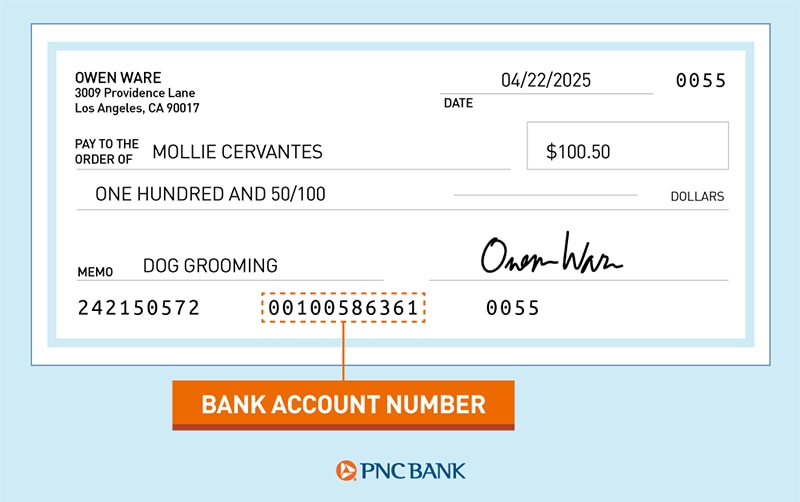
If you still use paper checks, your account number is printed directly on every leaf. At the bottom of a standard check, you will see a series of numbers printed in a special font known as MICR (Magnetic Ink Character Recognition). The first set of nine digits is the ABA Routing Number. The second set of digits, typically located in the middle or toward the end, is your unique Account Number. The third, shorter set is the individual check number. This method is foolproof for verifying the exact number required for electronic fund transfers (EFT).
Reviewing Monthly Statements
Your monthly bank statement—whether received via mail or downloaded as a PDF—contains your account number. It is usually located at the top of the first page under the heading “Account Summary” or “Account Information.” Statements are particularly useful because they provide a historical record and serve as official documentation if you need to provide proof of account ownership to a third party.
2. Differentiating Between Account, Routing, and Card Numbers
A frequent point of confusion in personal finance management is the distinction between the various strings of numbers associated with a single bank account. Confusing these can lead to failed transactions or, in worse cases, significant delays in receiving income.
The Account Number vs. The Routing Number
While the account number identifies your specific “bucket” of money within a bank, the routing number identifies the bank itself. Think of the routing number as the zip code and the account number as the specific street address. In the United States, the ABA Routing Number is a nine-digit code used to identify financial institutions for the purpose of processing checks and electronic transactions. You generally need both numbers to set up direct deposits or automated clearing house (ACH) transfers.
Why Your Debit Card Number is Not Your Account Number
A common mistake among young or new bank users is providing their 16-digit debit card number when asked for an account number. A debit card is merely a tool used to access your account; the card number is unique to the plastic itself and is subject to change if the card is lost, stolen, or expires. Your bank account number, conversely, remains constant regardless of how many times you replace your debit card.
Multi-Account Structures
Many individuals have “sub-accounts” under a single login. For instance, a “Checking” account and a “High-Yield Savings” account will have the same routing number (since they are at the same bank) but will have two entirely distinct account numbers. When setting up transfers, it is vital to ensure you have selected the specific number for the intended destination to avoid overdraft fees or misplaced funds.
3. Locating Numbers for Investment and Brokerage Accounts

Managing wealth often involves moving money between traditional banks and investment platforms. Locating account numbers for brokerage firms or retirement accounts follows a slightly different protocol than standard consumer banking.
Brokerage and Robo-Advisor Portals
For platforms like Vanguard, Fidelity, or newer fintech apps, account numbers are typically found under the “Profile” or “Account Settings” tab. Because these accounts are often used for wire transfers or ACATS (Automated Customer Account Transfer Service), the numbers may be longer or include alphanumeric characters. It is important to note that some brokerage accounts use a “clearing firm,” and the account number you provide for a wire transfer might differ from the internal ID shown on your dashboard.
Retirement Accounts (401k and IRA)
If you are attempting to roll over a 401(k) from a previous employer, finding the account number is essential. This is usually found on the quarterly statement provided by the plan administrator (such as Empower or T. Rowe Price). If the account is managed through an employer portal, you may need to navigate to the “Plan Documents” section to find the specific participant ID or account string required for a rollover.
Credit Card Account Numbers
Interestingly, unlike debit cards, a credit card number is the account number. However, if you are looking for the account number to set up an electronic payment from an external bank to pay off your credit card balance, you are actually looking for the 16-digit number on the front (or back) of the card. Some premium cards now offer “virtual account numbers” for online shopping to add a layer of security, but the primary account number remains the one used for official financial reporting.
4. Best Practices for Financial Security and Data Protection
Because your account number and routing number together are enough for a malicious actor to initiate unauthorized ACH withdrawals, protecting this information is a cornerstone of digital security.
Avoiding Phishing and Social Engineering
Legitimate financial institutions will never call, text, or email you asking for your full account number. Scammers often use “urgent” alerts about suspicious activity to trick users into revealing their credentials. If you receive a request for your account number, hang up and call the number on the back of your official bank card or log in directly through the bank’s verified app.
Secure Storage of Sensitive Data
Hard copies of bank statements and canceled checks should be stored in a fireproof safe or shredded when no longer needed. Digitally, avoid storing your account numbers in unencrypted “Notes” apps on your phone. Instead, utilize a reputable password manager that offers an “encrypted notes” feature. These tools use AES-256 bit encryption to ensure that even if your device is compromised, your financial identifiers remain inaccessible.
The Role of Two-Factor Authentication (2FA)
Always enable 2FA on your banking and investment apps. By requiring a second form of verification to view sensitive account details, you create a bottleneck for hackers. Even if someone manages to bypass your password, they will be unable to see your full account number without access to your physical 2FA device or biometric data.
5. What to Do if Your Account Number is Exposed
In the unfortunate event that your account number is compromised—perhaps through a data breach or a lost checkbook—immediate action is required to mitigate financial loss.
Notification and Freezing
The first step is to contact your bank’s fraud department immediately. They will likely close the compromised account and transfer your balance to a new account with a new number. While this can be a logistical headache—requiring you to update all your direct deposits and autopayments—it is the only way to ensure that unauthorized transfers stop permanently.
Monitoring Your Credit and Transaction History
After an exposure, monitor your transactions daily for several weeks. Look for small “test” deposits or withdrawals (often just a few cents), which scammers use to verify if an account is active before attempting a larger theft. Additionally, consider placing a fraud alert on your credit reports with Equifax, Experian, and TransUnion to prevent identity thieves from opening new lines of credit using your leaked information.

Updating Automated Financial Flows
Once you have your new account number, prioritize updating your “inbound” funds, such as payroll. Most HR departments require a few days to process changes, so acting quickly ensures you don’t miss a paycheck. Subsequently, update “outbound” payments like rent, utilities, and insurance to avoid late fees or service interruptions.
In conclusion, while “how to get my account number” may seem like a simple question, the answer involves a deep understanding of financial infrastructure and a commitment to personal security. By leveraging digital tools responsibly and maintaining a clear distinction between your various financial identifiers, you can navigate your personal finances with confidence and precision.
aViewFromTheCave is a participant in the Amazon Services LLC Associates Program, an affiliate advertising program designed to provide a means for sites to earn advertising fees by advertising and linking to Amazon.com. Amazon, the Amazon logo, AmazonSupply, and the AmazonSupply logo are trademarks of Amazon.com, Inc. or its affiliates. As an Amazon Associate we earn affiliate commissions from qualifying purchases.