
In the modern global economy, wealth is no longer measured solely by gold reserves or manufacturing output. Instead, the most valuable asset a nation or corporation possesses is its intellectual capital. When this capital—represented by highly skilled professionals, scientists, engineers, and healthcare workers—migrates from one region to another, it creates a phenomenon known as “brain drain.” From a financial and economic perspective, brain drain is more than just a demographic shift; it is a significant transfer of value that can destabilize the fiscal health of a losing entity while providing a substantial “brain gain” to the recipient.
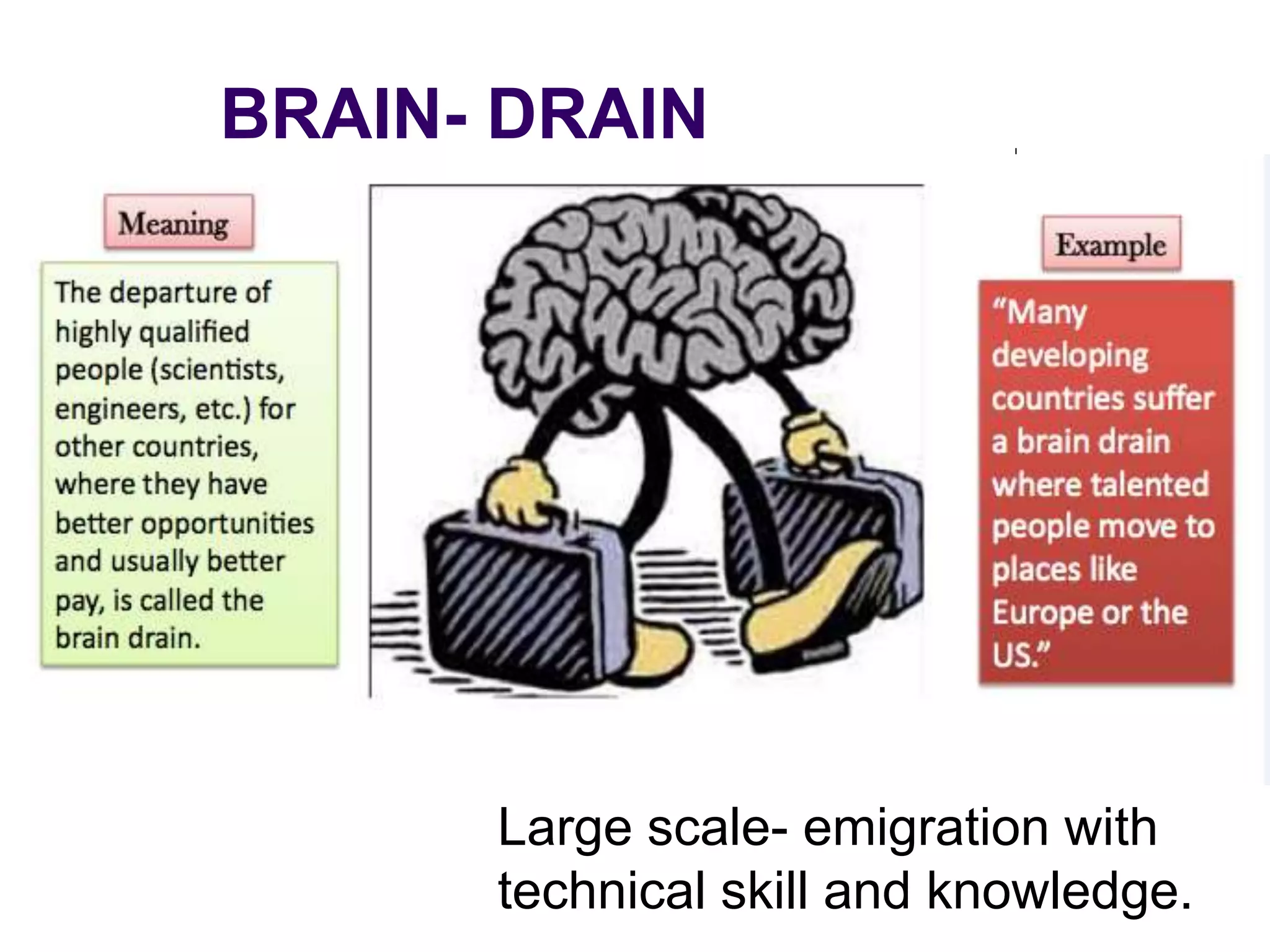
Defining Brain Drain through a Financial Lens
To understand brain drain within the context of money and business finance, one must view human labor as “human capital.” Just as a company invests in machinery or software to generate revenue, a nation invests in its citizens through education, healthcare, and infrastructure. Brain drain occurs when the return on that investment (ROI) is harvested by a different economy.
The Concept of Human Capital Migration
At its core, brain drain is the large-scale emigration of individuals with technical skills or specialized knowledge. In economic terms, this is the “export” of high-value services without a corresponding trade payment. When a software architect trained in an emerging market moves to a financial hub like London or New York, the originating country loses the productive capacity and future tax revenue that individual would have generated. This migration creates a vacuum in the local labor market, often driving up the cost of remaining talent and hindering the growth of domestic industries.
Identifying the “Push” and “Pull” Economic Factors
The movement of human capital is dictated by market forces, specifically “push” and “pull” factors. Push factors are negative economic conditions in the home country that encourage professionals to leave. These include low wage growth, high inflation, lack of research funding, and systemic economic instability.
Conversely, pull factors are the financial incentives offered by wealthier regions. These include higher purchasing power, robust venture capital ecosystems, and better-funded research and development (R&D) facilities. For a professional, the decision to migrate is often a calculated financial move—an attempt to maximize the lifetime value of their skills in a market that offers a higher price for their labor.
The Micro and Macro-Economic Costs of Talent Loss
The financial implications of brain drain are profound and operate on multiple levels of the economy. It is essentially a subsidy provided by poorer nations to wealthier ones, as the cost of “producing” a skilled professional is borne by the former, while the benefits are reaped by the latter.
Lost Return on Investment (ROI) in Public Education
One of the most quantifiable financial losses associated with brain drain is the “sunk cost” of education. Most countries provide subsidized primary, secondary, and often tertiary education. When a medical student receives a state-funded education costing tens of thousands of dollars and سپس migrates upon graduation, the state loses its entire investment.
From a business finance perspective, this is equivalent to a company paying for a specialized software license only for a competitor to use that software for free. The “donor” nation loses the direct investment in the individual’s training and the indirect “multiplier effect” that their spending and productivity would have contributed to the local economy.
The Erosion of the Tax Base and Fiscal Deficits
High-skilled professionals are typically high-income earners. In a progressive tax system, these individuals contribute a disproportionate share of the total tax revenue. When brain drain occurs, the fiscal impact is immediate:
- Direct Tax Loss: A reduction in personal income tax receipts.
- Consumption Tax Loss: High-earners spend more on luxury goods and services, contributing to VAT or sales tax.
- Corporate Tax Impact: A shortage of skilled labor can prevent local companies from scaling, leading to lower corporate tax yields.
This erosion of the tax base can lead to a vicious cycle. As tax revenue falls, the government may struggle to fund the very infrastructure and services needed to retain talent, leading to further emigration.
Brain Drain vs. Brain Gain: The Global Marketplace for Talent

In the world of international finance, brain drain is the “debit” side of a global ledger. On the “credit” side is “brain gain.” Countries like the United States, Canada, and Germany have built entire sectors of their economies—particularly in technology and healthcare—by attracting foreign-born talent.
How Developing Economies Lose Competitive Edge
For developing economies, the loss of human capital is a barrier to moving up the value chain. If a country wants to transition from a manufacturing-based economy to a knowledge-based economy, it requires a critical mass of scientists and innovators. When these individuals leave, the country remains stuck in “lower-margin” industries.
This creates a “poverty trap” in terms of business finance. Without high-level talent, local firms cannot innovate, which means they cannot attract international investment or venture capital. This lack of capital further depresses wages, ensuring that the next generation of talent will also look abroad for opportunities.
The “Brain Circulation” Phenomenon and Remittance Inflows
While the term “brain drain” suggests a permanent loss, modern economists also discuss “brain circulation.” This occurs when migrants maintain financial and professional ties with their home countries.
The most significant financial offset to brain drain is remittances. In many developing nations, money sent home by workers abroad constitutes a significant percentage of the GDP. These funds provide liquidity to the local economy, support small business startups, and increase the foreign exchange reserves of the home country. However, many financial analysts argue that remittances are a poor substitute for the systemic economic growth that would have been generated had the professionals remained and built local industries.
Mitigating the Financial Impact: Strategies for Economic Retention
For governments and organizations looking to protect their human capital, the solution lies in financial and structural reform. Retaining talent is a matter of making the “domestic market” more attractive than the “export market.”
Strengthening Domestic Infrastructure and Business Finance
To keep high-value earners at home, there must be an environment where their capital (both intellectual and financial) can grow. This involves:
- Venture Capital Access: Creating local funding pools so that entrepreneurs don’t have to go to Silicon Valley to fund their ideas.
- R&D Tax Credits: Offering financial incentives for companies to invest in high-tech research locally.
- Lowering Regulatory Barriers: Making it easier for professionals to start businesses and protect their intellectual property.
When a professional sees a path to wealth and career advancement within their own borders, the “pull” of foreign markets weakens.
Tax Incentives and Policy Reform to Retain High-Earners
Some nations have experimented with specific financial policies to combat brain drain. This includes “tax holidays” for returning scientists or specialized grants for researchers who commit to staying in the country for a set period.
Additionally, addressing the “cost of living vs. salary” ratio is crucial. While a developer might earn $150,000 in San Francisco, if the cost of living there is astronomical, a country that offers a $60,000 salary with a very low cost of living and specific tax exemptions may be able to retain that talent. Financial planning and competitive compensation packages are the primary tools in the war for global talent.

Conclusion: The Long-Term Value of Retaining Intellectual Capital
Brain drain is a complex economic challenge that reflects the globalized nature of the modern labor market. For individuals, it represents an opportunity to maximize their personal financial worth. For nations, however, it represents a significant loss of invested capital and a threat to future economic competitiveness.
Defining brain drain through a financial lens allows us to see it for what it truly is: a transfer of wealth. By understanding the fiscal costs—from lost education ROI to a shrinking tax base—governments and business leaders can better appreciate the need for strategic investment in retention. In the 21st century, the most successful economies will not be those with the most natural resources, but those that can best manage, retain, and grow their human capital. Financing the future requires more than just managing money; it requires keeping the “brains” that know how to make that money work.
aViewFromTheCave is a participant in the Amazon Services LLC Associates Program, an affiliate advertising program designed to provide a means for sites to earn advertising fees by advertising and linking to Amazon.com. Amazon, the Amazon logo, AmazonSupply, and the AmazonSupply logo are trademarks of Amazon.com, Inc. or its affiliates. As an Amazon Associate we earn affiliate commissions from qualifying purchases.