
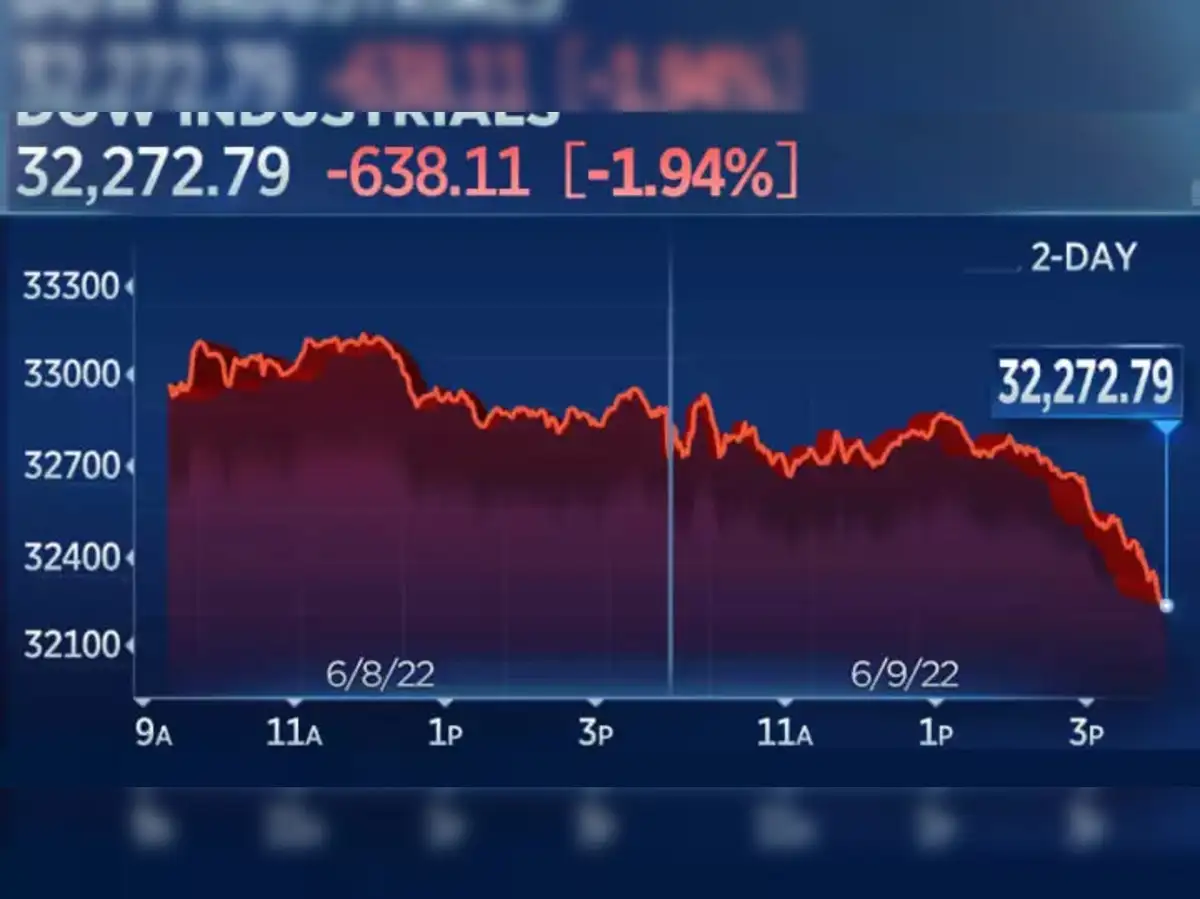
The Dow Jones Industrial Average (DJIA) remains one of the most closely watched barometers of the American economy. When the “Dow” drops, it often triggers a wave of concern among retail investors and financial analysts alike. However, a downward movement in the market is rarely the result of a single isolated event. Instead, it is typically a complex interplay of monetary policy, corporate performance, and global sentiment. To understand why the Dow is down today, one must look beneath the surface of the ticker symbols and examine the structural forces currently shaping the financial landscape.
The Macroeconomic Landscape: Interest Rates and the Federal Reserve
The most potent driver of market movement in the modern era is the Federal Reserve’s stance on monetary policy. Investors hang on every word from the Federal Open Market Committee (FOMC), searching for signals regarding interest rate hikes or cuts. When the Dow experiences a significant pullback, the primary culprit is often a shift in expectations regarding “the cost of money.”
The Impact of “Higher for Longer” Policy
Inflation remains the primary antagonist for the equity markets. When economic data—such as the Consumer Price Index (CPI) or Personal Consumption Expenditures (PCE) index—comes in hotter than expected, the market reacts negatively. This is because high inflation forces the Federal Reserve to keep interest rates elevated to cool the economy. For the 30 blue-chip companies that make up the Dow, higher interest rates mean higher borrowing costs. When it becomes more expensive for a corporation to finance its debt or fund new projects, future earnings projections are revised downward, leading to a decline in stock prices.
Treasury Yields and Their Inverse Relationship with Stocks
As interest rates rise, so do the yields on U.S. Treasury bonds. This creates a competitive environment for equities. If an investor can secure a guaranteed 4.5% or 5% return on a risk-free government bond, the relative appeal of a volatile stock decreases. This “risk-off” sentiment often leads institutional investors to rotate their capital out of the Dow’s industrial and consumer giants and into the safety of the bond market. Consequently, as the 10-year Treasury yield climbs, the Dow often faces downward pressure as the equity risk premium narrows.
Corporate Performance: When Blue-Chip Giants Stumble
Unlike the S&P 500, which is market-cap weighted, the Dow Jones Industrial Average is a price-weighted index. This means that companies with higher stock prices have a disproportionate impact on the index’s total value. If a few high-priced components report disappointing news, they can drag the entire index down, even if the majority of the constituent companies are trading in the green.
The Weight of the Dow’s Price-Weighted System
In a price-weighted index, a $10 move in a stock trading at $500 carries more weight than a $10 move in a stock trading at $50. Therefore, when heavyweights like UnitedHealth Group, Goldman Sachs, or Microsoft face headwinds, the Dow feels the impact acutely. Today’s decline might be traced back to a specific sector—such as healthcare or finance—where a single component’s earnings miss or a regulatory hurdle has created a localized drag that echoes across the entire 30-stock average.
Earnings Season Realities vs. Wall Street Expectations
Markets are forward-looking mechanisms. Stock prices are not just reflections of what a company did last quarter; they are reflections of what investors believe the company will do in the next year. During earnings season, “good” news is often not enough. If a Dow component reports record profits but provides a “soft” or cautious guidance for the upcoming months, investors may sell off the stock in anticipation of a slowdown. When multiple blue-chip companies echo this cautious sentiment, citing labor costs or waning consumer demand, it creates a cumulative downward trend for the index.
Global Instability and Geopolitical Pressure Points

The companies within the Dow are multinational entities with vast global footprints. They rely on international stability for supply chain efficiency and consumer demand. When geopolitical tensions rise, the uncertainty acts as a “volatility tax” on the market.
Energy Costs and Inflationary Echoes
Geopolitical unrest in oil-producing regions often leads to a spike in crude oil prices. For many Dow components, particularly those in the industrial, transport, and manufacturing sectors, energy is a significant input cost. Rising oil prices act as a double-edged sword: they increase the cost of production and logistics while simultaneously acting as a “tax” on the consumer, leaving them with less discretionary income to spend on the products and services offered by Dow companies. If energy prices are surging today, it is highly likely that the Dow is feeling the heat.
Supply Chain Disruptions and Trade Uncertainties
The modern global economy is built on “just-in-time” manufacturing. Any disruption to global trade routes—whether due to regional conflicts, changes in trade policy, or diplomatic friction—threatens the profit margins of Dow constituents. Large-cap companies like Boeing or Caterpillar are particularly sensitive to international trade relations. When news breaks regarding new tariffs or export restrictions, the market quickly prices in the potential for reduced revenue from overseas markets, contributing to the daily decline.
Market Psychology and Technical Indicators
While fundamentals like earnings and interest rates provide the long-term trajectory, daily price action is often driven by psychology and technical factors. The stock market is a reflection of human behavior, oscillating between periods of irrational exuberance and systemic fear.
Support Levels and Psychological Resistance
Traders often look at “support levels”—price points where an index has historically found a floor. If the Dow breaks below a key technical level, such as a 50-day or 200-day moving average, it can trigger automated sell orders from algorithmic trading systems. This “program trading” can turn a minor pullback into a significant rout. Once a psychological threshold is crossed, panic can set in among retail investors, leading to a cascade of selling that may not be rooted in any specific news event but rather in the fear of further losses.
The Role of Institutional Selling and Profit Taking
Sometimes, the Dow is down simply because it was “overbought.” Following a period of sustained growth, institutional investors often engage in profit-taking. This is a disciplined approach where fund managers sell a portion of their winning positions to rebalance their portfolios. If several large hedge funds or pension funds decide to lock in gains simultaneously, it creates a temporary supply-demand imbalance. In this scenario, the Dow is not falling because the economy is failing, but because the market is “digesting” its recent gains.
Navigating the Downturn: A Strategic Perspective for Investors
For the individual investor, seeing the Dow in the red can be unsettling. However, understanding the why behind the move is the first step in maintaining a disciplined financial strategy. Market corrections and daily dips are a natural part of the economic cycle and often present opportunities for those with a long-term horizon.
Staying Focused on Long-Term Valuation
The Dow Jones Industrial Average has survived world wars, depressions, and global pandemics. While today’s drop might feel significant, it is essential to view it within the context of the broader market cycle. Professional investors often use these periods of weakness to “buy the dip,” acquiring shares of high-quality, dividend-paying companies at a discount. If the underlying fundamentals of the Dow’s 30 companies remain strong, a daily decline is often a noise-filled distraction from the long-term wealth-creation potential of equities.

The Importance of Diversification Beyond the Dow
Finally, today’s movement in the Dow highlights the importance of a diversified portfolio. Because the Dow is limited to 30 large-cap stocks and is price-weighted, it does not always represent the health of the entire economy. Small-cap stocks, international markets, and fixed-income assets may perform differently during a Dow sell-off. By maintaining a balanced allocation across various asset classes, investors can mitigate the impact of a bad day on the “Big Board” and stay on track toward their long-term financial goals.
In conclusion, the Dow being down today is likely the result of a confluence of factors: perhaps a hawkish comment from a Fed official, a disappointing guidance report from a major tech or healthcare component, or a spike in global oil prices. By analyzing these elements through a professional financial lens, investors can move past the headlines and make informed decisions based on logic rather than emotion.
aViewFromTheCave is a participant in the Amazon Services LLC Associates Program, an affiliate advertising program designed to provide a means for sites to earn advertising fees by advertising and linking to Amazon.com. Amazon, the Amazon logo, AmazonSupply, and the AmazonSupply logo are trademarks of Amazon.com, Inc. or its affiliates. As an Amazon Associate we earn affiliate commissions from qualifying purchases.