
In the modern economic landscape, the question “what is a social science major” is increasingly being reframed from a purely academic inquiry to a strategic financial one. For years, the narrative surrounding liberal arts and social sciences was shadowed by the immediate, high-starting salaries of STEM fields. However, as the global economy evolves into a complex web of behavioral data, consumer psychology, and organizational strategy, the social science major has emerged as a high-potential asset for those who understand how to monetize human insight.
At its core, a social science major is the systematic study of human society and social relationships. This includes disciplines such as Economics, Psychology, Sociology, Political Science, and Anthropology. From a “Money” perspective, this major is an investment in understanding the “Human Factor”—the most volatile and valuable variable in any business equation. This article explores the financial viability of a social science degree, the high-yield career paths it unlocks, and how to maximize the return on investment (ROI) of this educational path.

Understanding the Economic Value of a Social Science Degree
The true value of a social science major lies in its versatility. Unlike highly specialized technical degrees that may have a “shelf life” due to rapid technological shifts, social science disciplines teach foundational skills that are resistant to automation: critical thinking, qualitative analysis, and a deep understanding of systemic structures.
The Shift from Theory to Marketable Assets
To the uninitiated, sociology or anthropology might seem like purely theoretical pursuits. However, in the corporate world, these theories are converted into marketable assets. For instance, an anthropology major’s ability to conduct ethnographic research is the exact skill set required for a “User Experience (UX) Researcher” at a Fortune 500 tech company—a role that often commands a six-figure salary. Similarly, psychology majors leverage their understanding of cognitive biases to excel in behavioral economics and high-stakes marketing.
Analyzing the Lifetime Earning Potential
Data from various labor statistics bureaus suggests a “catch-up” effect for social science majors. While an engineer might start with a higher baseline salary, social science graduates often see a steeper trajectory in mid-to-late career stages. This is because their skill sets are tailor-made for leadership, management, and strategic roles. As individuals move up the corporate ladder, technical skills become secondary to the ability to manage people, navigate organizational politics, and understand market sentiment—all of which are the bread and butter of the social sciences.
High-Yield Career Paths for Social Science Graduates
The financial success of a social science major depends largely on niche selection. By bridging the gap between social theory and business application, graduates can enter some of the most lucrative sectors of the economy.
Corporate Strategy and Market Research
Every business decision, from launching a new product to entering a foreign market, is a social science experiment. Market Research Analysts use statistical tools (Economics/Sociology) to predict consumer behavior. In this field, professionals can earn significant bonuses by providing insights that save companies millions in failed product launches. Corporate strategists, often coming from political science or economics backgrounds, analyze regulatory environments and geopolitical risks to protect a firm’s bottom line.
Human Resources and Organizational Development
In the 21st century, “Human Capital” is a company’s most expensive and valuable asset. Professionals in Organizational Development (typically with backgrounds in Psychology or Sociology) focus on optimizing the workforce. This isn’t just administrative work; it involves designing incentive structures, improving retention rates, and managing cultural shifts during mergers and acquisitions. High-level HR Executives and Diversity, Equity, and Inclusion (DEI) Consultants are currently among some of the highest-paid non-technical roles in the corporate world.

Public Policy and Economic Consulting
For those with a leaning toward Political Science or Economics, the world of consulting offers a path to high-net-worth status. Economic consultants provide expert testimony in legal cases or help governments design fiscal policies. These roles require the ability to translate complex social data into actionable financial advice, making it a “prestige” career path with substantial financial rewards.
Monetizing Soft Skills: Turning Insights into Income
The term “soft skills” is often a misnomer; in the context of wealth generation, these are “power skills.” Social science majors excel in communication, empathy, and systemic thinking—tools that are essential for any entrepreneur or high-level consultant.
The Psychology of Sales and High-Ticket Consulting
Wealth is rarely built through hourly labor; it is built through value perception. Psychology and Sociology majors have a unique advantage in understanding the “Value Proposition.” By understanding why people buy, what they fear, and what they aspire to, social science graduates can excel in high-ticket sales and business development. Whether it’s closing a real estate deal or securing a venture capital investment, the ability to read the room and influence behavior is a direct path to personal wealth.
Freelancing and the Creator Economy for Social Scientists
The rise of the digital economy has opened new doors for “Social Science Entrepreneurs.” We are seeing a surge in consultants who specialize in “Cultural Intelligence” or “Behavioral Design.” These individuals often work as freelancers or agency owners, charging premium rates to help brands navigate the complexities of social media sentiment and community building. By packaging their academic knowledge into digital products, workshops, or specialized consulting services, social science majors can create scalable online income streams that far exceed traditional salary caps.
Maximizing Your ROI: Strategic Financial Planning for Students
The primary risk of a social science major is the potential for high student debt relative to entry-level pay. To ensure a positive ROI, students must treat their education like a business investment.
Minimizing Student Debt through Strategic Specialization
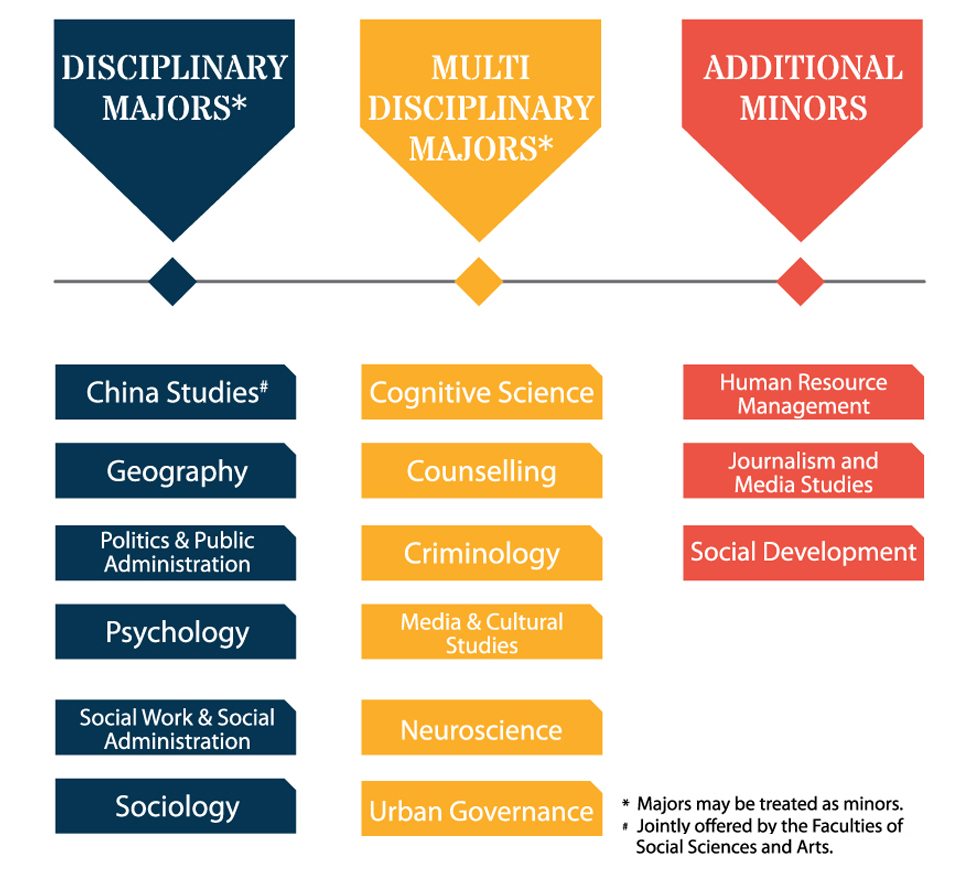
One of the most effective ways to increase the ROI of a social science degree is to pair it with a technical “minor” or certification. A Sociology major who understands Data Science (Python, R, or SQL) is infinitely more employable and higher-paid than one who does not. By specializing early in “Quantitative Social Science,” students can enter the job market at a higher tier, allowing them to pay off student loans faster and begin investing their income earlier.
Leveraging Internships for Immediate Salary Jumps
In the social sciences, your network is your net worth. Unlike some fields where a portfolio of work speaks for itself, social science careers often rely on institutional credibility and professional connections. Securing internships in high-finance, think tanks, or corporate headquarters during undergraduate years is crucial. These placements serve as a “proof of concept” to future employers, signaling that the student can apply their “soft” social science knowledge to “hard” financial realities. This often results in a 20-30% higher starting salary compared to peers without such experience.
The Future of Social Science in the Global Economy
As Artificial Intelligence (AI) takes over routine data processing and technical coding, the “human” element will become the ultimate premium. The future economy will place a high financial value on those who can ask the right questions, interpret cultural nuances, and provide ethical oversight—all core competencies of a social science major.
The question is no longer “what is a social science major,” but rather “how can a social science major be leveraged for maximum financial impact?” By viewing society as a marketplace and human behavior as the ultimate data point, social science graduates are not just observers of the world—they are the architects of the systems that drive wealth and value in the modern age. For the savvy student, a social science major is not a detour from a successful career in business or finance; it is the very foundation of it. Through strategic specialization, networking, and a focus on high-yield sectors, the social science degree remains one of the most flexible and potentially lucrative investments a person can make in their own human capital.
aViewFromTheCave is a participant in the Amazon Services LLC Associates Program, an affiliate advertising program designed to provide a means for sites to earn advertising fees by advertising and linking to Amazon.com. Amazon, the Amazon logo, AmazonSupply, and the AmazonSupply logo are trademarks of Amazon.com, Inc. or its affiliates. As an Amazon Associate we earn affiliate commissions from qualifying purchases.