
For decades, the S&P 500 has been hailed as one of the most effective vehicles for long-term wealth creation. Often referred to as the “benchmark” for the American economy, this index represents approximately 80% of the available market capitalization of the U.S. stock market. For the individual investor, asking “how do I invest in the S&P 500” is the first step toward a disciplined, high-probability financial future.
While you cannot “buy” the index itself—as it is a mathematical measurement—you can invest in funds that track its performance with near-perfect accuracy. This guide explores the mechanics of the S&P 500, the specific financial instruments used to capture its growth, and the strategic considerations every investor must weigh.
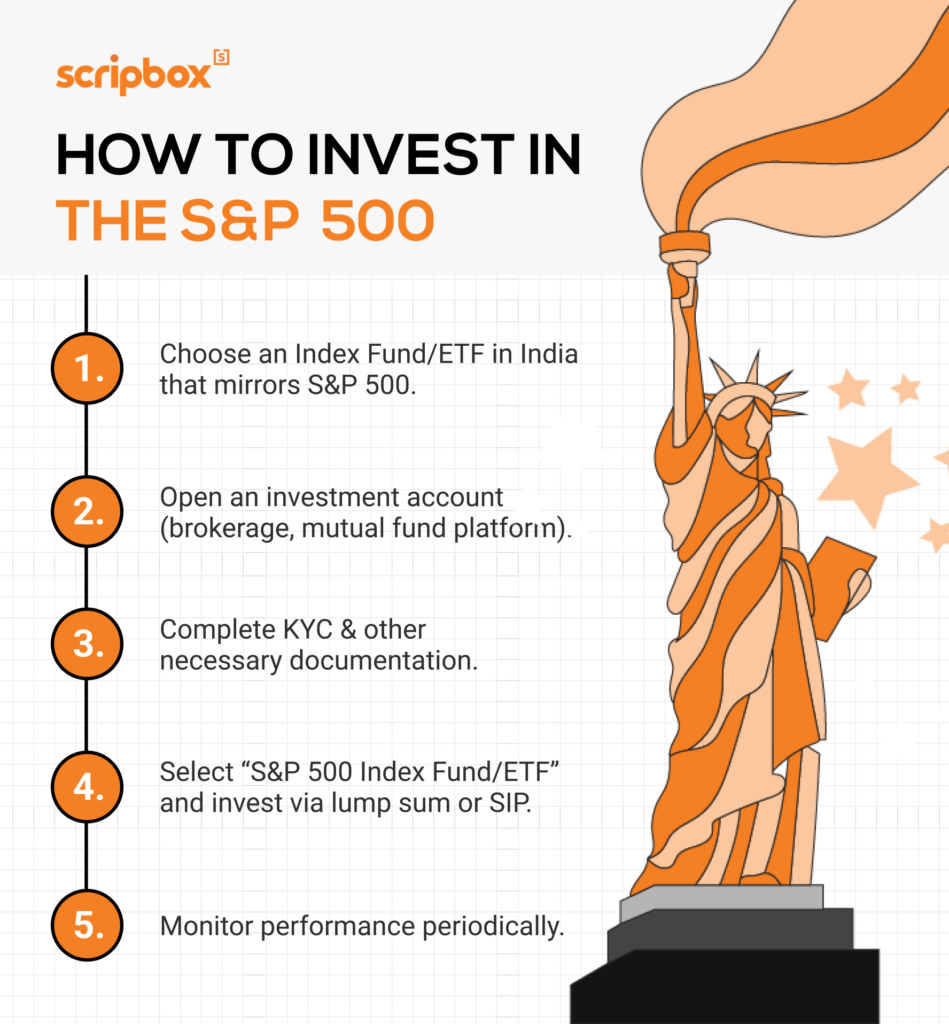
Understanding the S&P 500 Index
Before committing capital, it is essential to understand what the Standard & Poor’s 500 actually represents. It is a stock market index tracking the stock performance of 500 of the largest companies listed on stock exchanges in the United States.
The Composition of the Index
The S&P 500 is not a random collection of companies. To be included, a firm must meet strict criteria regarding liquidity, size, and profitability. These companies span across all sectors of the economy, including technology, healthcare, financials, and consumer staples. When you invest in the S&P 500, you are essentially buying a small slice of Apple, Microsoft, Amazon, Berkshire Hathaway, and 496 other giants.
Market Capitalization Weighting
One unique aspect of the S&P 500 is that it is “market-cap weighted.” This means that the larger a company’s total market value, the greater its influence on the index’s performance. For instance, a 1% move in a trillion-dollar tech giant will affect the index far more than a 1% move in a mid-sized utility company. While this allows investors to ride the momentum of the world’s most successful corporations, it also means the index can be heavily influenced by the technology sector during certain market cycles.
Historical Performance and the “10% Rule”
Historically, the S&P 500 has provided an average annual return of approximately 10% before inflation. While this does not mean the index returns 10% every year—some years see 30% growth while others see 20% drops—the long-term trajectory has been consistently upward. This reliability is why legendary investors like Warren Buffett often recommend the S&P 500 for the average person over individual stock picking.
Choosing Your Investment Vehicle: ETFs vs. Index Funds
Since you cannot invest directly in the index, you must choose a financial product that replicates it. The two most common tools are Exchange-Traded Funds (ETFs) and Index Mutual Funds.
Exchange-Traded Funds (ETFs)
ETFs are often the preferred choice for modern investors due to their flexibility. They trade on an exchange just like individual stocks, meaning you can buy or sell shares throughout the trading day at the current market price.
- Liquidity: High liquidity makes it easy to enter and exit positions.
- Low Cost: Major S&P 500 ETFs, such as the Vanguard S&P 500 ETF (VOO) or the iShares Core S&P 500 ETF (IVV), have extremely low expense ratios (often around 0.03%).
- Tax Efficiency: Due to the way they are structured, ETFs generally generate fewer capital gains distributions than mutual funds, making them excellent for taxable brokerage accounts.
Index Mutual Funds
Index mutual funds are the traditional way to track the S&P 500. Unlike ETFs, these are priced only once per day at the close of the market.
- Automation: Many mutual funds allow for “automatic investing,” where you can set a specific dollar amount (e.g., $200) to be pulled from your bank account and invested every month, regardless of the share price.
- Fractional Shares: While some brokers allow fractional shares for ETFs, mutual funds have historically made it easier to invest every cent of your available cash.
- Investment Minimums: Some mutual funds require an initial minimum investment (e.g., $3,000), whereas ETFs can be purchased for the price of a single share.
Comparing Expense Ratios
In the world of S&P 500 investing, the “product” is essentially a commodity. Whether you buy from Vanguard, Fidelity, or Charles Schwab, the underlying stocks are the same. Therefore, the primary differentiator is the expense ratio—the annual fee charged by the fund. Even a difference of 0.10% can amount to tens of thousands of dollars in lost gains over a 30-year investing horizon. Always opt for the lowest-cost provider.
A Step-by-Step Guide to Making Your First Investment
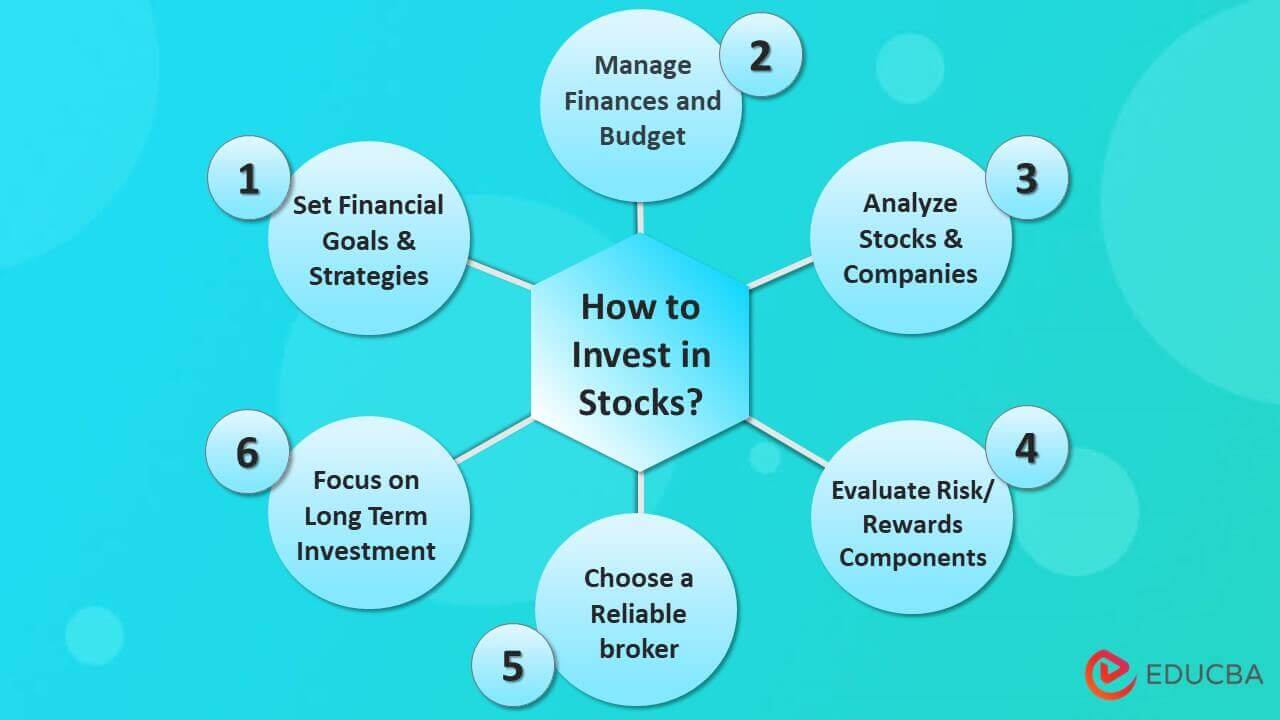
Once you have decided on the vehicle, the actual process of investing is straightforward. Follow these steps to move from a saver to an investor.
1. Open a Brokerage Account
To buy an S&P 500 fund, you need a brokerage account. You have several options:
- Tax-Advantaged Accounts: If you are investing for retirement, consider a Roth IRA or a Traditional IRA. These provide significant tax benefits.
- Standard Brokerage Accounts: Also called “taxable accounts,” these offer the most flexibility, allowing you to withdraw your money at any time without age-related penalties.
2. Fund Your Account
After opening the account, link your bank account to transfer funds. You can choose to deposit a lump sum or set up a recurring transfer. For most investors, setting up a monthly “autopay” into their brokerage account is the most effective way to ensure consistent growth.
3. Select Your Ticker Symbol
Once the money is in your account, you need to search for the specific fund you want to buy. Common ticker symbols for S&P 500 tracking funds include:
- VOO: Vanguard S&P 500 ETF
- SPY: SPDR S&P 500 ETF Trust
- IVV: iShares Core S&P 500 ETF
- FXAIX: Fidelity 500 Index Fund (Mutual Fund)
4. Execute the Trade
Enter the ticker symbol, choose the number of shares (or the dollar amount), and select a “Market Order” to buy at the current price. Once the order is filled, you officially own a piece of the 500 largest companies in America.
Strategic Considerations and Risk Management
Investing in the S&P 500 is a “low-effort” strategy, but it is not “no-risk.” Successful investing requires a psychological framework to handle market fluctuations.
The Power of Dollar-Cost Averaging (DCA)
Market timing is a losing game for most. Instead of trying to buy “at the bottom,” many successful investors use Dollar-Cost Averaging. By investing a fixed amount of money at regular intervals, you buy more shares when prices are low and fewer shares when prices are high. Over time, this lowers your average cost per share and removes the emotional stress of watching daily price swings.
Understanding Market Volatility
The S&P 500 can be volatile. It is common for the index to experience a 10% “correction” once a year and a 20% “bear market” once every few years. The key to S&P 500 investing is time in the market, not timing the market. Historically, the probability of a positive return from the S&P 500 increases the longer you hold the investment. Over a 20-year period, the S&P 500 has never had a negative return.
Dividend Reinvestment (DRIP)
Most companies in the S&P 500 pay dividends—a portion of their profits distributed to shareholders. When you invest in an S&P 500 fund, you will receive these dividends. To maximize growth, you should enable a Dividend Reinvestment Plan (DRIP). This automatically uses your dividend payments to buy more shares of the fund, triggering a powerful compounding effect where your “money makes money, and the money that makes money makes more money.”
The Role of the S&P 500 in a Diversified Portfolio
While the S&P 500 offers excellent diversification across large-cap U.S. companies, it is not a complete financial plan on its own. It represents one “asset class.”
Large-Cap vs. Small-Cap and International
The S&P 500 focuses exclusively on large U.S. companies. It does not include small-cap companies, which may have higher growth potential, or international companies in Europe and Asia. For a truly global portfolio, some investors choose to pair their S&P 500 fund with an international stock fund or a small-cap fund to ensure they are not overly dependent on a single geographic region or company size.
Balancing with Fixed Income
As you approach retirement or your specific financial goal, you may want to move some of your S&P 500 holdings into “fixed income” assets like bonds or high-yield savings accounts. While the S&P 500 offers growth, bonds offer stability. Finding the right balance between the two depends on your “risk tolerance” and your “time horizon.”

Final Thoughts: The Path to Wealth
Investing in the S&P 500 is perhaps the most democratic way to participate in the growth of the global economy. It requires no special expertise, no secret algorithms, and no high-priced consultants. By choosing a low-cost fund, investing consistently, and maintaining a long-term perspective, you can harness the collective power of the world’s most successful corporations to build a lasting financial legacy. The best time to start was ten years ago; the second best time is today.
aViewFromTheCave is a participant in the Amazon Services LLC Associates Program, an affiliate advertising program designed to provide a means for sites to earn advertising fees by advertising and linking to Amazon.com. Amazon, the Amazon logo, AmazonSupply, and the AmazonSupply logo are trademarks of Amazon.com, Inc. or its affiliates. As an Amazon Associate we earn affiliate commissions from qualifying purchases.