
In the modern digital landscape, the concept of data integrity is the bedrock upon which secure communication, software distribution, and identity verification are built. At the heart of this integrity lies a mathematical process known as hashing. Among the various algorithms that have shaped the internet, SHA1 (Secure Hash Algorithm 1) stands as one of the most significant, albeit now controversial, tools in the history of digital security. This article explores the mechanics of SHA1, its historical dominance, the vulnerabilities that led to its retirement, and the current standards that have taken its place in the tech industry.
The Fundamentals of SHA1 and Cryptographic Hashing
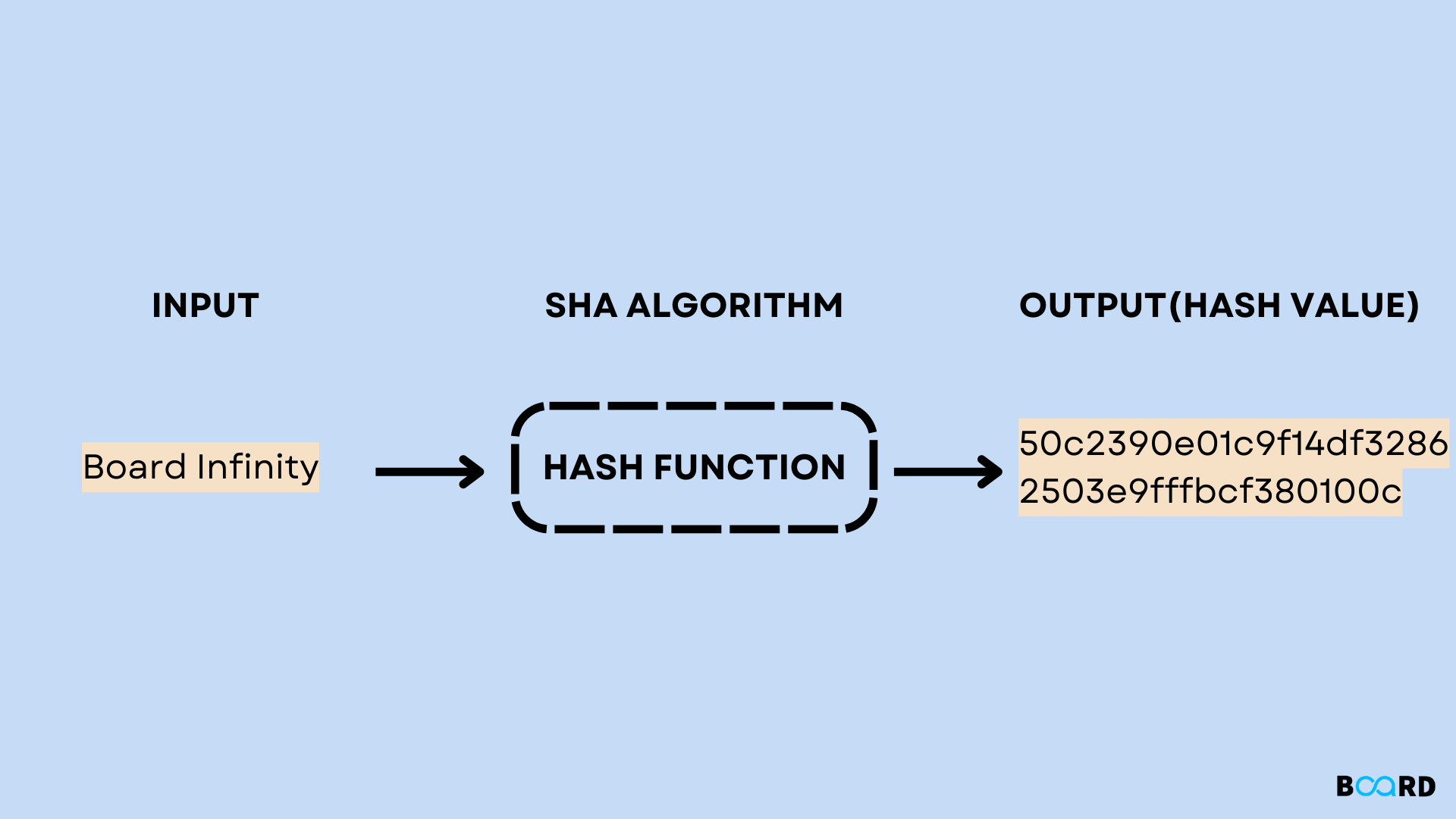
To understand SHA1, one must first grasp the concept of a cryptographic hash function. A hash function is an algorithm that takes an input (or ‘message’) of any size and transforms it into a fixed-size string of characters, which is usually a hexadecimal number. In the case of SHA1, the output is always 160 bits long, typically represented as a 40-character hexadecimal string.
Defining the Hash Function
A cryptographic hash function is often described as a “digital fingerprint.” Just as a human fingerprint uniquely identifies an individual, a hash value uniquely identifies a specific set of data. Crucially, even the smallest change to the input—such as changing a single bit or adding a period at the end of a sentence—will result in a radically different hash value. This property, known as the “avalanche effect,” ensures that data tampering is easily detectable.
The Origin and Evolution of SHA1
SHA1 was designed by the National Security Agency (NSA) and published by the National Institute of Standards and Technology (NIST) in 1995 as a Federal Information Processing Standard (FIPS). It was an improvement over its predecessor, SHA-0, which had been retracted shortly after its release due to a “significant flaw.”
For nearly two decades, SHA1 became the global standard for securing sensitive information. It was integrated into many widely used security protocols, including TLS (Transport Layer Security), SSL (Secure Sockets Layer), PGP (Pretty Good Privacy), and SSH (Secure Shell). Its efficiency and perceived strength at the time made it the go-to choice for developers and security engineers worldwide.
How SHA1 Works: The Mechanics of Data Digestion
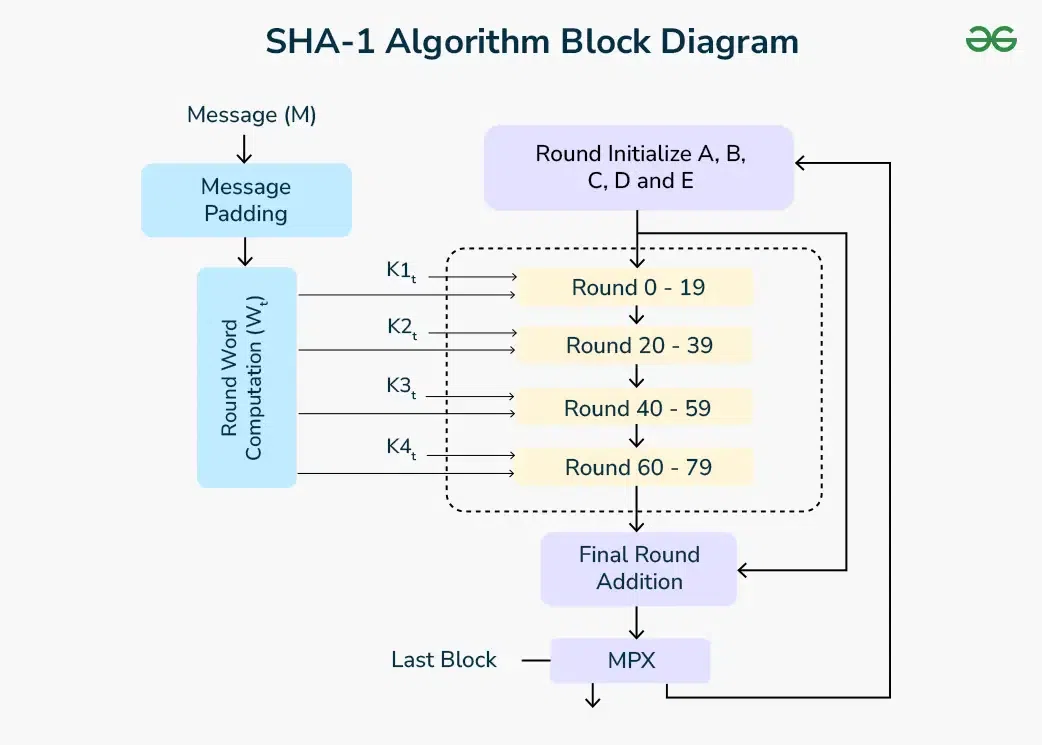
The mathematical complexity of SHA1 is what allowed it to provide security for so many years. It operates on 512-bit blocks of data and uses a series of logical functions and constants to “digest” the input into the final 160-bit output.
The Mathematical Process
The SHA1 algorithm follows a specific sequence of steps to process data. First, the input message is padded so that its length is a multiple of 512 bits. This ensures that the algorithm can process the data in uniform chunks. The message is then divided into blocks, and each block is processed through a series of four rounds, with each round consisting of twenty iterations.
During these iterations, the algorithm utilizes bitwise operations such as “AND,” “OR,” “XOR,” and “NOT,” along with modular addition and cyclic shifts. These operations are designed to mix the input data thoroughly. By the time the final block is processed, the resulting 160-bit hash is a complex distillation of every single bit that entered the system.
Key Characteristics of a Reliable Hash
For SHA1 to be effective in a tech environment, it had to adhere to several key cryptographic principles:
- Determinism: The same input must always produce the same output hash.
- Pre-image Resistance: It must be computationally infeasible to reverse the process—meaning you cannot take a hash value and work backward to find the original input.
- Collision Resistance: It should be extremely difficult to find two different inputs that produce the identical hash output.
- Speed: The algorithm must be fast enough to calculate hashes for large files or high-speed network traffic without causing significant latency.
Historical Applications and Technical Use Cases
Before its security was called into question, SHA1 was the workhorse of the digital world. Its applications spanned from simple file verification to the backbone of secure internet browsing.
Verifying File Integrity and Digital Signatures
One of the most common uses for SHA1 was (and in some non-security contexts, still is) checking the integrity of files. When you download a large software package, the provider often lists an “SHA1 Checksum.” By running the downloaded file through an SHA1 calculator, you can compare your result with the provider’s. If they match, you are certain the file hasn’t been corrupted or altered by a malicious third party during transit.
Beyond simple integrity, SHA1 was a core component of digital signatures. In this context, a hash of a document is encrypted with a private key. The receiver can decrypt the hash and compare it to a fresh hash of the document. This proves both the authenticity of the sender and the integrity of the content.
Version Control Systems and Git
In the world of software development, SHA1 is perhaps most famous for its role in Git, the version control system created by Linus Torvalds. Git uses SHA1 hashes to identify every commit, file, and directory in a repository.
In Git, the hash isn’t primarily used for “security” in the cryptographic sense; rather, it is used as a content-addressable identifier. Because the hash is based on the content of the file, Git can efficiently detect changes and ensure that the history of a project remains immutable. Even as the security community moved away from SHA1, Git continued to use it for years because the risk of a “malicious collision” in a local development environment was considered manageable compared to the massive effort required to transition a global ecosystem to a new algorithm.
The Decline of SHA1: Vulnerabilities and the Collision Problem
The downfall of SHA1 was not sudden; it was a slow erosion caused by increasing computational power and breakthroughs in cryptanalysis. As computers became faster, the theoretical weaknesses of the 160-bit hash became practical threats.
SHAttered: The First Practical Collision Attack
The most significant blow to SHA1 came in 2017 when researchers from Google and the CWI Institute in Amsterdam announced “SHAttered.” This was the first documented practical collision attack against SHA1. They produced two different PDF files that had entirely different content but resulted in the exact same SHA1 hash.
This discovery proved that SHA1’s collision resistance was broken. If an attacker could create two different files with the same hash, they could potentially substitute a legitimate document or software update with a malicious one without triggering any integrity alarms. The SHAttered attack required significant computational power (equivalent to 110 years of processing for a single GPU), but it proved that well-funded entities could bypass SHA1-based security.
Why Modern Systems Have Moved On
Following the SHAttered attack, the tech industry accelerated its phase-out of SHA1. Browsers like Google Chrome, Mozilla Firefox, and Microsoft Edge began flagging websites using SHA1-based SSL certificates as “not secure.” Major software platforms stopped accepting SHA1 for digital signatures in their update mechanisms.
The primary issue is that once a “collision” is demonstrated, the mathematical trust in the algorithm evaporates. In digital security, we must always stay ahead of the “Moore’s Law” of hacking—as hardware becomes cheaper and more powerful, older algorithms that were once “good enough” become trivial to crack.
The Future of Hashing: Transitioning to SHA-2 and SHA-3
With SHA1 relegated to the archives of tech history, the industry has migrated toward more robust alternatives. For any current software project or security implementation, using SHA1 is now considered a critical vulnerability.
The Strength of SHA-2 and SHA-256
The immediate successor to SHA1 is the SHA-2 family. SHA-2 is not just a single algorithm but a suite of functions, the most popular being SHA-256. As the name suggests, it produces a 256-bit hash.
The jump from 160 bits (SHA1) to 256 bits is massive. In terms of combinations, a 256-bit hash is exponentially more difficult to crack via brute force. While SHA1 has $2^{160}$ possible combinations, SHA-256 has $2^{256}$. To put this in perspective, $2^{256}$ is a number so large that it exceeds the estimated number of atoms in the observable universe. Currently, there are no known practical collision attacks against SHA-256, making it the industry standard for everything from Bitcoin mining to securing government communications.

SHA-3 and Best Practices for Developers
In addition to SHA-2, NIST released SHA-3 in 2015. Unlike SHA-1 and SHA-2, which share a similar mathematical structure (the Merkle–Damgård construction), SHA-3 is based on a completely different design known as “sponge construction.” This provides a secondary layer of safety; if a fundamental mathematical flaw is ever found in the SHA-2 family, SHA-3 will likely remain unaffected.
For developers and IT professionals, the directive is clear:
- Audit Legacy Systems: Identify any remaining use of SHA1 in your infrastructure, especially for password hashing or digital signatures.
- Implement Salts: When hashing sensitive data like passwords, never use a hash function alone. Always use a “salt” (random data added to the input) and consider using algorithms specifically designed for password storage, such as Argon2 or bcrypt.
- Stay Informed: Cryptography is an evolving field. What is secure today may be vulnerable tomorrow. Following NIST guidelines and staying updated on cryptographic research is essential for maintaining a secure tech stack.
In conclusion, while SHA1 played a pivotal role in the expansion of the digital age, its time has passed. It serves as a vital case study in the lifecycle of technology: a tool is born of necessity, serves the world through its peak, and eventually gives way to more advanced iterations as the landscape of threat and capability evolves. Understanding SHA1 is not just about understanding a hash; it is about understanding the relentless pursuit of integrity in an increasingly complex digital world.
aViewFromTheCave is a participant in the Amazon Services LLC Associates Program, an affiliate advertising program designed to provide a means for sites to earn advertising fees by advertising and linking to Amazon.com. Amazon, the Amazon logo, AmazonSupply, and the AmazonSupply logo are trademarks of Amazon.com, Inc. or its affiliates. As an Amazon Associate we earn affiliate commissions from qualifying purchases.