
In the rapidly evolving landscape of digital transformation, the friction between user convenience and robust security has become a primary challenge for IT departments worldwide. As organizations migrate their workflows to the cloud and adopt a plethora of Software-as-a-Service (SaaS) applications, the traditional method of managing individual login credentials for every platform has become obsolete. This is where SAML SSO (Security Assertion Markup Language Single Sign-On) enters the frame.
SAML SSO is not just a technical convenience; it is a foundational pillar of modern cybersecurity. By allowing users to access multiple applications with a single set of credentials, it streamlines the digital experience while significantly hardening an organization’s defense against unauthorized access. This article provides an in-depth exploration of SAML SSO, its underlying mechanics, its critical benefits, and how it compares to other authentication protocols in the tech ecosystem.
Understanding the Mechanics: What is SAML and How Does it Work?
At its core, SAML (Security Assertion Markup Language) is an open-standard, XML-based framework for exchanging authentication and authorization data between parties. Specifically, it facilitates the communication between an identity provider and a service provider. To understand SAML SSO, one must first understand the relationship between these two entities.
Defining the Identity Provider (IdP) and Service Provider (SP)
In a SAML ecosystem, the Identity Provider (IdP) is the system that maintains the user directory and performs the actual authentication. Common examples of IdPs include Microsoft Azure Active Directory (now Entra ID), Okta, Ping Identity, and Google Workspace. The IdP’s job is to verify that the user is who they claim to be.
The Service Provider (SP) is the application or resource the user is trying to access. This could be Slack, Salesforce, Zoom, or an internal corporate portal. Instead of asking the user for a password, the SP trusts the IdP to verify the user’s identity. The “assertion” in SAML is essentially a digital document sent from the IdP to the SP that says, “I have verified this user, and they are authorized to enter.”
The Role of XML in SAML Assertions
SAML uses XML (Extensible Markup Language) to package this identity information. A SAML assertion contains specific “statements” about a user. These usually include the user’s identity (Authentication statements), their roles or permissions (Attribute statements), and the specific conditions under which the authentication is valid (Authorization decision statements). Because these assertions are digitally signed, the Service Provider can verify that the data has not been tampered with during transit.
The Concept of Federation
SAML is the technology that enables “Identity Federation.” Federation is the practice of linking a user’s identity across multiple distinct IT systems. In a federated environment, a user can move between different domains and applications seamlessly because those applications have an established “trust relationship” built on SAML standards.
The SAML Handshake: A Step-by-Step Technical Breakdown
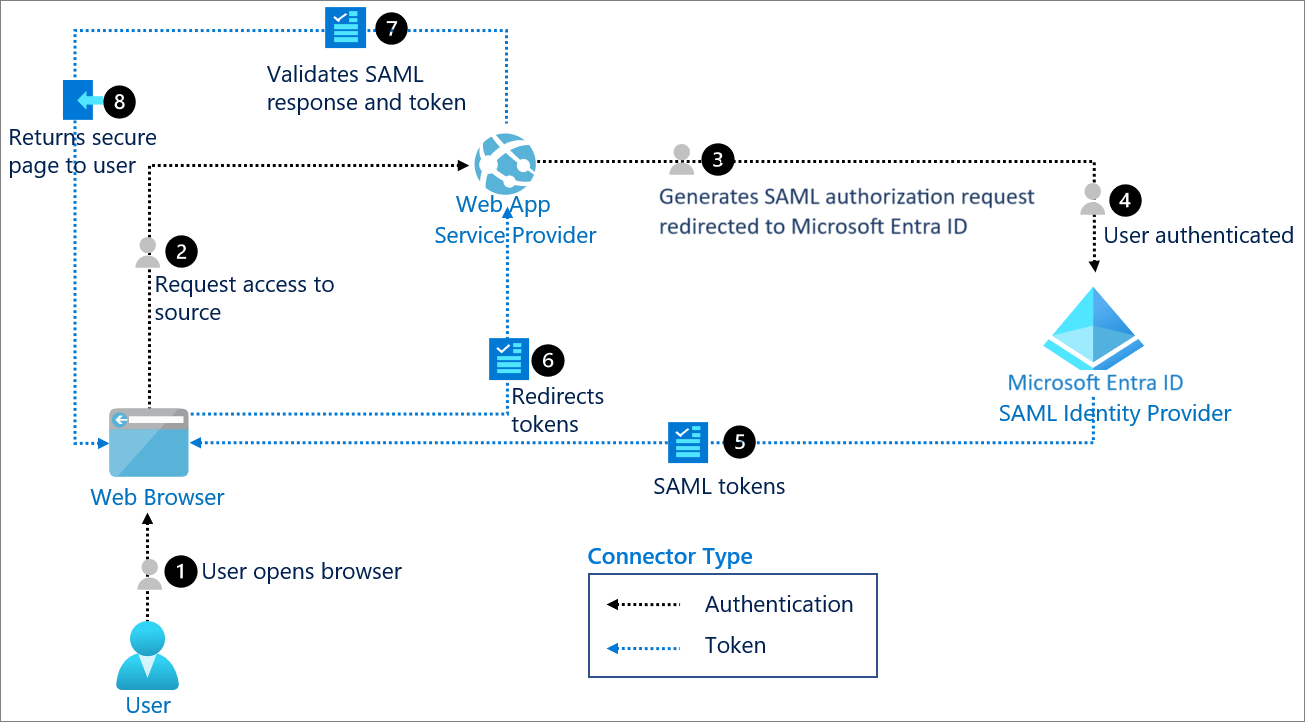
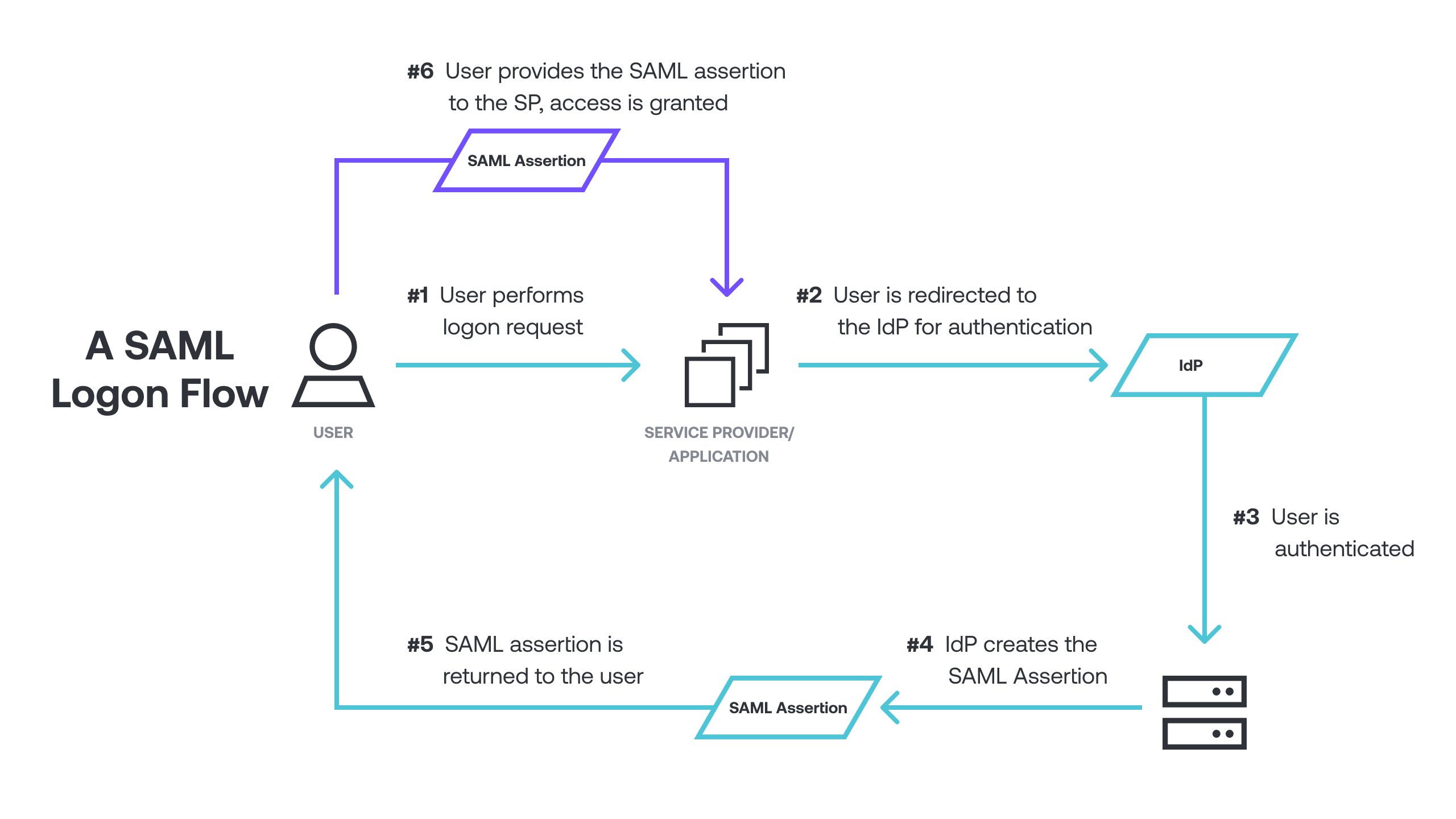
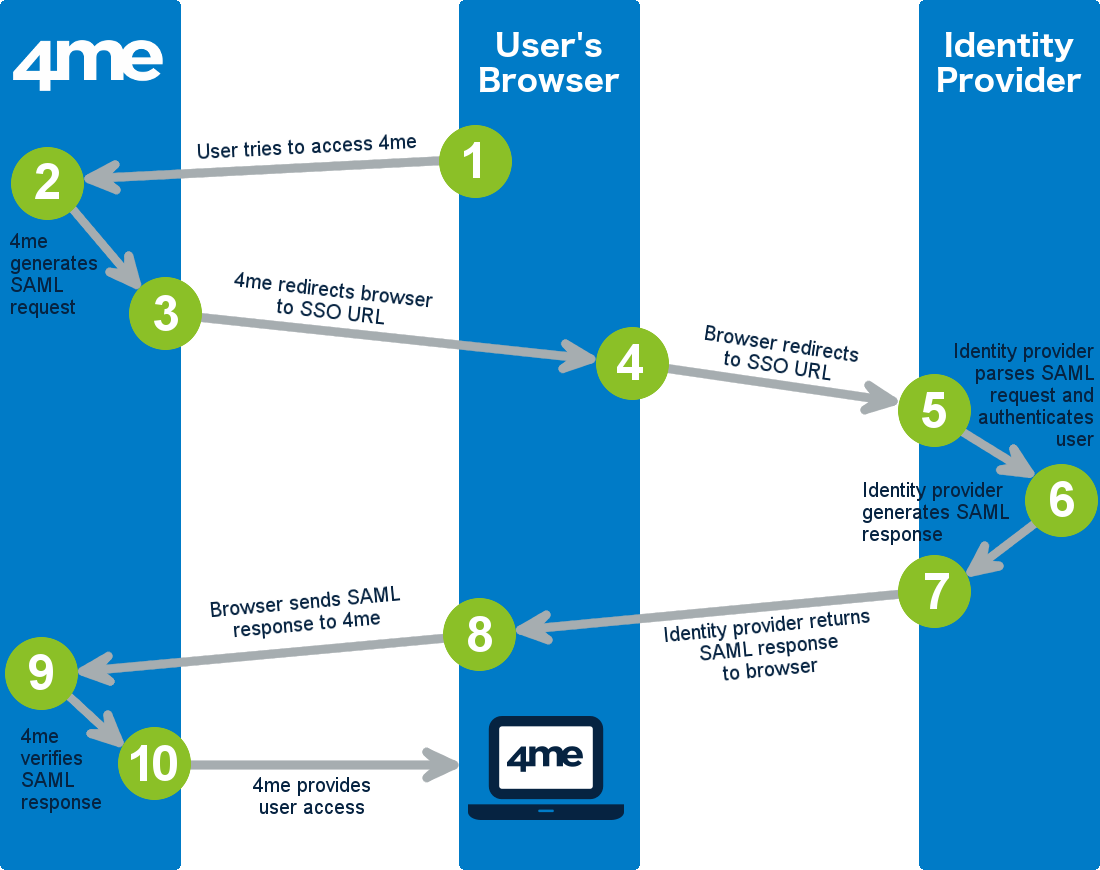
To truly appreciate the elegance of SAML SSO, we must look at the “handshake”—the sequence of events that occurs when a user attempts to log in. This process usually happens in a matter of milliseconds, but it involves several sophisticated steps.
Step 1: The Access Request
The process begins when a user navigates to a Service Provider (like Salesforce) and attempts to log in. The SP recognizes that the user belongs to an organization that uses SAML. Instead of showing a password field, the SP generates a SAML Authentication Request and redirects the user’s browser to the Identity Provider (the IdP).
Step 2: Authentication at the IdP
The user arrives at the IdP’s login page. If the user is already logged into the IdP (perhaps they already signed into their corporate email), this step is transparent. If not, the IdP challenges the user for their credentials—often requiring Multi-Factor Authentication (MFA). Once the IdP is satisfied with the user’s identity, it generates a SAML Assertion.
Step 3: The Assertion Delivery and Validation
The IdP sends the SAML Assertion back to the user’s browser, which then automatically forwards it to the Service Provider. This assertion is cryptographically signed with a private key known only to the IdP. The Service Provider, possessing the corresponding public key, validates the signature. If the signature is valid and the assertion meets the required security criteria (such as not being expired), the SP grants the user access to the application.
Step 4: Establishing the Session
Once validated, the SP establishes a session for the user. The user is now logged in without ever having shared their corporate password with the Service Provider. This separation of credentials from applications is a major security milestone in modern computing.
Why SAML SSO is Essential for Digital Security and Efficiency
The adoption of SAML SSO has become a standard requirement for enterprise-grade software. This is not merely due to the “cool factor” of modern tech, but because it solves several critical pain points in digital security and IT management.
Eliminating Password Fatigue and “Shadow IT”
The average employee uses dozens of cloud applications. Without SSO, users are forced to remember dozens of unique passwords. This leads to “password fatigue,” causing users to choose weak passwords or reuse the same password across multiple sites. SAML SSO eliminates this risk by reducing the attack surface to a single, highly secure set of credentials. Furthermore, it helps IT departments combat “Shadow IT”—the use of unauthorized software—by providing a centralized portal where all sanctioned apps are managed.
Strengthening Organizational Security Posture
Centralizing authentication allows security teams to enforce global policies. For instance, an organization can mandate that Multi-Factor Authentication (MFA) must be completed at the IdP level. This one change instantly secures every SAML-connected application. Additionally, SAML assertions are time-bound and specific to the session, making them far more secure than traditional browser cookies or stored passwords.
Streamlining IT Operations and Lifecycle Management
One of the most significant advantages of SAML SSO is the ease of “offboarding.” In a traditional setup, when an employee leaves the company, IT must manually disable their account in every single application. With SAML SSO, the admin simply disables the user in the central Identity Provider. Because the SPs rely on the IdP for authentication, the user instantly loses access to all connected applications. This reduces the risk of former employees retaining access to sensitive corporate data.
SAML vs. OAuth and OpenID Connect (OIDC): Navigating the Protocol Landscape
In discussions about digital security, SAML is often mentioned alongside OAuth and OpenID Connect (OIDC). While they all deal with identity and access, they serve different purposes in the tech stack.
SAML: The Enterprise Workhorse
SAML is primarily designed for enterprise web-based SSO. It is “heavyweight” due to its XML structure, which makes it highly flexible and descriptive for complex corporate environments. It excels at transferring comprehensive user profiles and roles between a company’s directory and its business software.
OAuth: The Authorization Protocol
Contrary to popular belief, OAuth is not an authentication protocol; it is an authorization protocol. It is designed to allow one application to access data in another application on behalf of a user (e.g., giving a calendar app permission to access your Google Contacts). OAuth doesn’t tell the application who the user is; it just provides a “token” that grants specific permissions.
OpenID Connect (OIDC): The Modern Alternative
OIDC is a thin layer of authentication built on top of the OAuth 2.0 framework. It uses JSON (JavaScript Object Notation) instead of XML, making it much lighter and more suitable for mobile applications and modern web development. While SAML remains the king of the corporate enterprise world, OIDC is rapidly gaining ground in consumer-facing apps and mobile-first environments.
Implementing SAML SSO: Best Practices for Robust Security
Implementing SAML is not a “set it and forget it” task. To ensure the highest level of security, IT professionals must follow specific best practices during the configuration and maintenance phases.
Prioritizing Multi-Factor Authentication (MFA)
SAML SSO creates a “single point of failure.” If a user’s IdP credentials are compromised, the attacker gains access to every connected application. Therefore, it is non-negotiable to layer MFA on top of the SAML login process. Modern IdPs offer various MFA methods, from SMS codes to biometrics and hardware security keys (like YubiKeys).
Certificate Management and Rotation
The trust between an IdP and an SP relies on digital certificates. These certificates have expiration dates. A common cause of SSO downtime is an expired certificate. Organizations should implement automated monitoring for certificate validity and establish a clear “rotation” policy to update keys before they expire, ensuring uninterrupted service.
Auditing and Monitoring Assertion Logs
Because the IdP is the central hub for all logins, it provides a goldmine of security data. Organizations should regularly audit SAML assertion logs to look for anomalies, such as logins from unexpected geographic locations or “impossible travel” scenarios (e.g., a user logging in from New York and then from London 20 minutes later). Integrating these logs into a SIEM (Security Information and Event Management) system allows for real-time threat detection.
The Future of SAML in an Era of Zero Trust
As we move toward a “Zero Trust” security model—where no user or device is trusted by default, even inside the network—SAML SSO continues to play a vital role. While newer protocols like OIDC are easier to implement for developers, SAML’s deep integration into the enterprise ecosystem ensures its relevance for years to come.
By centralizing identity, enforcing strong authentication, and automating the lifecycle of user access, SAML SSO stands as one of the most effective tools in the modern technologist’s arsenal. Whether you are an IT administrator looking to secure a growing startup or a security architect at a Fortune 500 company, a deep understanding of SAML is essential for navigating the complex digital frontier of the 21st century.
aViewFromTheCave is a participant in the Amazon Services LLC Associates Program, an affiliate advertising program designed to provide a means for sites to earn advertising fees by advertising and linking to Amazon.com. Amazon, the Amazon logo, AmazonSupply, and the AmazonSupply logo are trademarks of Amazon.com, Inc. or its affiliates. As an Amazon Associate we earn affiliate commissions from qualifying purchases.