
In the landscape of competitive digital gaming, few entities present as fascinating a case study in software balancing and meta-evolution as Sableye. Since its introduction in the third generation of the Pokémon franchise, this Dark/Ghost-type creature has occupied a unique niche within the game’s technical framework. For several years, Sableye was a statistical anomaly: a character with no inherent elemental weaknesses. However, as the developers at Game Freak sought to rebalance the competitive ecosystem, the introduction of new mechanics altered Sableye’s standing.
To understand what Sableye is weak to, one must look beyond simple gameplay and analyze the technical shifts in game design, the implementation of the Fairy-type “patch,” and the specific data-driven strategies required to overcome its disruptive utility in both the Pokémon main series and mobile applications like Pokémon GO.

The Evolution of Type Matchup Logic
The fundamental architecture of Pokémon combat relies on a complex “Rock-Paper-Scissors” logic system governed by elemental types. For the first decade of its existence, Sableye’s Ghost/Dark typing provided a perfect defensive synergy. In the underlying code of the game, Ghost moves are weak to Dark, and Dark moves are weak to Fighting and Bug. However, Sableye’s Ghost typing provided immunity to Fighting and resistance to Bug, while its Dark typing neutralized its Ghost weakness.
The Fairy Type: A Systemic Rebalancing
In 2013, with the release of Pokémon X and Y (Generation VI), the developers introduced the Fairy type. This was not merely a thematic addition but a technical necessity to curb the dominance of Dragon-type and Dark-type strategies that had begun to stagnate the competitive meta. From a software design perspective, this was a “balance patch” aimed at diversifying the competitive environment.
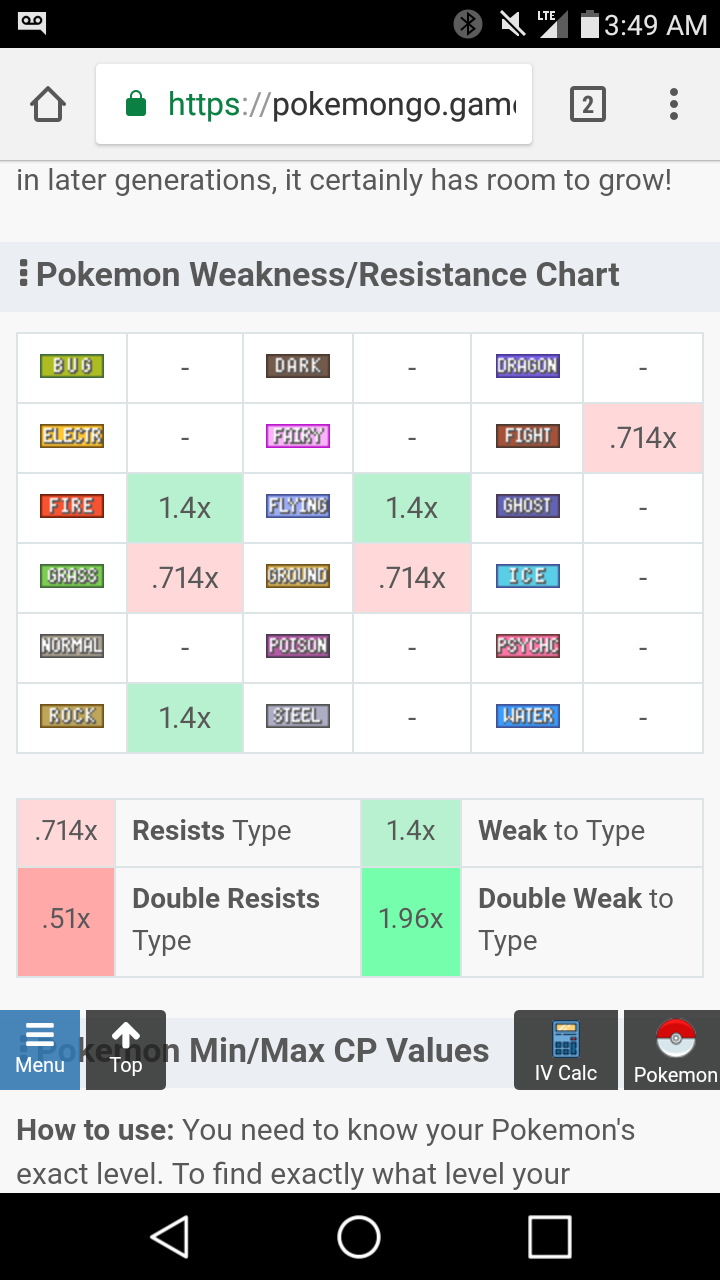
The Fairy type was programmed to deal 2x damage to Dark-type Pokémon. Because Sableye’s Ghost typing does not resist Fairy, the result was the first-ever structural weakness for the “Darkness Pokémon.” In the current technical iteration of the game, Sableye is exclusively weak to Fairy-type attacks.
Resistance and Immunity Data
To effectively counter Sableye, a player must also understand what not to use. The technical strengths of Sableye include several key immunities and resistances that make it a formidable defensive pivot:
- Immunities: Normal, Fighting, and Psychic. (In the game’s code, damage from these types is multiplied by zero).
- Resistances: Poison. (Damage is multiplied by 0.5x).
- Neutrality: All other types (Fire, Water, Grass, Electric, etc.) deal 1x standard damage.
Sableye in the Digital Meta: From Pokémon GO to VGC
The technical application of Sableye’s weaknesses varies significantly between different gaming platforms. Whether you are navigating the turn-based logic of the Video Game Championships (VGC) or the real-time tapping mechanics of the Pokémon GO app, the “weakness” of Sableye must be exploited using different methodologies.
Analyzing Pokémon GO’s Battle League Algorithms
In Pokémon GO, the combat system utilizes a real-time energy management engine. Here, “weakness” is quantified differently. While the Fairy-type weakness remains the primary vulnerability, the impact of “Super Effective” damage is calculated as a 1.6x multiplier rather than the 2x multiplier found in the console games.
For tech-focused players of the GO Battle League (GBL), Sableye is a staple in the Great League due to its “Shadow” variant and its “Purified” access to the move Return. To defeat a Sableye in this digital environment, players must leverage “Charmers”—Pokémon that utilize the Fairy-type Fast Move Charm. Because Charm carries high base damage and benefits from the Fairy-type multiplier, it can deplete Sableye’s HP bar before the user can cycle through their technical shield-baiting strategies.
The VGC Perspective: Priority Brackets and Ability Mechanics
In the more technically rigorous environment of the Nintendo Switch VGC, Sableye’s weakness isn’t just its elemental type—it is its reliance on its “Prankster” ability. Prankster is a piece of ability logic that gives “Status” moves (non-damaging moves) priority +1 in the turn order.
A technical counter to Sableye in this format involves utilizing the “Psychic Terrain” field effect or the “Armor Tail” ability, both of which are programmed to ignore priority moves. By using these technical workarounds, players can bypass Sableye’s disruptive toolkit (like Will-O-Wisp or Quash) and land a powerful Fairy-type move like Dazzling Gleam or Moonblast to exploit its low base defensive stats.
Strategic Counter-Measures and Technical Builds
While knowing that Sableye is weak to Fairy is the first step, a professional-level analysis requires understanding how to build a team that can force Sableye into a disadvantageous position. This involves analyzing the Pokémon’s base stats and the software-driven limitations of its move-pool.
Prankster Logic and Disruptive Programming
Sableye’s primary utility in a high-level digital environment is its ability to act before the opponent. By using moves like Encore, Taunt, and Disable, it functions as a “control” unit. To counter this, tech-savvy players use “Dark-type Immunity.” In Generation VII, a technical change was made to the game’s code: Dark-type Pokémon are now immune to moves boosted by the Prankster ability.
This means that a Dark-type Pokémon, such as Incineroar or Umbreon, acts as a “soft counter” to Sableye. Even though they don’t hit it for super-effective damage, they are immune to its priority disruption, allowing them to out-attrition the Sableye user.
Optimal Damage Calculation for Maximum Efficiency
In competitive play, players often use web-based damage calculators to determine exactly how much “Investment” (EVs/IVs) is required to survive a hit from a Sableye or to knock it out in one turn (an “OHKO”).
Because Sableye has a very low base HP stat (Base 50), it is highly susceptible to “raw” damage even from neutral hits. A technical analysis suggests that powerful attackers like Zacian or Sylveon do not even need to rely on the type advantage to overcome Sableye; their sheer statistical output, combined with the 2x Fairy multiplier, makes it nearly impossible for a Sableye to remain on the field for more than one or two turns.
Data-Driven Team Building: Mitigating Sableye’s Vulnerabilities
For those who wish to use Sableye despite its Fairy weakness, the solution lies in “Core Synergy”—a technical approach to team building where one Pokémon’s weakness is covered by another’s resistance.
Using Simulation Software for Team Optimization
Professional players often use simulators like Pokémon Showdown to stress-test their teams against common “Fairy-type threats.” To protect a Sableye, a player will typically pair it with a Steel-type or Poison-type Pokémon.
- Steel-types (like Gholdengo or Metagross) resist Fairy-type moves.
- Poison-types (like Toxapex or Amoonguss) also resist Fairy-type moves and can threaten an immediate knockout in return.
This technical “back-and-forth” creates a “Pivot” strategy. When the opponent brings in a Fairy-type to exploit Sableye’s weakness, the player switches to a resistant teammate, essentially “wasting” the opponent’s turn and regaining the momentum in the digital battle.
Synergizing Types for Digital Dominance
In the current meta-game (Generation IX), the introduction of “Terastalization” has added a new layer of tech to the Sableye equation. Terastalization allows a Pokémon to change its type once per battle. A Sableye user who anticipates a Fairy-type attack can “Tera-Steel” or “Tera-Poison,” instantly flipping their weakness into a resistance.
This software mechanic has revolutionized how weaknesses are perceived. A “weakness” is no longer a static data point but a fluid variable that can be manipulated through strategic foresight. To defeat a Sableye in this modern technical era, one must not only carry a Fairy-type move but also predict whether the Sableye will change its type to negate that advantage.

Conclusion: The Technical Depth of a Singular Weakness
In summary, while the question “what is Sableye weak to?” has a simple one-word answer—Fairy—the technical implications of that answer are vast. From the historical “patching” of the Ghost/Dark typing to the real-time energy calculations of Pokémon GO and the priority-bracket logic of the VGC, Sableye’s weakness is a cornerstone of competitive balance.
Understanding these mechanics allows players to move beyond casual play and into the realm of technical mastery. By leveraging damage calculators, understanding ability-based immunities, and mastering the “Tera” mechanic, gamers can effectively neutralize the disruptive power of this iconic digital creature. In the world of high-stakes gaming, data and logic are the ultimate counters to any opponent, no matter how few weaknesses they may seem to have.
aViewFromTheCave is a participant in the Amazon Services LLC Associates Program, an affiliate advertising program designed to provide a means for sites to earn advertising fees by advertising and linking to Amazon.com. Amazon, the Amazon logo, AmazonSupply, and the AmazonSupply logo are trademarks of Amazon.com, Inc. or its affiliates. As an Amazon Associate we earn affiliate commissions from qualifying purchases.