
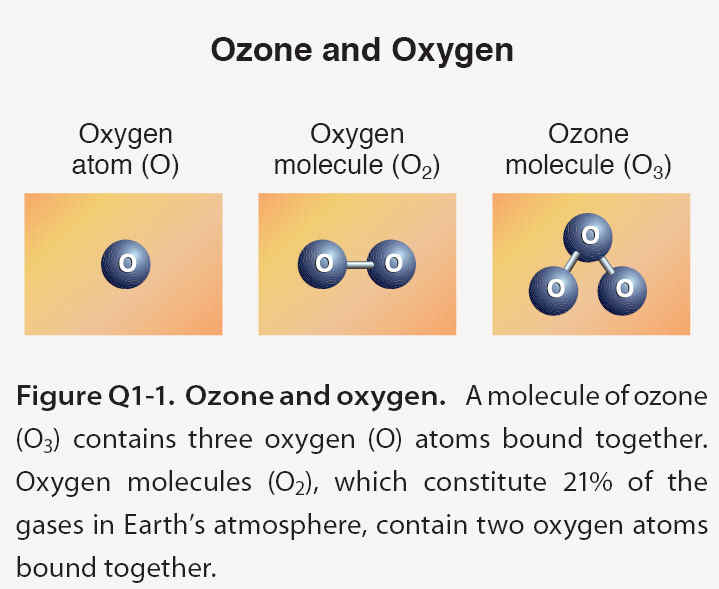
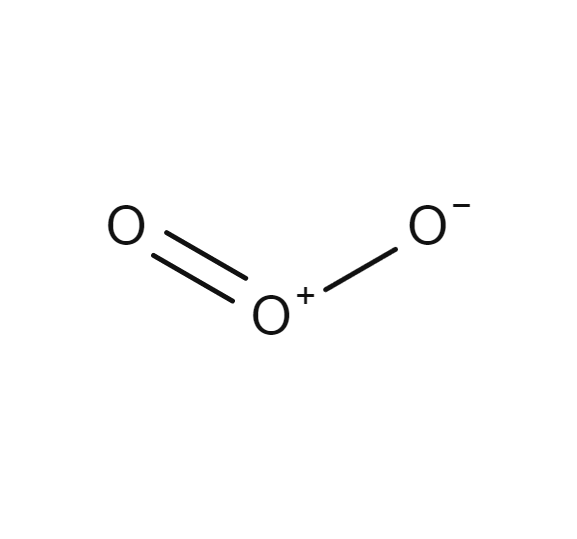
In the realm of chemical science, the ozone chemical formula is deceptively simple: $O_3$. Consisting of three oxygen atoms, this triatomic molecule is often associated with the protective layer of Earth’s stratosphere. However, in the fast-evolving landscape of technology, ozone has transcended its biological importance to become a critical component in high-tech manufacturing, environmental engineering, and advanced sterilization protocols. To understand the “what” of the ozone chemical formula is to understand a volatile, high-energy molecule that serves as one of the most powerful oxidizing agents available to modern engineers.

As we dive into the technological applications of $O_3$, we see a transition from basic chemistry to sophisticated hardware and software systems designed to harness its reactive nature. From the production of the microchips in our pockets to the purification of the water in our smart cities, ozone technology represents a silent revolution in industrial efficiency and digital precision.
Understanding the Foundation: From Chemical Formula to Tech Application
The ozone chemical formula, $O3$, signifies a molecule that is inherently unstable compared to the standard diatomic oxygen ($O2$) we breathe. This instability is exactly what makes it a “tech-ready” molecule. Because the third oxygen atom is loosely bonded, it is eager to break away and react with other substances. In the world of technology, this process—known as oxidation—is used to break down pollutants, etch surfaces at a molecular level, and eliminate pathogens without the need for harsh, lingering chemicals.
The $O_3$ Molecule: Why Trioxygen is a Tech Powerhouse
The chemical structure of ozone allows it to serve as a potent oxidant with a high redox potential. In technical terms, it is capable of disrupting cellular membranes and breaking complex organic bonds. For tech industries, this means $O3$ can be used as a “clean” reagent. Unlike chlorine or other industrial cleaners, ozone reverts back to simple oxygen ($O2$) after it has finished its work, leaving behind no chemical residue. This “zero-waste” characteristic is a cornerstone of Green Tech and sustainable industrial design.
Synthetic Generation: How Corona Discharge and UV Tech Create Ozone
Since ozone is too unstable to be stored and transported in tanks like other gases, tech firms must generate it on-site. This has led to the development of sophisticated Ozone Generators. The two primary technologies used are:
- Corona Discharge: This mimics lightning by passing dry air or oxygen through a high-voltage electrical field. The energy splits $O2$ molecules, which then reform into $O3$. This requires precise electrical engineering and heat management software.
- Ultraviolet (UV) Radiation: Using specific wavelengths (usually around 185 nm), UV lamps can photochemically produce ozone. This technology is frequently integrated into air purification gadgets and laboratory equipment.
Ozone in the Semiconductor and Electronic Manufacturing Sector
One of the most specialized applications of the ozone chemical formula is found in the heart of Silicon Valley and global semiconductor fabrication plants (fabs). As transistors shrink to the nanometer scale, the demand for ultra-clean environments and precise atomic-level processing has skyrocketed. Ozone has become a vital “tool” in the digital manufacturing stack.
Atomic Layer Deposition (ALD) and Oxide Growth
In the fabrication of microprocessors, engineers use a process called Atomic Layer Deposition (ALD) to build thin films of materials one atomic layer at a time. Ozone ($O3$) is frequently used as the oxygen source in this process. Because ozone is more reactive than $O2$, it allows for lower processing temperatures. This is crucial for protecting the delicate circuitry of modern chips. By using ozone, tech manufacturers can grow high-quality dielectric layers (insulators) that are essential for the high-speed performance of AI chips and mobile processors.
Ultra-Clean Surface Preparation for Microchips
Contamination is the enemy of hardware. A single organic molecule or a speck of dust can ruin a multi-thousand-dollar silicon wafer. Traditional cleaning methods involved heavy acids and solvents. However, “Ozonated Water” (DI-$O_3$) has replaced many of these chemicals in the wet-cleaning stages of semiconductor manufacturing. The ozone reacts with organic contaminants on the wafer surface, converting them into carbon dioxide and water, which are then easily rinsed away. This tech-driven cleaning process ensures the high yields necessary for the mass production of modern gadgets.
Environmental Tech: Ozone’s Role in Sustainable Water and Air Purification
As the global focus shifts toward “Clean-Tech,” the $O_3$ chemical formula is being leveraged to solve some of the world’s most pressing environmental challenges. Digital integration and IoT (Internet of Things) are now being layered on top of traditional ozone chemistry to create “smart” purification systems.
Advanced Oxidation Processes (AOP) in Smart Cities
Modern wastewater treatment plants are no longer just concrete basins; they are high-tech facilities utilizing Advanced Oxidation Processes (AOP). By combining ozone with hydrogen peroxide or UV light, tech systems generate hydroxyl radicals—the strongest oxidants used in water treatment. These systems are managed by sophisticated software that monitors water flow, pollutant levels, and $O_3$ concentration in real-time, ensuring that pharmaceuticals, pesticides, and microplastics are neutralized before water is recycled back into the environment.
Integrating IoT with Ozone Disinfection Systems
In the wake of global health concerns, ozone-based air and surface disinfection tech has moved into the consumer and corporate space. We are now seeing “Smart Ozone Cabinets” and HVAC-integrated ozone modules. These devices use IoT sensors to detect occupancy; they release controlled bursts of $O3$ to sanitize a room when it is empty and use “quenchers” to revert the gas back to $O2$ before people return. This marriage of chemistry and digital logic allows for a level of safety and efficiency that was previously impossible.
The Future of Ozone Technology: AI Integration and Nanotech
The evolution of ozone technology is moving toward greater precision and automation. We are entering an era where the chemical formula of ozone is managed not just by manual valves, but by artificial intelligence and machine learning algorithms.
Precision Monitoring via Smart Sensors
One of the historical barriers to widespread ozone use was the difficulty of controlling its concentration. Too little is ineffective; too much can be corrosive or harmful. Modern tech has solved this through the development of solid-state ozone sensors. These sensors utilize nanotechnology to detect $O_3$ at the parts-per-billion (ppb) level. When connected to an AI-driven control system, the generator can adjust its output instantaneously based on environmental variables like humidity, temperature, and contaminant load.
Ozone-Based Clean-Tech Innovations for a Greener Future
Looking forward, ozone is being explored in the field of battery recycling—a critical tech sector for the electric vehicle (EV) revolution. Researchers are using ozone’s oxidative power to separate precious metals like lithium, cobalt, and nickel from spent battery cathodes more efficiently than traditional smelting. This application of the $O_3$ molecule represents a significant step toward a circular economy in the tech industry, reducing the environmental footprint of our digital devices.
Furthermore, in the world of specialized materials, ozone is being used to functionalize carbon nanotubes and graphene. By treating these “wonder materials” with ozone, engineers can change their electrical and chemical properties, opening the door to faster sensors, more efficient solar cells, and next-generation wearables.
Conclusion
The ozone chemical formula—$O_3$—is much more than a footnote in a high school chemistry textbook. In the hands of modern technologists, it is a versatile, powerful, and clean tool that facilitates some of the most advanced processes on the planet. From the atomic-scale layering of our most powerful CPUs to the large-scale purification systems that keep our cities habitable, ozone is an indispensable part of the global technology ecosystem.
As we continue to push the boundaries of AI, semiconductors, and green energy, the role of ozone will only expand. By harnessing the volatile energy of trioxygen through digital precision and innovative hardware, the tech industry is proving that even the simplest molecules can drive the most complex advancements. The future of technology is not just about silicon and code; it is about mastering the chemical elements that make our modern world possible.
aViewFromTheCave is a participant in the Amazon Services LLC Associates Program, an affiliate advertising program designed to provide a means for sites to earn advertising fees by advertising and linking to Amazon.com. Amazon, the Amazon logo, AmazonSupply, and the AmazonSupply logo are trademarks of Amazon.com, Inc. or its affiliates. As an Amazon Associate we earn affiliate commissions from qualifying purchases.