
Oral and maxillofacial surgery (OMS) stands at the unique intersection of dentistry and medicine, requiring a profound understanding of the complex anatomical structures of the face, mouth, and jaws. While the field has traditionally been defined by surgical technique and anatomical mastery, the modern era has ushered in a radical transformation driven by high-level technology. Today, answering the question “what is oral and maxillofacial surgery” is impossible without discussing the digital ecosystem that powers it.
From artificial intelligence used in diagnostic imaging to the precision of robotic-assisted surgery, technology has shifted the paradigm from traditional “analog” procedures to a highly predictable, data-driven discipline. This article explores the technological trends, software innovations, and advanced gadgets that currently define the frontier of oral and maxillofacial surgery.

The Foundations of Precision: Advanced Imaging and Diagnostic Technology
The journey of any maxillofacial procedure begins with visualization. In the past, surgeons relied on two-dimensional X-rays to navigate three-dimensional problems. However, the integration of advanced imaging software and hardware has eliminated the guesswork, providing a “digital twin” of the patient’s anatomy.
CBCT and the Shift from 2D to 3D Diagnostics
The cornerstone of modern OMS technology is Cone Beam Computed Tomography (CBCT). Unlike traditional medical CT scans, CBCT is designed specifically for the head and neck, offering lower radiation doses while providing sub-millimeter resolution.
This technology allows surgeons to visualize the exact position of impacted teeth, the density of the jawbone for implants, and the proximity of vital nerves. The software accompanying these scanners allows for multi-planar reconstruction, enabling the surgeon to “fly through” the patient’s skull virtually before a single incision is made. This level of insight is critical for preventing complications and ensuring that surgical outcomes are planned with mathematical precision.
Intraoral Scanning and Digital Impressions
The era of messy, uncomfortable putty impressions is rapidly coming to an end. High-speed intraoral scanners use optical technology to capture thousands of data points per second, creating a highly accurate digital 3D model of the patient’s dentition.
These “digital impressions” are more than just a convenience; they serve as the foundational data for Computer-Aided Design (CAD) software. Once captured, these files can be instantly transmitted to laboratories or processed in-house to design surgical guides, splints, or temporary prosthetics. The integration of these scanners into the surgical workflow represents a significant leap in efficiency and patient comfort.
Surgical Innovation: Robotics and Navigational Systems
If imaging provides the roadmap, then robotics and navigation systems represent the high-performance vehicles used to reach the destination. The technical evolution of the operating room has introduced tools that enhance the surgeon’s natural abilities, providing stability and accuracy that the human hand cannot achieve alone.
Robotic-Assisted Surgery in Complex Reconstructions
One of the most exciting trends in the tech-driven medical space is the introduction of robotic assistants. Systems like the Yomi robotic platform—the first FDA-cleared robot for dental implant surgery—provide haptic feedback to the surgeon.
The robot does not replace the surgeon; instead, it acts as a GPS-guided stabilizer. The software tracks the patient’s position in real-time, and the robotic arm restricts the surgeon’s movements to the pre-planned boundaries. This prevents deviations from the surgical plan, ensuring that implants or bone cuts are placed with a degree of accuracy that is measured in microns. For complex reconstructions involving the jaw or midface, this technology reduces operative time and minimizes trauma to surrounding tissues.
Dynamic Surgical Navigation
Dynamic navigation functions much like a GPS for the human body. By using specialized cameras and infrared trackers attached to the surgical instruments, the system displays the instrument’s exact location on a screen in real-time, superimposed over the patient’s CT scan.
This allows for “blind” precision, where a surgeon can precisely navigate through bone to avoid a nerve canal or a sinus cavity without needing a large, invasive flap. The tech-heavy nature of dynamic navigation relies on sophisticated software algorithms that synchronize the physical movement of the handpiece with the digital 3D model, providing a seamless augmented reality experience for the clinician.
Customization through Additive Manufacturing and CAD/CAM
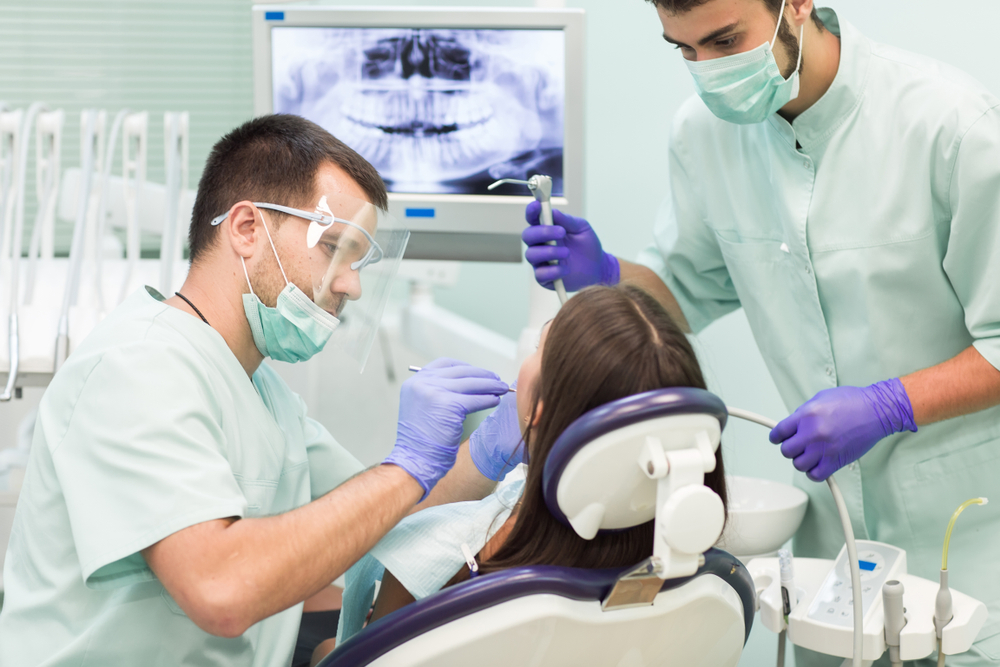
The concept of “one size fits all” is obsolete in modern maxillofacial surgery. Technology now allows for the creation of patient-specific hardware, tailored to the unique contours of an individual’s skeleton.
3D Printing of Patient-Specific Implants (PSI)
Additive manufacturing, or 3D printing, has revolutionized reconstructive surgery. In cases of severe facial trauma or tumor resection, surgeons no longer have to manually bend titanium plates in the operating room to fit a patient’s bone.
Instead, using CAD software, engineers and surgeons design a Patient-Specific Implant (PSI) based on the patient’s own CT data. These designs are then printed using medical-grade titanium or PEEK (polyetheretherketone). These “custom” gadgets fit the patient like a jigsaw puzzle piece. The result is a more natural aesthetic outcome, shorter anesthesia times, and a significantly lower risk of hardware failure.
Virtual Surgical Planning (VSP)
Virtual Surgical Planning is a software-intensive process that has become the gold standard for orthognathic (jaw correction) surgery. Surgeons use VSP to perform the entire operation in a virtual environment. They can “cut” the jawbones on screen, move them to the desired position, and observe how the movement affects the patient’s airway and facial profile.
Once the digital plan is finalized, 3D printers create surgical “guides” that snap onto the patient’s teeth during the actual surgery. These guides dictate exactly where the surgeon should cut and where the screws should be placed, effectively “downloading” the digital plan into the physical world.
AI and Virtual Reality: The Future of Surgical Planning and Training
As we look toward the next decade of oral and maxillofacial surgery, the focus is shifting toward the “intelligence” of the tools being used. Artificial Intelligence (AI) and Virtual Reality (VR) are moving from the realm of science fiction into the everyday clinical workflow.
Artificial Intelligence in Early Pathology Detection
AI tools are increasingly being integrated into diagnostic software to assist in identifying pathologies. Deep learning algorithms, trained on millions of clinical images, can flag suspicious lesions, cysts, or tumors in their earliest stages—often before they are visible to the naked human eye on a standard radiograph.
Furthermore, AI-driven software is being developed to automate the tedious parts of surgical planning, such as segmenting anatomical structures or identifying the ideal location for nerve repositioning. By offloading these tasks to an algorithm, surgeons can focus more on the creative and clinical decision-making aspects of the procedure.
VR and AR for Immersive Training and Patient Education
Virtual Reality (VR) is transforming how maxillofacial surgeons are trained. Residents can now practice complex procedures in a fully immersive digital environment, allowing them to make mistakes and learn from them without any risk to a patient.
Similarly, Augmented Reality (AR) is being used for patient education. By wearing AR glasses or using a tablet, patients can see a 3D overlay of their own facial structure and a simulation of their post-surgical results. This high-tech visual aid bridges the communication gap, allowing patients to better understand the technological complexity and the expected benefits of their treatment.
Digital Security and Data Integration in Maxillofacial Practice
With the transition to a fully digital workflow comes the immense responsibility of managing and securing vast amounts of sensitive data. In the tech-driven OMS landscape, digital security is just as important as the surgery itself.
Protecting Patient Data in a Connected Ecosystem
As surgical offices become more connected—sending large 3D files to labs, using cloud-based AI diagnostics, and storing records in digital formats—they become targets for cyber threats. Modern maxillofacial practices must employ robust encryption protocols and secure HIPAA-compliant file-sharing platforms.
The “gadgetry” of the office is only as good as the security of the network it sits on. Advanced firewalls and multi-factor authentication are now standard components of a surgical suite’s infrastructure. Ensuring the integrity of the “digital twin” data is paramount; if a patient’s 3D surgical plan were to be tampered with, the physical consequences could be catastrophic.

The Integration of Electronic Health Records (EHR)
The final piece of the tech puzzle is the seamless integration of surgical software with Electronic Health Records. Modern OMS platforms are moving toward a “single pane of glass” philosophy, where the surgeon can access imaging, vitals, surgical plans, and post-operative recovery data from a single interface. This data-rich environment allows for better longitudinal tracking of patient outcomes, enabling the field of oral and maxillofacial surgery to continue its evolution through the power of big data and tech-driven insights.
In conclusion, oral and maxillofacial surgery is no longer just a manual craft; it is a high-tech discipline defined by its ability to leverage hardware and software to achieve unprecedented levels of precision and safety. As technology continues to advance, the line between the digital and physical worlds will continue to blur, ushering in an era of personalized, robotic, and AI-enhanced facial surgery.
aViewFromTheCave is a participant in the Amazon Services LLC Associates Program, an affiliate advertising program designed to provide a means for sites to earn advertising fees by advertising and linking to Amazon.com. Amazon, the Amazon logo, AmazonSupply, and the AmazonSupply logo are trademarks of Amazon.com, Inc. or its affiliates. As an Amazon Associate we earn affiliate commissions from qualifying purchases.