
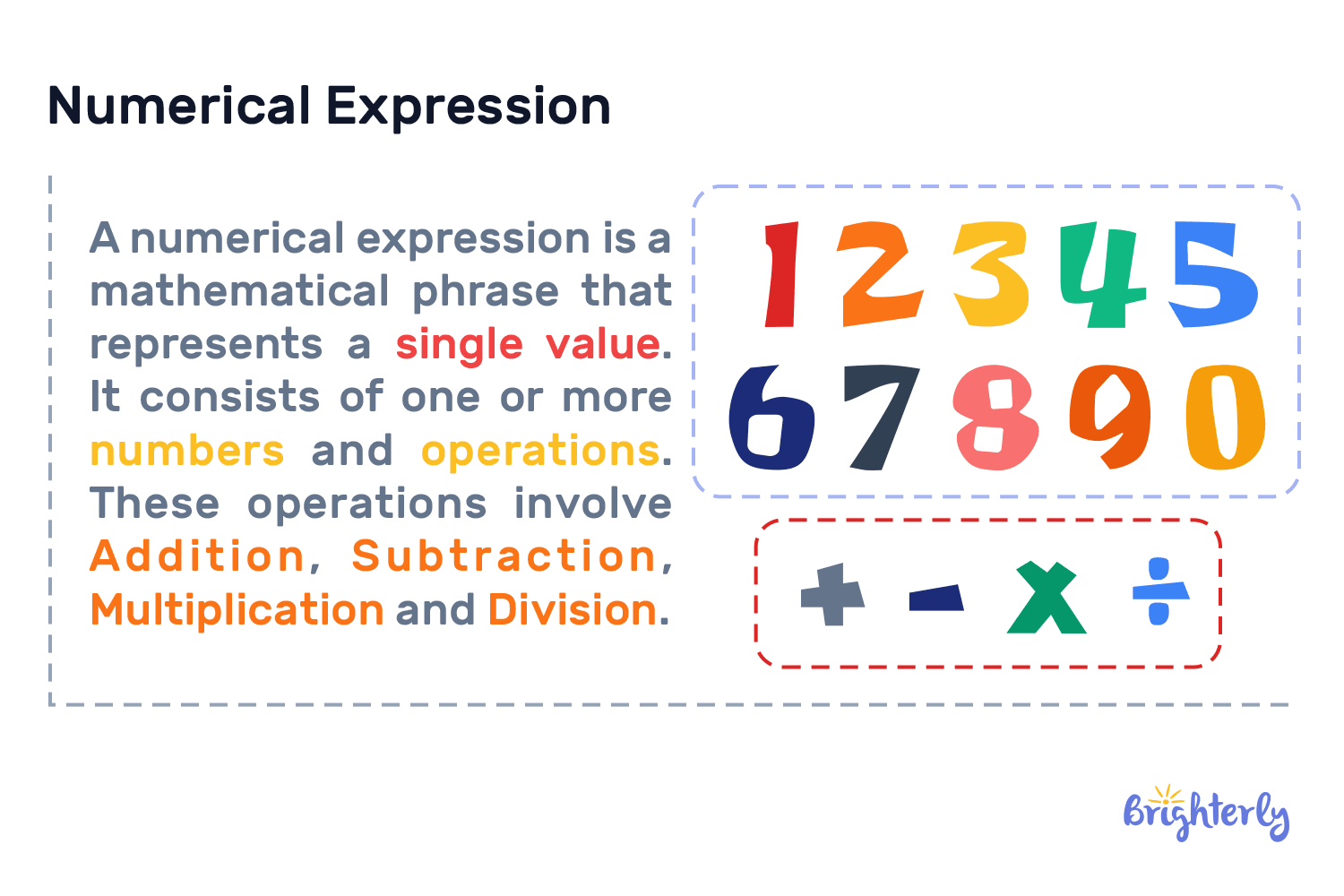
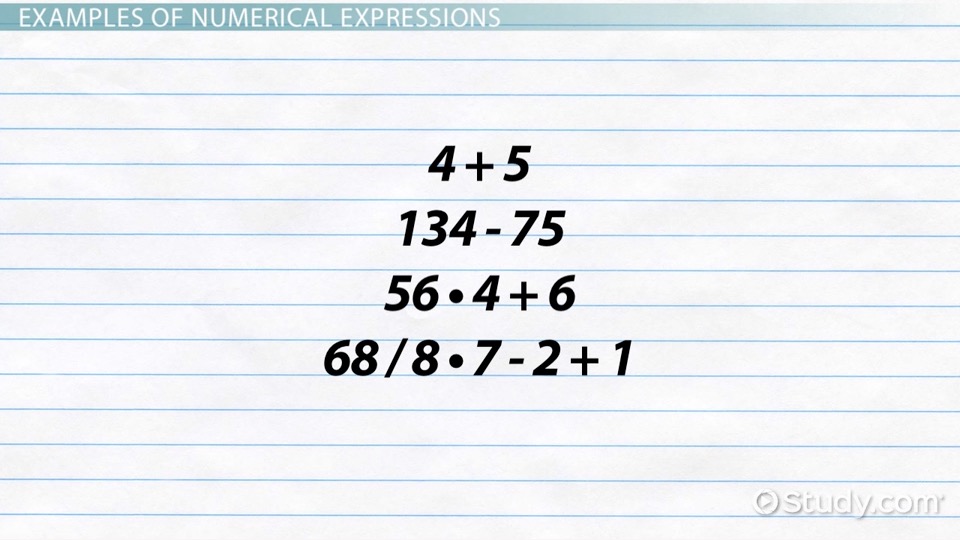
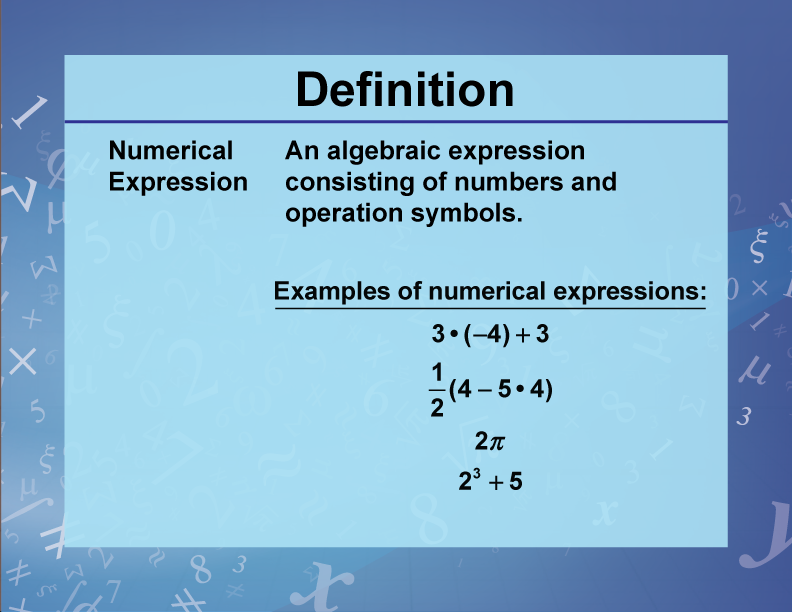
In the contemporary landscape of information technology, the term “numerically” transcends simple arithmetic. It represents the backbone of how modern software, artificial intelligence, and digital infrastructure interpret the physical world. At its core, “numerically” refers to the methodology of solving complex problems through discrete approximations rather than symbolic manipulations. While a mathematician might solve an equation using algebraic rules to find an exact “x,” a computer operates numerically—iterating through trillions of calculations to find a value so precise that the margin of error becomes irrelevant for practical application.
This transition from symbolic logic to numerical computation is what has fueled the digital revolution. From the rendering of high-definition graphics in modern gaming to the training of large language models, the ability to process data “numerically” is the engine of 21st-century innovation. To understand the current state of technology, one must understand how numerical methods define the limits and possibilities of our digital tools.
The Evolution of Numerical Computing in the Digital Age
The history of computing is, in many ways, the history of numerical refinement. In the early days of vacuum tubes and punch cards, numerical computation was a slow, laborious process reserved for ballistic trajectories and census data. Today, the ubiquity of high-speed processors has turned numerical analysis into a real-time utility.
From Manual Calculation to Algorithmic Efficiency
Before the advent of modern silicon, “computers” were humans who performed long-form calculations to solve engineering problems. The shift to digital systems required a fundamental change in how we approach logic. Computers do not inherently understand the concept of “infinity” or “continuity.” Instead, they break down continuous phenomena—such as sound waves or weather patterns—into discrete numerical steps. This process, known as discretization, is the first step in any numerical technological process. By turning the world into a series of 1s and 0s, and subsequently into floating-point numbers, hardware can execute complex instructions at a scale that was previously unimaginable.
The Role of Floating-Point Arithmetic
One cannot discuss numerical technology without mentioning the IEEE 754 standard for floating-point arithmetic. This is the technical “language” that allows different hardware systems—be it an iPhone or a supercomputer—to handle decimals and massive integers consistently. In the tech world, the precision of a system is often measured by its “flops” (Floating Point Operations Per Second). Whether a software developer is optimizing a database or a researcher is simulating a molecular reaction, the ability to handle numerical data with high precision and low latency is the benchmark of superior technology.
Numerically Defined: Logic, Data, and Software Architecture
At the architectural level, software is built on the assumption that every input can be represented numerically. This paradigm dictates how data structures are designed and how algorithms are optimized for performance. When we ask “what is numerically” in the context of software engineering, we are looking at the bridge between abstract human concepts and the rigid, binary reality of the CPU.
How Algorithms Process Real-World Variables
In software development, “numerically” refers to the use of algorithms that approximate solutions for problems that are too complex for direct calculation. For example, search engine algorithms do not “read” web pages the way humans do; they convert text into numerical vectors (a process called word embedding). By comparing these vectors numerically, a search engine can determine the relevance of a page to a user’s query. This transformation of qualitative data into quantitative sets is the secret sauce behind modern software’s perceived intelligence.
The Bridge Between Abstract Math and Machine Code
The gap between a high-level programming language like Python and the machine code executed by a processor is bridged by numerical compilers. These tools take human-readable logic and translate it into optimized numerical instructions. For tech professionals, the challenge lies in “numerical stability.” If a software program is not numerically stable, small errors in calculation (rounding errors) can compound over time, leading to system crashes or inaccurate data. This is why fields like digital security and aerospace engineering rely on rigorous numerical verification to ensure that the software’s logic holds up under extreme computational stress.
Critical Applications: Where Numerical Methods Drive Innovation
The most exciting developments in the tech sector today are almost entirely driven by advancements in numerical methods. By leveraging massive datasets and high-performance computing (HPC), industries are solving problems that were once considered computationally “intractable.”
Artificial Intelligence and Neural Networks
Artificial Intelligence is, at its heart, a massive numerical optimization problem. When a developer trains a neural network, they are essentially using an algorithm called “stochastic gradient descent” to minimize a numerical “loss function.” Each “neuron” in a digital network is a weight—a numerical value that adjusts as the system learns. The breakthrough in AI over the last decade hasn’t been a change in the philosophy of intelligence, but rather a massive leap in our ability to perform these numerical calculations in parallel using Graphics Processing Units (GPUs). To talk about AI today is to talk about the sheer scale of numerical throughput.
Predictive Modeling and Big Data Analytics
In the realm of enterprise tech, big data analytics relies on numerical modeling to predict consumer behavior, market trends, and system failures. By applying numerical regression models to historical data, companies can forecast future outcomes with startling accuracy. This isn’t just about counting numbers; it’s about identifying patterns within numerical noise. Technologies like Apache Spark and Hadoop are designed specifically to distribute these numerical tasks across thousands of servers, allowing for the analysis of petabytes of data in seconds.
Simulation and Virtual Prototyping
From automotive design to urban planning, numerical simulation has replaced physical prototyping. Engineers use Finite Element Analysis (FEA) and Computational Fluid Dynamics (CFD) to test how a new car design will react to a crash or how air flows over a wing. These are purely numerical environments where physics is recreated through differential equations. This “digital twin” technology saves billions of dollars in R&D costs and allows for rapid iteration in the tech and manufacturing sectors.
The Future of Numerical Computation: Quantum and Beyond
As we approach the physical limits of silicon-based transistors (Moore’s Law), the tech industry is looking toward the next frontier of numerical computation. The quest for more “numerical power” is driving a radical redesign of computing hardware.
Overcoming Current Hardware Limitations
Traditional binary computers are reaching a bottleneck in how quickly they can move numerical data between memory and the processor (the Von Neumann bottleneck). To solve this, the industry is moving toward “neuromorphic” chips and specialized AI accelerators like TPUs (Tensor Processing Units). These chips are designed to do one thing: perform matrix multiplication—the fundamental numerical operation of modern software—at lightning speed and with minimal energy consumption.
The Intersection of Human Logic and Numerical Precision
We are entering an era where the distinction between “digital” and “physical” is blurring. Through technologies like Augmented Reality (AR) and the Internet of Things (IoT), our physical environment is being mapped numerically in real-time. This requires a new level of edge computing, where numerical processing happens locally on a device rather than in the cloud.
Furthermore, Quantum Computing represents a paradigm shift in the definition of “numerically.” While classical computers use bits (0 or 1), quantum computers use qubits, which can represent numerical states in a superposition. This allows for the numerical solving of problems that would take a classical supercomputer billions of years to crack, such as complex chemical simulations or unbreakable encryption codes.
In conclusion, “numerically” is not just a mathematical term; it is the fundamental logic of the digital age. It is the process by which we translate the complexity of the universe into a language that machines can manipulate, improve, and act upon. As we continue to push the boundaries of AI, quantum mechanics, and big data, our mastery over numerical computation will remain the primary driver of technological progress. Understanding this core concept is essential for anyone looking to navigate the future of the tech industry, as it informs every tool we use, every app we download, and every innovation we anticipate.
aViewFromTheCave is a participant in the Amazon Services LLC Associates Program, an affiliate advertising program designed to provide a means for sites to earn advertising fees by advertising and linking to Amazon.com. Amazon, the Amazon logo, AmazonSupply, and the AmazonSupply logo are trademarks of Amazon.com, Inc. or its affiliates. As an Amazon Associate we earn affiliate commissions from qualifying purchases.