
In the landscape of modern business finance, efficiency is the cornerstone of profitability. Every dollar allocated to marketing, operations, or customer retention must be accounted for and optimized. One often-overlooked area where significant financial leakage occurs is in the physical distribution of materials—specifically, direct mail. This is where NCOA, or National Change of Address, becomes a critical financial tool rather than just a technical database.
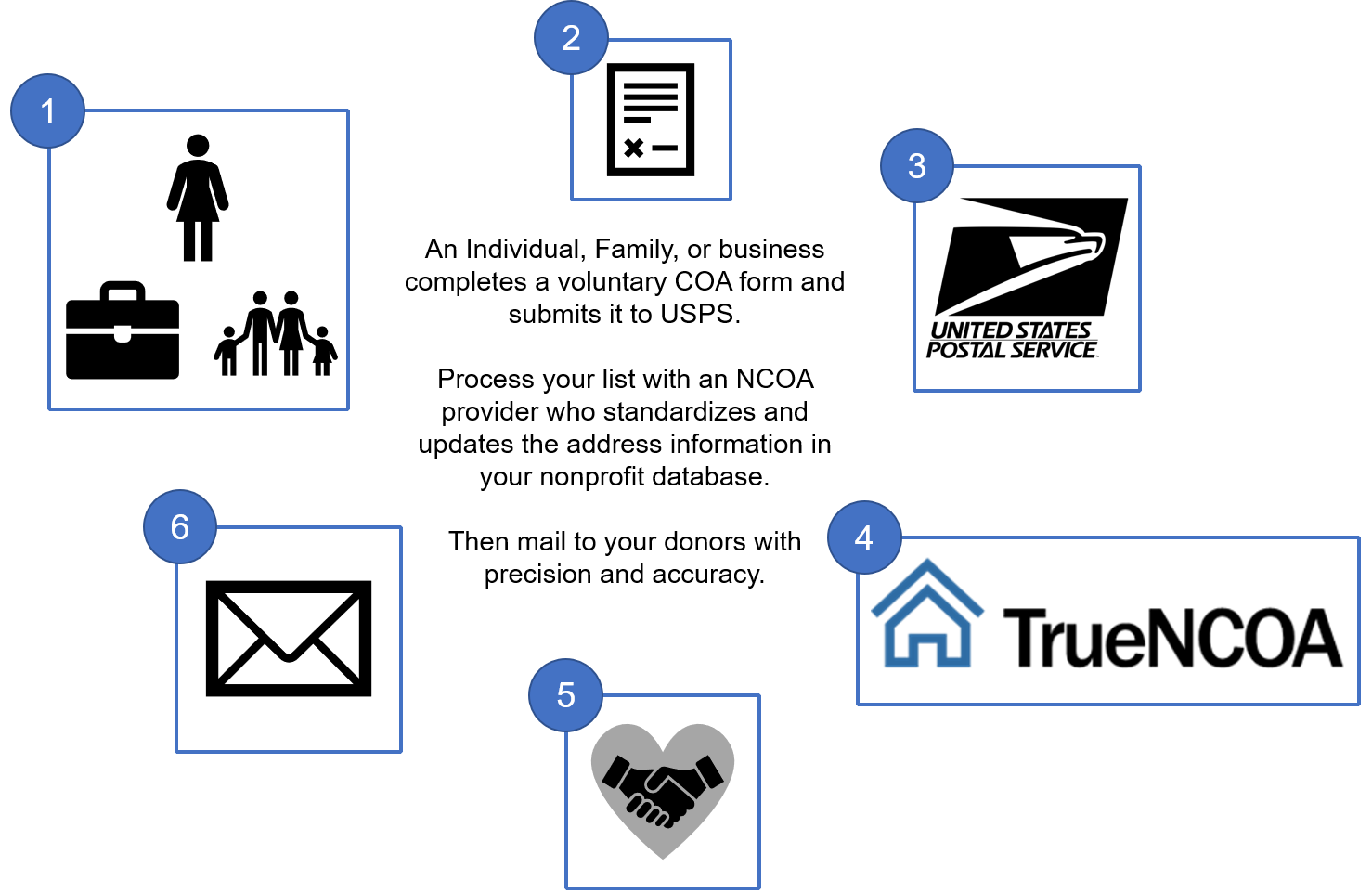
NCOA is a secure dataset maintained by the United States Postal Service (USPS) that contains the names and addresses of individuals, families, and businesses who have filed a change-of-address order. For a business, leveraging this data is not merely a logistical necessity; it is a sophisticated financial strategy designed to protect margins, enhance Return on Investment (ROI), and ensure that capital is deployed effectively.
Understanding NCOA as a Strategic Financial Tool
To understand the financial implications of NCOA, one must first understand what it represents: a dynamic map of consumer movement. Approximately 10% to 15% of the American population moves every year. For a company maintaining a database of 100,000 customers, this means that every 12 months, up to 15,000 records become obsolete.
How the NCOA Database Works
The NCOA system—specifically the NCOALink® service—allows businesses to compare their existing mailing lists against the USPS database. When a match is found, the system provides the new, current address for that individual or business. This process typically covers the last 18 to 48 months of move data.
From a financial perspective, this is a form of data hygiene. High-quality data is an asset, whereas “dirty” data is a liability. By utilizing NCOA, a business converts a depreciating asset (an outdated mailing list) into a high-performing financial engine. It ensures that communication lines remain open, preventing the silent attrition that occurs when customers move and simply stop hearing from a brand.
The Cost of Undeliverable Mail (UAA)
In the world of corporate finance, “UAA” stands for Undeliverable-As-Addressed. This is the financial black hole of the direct mail industry. Every piece of UAA mail represents a trifecta of wasted capital:
- Production Costs: The money spent on design, paper, and printing.
- Postage Costs: The fees paid to the USPS to transport a dead-end document.
- Labor Costs: The administrative hours spent managing returned mail and attempting to reconcile accounts.
When a company ignores NCOA updates, they are essentially betting against the mobility of the American workforce. For large-scale financial institutions, insurance companies, or retail giants, the cumulative cost of UAA mail can reach hundreds of thousands of dollars annually. NCOA serves as the primary hedge against this specific type of operational waste.
Boosting ROI: The Financial Benefits of Regular NCOA Updates
The primary goal of any financial officer is to maximize the yield on every dollar spent. Direct mail remains one of the most effective channels for high-value customer acquisition and retention, but its profitability depends entirely on the accuracy of the underlying data.
Reducing Wasteful Spending on Postage and Materials
The most immediate financial benefit of NCOA is the reduction in “sunk costs.” When a mailing list is cleaned through NCOA before a campaign is launched, the “dead” addresses are removed or updated. This results in immediate savings on postage and printing.
Consider a medium-sized enterprise sending out a quarterly catalog to 50,000 recipients. If 10% of those recipients have moved without the company’s knowledge, 5,000 catalogs are printed and mailed to the wrong locations. At an estimated cost of $1.50 per unit (including postage and production), that is $7,500 in pure waste per quarter, or $30,000 per year. Implementing an NCOA update usually costs a fraction of that amount, providing an immediate and measurable return on the software investment.
Maximizing Customer Lifetime Value through Data Integrity
Customer Lifetime Value (LTV) is a key metric in business finance. It represents the total net profit attributed to the entire future relationship with a customer. However, LTV drops to zero if you lose contact with the customer.

NCOA plays a vital role in “Customer Win-Back” and retention strategies. When a high-value customer moves, they are in a state of transition where they are likely to reconsider their service providers—banks, insurance agents, or utility companies. By using NCOA to ensure your communication reaches them at their new residence before the competition does, you protect the long-term revenue stream associated with that individual. The cost of acquiring a new customer is significantly higher than the cost of maintaining one through an address update, making NCOA a high-leverage tool for maintaining a healthy bottom line.
Compliance, Risk Management, and Financial Security
Beyond simple cost savings, NCOA is a pillar of risk management. In many industries, the failure to deliver documents to the correct address isn’t just a waste of money—it is a legal and financial risk.
Avoiding Penalties and Ensuring Regulatory Compliance
For industries such as banking, healthcare, and insurance, there are strict regulatory requirements regarding the delivery of sensitive information. Privacy laws, such as HIPAA in healthcare or various financial privacy acts, require that personal data be sent to the correct individual.
If a financial statement or a medical bill is sent to an old address and opened by a new tenant, it constitutes a data breach. The resulting fines, legal fees, and reputational damage can be devastating to a company’s financial health. Furthermore, the USPS offers discounted “automation rates” for mailers who can prove their lists have been updated within a specific timeframe (usually 95 days) using an approved Move Update method like NCOA. Failure to comply results in higher postage rates, effectively acting as a financial penalty for poor data management.
Protecting Revenue Streams through Consistent Communication
In subscription-based businesses or companies that rely on recurring billing, the physical address is often the primary point of contact for collections and renewals. When a customer moves and the bill doesn’t follow, the “churn” that results is often unintentional. The customer didn’t necessarily want to cancel; they simply stopped receiving the invoice.
From a cash flow perspective, this creates an “Account Receivable” (AR) nightmare. The time and effort required to track down a moved customer to collect a debt is significantly more expensive than the automated NCOA process that would have prevented the lapse in the first place. By maintaining address integrity, companies ensure a smoother, more predictable cash flow and reduce the need for aggressive (and expensive) collection efforts.
Implementing NCOA into Your Business Finance Strategy
Integrating NCOA into your financial ecosystem should not be viewed as a one-time “clean-up” project but as an ongoing component of your financial technology stack.
Automation and Cost-Benefit Analysis of NCOA Software
Modern financial tools allow for the automation of NCOA processing. By integrating NCOA APIs directly into a Customer Relationship Management (CRM) or Enterprise Resource Planning (ERP) system, updates can happen in real-time or at set intervals.
When performing a cost-benefit analysis for NCOA software, CFOs should look at:
- The “Burn Rate” of the Mailing List: How quickly does your specific demographic move?
- Postage Discounts: Does the NCOA service qualify the business for USPS workshare discounts?
- Labor Savings: How many hours are currently spent by staff handling “Return to Sender” mail?
- Opportunity Cost: What is the value of the sales lost because marketing materials didn’t reach the target?
Usually, the analysis reveals that the software pays for itself within the first two or three mailing cycles.

Integrating Data Hygiene into the Marketing Budget
Finally, NCOA should be a line item in the marketing and operations budget, but it should be categorized as an “Efficiency Multiplier.” Instead of simply asking for more budget to reach more people, savvy managers use NCOA to ensure that the existing budget is working at 100% capacity.
By shifting the perspective from “What does NCOA cost?” to “How much is our bad data costing us?”, businesses can unlock hidden capital. In an era where every basis point of margin matters, NCOA provides a clear, data-driven path to financial optimization. It turns the simple act of a customer moving house into an opportunity for a business to demonstrate its technical precision and financial discipline.
In conclusion, NCOA is more than a postal requirement; it is a fundamental pillar of modern business finance. By reducing waste, ensuring compliance, and protecting customer relationships, it serves as a vital tool for any organization looking to maximize its fiscal health in a mobile society.
aViewFromTheCave is a participant in the Amazon Services LLC Associates Program, an affiliate advertising program designed to provide a means for sites to earn advertising fees by advertising and linking to Amazon.com. Amazon, the Amazon logo, AmazonSupply, and the AmazonSupply logo are trademarks of Amazon.com, Inc. or its affiliates. As an Amazon Associate we earn affiliate commissions from qualifying purchases.