
In the modern landscape of software development, most programmers spend their time working with high-level languages like Python, JavaScript, or Java. These languages are designed to be human-readable, abstracting away the complex inner workings of computer hardware to allow for rapid development. However, beneath every sleek mobile app and complex web platform lies a foundation built on low-level programming.
Low-level programming refers to coding languages that provide little to no abstraction from a computer’s instruction set architecture. These languages are “close to the metal,” meaning they interact directly with the hardware—the CPU, memory, and registers—without the safety nets or automated management systems found in modern software stacks. Understanding low-level programming is essential for anyone looking to master computer science, optimize performance-critical systems, or develop the foundational software that powers our digital world.
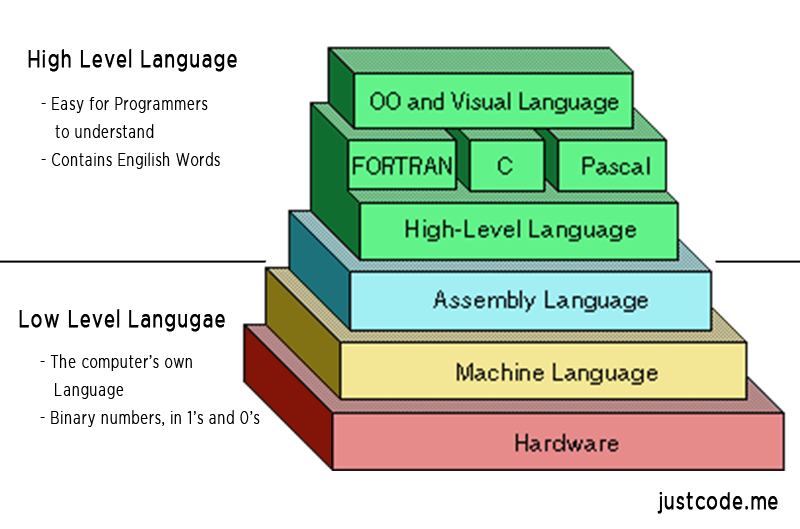
The Foundations: Machine Code and Assembly Language
To understand low-level programming, one must first understand how a computer perceives instructions. Unlike humans, who think in logic and syntax, a central processing unit (CPU) only understands electrical signals represented as binary.
The Language of the Processor: Machine Code
Machine code is the lowest level of software. It consists entirely of binary digits (0s and 1s) or hexadecimal numbers that represent specific operations for the CPU. Every processor family (such as Intel’s x86 or Apple’s M-series ARM chips) has its own unique machine code, known as its Instruction Set Architecture (ISA). In machine code, there are no variables or functions—only memory addresses and operation codes (opcodes). While it is the only language a computer can execute directly, it is nearly impossible for humans to write or maintain complex programs at this level.
Assembly: The Human-Readable Bridge
Assembly language is a slight step up from machine code. It uses “mnemonics”—short, readable terms like MOV (move), ADD (addition), or PUSH (push onto stack)—to represent specific machine code instructions. Because there is usually a one-to-one correspondence between an assembly instruction and a machine code instruction, it is still considered a low-level language.
Writing in Assembly gives a developer total control over the processor. You decide exactly which data goes into which register and exactly when memory is accessed. However, this control comes at a cost: Assembly is not portable. A program written in x86 Assembly for a desktop computer will not run on an ARM-based smartphone without being completely rewritten.
Key Characteristics of Low-Level Languages
Low-level programming is defined by its intimacy with hardware. While high-level languages prioritize developer productivity, low-level languages prioritize machine efficiency and granular control.
Manual Memory Management
In high-level languages like Java or Python, “Garbage Collection” automatically handles memory. When you are done with a piece of data, the language cleans it up for you. In low-level programming, the developer is the garbage collector. Using languages like C (often considered “mid-to-low level”) or Assembly, you must manually allocate memory blocks and, crucially, free them when they are no longer needed. Failure to do so leads to memory leaks, while incorrect management can lead to system crashes or security vulnerabilities like buffer overflows.
Direct Hardware Interaction
Low-level programming allows developers to bypass the operating system’s standard abstractions. If a developer needs to write a driver for a new graphics card or optimize how a network packet is processed at the silicon level, they use low-level techniques. This involves manipulating registers (small, ultra-fast storage locations inside the CPU) and interacting with I/O ports directly.
Minimal Abstraction and High Performance
Abstraction is the process of hiding complexity. High-level languages hide the complexity of the CPU to make coding easier. Low-level languages remove those layers. The result is “deterministic performance.” Because there is no overhead from a runtime environment or a virtual machine, the code executes exactly as written with maximum speed and the smallest possible memory footprint. This makes low-level programming the gold standard for resource-constrained environments.
Comparison: Low-Level vs. High-Level Programming
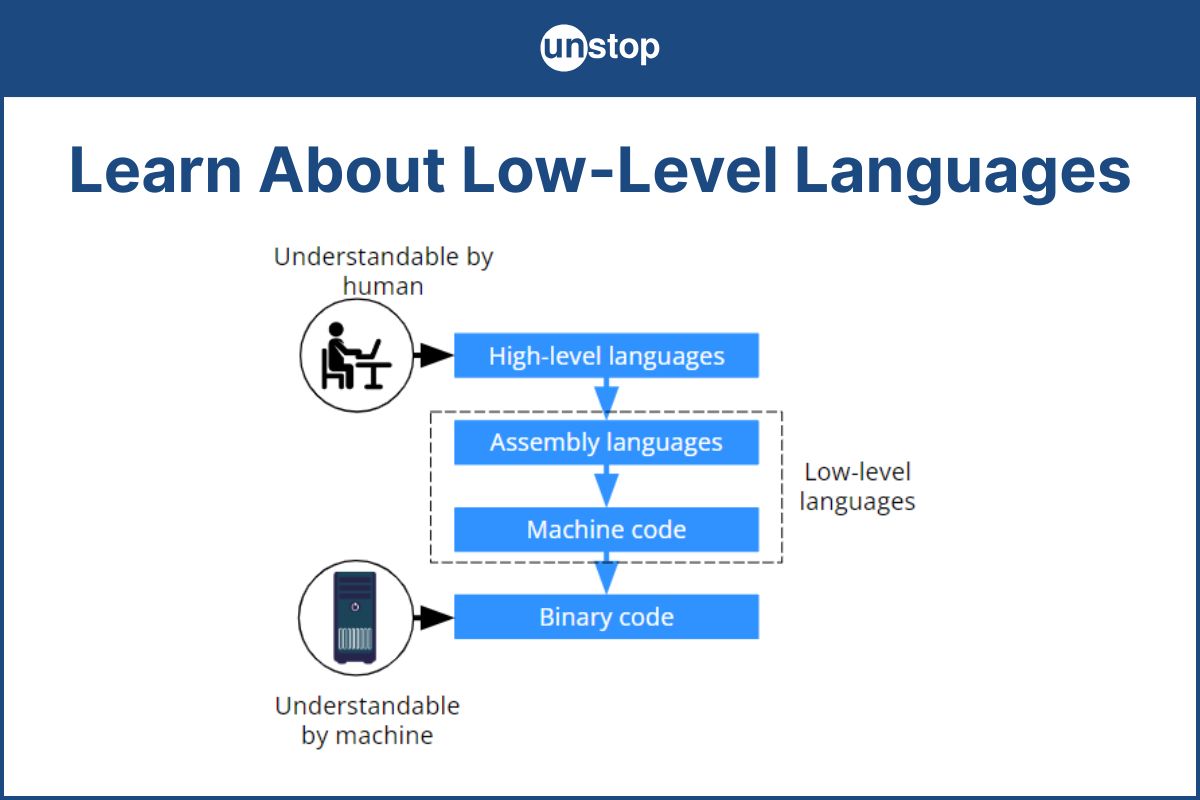
The choice between low-level and high-level programming is rarely about which is “better,” but rather which is appropriate for the task at hand. Understanding the trade-offs is vital for technical architecture.
Development Speed vs. Execution Speed
High-level languages allow developers to build complex applications quickly. A task that takes ten lines of Python might take hundreds of lines of Assembly. However, the Python code will likely run significantly slower and consume more RAM. Low-level programming is an investment: you spend more time in the development phase to ensure the final product is as fast and efficient as possible. This is why the “core” of performance-heavy software—like video rendering engines or high-frequency trading platforms—is written in low-level or mid-level languages.
Portability and the Abstraction Ladder
High-level code is generally portable across different operating systems and architectures because the compiler or interpreter handles the translation. Low-level code is tied to the “metal.” If you write a low-level routine to optimize a specific processor’s cache usage, that code is useless on a different processor type. Developers must weigh the need for specialized performance against the need to reach a broad range of hardware devices.
Practical Use Cases in Modern Technology
Despite the popularity of “easy” languages, low-level programming remains the backbone of the tech industry. Without it, the high-level languages we love wouldn’t have a platform to run on.
Operating Systems and Kernel Development
The kernel is the heart of an operating system (like Linux, Windows, or macOS). It manages the communication between software and hardware. Kernels must be written in low-level languages (primarily C and Assembly) because they need to manage hardware resources directly and operate with zero latency. Every time your laptop wakes up from sleep or saves a file, low-level code is executing those instructions.
Embedded Systems and IoT
The “Internet of Things” (IoT) consists of billions of small devices, from smart thermostats to industrial sensors. These devices often have very little memory and weak processors. You cannot run a heavy Python script on a tiny microcontroller with 32KB of RAM. Instead, developers use low-level C or Assembly to write highly efficient code that can run for years on a single battery charge.
Game Engines and Real-Time Simulation
Modern AAA video games require immense computational power to render realistic graphics and calculate physics in real-time. Game engines like Unreal Engine are built using C++ and low-level optimizations to ensure the hardware is being pushed to its absolute limit. When a game needs to render 60 frames per second, every microsecond of CPU and GPU time must be accounted for.
Why You Should Learn Low-Level Concepts Today
In an era of “low-code” and “no-code” platforms, one might wonder if low-level programming is becoming obsolete. On the contrary, it is more relevant than ever for those who want to excel in the tech field.
Enhanced Debugging and Optimization Skills
When a high-level program crashes with a “segmentation fault” or a “stack overflow,” a developer who understands low-level concepts knows exactly what that means in terms of memory. They can look past the syntax error and understand what the hardware is struggling with. This knowledge allows for “mechanical sympathy”—the ability to write code that works in harmony with the hardware’s design rather than against it.
Understanding Computer Architecture
Learning a low-level language is the best way to learn how a computer actually works. You learn about the data bus, the address bus, the fetch-decode-execute cycle, and how the CPU manages state. This foundational knowledge makes you a more versatile engineer. Whether you are scaling a cloud infrastructure or securing a network, knowing the underlying mechanics of the machine gives you a significant advantage in troubleshooting and systems design.

Conclusion: The Enduring Power of the Metal
Low-level programming is the bridge between the abstract world of human logic and the physical world of silicon and electricity. While it is undeniably more difficult to master than high-level web or app development, its importance cannot be overstated. From the operating systems that power our servers to the embedded chips in our cars, low-level code provides the efficiency, control, and performance that modern civilization relies upon.
For the aspiring developer or the seasoned tech professional, diving into the depths of machine code, assembly, and manual memory management is more than just a technical exercise; it is an exploration of the very soul of the computer. In a world that is increasingly abstracted, those who understand the “metal” will always be the ones who truly control the machine.
aViewFromTheCave is a participant in the Amazon Services LLC Associates Program, an affiliate advertising program designed to provide a means for sites to earn advertising fees by advertising and linking to Amazon.com. Amazon, the Amazon logo, AmazonSupply, and the AmazonSupply logo are trademarks of Amazon.com, Inc. or its affiliates. As an Amazon Associate we earn affiliate commissions from qualifying purchases.