
In the vast and often opaque world beneath the waves, life has evolved extraordinary sensory systems to navigate, hunt, and survive. Among these marvels is the lateral line system, a sophisticated mechanosensory organ predominantly found in fish and amphibians. Far from being a mere biological curiosity, this intricate network has become a profound source of inspiration for engineers and scientists striving to develop next-generation underwater technologies. It represents nature’s elegant solution to detecting movement, pressure gradients, and vibrations in an aquatic environment, providing a blueprint for biomimetic sensors that promise to revolutionize everything from autonomous underwater vehicles (AUVs) to environmental monitoring systems. Understanding the fundamental principles of the lateral line system is the first step towards unlocking its immense technological potential, paving the way for innovations that could redefine our interaction with the ocean.

Nature’s Masterpiece: A Biological Blueprint for Sensing
At its core, the lateral line system is a testament to evolution’s ingenuity, offering an unparalleled example of a highly optimized sensory apparatus. Its primary function is to perceive changes in water flow and pressure, essentially providing aquatic creatures with a “touch at a distance.” This capability is crucial for a myriad of behaviors, including schooling, avoiding obstacles, navigating in murky waters, detecting predators, and locating prey.
The Fundamental Mechanics of Hydrodynamic Perception
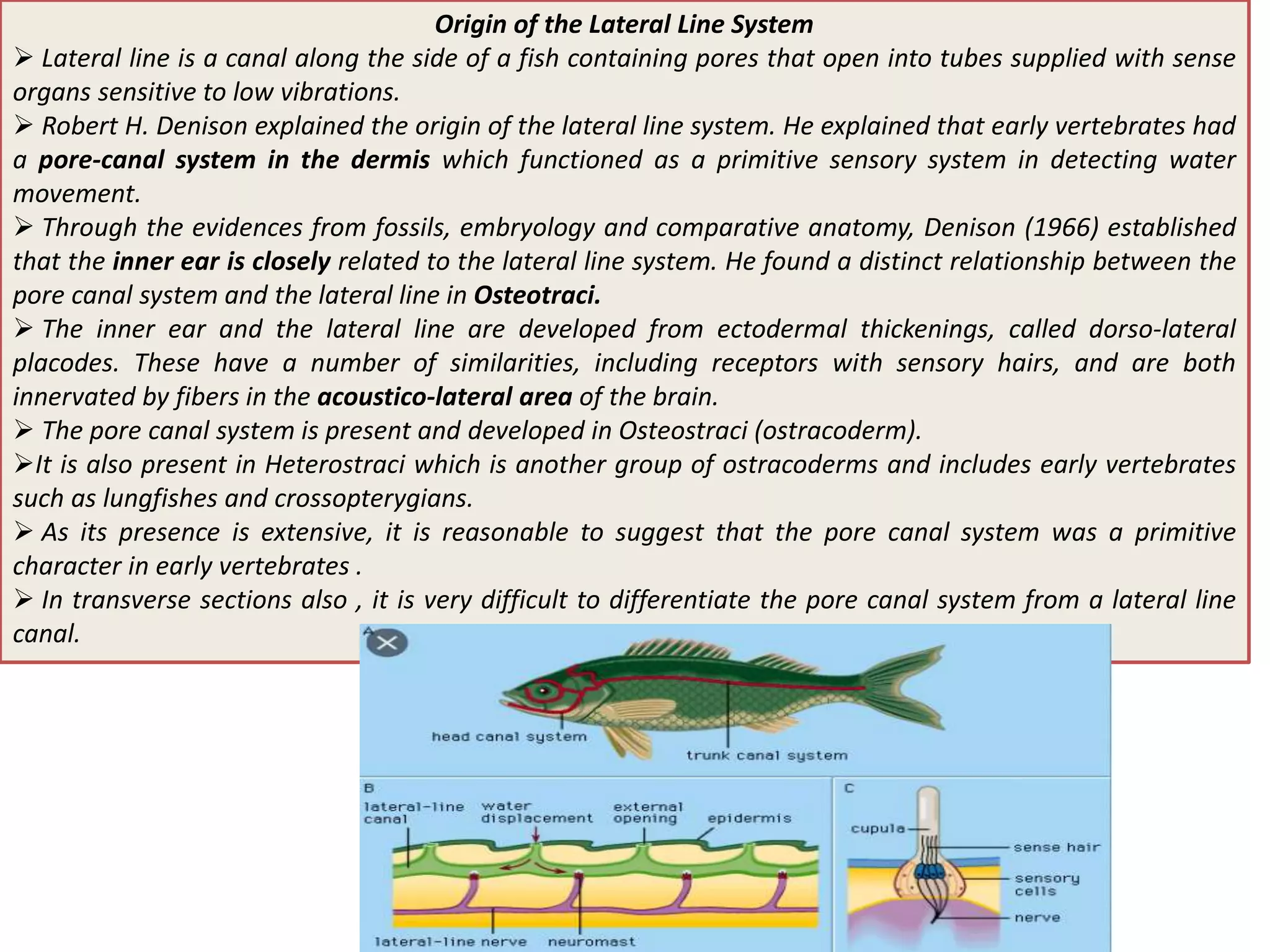
The lateral line system is not a single organ but rather a network of sensory units called neuromasts. These neuromasts are strategically distributed across the head and body of the aquatic animal, often embedded within sub-dermal canals that open to the exterior through pores, or existing as superficial, free-standing structures on the skin. Each neuromast is a cluster of hair cells, remarkably similar to those found in the inner ear of mammals, which are responsible for hearing and balance. These hair cells are topped with delicate gelatinous projections called cupulae. When water moves past the fish or amphibian, it deflects the cupula, causing the hair cells within the neuromast to bend. This mechanical deflection is then converted into electrical signals that are transmitted via afferent nerves to the brain. The brain processes these signals, allowing the creature to construct a detailed hydrodynamic “picture” of its surroundings. The density and arrangement of these neuromasts vary significantly across species, reflecting their specific ecological niches and sensory needs. For instance, species living in fast-flowing rivers might have more robust canal systems to filter out turbulent noise, while bottom dwellers might have more superficial neuromasts to detect substrate vibrations.
Evolutionary Prowess and Sensory Acuity
The lateral line’s evolutionary success stems from its incredible sensitivity and resolution. It can detect minute water displacements, often on the order of nanometers, across a wide range of frequencies, enabling fish to perceive the wake left by another fish, the faint ripples of a distant struggling insect, or even changes in water pressure signaling an approaching obstacle. This sensory acuity provides a significant advantage in environments where visual cues are limited due to darkness, turbidity, or long distances. For schooling fish, the lateral line facilitates synchronized movements and collision avoidance without direct physical contact. For predators like sharks, it’s a vital tool for tracking prey through subtle water disturbances. The system’s ability to differentiate between various flow patterns—laminar, turbulent, oscillating—is a sophisticated biological feat that has captivated engineers looking to replicate such discernment in artificial systems. This deep understanding of its biological architecture and function is the indispensable foundation for any endeavor aimed at translating nature’s design into technological innovation.
From Biology to Bytes: The Rise of Biomimetic Sensors
The profound capabilities of the lateral line system have not gone unnoticed by the technology sector. Recognizing its potential to address long-standing challenges in underwater sensing, engineers and material scientists have embarked on an exciting journey of biomimicry, aiming to replicate and even enhance this biological marvel in artificial systems. This pursuit has given rise to the field of Artificial Lateral Line Systems (ALLS), a rapidly evolving domain within sensor technology.
The Biomimicry Imperative: Learning from Nature’s Designs
Biomimicry, the innovative approach of solving human challenges by emulating nature’s time-tested designs and processes, finds a perfect application in the lateral line system. Unlike traditional sonar or optical systems, which can be limited by range, clarity, or active emission profiles that reveal their presence, a bio-inspired lateral line sensor offers passive, local, and high-resolution flow detection. Nature has already optimized this system over millions of years, providing a robust, energy-efficient, and multi-functional sensor. The appeal lies in its ability to detect subtle hydrodynamic cues that are critical for close-range navigation, object interaction, and environmental awareness – tasks where conventional underwater technologies often struggle. By studying the mechanics of the cupula, the sensitivity of hair cells, and the neural processing of signals, researchers aim to distil these principles into designs that can imbue machines with a similar sense of their fluid environment. This approach is not merely about copying, but about understanding the underlying physical principles and engineering equivalents that can be manufactured and integrated into technological platforms.
Engineering Artificial Lateral Line Systems (ALLS)
Developing artificial lateral line systems involves significant interdisciplinary challenges, spanning materials science, micro-electromechanical systems (MEMS) engineering, signal processing, and robotics. Early ALLS prototypes often utilized piezoelectric materials or strain gauges, which generate an electrical signal in response to mechanical deformation caused by water flow. More advanced systems leverage MEMS technology to create arrays of tiny cantilevers or diaphragms that mimic the hair cells, allowing for high sensitivity and spatial resolution. These micro-sensors are designed to detect pressure differences or shear forces exerted by moving water. Key challenges include achieving the same level of sensitivity as biological neuromasts, ensuring robustness and durability in harsh aquatic environments, and developing sophisticated algorithms to interpret the complex data streams generated by multiple sensors. Researchers are experimenting with various materials, including polymers that can mimic the flexibility and responsiveness of the biological cupula, and integrating these into sensor arrays that can be conformally mounted onto robotic skins. The goal is to not only detect static pressure changes but to accurately map dynamic flow fields, enabling robots to perceive the shape and movement of objects around them without relying on traditional active sensing methods.
Unleashing Capabilities: Applications in Underwater Technology
The development of functional Artificial Lateral Line Systems (ALLS) is not an academic exercise; it promises transformative applications across numerous sectors, fundamentally changing how we interact with and explore underwater environments. From enhancing the autonomy of robotic platforms to providing unprecedented data for environmental monitoring, ALLS are poised to become a cornerstone of future aquatic technologies.
Enhancing Autonomous Underwater Vehicles (AUVs) and Robotics

One of the most immediate and impactful applications of ALLS lies in the realm of Autonomous Underwater Vehicles (AUVs) and underwater robotics. Traditional AUVs often rely on sonar for navigation and obstacle avoidance, which can be power-intensive, susceptible to interference, and limited in close-range scenarios. Integrating ALLS can provide AUVs with a “hydrodynamic sense” akin to a fish. This allows for more precise close-quarter maneuvering, crucial for tasks like docking with underwater stations, inspecting pipelines or cables, and navigating through complex submerged structures. Imagine an AUV that can feel the subtle currents around a coral reef or detect the wake of a moving object, allowing it to dynamically adjust its trajectory without active sonar pings. Furthermore, ALLS can improve “stealth” capabilities for military or research AUVs, as they can operate passively, detecting threats or targets through their hydrodynamic signatures without emitting detectable signals themselves. For collaborative robotics, ALLS could enable multiple AUVs to maintain formation and avoid collisions by sensing each other’s flow fields, mimicking the efficiency and coordination seen in fish schools. This leap in sensory capability promises AUVs that are not just smarter, but more resilient and adept at navigating the complexities of the underwater world.
Subaquatic Surveillance, Monitoring, and Exploration
Beyond direct robotic control, ALLS open up new avenues for subaquatic surveillance, environmental monitoring, and scientific exploration. Arrays of stationary or mobile ALLS can be deployed to detect subtle changes in water currents, indicative of phenomena like pollution plumes, invasive species movements, or changes in local ecosystems. For instance, a network of ALLS could identify anomalies in flow patterns caused by oil spills or chemical discharges, providing early warning and precise localization. In marine biology, these sensors could track the movement of marine life by detecting their hydrodynamic signatures, offering a non-invasive method for studying behavior and migration patterns. This is particularly valuable for species sensitive to traditional sonar or visual disturbances. For infrastructure inspection, ALLS-equipped robots can meticulously examine underwater pipelines, wind turbine foundations, and submerged cables, detecting structural fatigue or damage by sensing changes in local flow dynamics around potential cracks or abrasions. Moreover, in search and rescue operations, an ALLS could potentially detect the subtle water disturbances caused by a distressed diver or a submerged object, improving the efficiency of recovery efforts. The ability to passively perceive and interpret the dynamic flow of water represents a paradigm shift in how we gather information and manage our aquatic resources.
The Intersection with Emerging Tech: AI, IoT, and Advanced Materials
The true transformative power of Artificial Lateral Line Systems will be realized not in isolation, but through their integration with other cutting-edge technologies. The synergy between ALLS, Artificial Intelligence, the Internet of Things, and advanced materials is set to unlock unprecedented capabilities, pushing the boundaries of what’s possible in underwater sensing and interaction.
Intelligent Sensing: Integrating AI for Data Interpretation
The raw data generated by an array of ALLS can be complex and voluminous, reflecting the intricate dynamics of water flow. This is where Artificial Intelligence and machine learning become indispensable. AI algorithms can be trained to interpret these complex hydrodynamic signatures, differentiating between various types of stimuli – a predator’s approach, a distant vessel, turbulence from an obstacle, or the subtle currents around a coral reef. Machine learning models can identify patterns that are imperceptible to human analysis, leading to more accurate object recognition, predictive analytics for environmental changes, and adaptive decision-making for autonomous systems. For instance, an AI-powered ALLS could learn to distinguish between the unique flow signatures of different marine species, enabling automated biodiversity monitoring. Furthermore, AI can optimize sensor calibration, filter out noise, and even predict future flow conditions based on observed patterns, transforming ALLS from mere detectors into intelligent perception systems that not only sense but understand their environment. This intelligent layer is crucial for translating raw data into actionable insights for navigation, surveillance, and scientific research.
The Internet of Underwater Things (IoUT) and Networked Sensors
Just as the Internet of Things (IoT) has revolutionized terrestrial data collection, the concept of an Internet of Underwater Things (IoUT) promises similar advancements beneath the surface. ALLS are ideal candidates for integration into such a network. Imagine vast arrays of interconnected ALLS-equipped buoys, AUVs, and fixed seabed sensors, constantly communicating and sharing hydrodynamic data. This networked approach would create a comprehensive, real-time “hydrodynamic map” of expansive underwater regions. For environmental monitoring, an IoUT incorporating ALLS could provide unprecedented detail on ocean currents, pollution dispersion, and the movement of marine life across vast areas. For security applications, it could form a “hydrodynamic fence” to detect unauthorized sub-surface activity. Such a network could also facilitate swarm robotics, where multiple AUVs equipped with ALLS coordinate their movements and share sensory data to achieve complex objectives, such as large-scale mapping or targeted intervention, far more efficiently than single units. The combination of localized, high-resolution sensing from ALLS with the broad coverage and data aggregation capabilities of the IoUT represents a powerful leap towards truly intelligent and interconnected underwater ecosystems.
Nanomaterials and Miniaturization: Pushing the Boundaries
The future development of ALLS is heavily reliant on advancements in materials science and nanotechnology. New nanomaterials offer the promise of sensors that are not only incredibly sensitive – potentially surpassing biological neuromasts – but also more robust, energy-efficient, and capable of being manufactured at microscopic scales. Research into graphene, carbon nanotubes, and advanced polymers is paving the way for flexible, transparent, and highly responsive sensor arrays that can be integrated seamlessly into the “skin” of underwater vehicles or even deployed as self-powered, bio-degradable environmental monitors. Miniaturization, driven by nano-fabrication techniques, will allow for denser sensor arrays, leading to higher spatial resolution and more detailed hydrodynamic imaging. Furthermore, the development of self-healing materials inspired by biological systems could extend the lifespan and reliability of ALLS in challenging underwater environments. These advanced materials will enable the creation of ALLS that are not just copies, but significant enhancements of nature’s design, offering unprecedented capabilities in sensing, power efficiency, and longevity, ultimately pushing the boundaries of underwater exploration and intervention.
The Future Horizon: Ethical Considerations and Uncharted Potential
As Artificial Lateral Line Systems mature and become more integrated into our technological landscape, it becomes imperative to consider not only their boundless potential but also the ethical implications that accompany such advanced capabilities.
Ethical Dimensions of Advanced Bio-Inspired Surveillance
The ability to passively detect and identify objects, movements, and even subtle hydrodynamic changes in underwater environments through ALLS raises important ethical questions, particularly concerning surveillance and privacy. If these systems become sophisticated enough to track individuals or vessels non-invasively, the potential for misuse in contexts like national security, law enforcement, or even corporate espionage becomes a critical concern. Furthermore, the environmental impact of deploying vast networks of sensors, even if they are passively observing, needs careful consideration. While the aim is often to monitor and protect marine ecosystems, the unintended consequences of increased technological presence in sensitive habitats must be rigorously evaluated. Developing clear regulatory frameworks and ethical guidelines for the deployment and data usage of ALLS will be crucial to ensure that these powerful technologies are harnessed responsibly for the betterment of society and the environment, rather than becoming tools for unchecked surveillance or ecological disruption.
Beyond the Aquatic: Exploring Novel Domains
While the lateral line system is intrinsically linked to aquatic life, the fundamental principles of flow sensing and biomimicry have potential applications that extend far beyond the underwater realm. Imagine airborne drones equipped with “artificial lateral lines” to detect subtle airflow changes, improving aerodynamic efficiency, navigating complex wind currents, or even identifying atmospheric anomalies. In biomedical engineering, the principles of mechanosensing could inspire new diagnostic tools, such as microfluidic sensors that detect subtle changes in fluid flow within the human body, potentially identifying early indicators of disease. Even in robotics for terrestrial environments, an enhanced sense of fluid dynamics (air or other gases) could provide robots with a more nuanced understanding of their immediate surroundings, enabling more dexterous manipulation or safer human-robot interaction. The lateral line system, therefore, is not just a blueprint for underwater technology; it is a foundational inspiration for a new generation of sensors that can grant machines a more intuitive, biologically-inspired perception of the fluid world around them, opening up uncharted territories for innovation in myriad domains.
The journey from understanding a fish’s unique sense to engineering sophisticated artificial counterparts is a testament to human ingenuity inspired by nature. The lateral line system stands as a powerful reminder that some of the most advanced technological solutions can often be found by looking closely at the elegance and efficiency of the natural world. As we continue to refine ALLS and integrate them with emerging technologies like AI and advanced materials, we are not just building better sensors; we are crafting new ways for technology to perceive, interact with, and ultimately understand the complex and dynamic environments that shape our planet.
aViewFromTheCave is a participant in the Amazon Services LLC Associates Program, an affiliate advertising program designed to provide a means for sites to earn advertising fees by advertising and linking to Amazon.com. Amazon, the Amazon logo, AmazonSupply, and the AmazonSupply logo are trademarks of Amazon.com, Inc. or its affiliates. As an Amazon Associate we earn affiliate commissions from qualifying purchases.