
In the architecture of the modern digital world, the Internet Protocol (IP) serves as the fundamental language that allows devices to communicate across a global network. Much like a postal service requires a unique physical address to deliver mail, every device connected to the internet—be it a smartphone, a high-performance server, or a smart thermostat—requires a unique IP address to send and receive data. For decades, the world relied on Internet Protocol version 4 (IPv4). However, as the digital landscape expanded exponentially, the limitations of this aging standard became impossible to ignore, leading to the development and slow-motion revolution of Internet Protocol version 6 (IPv6).
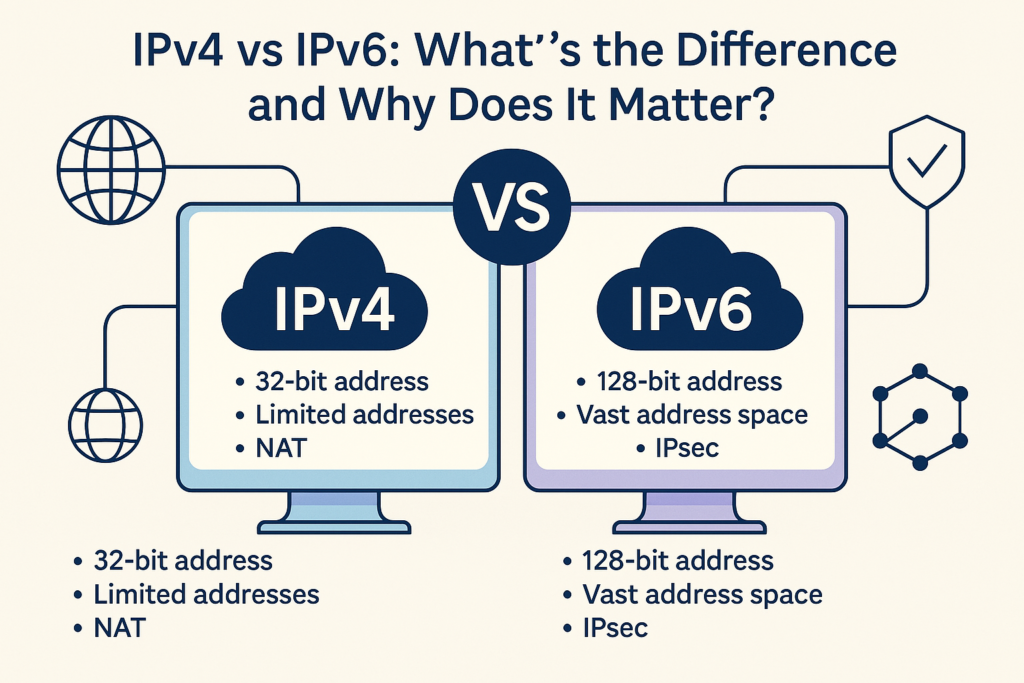
Understanding the technical nuances between these two protocols is not merely an academic exercise for network engineers; it is essential for understanding how the next generation of technology, from 5G to the Internet of Things (IoT), will function.
The Foundation of Connectivity: Understanding IPv4 and Its Limitations
IPv4 was first deployed in 1983 by ARPANET, the precursor to the modern internet. At the time, the idea that billions of people would carry internet-connected computers in their pockets was the stuff of science fiction. Consequently, the design of IPv4 reflected the modest expectations of that era.
The Birth of the 32-Bit Protocol
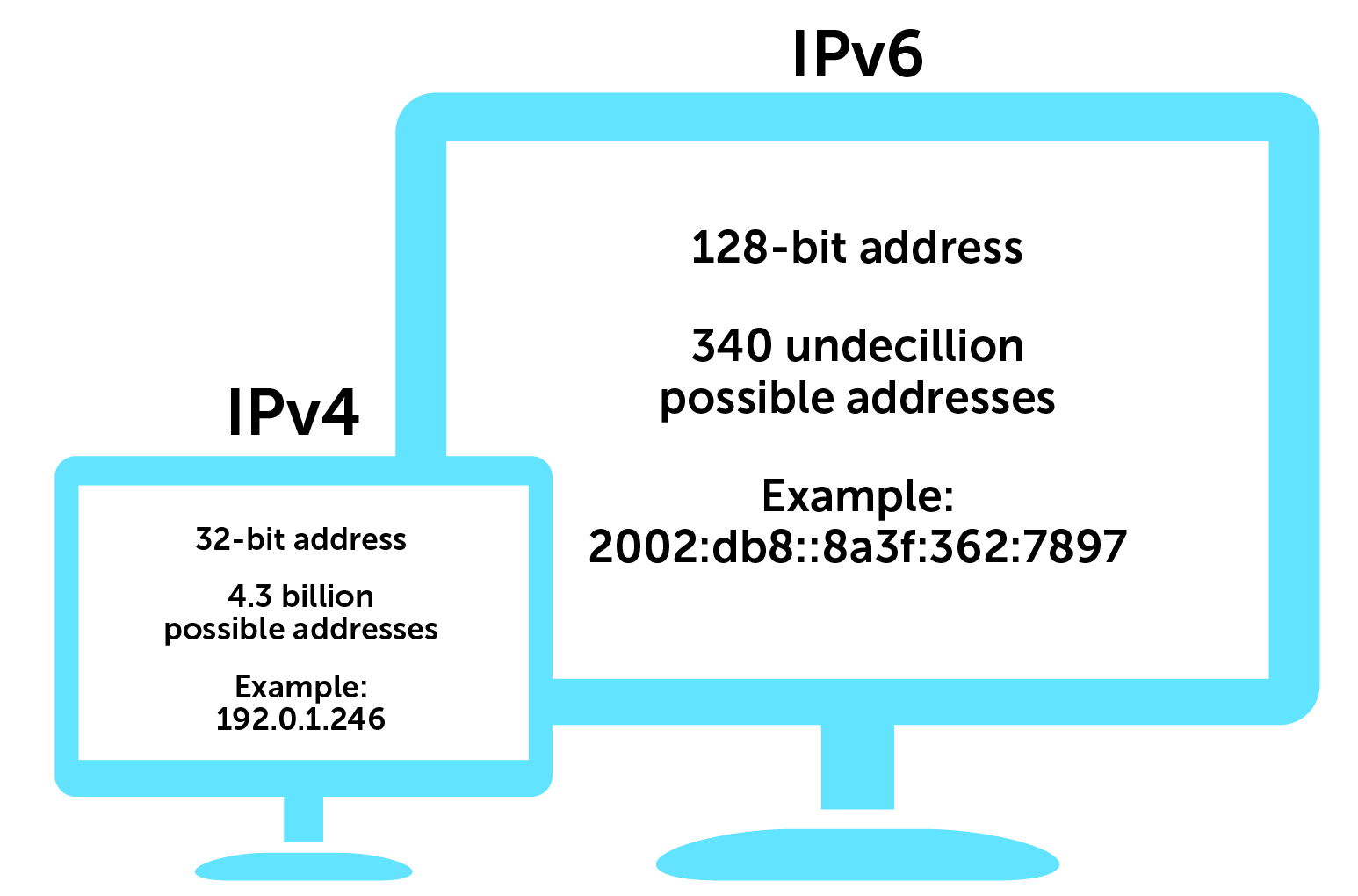
IPv4 utilizes a 32-bit addressing scheme, which is typically expressed in “dotted-decimal” notation (e.g., 192.168.1.1). Mathematically, a 32-bit system allows for $2^{32}$ addresses, which totals approximately 4.3 billion unique identifiers. In the early 1980s, this seemed like an inexhaustible supply. The structure was simple, the headers were manageable for the hardware of the time, and it successfully facilitated the initial “dot-com” boom.
The Exhaustion Crisis: Why We Ran Out of Addresses
The rapid proliferation of personal computers, followed by the mobile revolution, quickly depleted the pool of available IPv4 addresses. By the late 1990s, the Internet Engineering Task Force (IETF) realized that the 4.3 billion limit would soon be reached. Top-level registries began running out of unallocated address blocks as early as 2011.
To delay the inevitable, the industry adopted Network Address Translation (NAT). NAT allows a single public IPv4 address to represent an entire private network of devices. While NAT successfully extended the lifespan of IPv4, it added layers of complexity to network routing and broke the “end-to-end” transparency that the original internet design intended. This “band-aid” solution made peer-to-peer communication and certain security protocols significantly more difficult to implement.
Enter IPv6: The Next-Generation Solution
Recognizing that IPv4 could not sustain the future of global connectivity, the IETF formalized IPv6 in the late 1990s. This wasn’t just a minor update; it was a complete redesign of how addressing and routing function.
The 128-Bit Revolution
The most significant change in IPv6 is the move from a 32-bit to a 128-bit address space. While the jump from 32 to 128 might sound linear, in binary mathematics, it is exponential. IPv6 provides $2^{128}$ addresses, which is approximately 340 undecillion (that is 340 followed by 36 zeros).
To put this into perspective, IPv6 provides enough addresses to assign a unique IP to every atom on the surface of the Earth and still have enough left over for another hundred-plus Earths. This effectively eliminates the “address exhaustion” problem for the foreseeable future, allowing for true end-to-end connectivity without the need for NAT.
Hexadecimal Notation and Address Complexity
Because IPv6 addresses are so much longer, the dotted-decimal notation used in IPv4 became impractical. IPv6 uses hexadecimal notation, divided into eight groups of four hexadecimal digits, separated by colons (e.g., 2001:0db8:85a3:0000:0000:8a2e:0370:7334). This system also allows for “shorthand” notations, where consecutive zeros can be compressed to make the addresses more readable for human administrators, though the underlying logic remains focused on machine-level efficiency.
Technical Showdown: Structural and Performance Differences
Beyond the sheer number of addresses, IPv6 introduces several structural improvements that enhance the efficiency and security of data transmission.

Header Efficiency and Packet Processing
One of the primary goals of IPv6 was to minimize the time routers spend processing packet headers. An IPv4 header is of variable length and includes a “checksum,” which must be recomputed by every router the packet passes through. This creates a cumulative delay (latency).
In contrast, IPv6 features a fixed-length header of 40 bytes. It removes the checksum requirement at the router level, delegating error-checking to the end-nodes (the sender and receiver). By simplifying the header and moving non-essential fields into “extension headers,” IPv6 allows routers to process packets at much higher speeds, which is vital for the high-bandwidth demands of modern streaming and cloud computing.
End-to-End Connectivity vs. NAT
As previously mentioned, IPv4 relies heavily on NAT. While NAT provides a marginal layer of obfuscation that some mistake for security, it complicates many applications. Voice over IP (VoIP), online gaming, and virtual private networks (VPNs) often struggle with “NAT traversal,” requiring complex workarounds to establish a connection.
IPv6 restores the original vision of the internet where every device has a unique, globally reachable address. This simplifies peer-to-peer communication, improves the reliability of real-time applications, and reduces the processing overhead on home and corporate routers that no longer need to manage complex NAT tables.
Security by Design: IPSec Integration
When IPv4 was created, the internet was a small community of trusted researchers. Security was an afterthought. When the need for encrypted communication arose, Internet Protocol Security (IPSec) was “bolted on” as an optional suite.
IPv6 was designed with security as a core requirement. While it is now technically optional in the final standards, IPv6 was built to natively support IPSec. This means that encryption and authentication can be integrated into the protocol itself, providing a more robust framework for secure data exchange across the network.
The Impact on Modern Tech: 5G, IoT, and AI
The transition to IPv6 is not just about keeping the internet running; it is about enabling the next wave of technological innovation. Many of the “buzzword” technologies of the 2020s would be crippled, or entirely impossible, under a purely IPv4 infrastructure.
Empowering the Internet of Things (IoT)
The Internet of Things refers to the billions of physical devices—sensors, vehicles, industrial machines, and wearable tech—that collect and share data. Estimations suggest there will be over 75 billion connected devices by 2025. IPv4 simply cannot handle this volume. IPv6 allows every individual sensor in a “smart city” or an automated factory to have its own unique IP address. This enables direct management, better data granularity, and more efficient machine-to-machine (M2M) communication without the bottleneck of local gateways.
Accelerating Mobile Networks and Cloud Computing
The rollout of 5G networks is intrinsically linked to IPv6. 5G aims to provide ultra-low latency and massive device density. To achieve this, mobile carriers are increasingly moving to IPv6-only internal networks. Furthermore, in the realm of AI and Cloud Computing, where thousands of virtual machines are spun up and torn down in seconds, the massive address space of IPv6 allows for seamless scaling that would be a logistical nightmare under the constraints of IPv4.
The Road to Transition: Challenges and Dual-Stack Reality
If IPv6 is superior in almost every technical metric, why is IPv4 still so prevalent? The answer lies in the sheer scale of the existing global infrastructure.
Backward Compatibility Issues
The most significant hurdle is that IPv6 is not backward-compatible with IPv4. An IPv4-only device cannot communicate directly with an IPv6-only device. This necessitates a transition period where both protocols must coexist. Most modern operating systems and routers use a “Dual-Stack” approach, where the hardware runs both IPv4 and IPv6 simultaneously. While effective, this increases the complexity of network management and requires more memory and processing power from network equipment.
Global Adoption Trends and Future Outlook
The transition is happening, but it is uneven. Large-scale Internet Service Providers (ISPs) and mobile carriers have been the fastest to adopt IPv6, with some regions showing adoption rates over 50%. However, many enterprise networks and legacy websites remain on IPv4 due to the costs associated with upgrading hardware and retraining staff.
Despite these hurdles, the momentum is irreversible. Major tech giants like Google, Facebook, and Microsoft have long since optimized their data centers for IPv6. Governments worldwide are also mandating IPv6 compatibility for all new IT infrastructure. We are currently in a “long-tail” transition phase where IPv4 will likely persist for specific legacy uses, but the “real” internet—the one driving innovation in AI, 5G, and beyond—will be built on the back of IPv6.
In conclusion, the shift from IPv4 to IPv6 represents the maturation of the internet. We are moving from a crowded, patched-together system of limited addresses to a vast, streamlined, and secure highway capable of supporting the trillions of connections that will define our digital future. Understanding this shift is key to understanding the roadmap of technology itself.
aViewFromTheCave is a participant in the Amazon Services LLC Associates Program, an affiliate advertising program designed to provide a means for sites to earn advertising fees by advertising and linking to Amazon.com. Amazon, the Amazon logo, AmazonSupply, and the AmazonSupply logo are trademarks of Amazon.com, Inc. or its affiliates. As an Amazon Associate we earn affiliate commissions from qualifying purchases.