
The transition from a saver to an investor is one of the most significant milestones in a person’s financial journey. While the concept of “buying low and selling high” sounds simple in theory, the actual process of purchasing stocks involves a series of strategic decisions, technical steps, and psychological preparations. In an era where financial markets are more accessible than ever, understanding the mechanics of the stock market is essential for anyone looking to build long-term wealth, outpace inflation, and achieve financial independence.
This guide provides a professional and comprehensive roadmap for navigating the complexities of the equity markets, from the initial preparation to the execution of your first trade and the long-term management of your portfolio.

1. Setting the Foundation: Financial Readiness and Goal Setting
Before you deposit a single dollar into a brokerage account, you must establish a solid financial foundation. Investing in the stock market involves risk, and the “how” of purchasing stocks begins with ensuring that your personal finances can support the volatility of the market.
Defining Your Financial Goals and Time Horizon
The strategy you employ to purchase stocks should be dictated by your objectives. Are you investing for a retirement that is thirty years away, or are you looking to build a down payment for a house in five years? A long-term time horizon allows you to weather the market’s inevitable downturns and benefit from the power of compounding. Conversely, a shorter time horizon requires a more conservative approach. Defining your “why” helps determine your asset allocation—the balance between aggressive growth stocks and stable, dividend-paying companies.
Building an Emergency Fund and Managing Debt
It is a cardinal rule of personal finance never to invest money that you might need in the immediate future. High-interest debt, such as credit card balances, often carries interest rates that exceed the average annual return of the stock market (historically around 7-10%). Therefore, paying off high-interest debt is a guaranteed “return” on your money. Additionally, maintaining an emergency fund covering three to six months of living expenses ensures that you won’t be forced to sell your stocks at a loss during a market dip just to cover an unexpected medical bill or car repair.
2. Selecting the Right Brokerage Account
The “where” is just as important as the “how.” A brokerage account is your gateway to the financial markets. In the modern financial landscape, investors have a wide array of options ranging from traditional full-service firms to mobile-first discount brokers.
Evaluating Discount vs. Full-Service Brokers
Full-service brokers offer personalized investment advice, estate planning, and tax coordination, but they often charge higher commissions or a percentage of assets under management. On the other hand, discount brokers and “robo-advisors” have democratized investing by offering $0 commission trades on stocks and ETFs (Exchange-Traded Funds). For most individual investors starting their journey, a reputable discount broker provides all the necessary tools—charts, research reports, and execution speed—at a fraction of the cost.
Understanding Account Types and Tax Implications
When opening an account, you must decide between a standard taxable brokerage account and a tax-advantaged retirement account.
- Taxable Accounts: Offer the most flexibility; you can withdraw your money at any time, but you will owe capital gains taxes on your profits.
- Retirement Accounts (e.g., IRA, 401k): These offer significant tax benefits, such as tax-deductible contributions or tax-free growth. However, they usually have restrictions on when you can withdraw the funds without penalty. Choosing the right account structure can save you thousands of dollars in taxes over several decades.
3. The Art of Research: How to Pick Your First Stocks
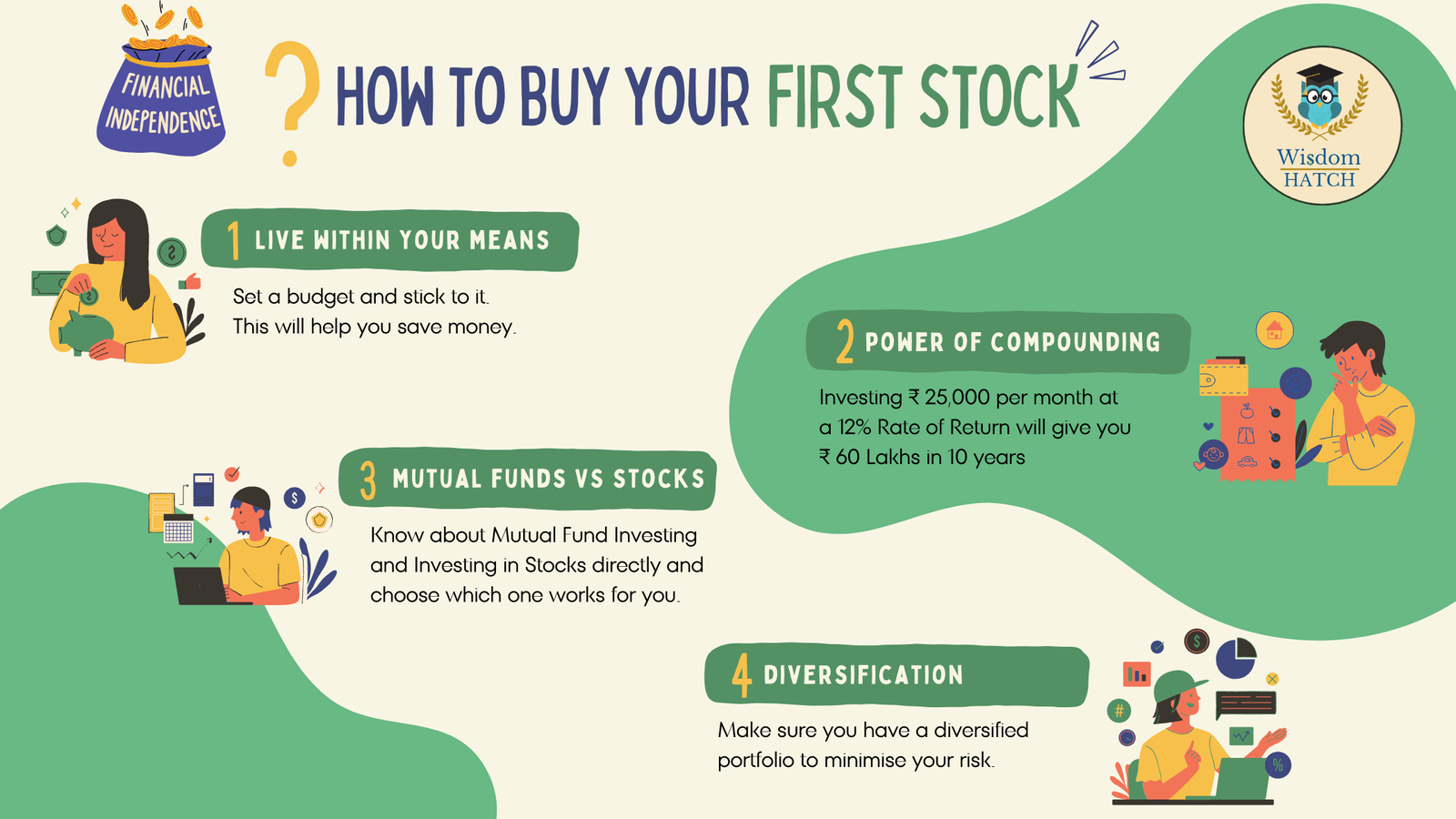
Once your account is funded, the challenge lies in selecting the specific businesses you wish to own. Purchasing a stock is not merely a gamble on a ticker symbol; it is the acquisition of an equity stake in a living, breathing corporation.
Fundamental Analysis: Reading the Vital Signs
Professional investors rely heavily on fundamental analysis to determine the “intrinsic value” of a stock. This involves examining a company’s financial statements:
- The Income Statement: Look for consistent revenue growth and healthy profit margins.
- The Balance Sheet: Evaluate the company’s debt levels. A company with too much debt may struggle during economic downturns.
- The Cash Flow Statement: Ensure the company is generating actual cash, not just “paper profits.”
Key metrics such as the Price-to-Earnings (P/E) ratio, Return on Equity (ROE), and Dividend Yield provide a quantitative framework to compare different companies within the same industry.
Qualitative Factors: The Economic Moat
Beyond the numbers, you must consider the “qualitative” aspects of a business. Legendary investor Warren Buffett popularized the concept of the “Economic Moat”—a structural advantage that protects a company from competitors. This could be a powerful brand (like Coca-Cola), a massive network effect (like Meta), or high switching costs (like enterprise software). Assessing the quality of the management team and the long-term viability of the industry is crucial for making informed purchasing decisions.
4. Execution: Navigating the Trade
With your research complete, it is time to execute the purchase. The interface of a brokerage platform can be intimidating for beginners, but understanding a few key terms will allow you to trade with confidence.
Market Orders vs. Limit Orders
There are two primary ways to buy a stock:
- Market Order: This instructs the broker to buy the stock immediately at the best available current price. While this guarantees the trade will go through, the price you pay might be slightly higher than what you saw on your screen a moment ago, especially in volatile markets.
- Limit Order: This allows you to set a maximum price you are willing to pay. The trade will only execute if the stock price hits your target or lower. This gives you more control over your entry price and prevents “buyer’s remorse” during sudden price spikes.
Fractional Shares and Dollar-Cost Averaging
In the past, if a single share of a high-priced stock like Amazon or Berkshire Hathaway cost thousands of dollars, it was out of reach for many. Today, most major brokers offer “fractional shares,” allowing you to buy $10 or $100 worth of a stock regardless of its share price. This facilitates Dollar-Cost Averaging (DCA)—the practice of investing a fixed amount of money at regular intervals. DCA reduces the risk of “timing the market” poorly by ensuring you buy more shares when prices are low and fewer when prices are high.
5. Portfolio Management and the Long-Term Mindset
Purchasing the stock is only the beginning. The final stage of the process involves managing your investments to ensure they continue to align with your financial goals.
The Power of Rebalancing and Diversification
The golden rule of investing is “don’t put all your eggs in one basket.” Diversification across different sectors (tech, healthcare, energy) and asset classes (stocks, bonds, real estate) protects your portfolio from a total loss if one industry suffers. Over time, some stocks will grow faster than others, causing your portfolio to become lopsided. Professional investors practice “rebalancing”—periodically selling a portion of winners and buying more of the underperformers to return to their original target allocation.
Managing Emotions and the “Noise”
The stock market is a marathon, not a sprint. Financial news cycles are often filled with sensationalist headlines designed to trigger fear or greed. Successful investors develop the discipline to ignore short-term market fluctuations. Instead of reacting to daily price changes, focus on the underlying business performance. As long as the reasons you originally bought the stock remain true, market volatility is often just “noise” or, in some cases, an opportunity to purchase more shares at a discount.

Conclusion
Purchasing stocks is a powerful tool for wealth creation, but it requires a disciplined approach rooted in education and strategy. By securing your personal finances, choosing a low-cost brokerage, conducting thorough fundamental research, and maintaining a diversified long-term perspective, you can navigate the equity markets with professionalism and poise. Remember that the goal of investing is not to get rich overnight, but to consistently grow your capital over time, allowing your money to work for you just as hard as you worked to earn it. With the steps outlined above, you are now equipped to take the first step toward building your financial legacy.
aViewFromTheCave is a participant in the Amazon Services LLC Associates Program, an affiliate advertising program designed to provide a means for sites to earn advertising fees by advertising and linking to Amazon.com. Amazon, the Amazon logo, AmazonSupply, and the AmazonSupply logo are trademarks of Amazon.com, Inc. or its affiliates. As an Amazon Associate we earn affiliate commissions from qualifying purchases.