
In the modern digital era, we take the instantaneous nature of search for granted. Whether we are looking for a complex coding solution on Stack Overflow or the latest advancements in quantum computing, a search engine provides millions of relevant results in milliseconds. However, the search engine does not actually “search” the live World Wide Web in real-time when you type a query. Instead, it consults a massive, highly optimized database known as an index.
Understanding what a search engine index is, how it is constructed, and how it functions is fundamental for anyone working in software development, data science, or digital infrastructure. The index is the bridge between the chaotic, unstructured data of the internet and the structured, searchable knowledge base that powers our digital lives.
1. The Mechanics of Search Engine Architecture: From Crawling to Indexing
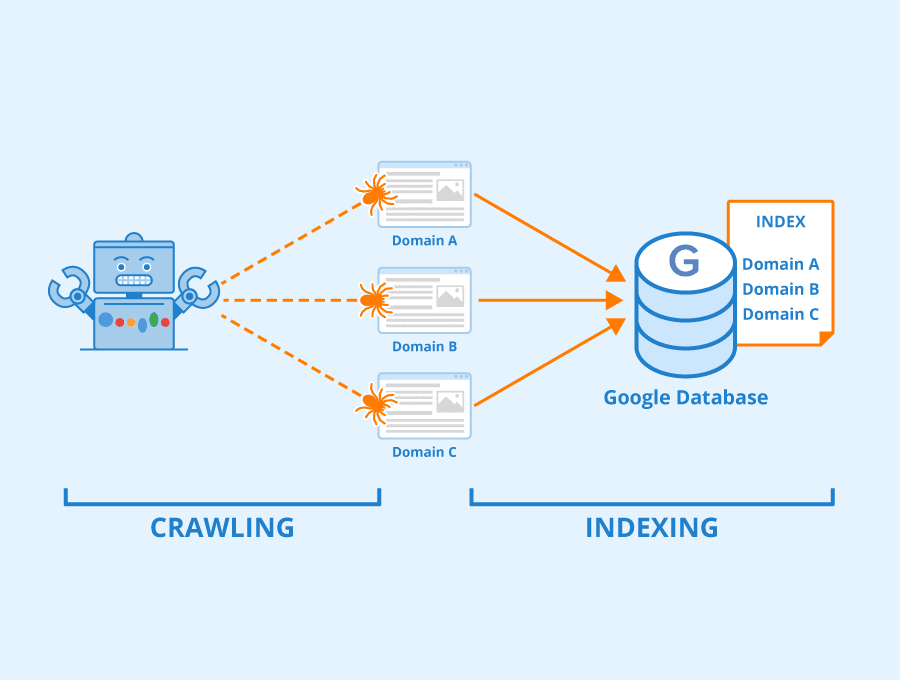
To understand the index, one must first understand the pipeline that creates it. Search engines operate through a continuous cycle of three primary stages: crawling, indexing, and ranking.
The Role of Web Crawlers (Spiders)
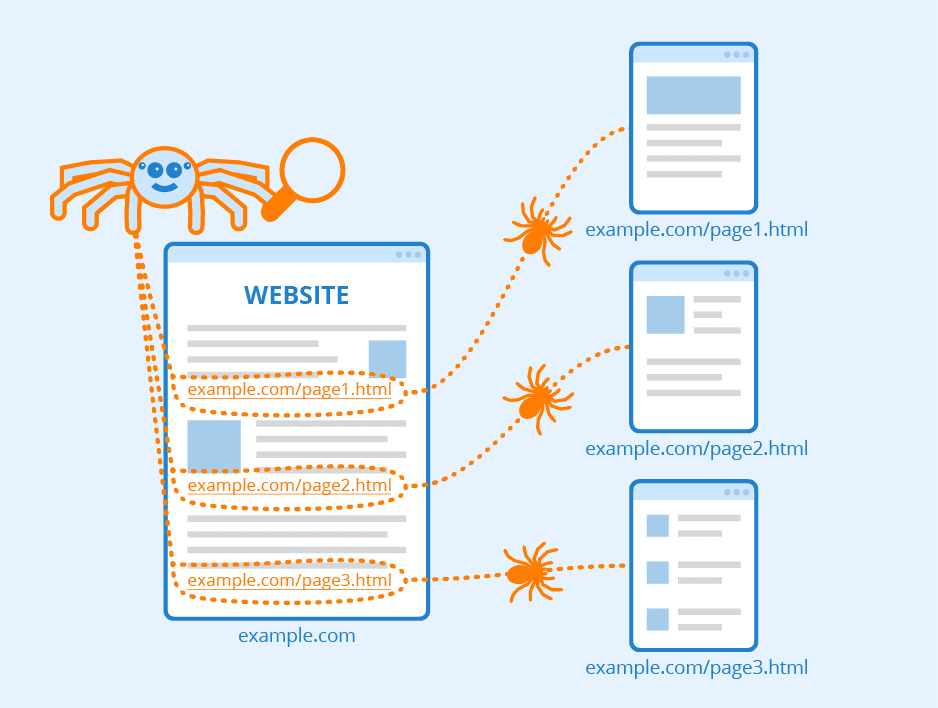
The process begins with “crawlers” or “spiders”—automated software programs like Googlebot or Bingbot. These bots navigate the internet by following links from one page to another. Their primary job is discovery. They download the HTML of a webpage and pass it along to the next stage of the pipeline. In a technical sense, crawling is the data acquisition phase of the search engine’s operations.
Processing and Parsing Data
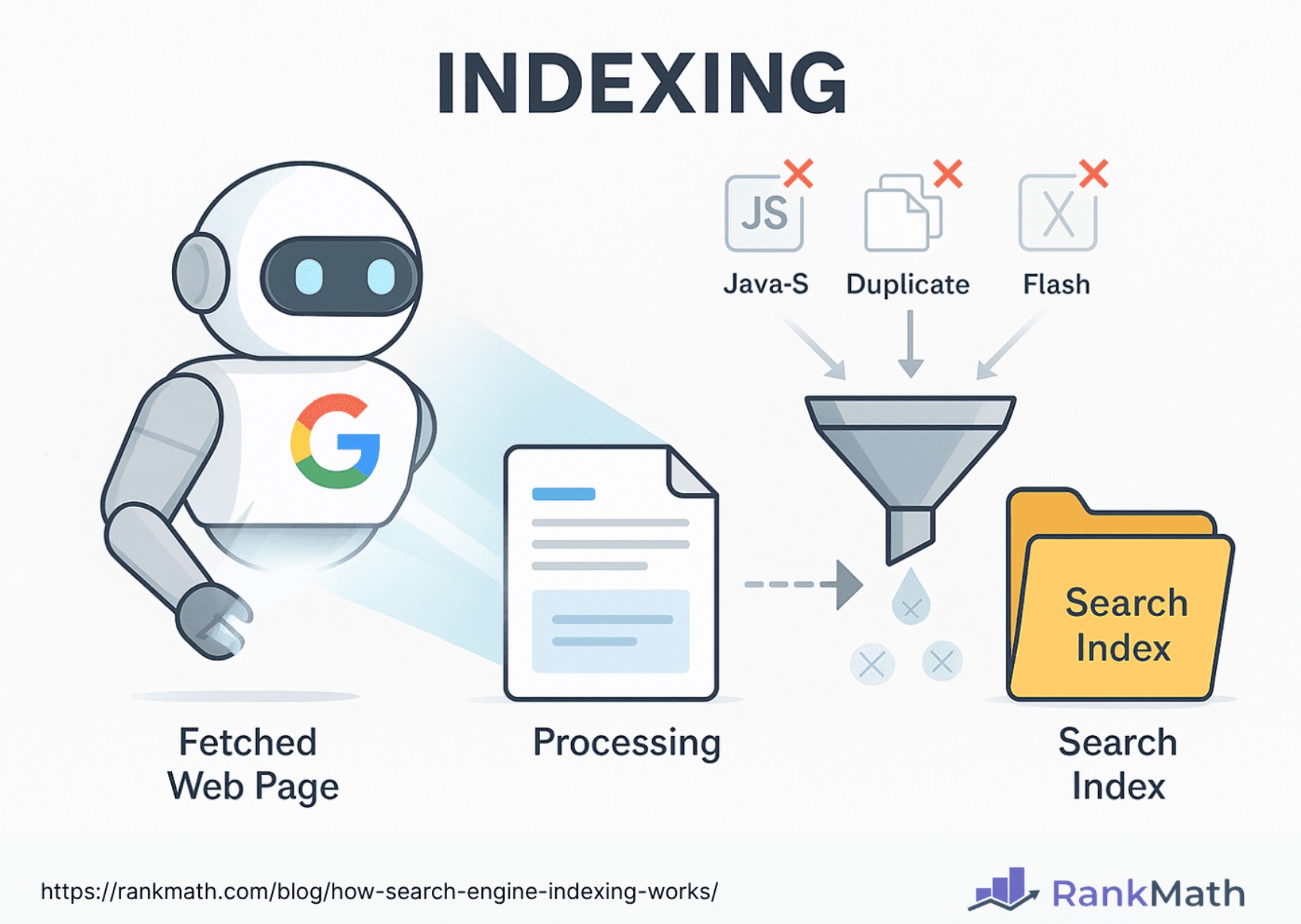
Once a page is crawled, it undergoes “parsing.” This is where the search engine’s software analyzes the raw HTML code. It extracts text, identifies headers (H1, H2), notes the location of images, and reads metadata. Crucially, it also identifies the links on the page to feed back into the crawler’s queue. This parsed data is then refined; the system removes “stop words” (like “the,” “is,” and “at”) that carry little semantic weight and prepares the core information for storage.
Storing the Inverted Index
After parsing, the data is added to the index. This isn’t a simple list of websites. It is a highly sophisticated database often referred to as an “inverted index.” If a standard database maps a document to the words it contains, an inverted index maps a word to every document that contains it. This architectural choice is what allows search engines to perform at such incredible speeds.
2. How Search Engine Indices Function: A Technical Deep Dive
The scale of a modern search engine index is astronomical, encompassing hundreds of billions of webpages and petabytes of data. Managing this requires advanced data structures and high-performance computing.
The Inverted Index Explained
To visualize an inverted index, imagine the back of a massive textbook. If you want to find every mention of “encryption” in a 1,000-page book, you don’t flip through every page; you go to the index at the back, find “encryption,” and see a list of page numbers.
In a search engine index, the “word” is the key, and the “document IDs” are the values. This allows the search engine to instantly identify all relevant pages for a specific term without scanning the entire web.
Tokens and Normalization
Before a word enters the index, it undergoes “tokenization” and “normalization.” Tokenization breaks down a stream of text into individual units (tokens). Normalization ensures that “Running,” “runs,” and “run” are treated as variations of the same concept (a process known as stemming or lemmatization). This ensures that the index remains efficient and that search results are comprehensive regardless of the specific tense or capitalization used by the searcher.
Data Structures and Distributed Systems
Storing this much information requires more than just a simple list. Search engines use complex data structures like Hash Tables, B-Trees, and Suffix Trees to optimize retrieval speed. Furthermore, no single server can hold the entire web index. The index is “sharded”—broken into smaller pieces—and distributed across thousands of servers in data centers globally. When you perform a search, your query is sent to multiple shards simultaneously, and the results are aggregated in real-time.
3. Modern Challenges in Large-Scale Indexing
As the web grows more complex, the task of maintaining an accurate and timely index becomes increasingly difficult. The “Tech” behind indexing must constantly evolve to keep up with the changing nature of digital content.
The Volume and Velocity of Web Data
The sheer volume of data is the most obvious challenge. Every second, thousands of new pages are created, and existing ones are updated. Search engines must decide how often to “re-crawl” a page. A news site like the New York Times might be re-indexed every few minutes, while a static personal blog might only be visited by a crawler once a month. This prioritization is managed by complex algorithms that assess the “authority” and update frequency of a domain.
Handling JavaScript and Dynamic Content
In the early days of the web, pages were static HTML. Today, many websites are “Single Page Applications” (SPAs) built with frameworks like React, Angular, or Vue. These sites rely on JavaScript to render content in the browser. For a search engine to index this content, it must act like a browser—executing the JavaScript to see the final rendered page. This process, known as “rendering,” is computationally expensive and adds a significant layer of complexity to the indexing pipeline.
Real-Time Indexing and the “Freshness” Factor
For certain types of information—such as stock prices, breaking news, or social media trends—a delay of even an hour is too long. Search engines use “supplemental indices” or “real-time pipelines” to handle this. These systems bypass some of the deeper processing steps to get information into the searchable index as quickly as possible, ensuring that “fresh” content is available to users immediately.
4. AI and Machine Learning: Transforming the Index
We are currently witnessing a paradigm shift in how indices are constructed and queried. Traditional indexing was based on exact keyword matching, but Artificial Intelligence (AI) is moving the industry toward “semantic” indexing.
Vector Databases and Semantic Search
Modern search engines increasingly use vector embeddings to represent data. Instead of just storing words, the system converts phrases and concepts into high-dimensional mathematical vectors. In this “vector space,” words with similar meanings are positioned close together.
This means that if you search for “fastest feline,” a vector-based index can return results for “cheetah” even if the word “cheetah” wasn’t in your query. This move from “keyword indexing” to “concept indexing” is powered by deep learning models and specialized vector databases.
Large Language Models (LLMs) and Indexing for RAG
With the rise of Generative AI, indexing has taken on a new role in “Retrieval-Augmented Generation” (RAG). In these systems, an index is used to provide an LLM with relevant, up-to-date facts that were not part of its original training data. The index acts as the “long-term memory” for the AI, allowing it to provide accurate, cited answers based on a specific corpus of technical documentation or proprietary data.
5. Optimizing Digital Assets for Indexing: A Technical Overview
For developers and systems architects, ensuring that content is “indexable” is a critical technical requirement. If a search engine cannot index a page, that page effectively does not exist for the majority of the internet.
Robots.txt and Meta Directives
The robots.txt file is the primary way a website communicates with a crawler. It provides instructions on which parts of the server should be avoided. Additionally, developers use “Meta Tags” (like <meta name="robots" content="noindex">) within the HTML to provide page-specific instructions. Managing these directives is essential for preventing the indexing of sensitive or redundant data, such as administrative login pages or internal search result pages.
XML Sitemaps and Canonicalization
An XML Sitemap acts as a roadmap for the search engine, listing all the important URLs on a site. This helps crawlers find new or updated content more efficiently. Furthermore, “canonicalization” (using the rel="canonical" tag) tells the search engine which version of a page is the “master” copy. This prevents the index from being cluttered with duplicate content, which can happen when the same page is accessible via multiple URLs (e.g., with different tracking parameters).
The Impact of Core Web Vitals
In recent years, the “indexability” and ranking of a page have become tied to its technical performance. Search engines now measure “Core Web Vitals”—metrics like Largest Contentful Paint (LCP) and Cumulative Layout Shift (CLS). If a page is technically sluggish or provides a poor user experience, it may be crawled less frequently, effectively lowering its priority within the index.
The Future of the Search Engine Index
The search engine index is far from a static directory; it is a living, breathing technological marvel. As we move toward a future dominated by AI agents and voice-activated search, the index will likely become even more abstracted. We are moving away from a list of blue links toward a “Knowledge Graph”—a multi-dimensional index that understands the relationships between people, places, and things.
For the tech professional, staying ahead means understanding these underlying infrastructures. Whether you are optimizing a web application for better crawlability or building a custom search solution using a vector database, the index remains the heart of the information age. It is the filter through which the world views the internet, and its evolution will continue to define how we interact with technology for decades to come.
aViewFromTheCave is a participant in the Amazon Services LLC Associates Program, an affiliate advertising program designed to provide a means for sites to earn advertising fees by advertising and linking to Amazon.com. Amazon, the Amazon logo, AmazonSupply, and the AmazonSupply logo are trademarks of Amazon.com, Inc. or its affiliates. As an Amazon Associate we earn affiliate commissions from qualifying purchases.