
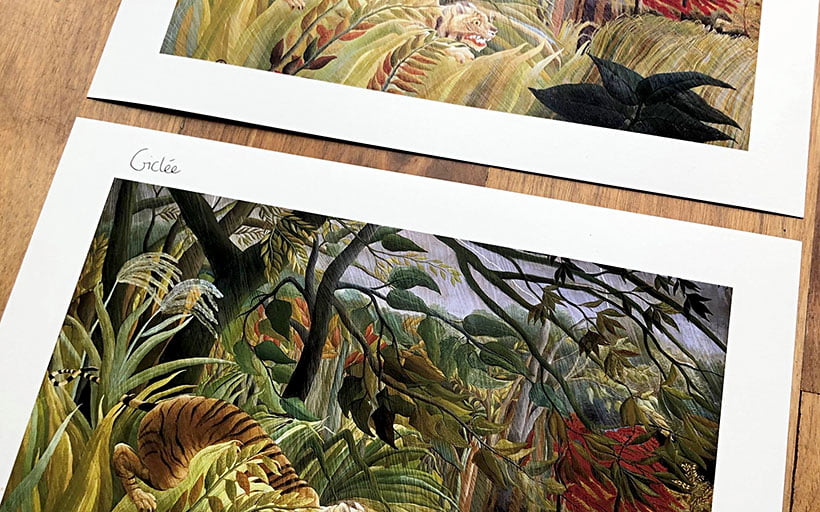
In the world of digital reproduction, few terms carry as much weight—or as much confusion—as “Giclée.” Derived from the French word gicler, meaning “to spray” or “to squirt,” the term was coined in the early 1990s to distinguish high-end, professional inkjet printing from the low-resolution office printers of the era. Today, Giclée represents the gold standard for digital art reproduction, sitting at the sophisticated intersection of advanced hardware engineering, complex ink chemistry, and high-resolution digital imaging.
Understanding Giclée is not merely about appreciating art; it is about understanding a specific technological ecosystem designed to achieve archival longevity and color precision that standard printing methods cannot replicate.

The Engineering Behind the Print: Understanding the Giclée Standard
While any inkjet printer “sprays” ink, not every inkjet print is a Giclée. To qualify under this technical designation, a print must meet specific hardware and material criteria that ensure the output is a faithful, long-lasting representation of the original digital file.
Piezoelectric Print Heads and Micro-Drip Technology
At the heart of Giclée technology is the print head. Unlike thermal inkjet printers that use heat to boil ink and force it onto paper, Giclée-capable machines (predominantly manufactured by brands like Epson and Canon) often utilize piezoelectric technology. This involves using electric charges to vibrate a gold-plated ceramic element, which mechanically pushes the ink out of the nozzles. This allows for microscopic precision in droplet size—often as small as 3.5 picoliters—and prevents the ink from being heat-stressed, which can alter its chemical stability.
The Archival Quality of Pigment-Based Inks
Standard desktop printers typically use dye-based inks, which are affordable but prone to “bleeding” and rapid fading when exposed to UV light. Giclée prints, conversely, utilize pigment-based inks. These inks consist of microscopic particles of solid color suspended in a liquid carrier. From a technical standpoint, these pigments are far more stable; they sit on top of the medium rather than soaking in, providing a wider color gamut and a lifespan that can exceed 100 to 200 years without noticeable fading when stored in gallery conditions.
Media Compatibility: From Canvas to Rag Paper
The “Tech” of Giclée extends to the substrates (the materials being printed on). For a print to be a true Giclée, it must be printed on archival, acid-free paper or canvas. These materials are often 100% cotton rag or alpha-cellulose. The coating on these papers is engineered at a molecular level to “fix” the pigment particles instantly, preventing dot gain (the spreading of ink) and ensuring that the sharpest possible details are maintained from the digital file to the physical medium.
The Digital Workflow: From High-Resolution Capture to Precision Output
A Giclée print is only as good as the data fed into the printer. The technological workflow required to produce these prints involves sophisticated digital capture and color-matching systems.
Large Format Scanners and Camera Arrays
The process begins with high-resolution digitizing. This is typically achieved using large-format flatbed scanners or high-end digital camera arrays (often 100 megapixels or more) mounted on copy stands. The goal is to capture the “texture” of the original artwork. Sophisticated sensors must record not just the colors, but the way light interacts with the brushstrokes or the weave of the canvas, requiring a high dynamic range (HDR) to ensure details in the highlights and shadows are not lost.
Color Management Systems (CMS) and ICC Profiles
One of the most technical aspects of Giclée printing is “Color Management.” Because a digital monitor displays light (RGB) and a printer uses physical pigments (usually a high-fidelity 10- or 12-color ink set), a translation layer is required. This is managed via ICC (International Color Consortium) profiles. These are software files that tell the computer exactly how to translate digital values into ink volumes for a specific printer-and-paper combination. Without this precise software calibration, the output would never match the digital original.
Resolution Requirements: Why 300 DPI is the Minimum
In the tech world of printing, resolution is king. While a standard web image might be 72 Dots Per Inch (DPI), a Giclée requires a minimum of 300 DPI at the final output size. This ensures that the human eye cannot perceive individual dots of ink, creating a “continuous tone” effect that mimics a painting or a traditional chemical photograph. High-end RIP (Raster Image Processor) software is often used to calculate these millions of pixels and optimize the path of the print head.
Hardware and Software: The Tools of the Giclée Trade
The machinery used in Giclée production is a marvel of modern industrial design. These are not devices found in a typical home office; they are large-format “plotters” that require controlled environments to function correctly.
Leading Industrial Printers: Epson, Canon, and HP
The market for Giclée technology is dominated by a few key players. Epson’s SureColor series and Canon’s imagePROGRAF lines are the industry benchmarks. These machines often utilize 12-color ink systems. While a standard printer uses Cyan, Magenta, Yellow, and Black (CMYK), a Giclée printer adds Light Cyan, Light Magenta, Orange, Green, and multiple shades of Black (Photo Black, Matte Black, Gray, and Light Gray). This expanded palette allows for smoother gradients and a depth of color that covers a massive percentage of the visible spectrum.
Raster Image Processors (RIP Software)
To handle the massive file sizes associated with high-resolution art (often several gigabytes per file), professional printers use RIP software like Onyx or Imageprint. This software bypasses the standard Windows or Mac print drivers, providing the technician with granular control over ink density, linearization, and nesting. The RIP software acts as the “brain” of the operation, ensuring that the hardware executes the digital instructions with absolute fidelity.
Maintenance and Environmental Control
Giclée technology is highly sensitive. Because the nozzles are so fine, humidity and temperature must be strictly regulated in the print studio to prevent ink from drying in the heads or the paper from expanding/contracting. High-end setups often include atmospheric sensors to ensure that the physical conditions remain within the narrow tolerances required for archival precision.
Comparing Giclée to Traditional and Digital Alternatives
To truly understand what Giclée is, one must understand what it is not. It occupies a specific niche between traditional mechanical printing and standard digital output.
Giclée vs. Lithography: Precision vs. Mass Production
Traditional offset lithography uses etched plates and wet ink. While excellent for mass-producing thousands of posters, it lacks the resolution and color depth of Giclée. Furthermore, lithography uses “halftone dots,” which are visible under a magnifying glass. Giclée technology uses a stochastic (randomized) screening process, which makes the ink droplets appear invisible, providing a much higher perceived resolution.
Giclée vs. Standard Inkjet: Why Home Printers Fall Short
A consumer-grade inkjet printer uses dye inks that will fade in 5 to 10 years. It also typically uses a 4-color system, which cannot accurately reproduce certain vibrant colors like deep violets or bright oranges. Technically, the “Giclée” label serves as a certification that the print was made using the superior 8-12 color pigment system on archival media, distinguishing it from the “disposable” nature of standard digital printing.
The Future of Giclée: AI and 3D Texture Mapping
As we look toward the future, Giclée technology is evolving beyond two-dimensional ink application. The next frontier involves the integration of Artificial Intelligence and advanced spatial scanning.
Enhancing Resolution with AI Upscaling
New AI-driven software tools are now being used to upscale older, lower-resolution digital files into print-ready Giclée masterpieces. By using generative models to predict and “fill in” missing pixels, technicians can produce large-format prints from digital captures that were previously too small for high-quality output.
2.5D and 3D Printing: Replicating Brushstrokes
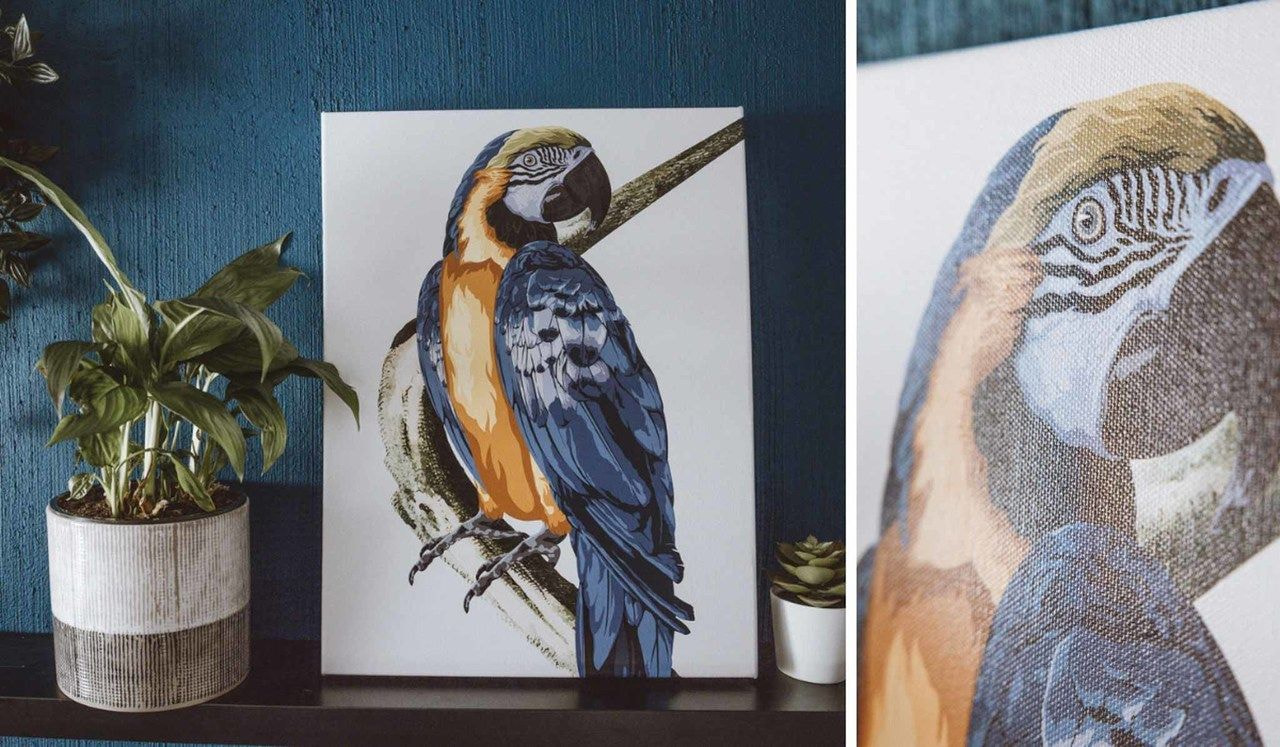
The most cutting-edge development in the Giclée world is “elevated printing” or 2.5D printing. By layering ink or specialized clear polymers, new printers can actually recreate the physical height and texture of an artist’s brushstrokes. This moves the technology from a simple visual reproduction to a structural replication, allowing the viewer to feel the “impasto” of a painting. This synthesis of 3D modeling and inkjet precision is the current “bleeding edge” of the niche.
In conclusion, a Giclée print is far more than a “computer printout.” It is a sophisticated technological product that relies on high-fidelity sensors, piezoelectric mechanics, pigment chemistry, and complex color-science algorithms. For the tech-savvy observer, the value of a Giclée lies in its ability to bridge the gap between the ephemeral digital world and the permanent physical world with uncompromising accuracy.
aViewFromTheCave is a participant in the Amazon Services LLC Associates Program, an affiliate advertising program designed to provide a means for sites to earn advertising fees by advertising and linking to Amazon.com. Amazon, the Amazon logo, AmazonSupply, and the AmazonSupply logo are trademarks of Amazon.com, Inc. or its affiliates. As an Amazon Associate we earn affiliate commissions from qualifying purchases.