
In the vast landscape of electrical engineering and modern hardware technology, few instruments hold as much historical significance or functional versatility as the galvanometer. While the average consumer might be more familiar with digital multimeters or smartphone sensors, the galvanometer remains a fundamental piece of tech that bridges the gap between raw electromagnetic forces and precise data visualization.
At its core, a galvanometer is an electromechanical instrument used for detecting and measuring small amounts of electric current. However, in the contemporary tech sector, its role has evolved far beyond a simple needle on a dial. From the laser-guided systems used in autonomous vehicles to the intricate optical scanners in medical imaging, the galvanometer is a cornerstone of high-precision sensing and actuation.
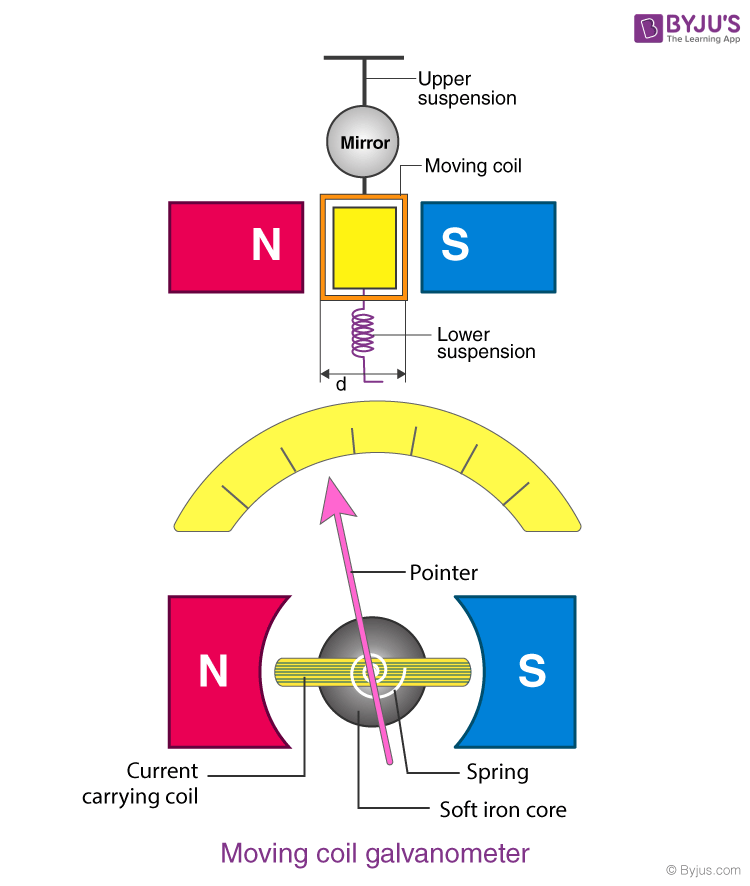
Understanding the Fundamentals: How Galvanometers Work
To appreciate the role of the galvanometer in modern technology, one must first understand the physics that drives it. The device operates on the principle of magnetic deflection, where an electric current passing through a coil in a magnetic field experiences a force. This is a direct application of the Lorentz force law, which is a pillar of electrodynamic theory.
The Principle of Electromagnetism
The fundamental operation of a galvanometer relies on the interaction between a permanent magnetic field and the magnetic field generated by an electrical current. When a current flows through a coil of wire suspended within the field of a permanent magnet, it generates a torque. This torque is directly proportional to the strength of the current. Because the mechanical resistance (usually provided by a spring) is linear, the resulting displacement of the coil—and therefore the movement of a pointer or a mirror—provides an accurate representation of the current’s magnitude.
Key Components and Mechanics
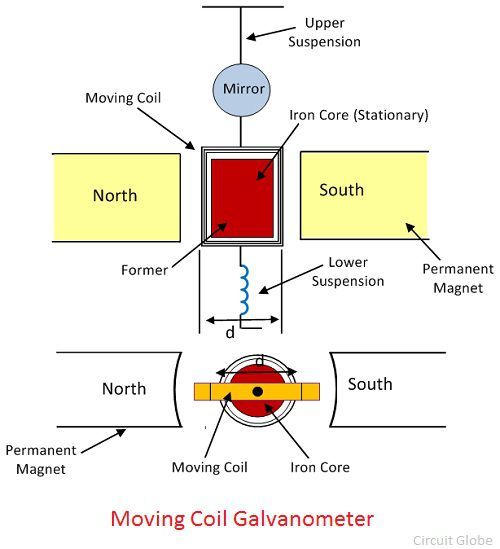
A standard “D’Arsonval” galvanometer (the most common type) consists of several critical tech components:
- The Moving Coil: A lightweight coil of thin wire that carries the current to be measured.
- Permanent Magnets: High-quality magnetic poles (often shaped to ensure a uniform field) that surround the coil.
- The Torsion Spring: This provides the “restoring force.” It ensures that the needle returns to zero when no current is present and provides the resistance against which the electromagnetic torque works.
- The Pointer or Mirror: In traditional units, a physical needle points to a scale. In high-tech applications, a tiny mirror is used to deflect a laser beam, allowing for incredible speed and precision.
From Analog Origins to Modern Digital Precision
The journey of the galvanometer is a testament to the evolution of technology. Invented in the early 19th century following Hans Christian Ørsted’s discovery that electric currents could deflect a compass needle, the device has undergone a radical transformation from a bulky laboratory curiosity to a micro-scale industrial powerhouse.
The Evolution of Measuring Tools
In the early days of the telegraph and the first trans-Atlantic cables, mirror galvanometers were the only way to detect the faint signals traveling across thousands of miles of underwater wire. As tech moved into the mid-20th century, these devices became the “analog faces” of early scientific equipment. Today, while digital signal processing (DSP) has replaced the need for analog needles in most consumer electronics, the physical movement dictated by a galvanometer remains irreplaceable in systems where light or mirrors must be physically moved at high frequencies.
Moving Coil vs. Moving Magnet Types
Technological advancements have branched the galvanometer into two primary design philosophies:
- Moving Coil: This is the most sensitive type, used for detecting micro-currents. Because the coil is the moving part, it must be extremely light.
- Moving Magnet: In this design, the coil is stationary, and a small, high-energy magnet moves. This is often more robust and is frequently used in modern industrial “galvo-scanners” where high-speed oscillation is required for laser steering.
Modern Applications in the Tech Landscape
While you might not see a galvanometer on your desk, they are hidden within the high-tech systems that define our current era. Their ability to translate an electrical signal into ultra-precise physical movement makes them indispensable in photonics and automation.
Laser Scanning and Projection Systems
Perhaps the most widespread “modern” use of galvanometer technology is in laser scanning heads, often referred to simply as “galvos.” In a laser show, a 3D printer (SLA/SLS), or a laser marking machine, two galvanometers are positioned perpendicularly to control the X and Y axes of a laser beam. By tilting tiny mirrors at speeds of thousands of times per second, these devices can “draw” complex shapes with light. This tech is also fundamental in LiDAR (Light Detection and Ranging) systems used by autonomous drones and self-driving cars to map their surroundings in real-time.
Medical and Scientific Instrumentation
In the medical field, galvanometers are the “eyes” of Optical Coherence Tomography (OCT) machines. These devices allow ophthalmologists to take high-resolution cross-sectional images of the retina. The galvanometer steers the scanning beam across the eye with such precision that it can map individual layers of cells. Furthermore, in laboratory settings, they are used in spectrometers and confocal microscopes to direct light paths with sub-millimeter accuracy.
Industrial Automation and Control
In the world of Industry 4.0, precision is everything. Galvanometers are integrated into high-speed sorting systems and automated optical inspection (AOI) rigs. Their high bandwidth and low latency—meaning they respond almost instantly to an electrical input—make them superior to traditional motors or servos for applications requiring rapid, repetitive, and minute adjustments.
Galvanometers vs. Multimeters: Choosing the Right Tool
It is common for those new to the tech world to confuse a galvanometer with a standard digital multimeter (DMM). While both measure electricity, they serve very different niches in a technician’s or engineer’s toolkit.
Sensitivity and Speed
A standard multimeter is designed to provide a numerical value of voltage, current, or resistance with high accuracy but relatively low temporal resolution. It “samples” the electricity. A galvanometer, conversely, is designed for extreme sensitivity. It can detect the presence of a current even if it is too small to register on a consumer-grade multimeter. More importantly, a galvanometer provides a continuous, real-time physical response.
When Digital Isn’t Enough
Digital displays often have a “refresh rate” that can hide rapid fluctuations in a signal. Because a galvanometer is an analog, physical system, it can show “noise” or rapid oscillations that a digital screen might smooth out. In tech R&D, this raw feedback is often crucial for troubleshooting delicate circuits or calibrating sensitive optical equipment.
The Future of High-Precision Sensing Technology
As we look toward the future of hardware, the galvanometer is not being phased out; rather, it is being miniaturized. The next frontier for this technology lies in the realm of MEMS (Micro-Electro-Mechanical Systems).
Integration with Silicon and AI
Engineers are currently developing “Galvanometer-on-a-chip” technology. By using semiconductor fabrication techniques, the mechanical components of a galvanometer—the coil and the pivot—can be shrunk down to the micrometer scale. These MEMS galvos are being integrated into augmented reality (AR) glasses to project images directly onto the wearer’s retina.
Furthermore, the integration of AI-driven control loops is making galvanometer systems smarter. Modern laser scanners use predictive algorithms to compensate for the tiny amounts of inertia in the galvanometer’s mirror, allowing for even faster speeds without losing precision. This “intelligent hardware” approach ensures that even as we move toward an increasingly digital world, the mechanical precision of the galvanometer remains at the cutting edge.

Conclusion
From its 19th-century roots as a tool for basic discovery to its current status as a linchpin of laser technology and medical diagnostics, the galvanometer represents the perfect marriage of physics and engineering. It serves as a reminder that in the tech world, the most enduring innovations are those that master the fundamental laws of nature to provide precision that digital systems alone cannot achieve. Whether it is steering a laser for a life-saving surgery or mapping the terrain for an autonomous vehicle, the galvanometer continues to be an essential instrument in our technological evolution.
aViewFromTheCave is a participant in the Amazon Services LLC Associates Program, an affiliate advertising program designed to provide a means for sites to earn advertising fees by advertising and linking to Amazon.com. Amazon, the Amazon logo, AmazonSupply, and the AmazonSupply logo are trademarks of Amazon.com, Inc. or its affiliates. As an Amazon Associate we earn affiliate commissions from qualifying purchases.