
In the realm of mechanical engineering and automotive technology, few concepts are as fundamental yet misunderstood as engine compression. At its core, compression is the process of reducing the volume of a gas—specifically the air-fuel mixture—within the cylinders of an internal combustion engine. This technological process is the primary driver behind the power, efficiency, and reliability of modern vehicles. As automotive technology continues to evolve toward higher efficiency and lower emissions, understanding the intricate mechanics of compression becomes essential for anyone interested in the intersection of hardware engineering and digital performance optimization.

The Mechanics of Compression: How the Internal Combustion Engine Works
To understand compression, one must first look at the internal combustion engine (ICE) as a sophisticated piece of hardware designed to convert chemical energy into kinetic energy. This conversion happens through a series of precise mechanical movements known as the four-stroke cycle: intake, compression, power, and exhaust.
The Four-Stroke Cycle Explained
In the intake stroke, the piston moves downward, creating a vacuum that pulls a mixture of air and fuel into the cylinder. The compression stroke follows immediately. During this phase, both the intake and exhaust valves close tightly, sealing the cylinder. As the piston moves back up toward the cylinder head, it forces the air-fuel mixture into a much smaller space. This “squeezing” action is what we define as compression. By the time the piston reaches the top of its stroke—known as Top Dead Center (TDC)—the mixture is highly pressurized and heated, ready for the spark plug to ignite it during the power stroke.
The Role of the Piston and Cylinder
The physical integrity of the piston and cylinder is the cornerstone of effective compression tech. The piston must create a near-perfect seal against the cylinder walls to prevent the pressurized gases from escaping into the crankcase. This seal is maintained by high-tech piston rings, which are engineered from specialized alloys to withstand extreme heat and friction. If these rings fail or if the cylinder walls become scored, the engine loses “compression,” leading to a significant drop in power and hardware efficiency.
Decoding Compression Ratios: The Tech Behind the Numbers
When browsing the technical specifications of a high-performance vehicle or a modern fuel-efficient sedan, you will often see a figure expressed as a ratio, such as 10:1 or 14:1. This is the compression ratio, a critical metric in automotive engineering that defines how much the air-fuel mixture is compressed.
Static vs. Dynamic Compression Ratios
Engineers distinguish between two types of ratios. The static compression ratio is a purely geometric calculation: it is the ratio of the volume of the cylinder when the piston is at the bottom of its stroke versus the volume when it is at the top. However, the dynamic compression ratio is a more advanced technological calculation that takes into account the timing of the valve openings. Because the intake valve doesn’t close the exact millisecond the piston starts moving up, the “real-world” compression starts slightly later. Modern Engine Control Units (ECUs) use software algorithms to manage these dynamics in real-time.
High-Compression vs. Low-Compression Engines
Traditionally, high-compression engines (11:1 and above) were reserved for racing and high-performance applications. Compressing the mixture more tightly results in a more violent and powerful explosion, leading to higher horsepower. However, high compression also increases the risk of “knock” or pre-detonation, where the heat of compression causes the fuel to ignite before the spark plug fires. To counter this, tech-heavy performance cars require higher-octane fuels and sophisticated knock sensors. Conversely, low-compression engines (often found in older turbocharged vehicles) are more robust but generally less efficient when not under boost.
Why Compression Matters: Efficiency, Power, and Tech Optimization
Compression is not just a mechanical byproduct; it is a primary lever for optimizing thermal efficiency. In the context of green technology and carbon reduction, maximizing compression is one of the most effective ways to extract more work from every drop of fuel.
Thermal Efficiency and Energy Output
The “Otto Cycle”—the mathematical model for the modern engine—proves that thermal efficiency is directly proportional to the compression ratio. The more you compress the gas before ignition, the higher the pressure and temperature during combustion. This results in a higher expansion ratio during the power stroke, meaning the engine can push the piston down with more force for a longer duration. From a technological standpoint, this is the “efficiency ceiling” that engineers are constantly trying to raise.
The Impact on Fuel Economy
In the current era of automotive tech, manufacturers are using high compression to meet stringent government fuel economy standards. By increasing compression ratios, engines can produce the same amount of torque and power while using less fuel. This is particularly evident in the development of “lean-burn” technologies, where a high compression environment allows the engine to ignite a mixture that contains much more air and much less fuel than was previously thought possible.
Diagnostic Technology: Measuring and Maintaining Engine Health
As vehicles become more digitized, the tools used to monitor and diagnose compression have also advanced. Maintaining proper compression is vital for the longevity of the vehicle’s hardware.
Using Compression Testers and Digital Diagnostic Tools
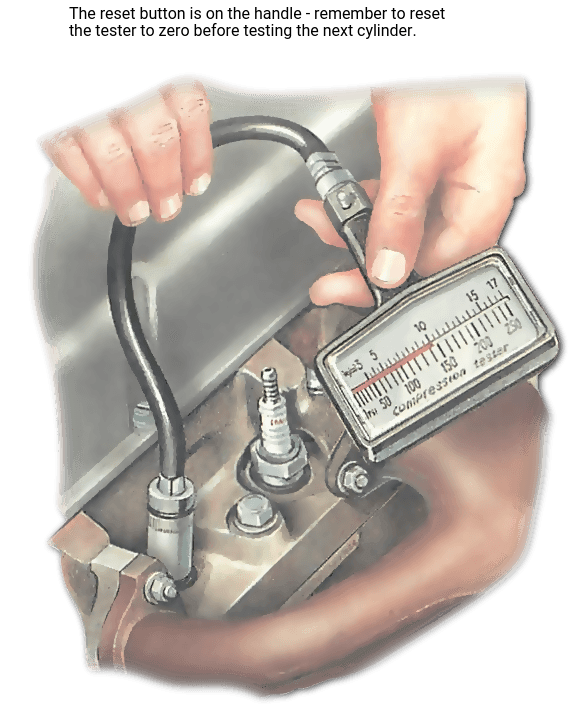
The traditional method of checking engine health is the compression test. A technician removes a spark plug and inserts a pressure gauge, then cranks the engine to measure the maximum pressure generated in the cylinder. However, modern shops now use digital transducers and oscilloscopes to perform “relative compression tests.” These digital tools measure the electrical current draw of the starter motor; a cylinder with low compression offers less resistance to the starter, showing up as a dip in the digital waveform. This allows for a non-invasive, high-tech health check of the engine’s internal state.
Identifying Technical Failures: Leak-Down Tests and Piston Ring Wear
When a compression test reveals a problem, the next step is often a “leak-down” test. This involves pressurizing the cylinder with compressed air while the piston is at TDC and using a specialized gauge to see where the air escapes. This diagnostic tech can pinpoint exactly where a mechanical failure has occurred—whether it’s a leaking valve, a blown head gasket, or worn piston rings. Understanding these failure points is essential for maintaining the “uptime” of any mechanical system.
The Future of Compression Tech: Variable Compression Engines and Hybridization
The most exciting frontier in automotive technology today is the movement away from “fixed” mechanical specs toward “variable” systems. For decades, an engine’s compression ratio was a physical constant, but that is changing.
VC-Turbo Technology: A Leap in Mechanical Engineering
Companies like Nissan and Infiniti have pioneered Variable Compression (VC) technology. Through a complex multi-link system and an electric motor actuator, these engines can physically change the reach of the piston in real-time. This allows the engine to switch from a high-efficiency 14:1 ratio for highway cruising to a high-performance 8:1 ratio for rapid acceleration. This represents a massive leap in mechanical hardware, effectively giving a car “two engines in one” through the power of advanced sensors and mechanical actuators.

Compression in the Age of High-Efficiency Powertrains
As we move toward a world of hybrids and range-extenders, the role of compression tech remains central. Mazda’s Skyactiv-X technology, for example, uses “Spark Controlled Compression Ignition.” This tech attempts to combine the high-compression benefits of a diesel engine with the cleanliness of a gasoline engine. By using a small spark to trigger a localized pressure increase, the rest of the fuel ignites via compression alone. This represents the pinnacle of current internal combustion tech, merging mechanical precision with sophisticated software control.
In conclusion, compression is far more than a simple automotive term; it is the technological foundation upon which engine performance and efficiency are built. From the precision engineering of piston rings to the software-driven logic of variable compression ratios, the “squeezing” of air and fuel remains the most critical process in the modern engine. As the industry shifts toward more sustainable and high-tech solutions, the science of compression will continue to be at the forefront of mechanical innovation.
aViewFromTheCave is a participant in the Amazon Services LLC Associates Program, an affiliate advertising program designed to provide a means for sites to earn advertising fees by advertising and linking to Amazon.com. Amazon, the Amazon logo, AmazonSupply, and the AmazonSupply logo are trademarks of Amazon.com, Inc. or its affiliates. As an Amazon Associate we earn affiliate commissions from qualifying purchases.