
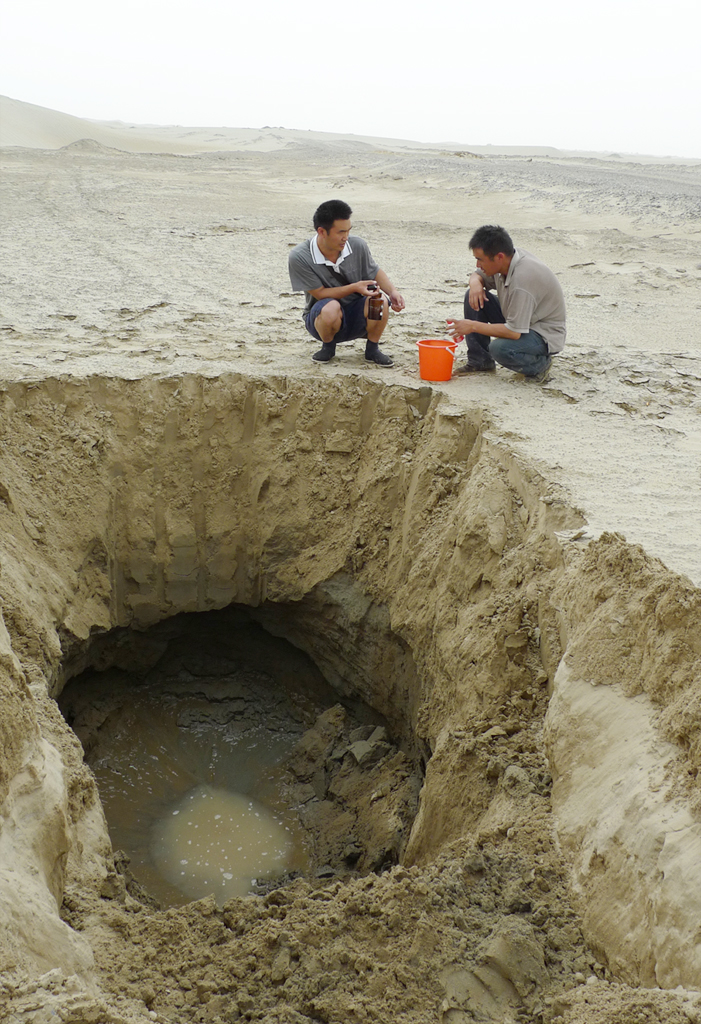
When we gaze upon the vast, undulating dunes of a desert, we see a landscape defined by its perceived emptiness. To the casual observer, the desert is a void—a place of heat, wind, and silence. However, in the context of the global technology sector, the “sands” are a thin veil covering the most sophisticated infrastructure and complex systems ever engineered by humanity.
The phrase “what is beneath the sands” serves as a powerful metaphor for the layers of modern technology that we often take for granted. From the physical fiber-optic nerves that pulse beneath the earth’s crust to the “digital archaeology” of legacy code that supports our most modern applications, the desert is far from empty. It is the foundation of our digital civilization. In this deep dive, we explore the subterranean world of tech infrastructure, the raw materials of the silicon age, and the hidden digital architectures that keep our world connected.
The Physical Infrastructure: Cables, Data Centers, and the Silent Grid
The internet is often described as a “cloud,” implying a weightless, ethereal existence above our heads. In reality, the internet is subterranean and submarine. The true power of the digital age lies not in the air, but beneath the ground, often traversing the most inhospitable deserts on the planet.
The Subterranean Backbone: Fiber Optics Across Arid Landscapes
Underneath the shifting sands of the Sahara, the Gobi, and the Mojave lies a dense network of fiber-optic cables. These are the literal nerves of the global economy. While undersea cables get much of the attention, terrestrial cables across desert regions are critical for connecting continents. For example, the transit routes through the Middle Eastern deserts serve as a vital bridge between European and Asian data hubs.
Engineers face unique challenges in these environments. The “sands” are not static; they shift, creating immense pressure and heat fluctuations that can damage traditional cabling. To counter this, tech giants and telecommunications firms utilize advanced protective sheathing and specialized trenching techniques to ensure that data—traveling at the speed of light—remains uninterrupted. These “information highways” are the reason a user in London can interact with a server in Singapore with millisecond latency.
Strategic Isolation: Why Data Centers are Moving to the Desert
In recent years, the tech industry has seen a massive migration toward desert regions for the placement of hyperscale data centers. At first glance, the heat of a desert seems antithetical to the cooling needs of thousands of servers. However, the desert offers two things that tech companies crave: space and sun.
States like Nevada and Arizona, and nations like the UAE and Saudi Arabia, have become tech hubs. Beneath the surface of these developments are massive cooling infrastructures that utilize geothermal exchange and advanced liquid cooling technologies. Furthermore, the vast, unobstructed surface area allows for massive solar arrays. By burying the core infrastructure and utilizing the surface for renewable energy, tech companies are creating “closed-loop” environments where the desert’s most abundant resource—sunlight—is converted into the very data we consume on our screens.
The Digital Archaeology: Legacy Systems and the Foundations of Modern Software
If we look beneath the “sands” of a modern user interface, we find layers of digital history. Much like an archaeologist uncovering ruins beneath a modern city, software engineers often have to navigate “legacy code” that was written decades ago.
The COBOL Sands: Why Ancient Code Still Runs Our World
One of the most profound “hidden” elements of the tech world is the reliance on legacy languages like COBOL and Fortran. Beneath the sleek, AI-driven interfaces of modern banking, insurance, and government portals lies a foundation of code written in the 1960s and 70s.
This is the digital bedrock. It is stable, robust, and incredibly difficult to move. When a modern FinTech app processes a transaction, it is often sending a request deep into these subterranean layers of code. Understanding what is “beneath the sands” in software development means acknowledging that the newest innovations are often just a facade for systems that have been running silently for half a century. The challenge for modern Tech leads is not just building the new, but ensuring the “foundational sands” don’t shift and collapse the structure above.
Technical Debt: The Shifting Dunes of Rapid Development
In the tech industry, “technical debt” represents the shortcuts taken during the development process to meet deadlines. Over time, these shortcuts accumulate, burying the project in a mess of unoptimized code and patches.
This debt is the metaphorical sand that can swallow a tech company. When developers talk about “refactoring,” they are essentially digging through the layers of the software to stabilize the foundation. As AI tools begin to assist in coding, the volume of produced software is increasing, but so is the potential for hidden bugs. The most successful tech firms are those that treat their codebase not as a finished monument, but as a living structure that requires constant excavation and reinforcement.
The Hidden Resources: From Silica to Silicon
The very sand of the desert is the primary ingredient of the digital age. Without the “lowly” grains of sand, the high-tech world would grind to a halt.
From Sand to Silicon: The Microchip Supply Chain
The journey from a desert dune to a high-end microprocessor is one of the most complex industrial processes in history. Most sand is made of silica (silicon dioxide). However, not all sand is created equal. The industry requires high-purity quartz sand to create the silicon wafers used in semiconductors.
As we look beneath the sands, we find the origin of the silicon cycle. Through a process of extreme heating and chemical purification, sand is transformed into 99.9999% pure silicon ingots. These ingots are sliced into wafers, upon which billions of transistors are etched using extreme ultraviolet (EUV) lithography. It is a poetic irony of the tech world: our most advanced artificial intelligences are essentially “thinking” through highly processed and electrified grains of sand.
The Rare Earth Paradox
Beyond silica, the “sands” of certain geographic regions contain rare earth elements (REEs) such as neodymium, terbium, and dysprosium. These elements are essential for everything from smartphone vibrating motors to the magnets in EV turbines.
The tech industry’s reliance on these hidden minerals has created a complex geopolitical landscape. To understand the future of tech—be it AI, robotics, or green energy—one must understand the mining and processing of what lies beneath the earth. The “Tech Desert” is not a place of scarcity, but a repository of the rare minerals that allow our gadgets to be small, powerful, and efficient.
Digital Security: Encryption and the “Hidden” Layers of Privacy
In the realm of digital security, “beneath the sands” refers to the layers of encryption and obfuscation used to protect data from prying eyes. In an age of constant surveillance and cyber-warfare, what remains hidden is often more important than what is visible.
The Deep Web and the Data Subsurface
Most users only interact with the “surface web.” However, beneath this layer lies the Deep Web—a vast expanse of data that is not indexed by search engines. This includes everything from private medical records and academic databases to secure corporate archives.
Further down is the “Dark Web,” a small portion of the Deep Web that requires specific software to access. In a tech context, this layer represents the ultimate “desert”—a place where anonymity is the primary currency. For cybersecurity experts, monitoring what is happening “beneath the surface” is essential for predicting threats and understanding the evolution of cybercrime.
Building Fortresses in the Sand: Zero-Knowledge Proofs
As we look to the future of privacy, technology like Zero-Knowledge Proofs (ZKPs) represents a new way to “bury” information securely. ZKPs allow one party to prove to another that a statement is true without revealing any information beyond the validity of the statement itself.
This is the ultimate form of digital concealment. It allows for a world where your identity, your financial status, and your private data remain “beneath the sands,” inaccessible to hackers and corporations, while still allowing you to function in a digital society. In the next decade, the tech industry will move toward these “invisible” security architectures, making the protection of what is “beneath” the primary goal of software design.

Conclusion: The Architecture of the Invisible
What is beneath the sands of a desert? For the technologist, the answer is: everything.
We live in an era where the most critical components of our lives—the way we communicate, the way we store wealth, and the way we process information—are hidden from view. The desert is no longer a wasteland; it is a strategic frontier. It houses the cables that connect us, the silicon that powers our devices, and the code that runs our civilization.
By understanding these hidden layers, we gain a deeper appreciation for the complexity of the modern world. Technology is not a series of isolated gadgets; it is a deeply rooted ecosystem that extends far beneath the surface of our daily reality. As we continue to innovate, we must remain mindful of these foundations, ensuring that the “sands” of our digital age are built on a bedrock of sustainability, security, and structural integrity.
aViewFromTheCave is a participant in the Amazon Services LLC Associates Program, an affiliate advertising program designed to provide a means for sites to earn advertising fees by advertising and linking to Amazon.com. Amazon, the Amazon logo, AmazonSupply, and the AmazonSupply logo are trademarks of Amazon.com, Inc. or its affiliates. As an Amazon Associate we earn affiliate commissions from qualifying purchases.