
In the modern digital landscape, where seamless user experiences and high-speed data processing are the benchmarks of success, the underlying infrastructure of software applications is more critical than ever. At the heart of this infrastructure lies the application server. Often misunderstood or confused with its sibling, the web server, the application server is the heavy-lifting engine that powers complex, enterprise-level applications.
From online banking systems to massive e-commerce platforms, application servers act as the bridge between the end-user’s interface and the back-end database. This article explores the intricate world of application servers, their architecture, their distinct roles compared to web servers, and their evolving place in a cloud-centric world.
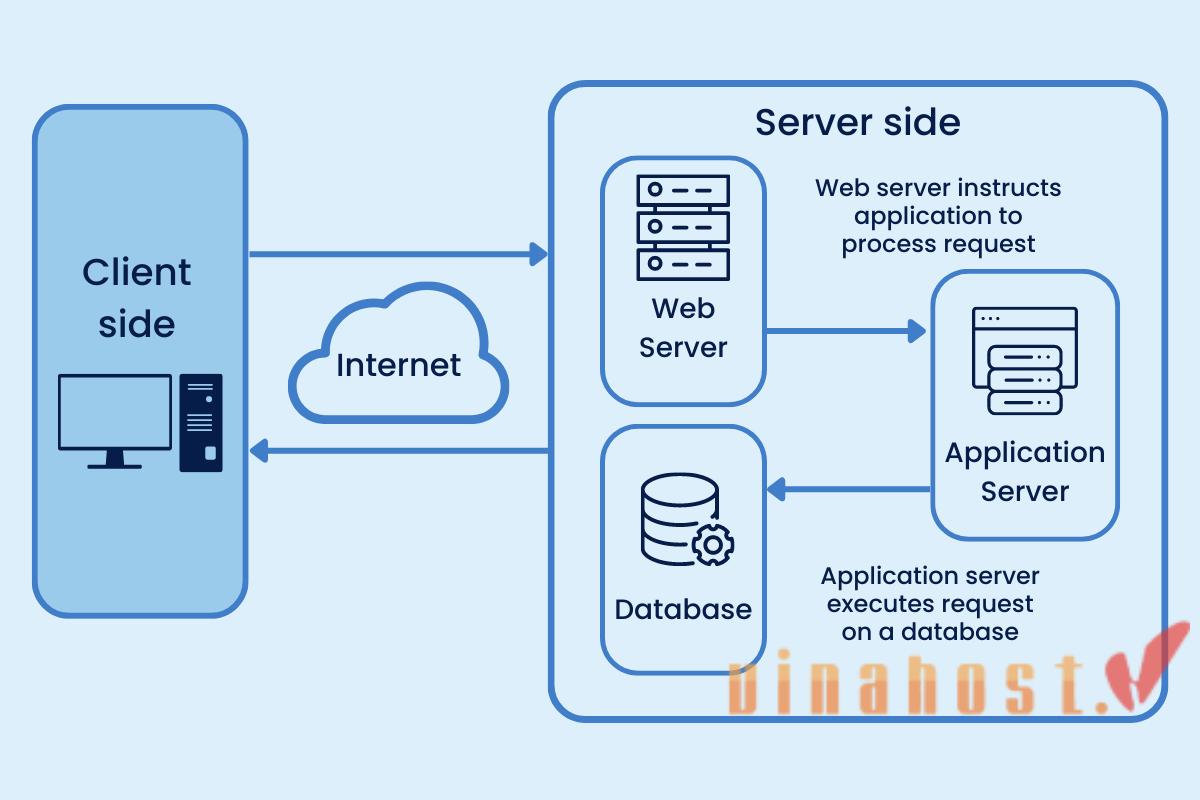
The Core Architecture and Workflow of Application Servers
To understand what an application server is, one must first understand its place in the standard “Three-Tier Architecture.” Unlike a simple website that displays static text, a modern application requires a layered approach to handle security, data integrity, and complex calculations.
The Three-Tier Model
The three-tier architecture consists of the Presentation Tier (the user interface), the Logic Tier (the application server), and the Data Tier (the database). The application server occupies the middle ground. It receives requests from the presentation tier, processes them according to pre-defined “business logic,” and communicates with the database to retrieve or update information. By isolating the logic in this middle tier, developers can update the application’s core functionality without altering the user interface or the underlying data structure.
Request Handling and Business Logic Processing
When a user interacts with an application—for example, by clicking “Purchase” on a retail site—the application server doesn’t just send back a webpage. It executes a series of complex scripts. It verifies the user’s identity, checks the inventory in the database, calculates taxes, processes the payment through a third-party API, and triggers a confirmation email. This collection of rules and procedures is known as “business logic.” The application server is the dedicated environment where this logic lives and breathes.
Database Connectivity and Connection Pooling
One of the most resource-intensive tasks for any software is opening and closing connections to a database. An application server optimizes this process through “connection pooling.” Instead of creating a new connection for every single user request, the server maintains a “pool” of active connections that are reused. This significantly reduces latency and prevents the database from being overwhelmed during peak traffic hours, ensuring the application remains responsive.
Core Features and Functionalities of Modern Application Servers
Application servers are much more than mere code executors; they are comprehensive management platforms that provide a suite of services to the applications running on them. These features ensure that software is secure, scalable, and reliable.
Load Balancing and High Availability
In a high-traffic environment, a single server can become a bottleneck or a single point of failure. Application servers often include built-in load-balancing capabilities. They can distribute incoming traffic across multiple server instances to ensure no single unit is overloaded. Furthermore, they support “failover” mechanisms: if one server instance crashes, the application server automatically reroutes traffic to a healthy instance, maintaining “high availability” and ensuring the end-user experiences no downtime.
Security and Transaction Management
Security is a paramount concern in the “Tech” niche, and application servers provide a robust layer of defense. They handle authentication (verifying who a user is) and authorization (verifying what a user is allowed to do) at the logic level.
Additionally, they manage “transactions.” In computing, a transaction is a series of operations that must all succeed or all fail together. For instance, in a bank transfer, money must be debited from one account and credited to another. If the credit fails, the debit must be rolled back. The application server manages these complex states to ensure data integrity is never compromised.
Resource Management and Multithreading
Application servers are designed to handle thousands of concurrent users. They achieve this through sophisticated multithreading and resource management. The server allocates CPU and memory resources dynamically, ensuring that a memory-heavy task performed by one user doesn’t crash the experience for others. This isolation of processes is what allows enterprise software to scale to global proportions.
Application Server vs. Web Server: Understanding the Differences
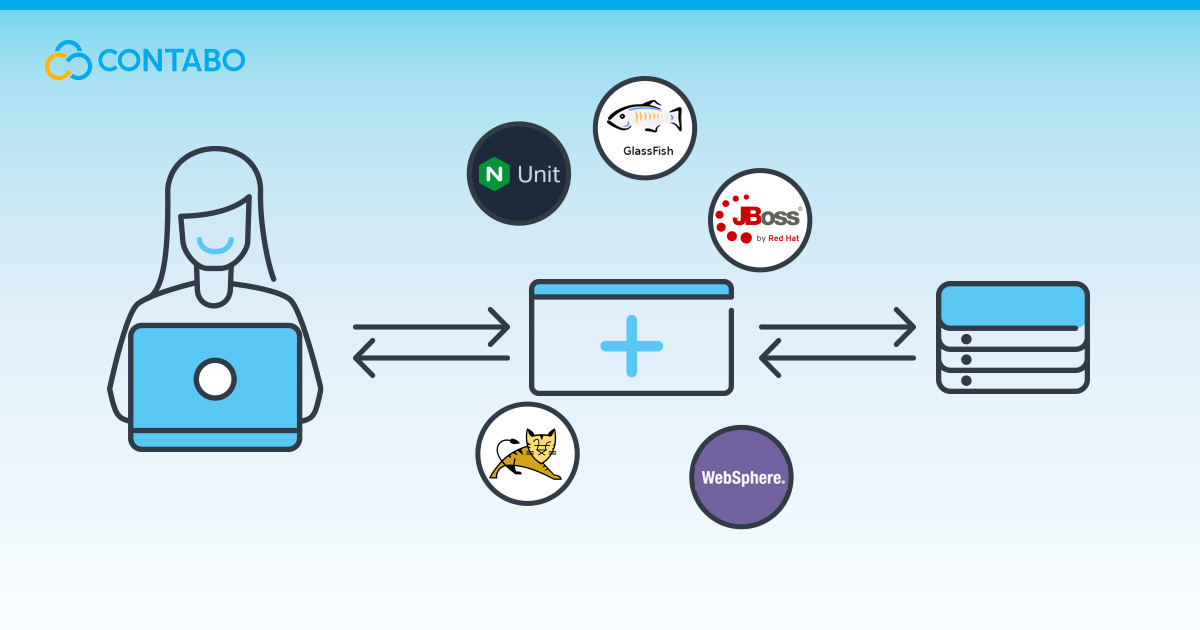
One of the most common points of confusion in technology is the distinction between a web server and an application server. While the lines have blurred in recent years, their primary purposes remain distinct.
Content Delivery: Static vs. Dynamic
A web server (like Apache or Nginx) is primarily designed to serve static content. This includes HTML files, CSS stylesheets, and images. When you request a simple “About Us” page, the web server finds the file and sends it to your browser.
In contrast, an application server generates dynamic content. It doesn’t just find a file; it creates the response on the fly based on user input and database queries. While a web server tells you what is there, an application server figures out what should be there.
Protocol Support: Beyond HTTP
Web servers are almost exclusively focused on the HTTP and HTTPS protocols. Application servers, however, support a wider array of protocols to facilitate communication between different software components. These can include RMI (Remote Method Invocation), RPC (Remote Procedure Call), and various messaging queues (like AMQP). This allows the application server to talk not just to browsers, but to other servers, legacy systems, and specialized hardware.
The Hybrid Approach: Why Both are Used
In a professional production environment, you rarely find one without the other. They usually work in tandem. The web server sits at the front, handling simple requests for images and scripts. When a request requires “intelligence” or data processing, the web server passes it back to the application server. This “reverse proxy” setup improves security, as the application server (which has access to the database) is never directly exposed to the public internet.
Popular Application Server Examples and Use Cases
The choice of an application server often depends on the programming language and the specific needs of the business. Different ecosystems have developed their own flagship servers.
Java EE/Jakarta EE Servers
For decades, Java has been the gold standard for enterprise applications. Servers like IBM WebLogic, Oracle GlassFish, and the open-source WildFly (formerly JBoss) provide a massive framework for building large-scale systems. These servers are highly regulated and follow strict specifications, making them ideal for government and financial institutions that require maximum stability and standardized configurations.
.NET Framework and Internet Information Services (IIS)
In the Microsoft ecosystem, the application server role is often filled by IIS (Internet Information Services) combined with the .NET framework. While IIS is technically a web server, its deep integration with the .NET runtime allows it to function as a powerful application server, hosting complex Web APIs and enterprise software built with C# and VB.NET.
Node.js and the Modern Shift
The rise of JavaScript on the server-side via Node.js has challenged the traditional definition of an application server. Node.js is often described as a “runtime environment” rather than a traditional application server, but it performs many of the same functions. It is lightweight, event-driven, and highly efficient for real-time applications like chat platforms and collaborative tools. It represents a shift away from “heavy” monolithic servers toward more agile, specialized environments.
The Future: Microservices, Containers, and Cloud-Native Logic
The evolution of technology is currently moving away from massive, “monolithic” application servers toward a more decentralized model. This shift is redefining how we think about middleware.
The Rise of Microservices
In a microservices architecture, a large application is broken down into dozens or hundreds of small, independent services. Instead of one giant application server running the entire platform, each service might have its own tiny, “embedded” server. This allows teams to update specific parts of an app—like the search function—without touching the checkout function, leading to faster innovation cycles.
Containerization and Kubernetes
Tools like Docker and Kubernetes have revolutionized the deployment of application logic. Applications are now “containerized,” meaning the code and the server environment are packaged together. This ensures that the application runs the same way on a developer’s laptop as it does in the cloud. In this world, the “server” is often a virtualized, ephemeral entity that scales up or down automatically based on demand.
Serverless Computing
The ultimate evolution of the application server concept is “Serverless” or Function-as-a-Service (FaaS), such as AWS Lambda. In this model, the developer doesn’t manage a server at all. They simply upload a snippet of code, and the cloud provider handles the execution, scaling, and security. While there is still technically a server running the code, the abstraction is so complete that the traditional “application server” becomes invisible to the developer.
In conclusion, while the form of the application server is changing—moving from physical hardware to virtual containers and invisible cloud functions—its role remains indispensable. As long as we need software that processes data, enforces security, and manages complex transactions, the application server will remain the vital “brain” of the digital world. Whether you are a developer, a business leader, or a tech enthusiast, understanding this middleware is key to understanding how the modern internet actually works.
aViewFromTheCave is a participant in the Amazon Services LLC Associates Program, an affiliate advertising program designed to provide a means for sites to earn advertising fees by advertising and linking to Amazon.com. Amazon, the Amazon logo, AmazonSupply, and the AmazonSupply logo are trademarks of Amazon.com, Inc. or its affiliates. As an Amazon Associate we earn affiliate commissions from qualifying purchases.