
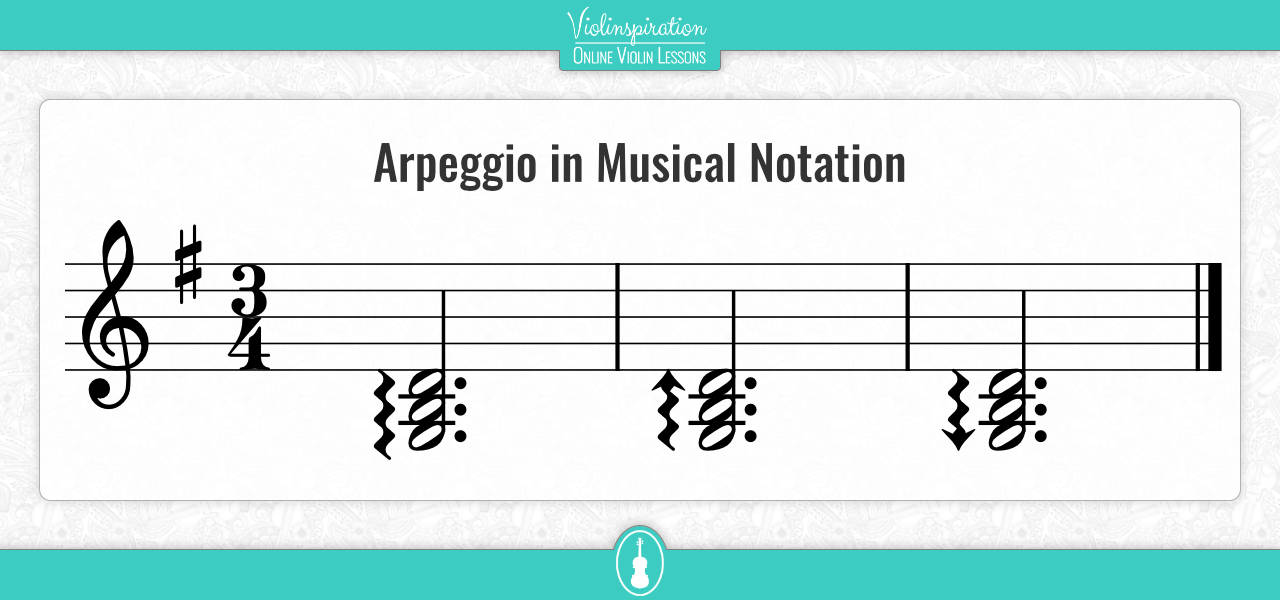
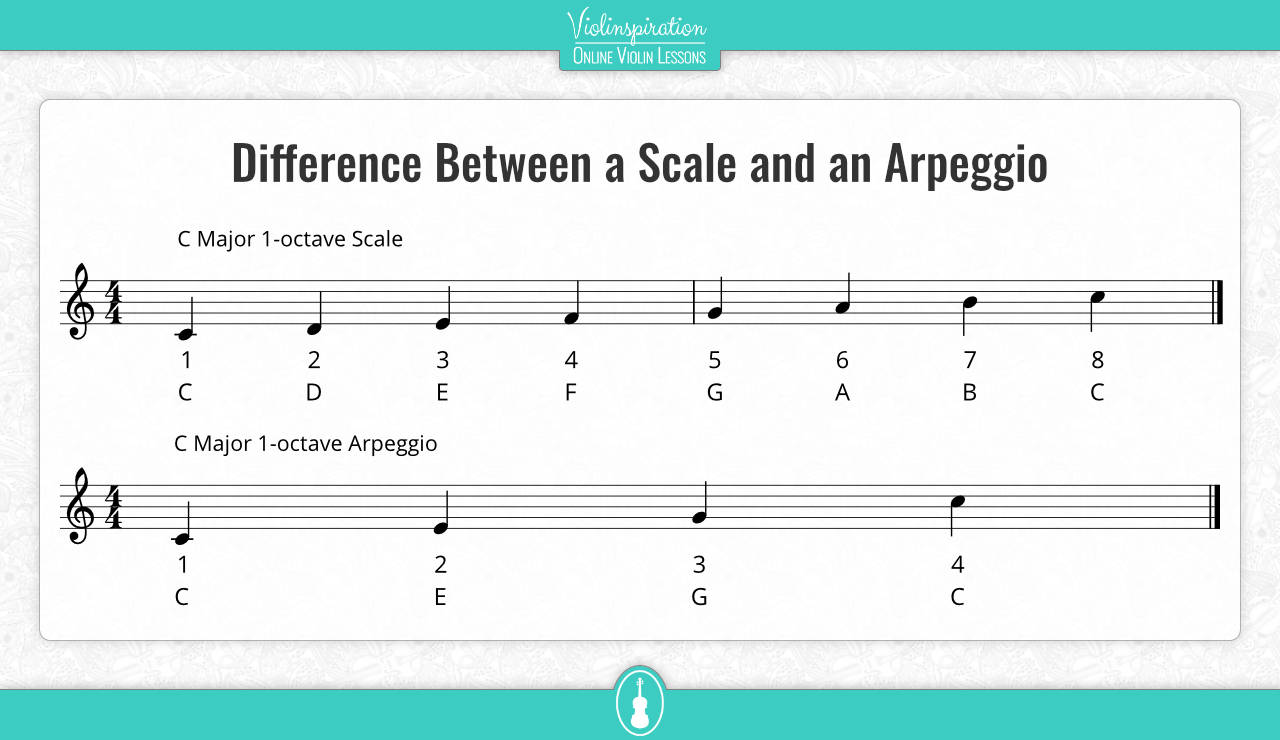
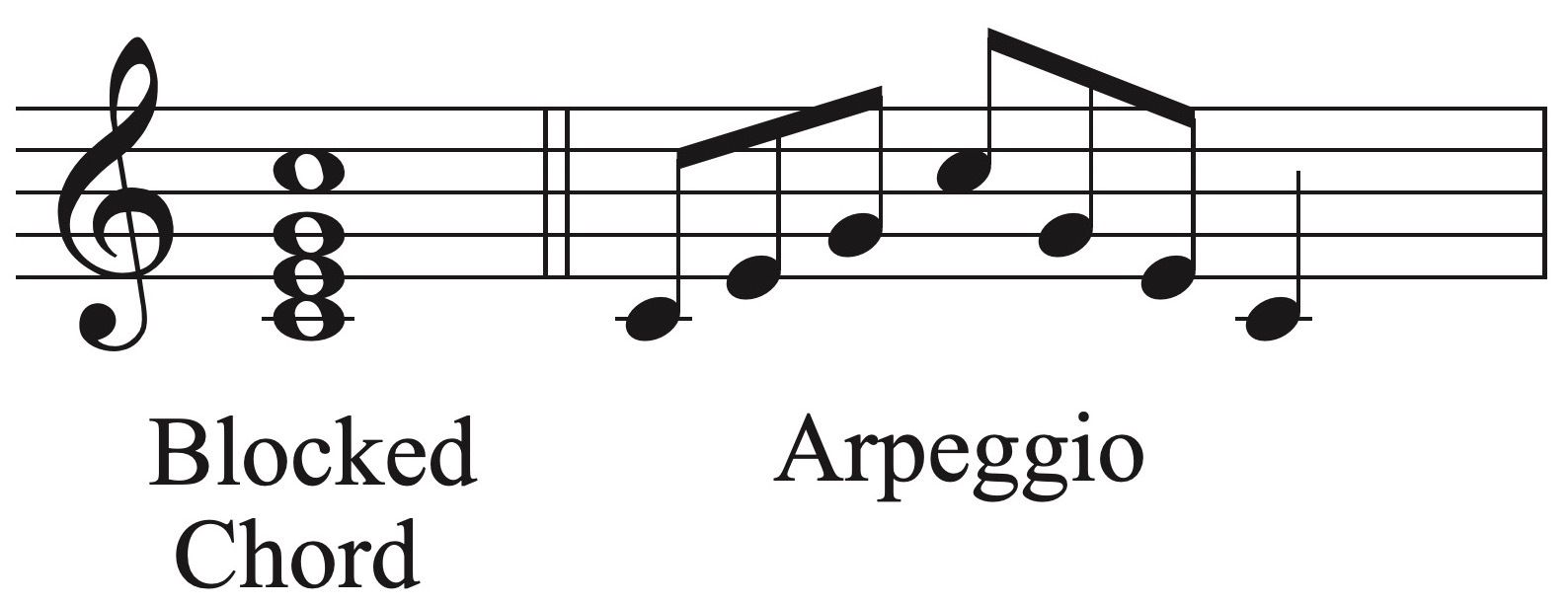
In the traditional sense, an arpeggio is a “broken chord” where the individual notes are played in succession rather than simultaneously. While this concept dates back centuries to the era of harps and lutes, the modern interpretation of the arpeggio has been fundamentally transformed by technology. Today, when we ask “what is an arpeggio in music,” we are often discussing complex algorithms, MIDI data streams, and the sophisticated digital synthesis that allows a single keystroke to erupt into a cascading sequence of perfectly timed notes.
For the modern technologist, music producer, or software developer, the arpeggio represents the intersection of harmonic theory and computational logic. It is no longer just a technique for the fingers; it is a programmable event.
The Digital Anatomy: How Modern Software Redefines the Arpeggio
In the analog world, an arpeggio requires a high degree of manual dexterity. However, in the digital landscape, the arpeggio is defined by data parameters. Within a Digital Audio Workstation (DAW), an arpeggio is essentially a series of instructions sent to a sound engine.
From Manual Performance to MIDI Sequences
MIDI (Musical Instrument Digital Interface) changed the way we perceive musical structures. Instead of recording audio waves, MIDI records performance data: note pitch, velocity, and duration. When we look at an arpeggio through the lens of MIDI tech, we see a precise mathematical grid. Technology allows us to “quantize” these notes, ensuring that the distance between each note of the broken chord is mathematically perfect—a feat nearly impossible for human performers to maintain over long periods.
The Role of Digital Audio Workstations (DAWs) in Arpeggio Construction
Modern software like Ableton Live, Logic Pro, and FL Studio treat arpeggios as “MIDI Effects.” In these environments, an arpeggio is a real-time transformation of input. A producer can hold down a simple C-Major triad (C, E, G), and the software’s engine will calculate the order, speed, and octave range of those notes instantly. This shift from “performance” to “processing” is a hallmark of current music technology, allowing for complexity that exceeds human physical limitations.
The Rise of the Arpeggiator: A Tech Revolution in Synthesis
If the arpeggio is the musical concept, the “arpeggiator” is the technological tool used to execute it. Originally introduced in the hardware synthesizers of the late 1970s and early 80s (such as the Roland Jupiter-4 or the Sequential Circuits Prophet-V), the arpeggiator has become a staple of electronic music technology.
Understanding LFOs, Gates, and Step Sequencers
The tech behind an arpeggiator relies on several key components. A Low-Frequency Oscillator (LFO) or a clock signal typically dictates the tempo. The software then applies a “gate” to determine how long each note in the arpeggio lasts.
More advanced digital arpeggiators function as “step sequencers.” This allows the user to program specific rhythms into the arpeggio. For example, instead of a simple up-and-down pattern, a developer can program the software to skip certain notes, vary the volume of others, or even change the swing (timing offset) to make the digital sequence feel more organic.
Hardware vs. Software Arpeggiators: The Engineering Gap
While vintage hardware arpeggiators relied on physical voltage-controlled oscillators (VCOs) and circuits, modern software arpeggiators (VSTs) operate via complex code. Virtual instruments like Xfer Serum or Spectrasonics Omnisphere use “wavetable synthesis” to create arpeggios. The engineering challenge here is CPU optimization; calculating hundreds of tiny note events with unique filter envelopes in real-time requires efficient coding to prevent audio “glitches” or latency.
AI and Algorithmic Arpeggiation: The Future of Sound Design
The most recent leap in the world of arpeggios involves Artificial Intelligence and Machine Learning. We are moving past static, pre-programmed patterns and into a realm where the arpeggio responds to the environment.
Neural Networks and Generative Harmonic Patterns
Companies like Google (through their Magenta project) are using neural networks to analyze thousands of hours of classical and contemporary music. The result is AI-driven arpeggiators that don’t just repeat a pattern but “compose” in real-time. These tools can analyze the mood of a track and generate a “broken chord” sequence that evolves, introducing subtle variations that mimic the improvisational skills of a master pianist.
Real-time Data Mapping: Converting Code into Melodic Arpeggios
In the niche of “Live Coding” and “Algorithmic Composition,” developers use languages like SuperCollider or TidalCycles to generate arpeggios. Here, the arpeggio is literally a piece of code. A developer might write a script where the notes of an arpeggio are determined by live data, such as fluctuations in the stock market or weather patterns. This transformation of raw data into musical harmony represents the ultimate technological evolution of the arpeggio—it is no longer just music; it is sonified information.
Optimization and Programming: The Developer’s Perspective on Musical Patterns
To the software engineer, an arpeggio is a loop. Creating a digital arpeggiator requires a deep understanding of data structures and timing precision.
Coding the Perfect “Broken Chord” Logic
When writing a script for an arpeggiator, the developer must handle a “buffer” of notes. If a player presses three keys, the software must store those notes in an array, sort them by pitch, and then iterate through that array at a speed determined by the BPM (Beats Per Minute) of the project.
The logic looks something like this:
- Input: Array of MIDI Note IDs [60, 64, 67]
- Sort: Ascending, Descending, or Random.
- Timer: Trigger next note every
Xmilliseconds. - Output: Send Note On/Note Off messages.
This logical flow is the backbone of every synth-pop lead and techno bassline heard in the modern digital era.
Latency and Jitter in Digital Arpeggio Processing
One of the greatest technological hurdles in digital music is “jitter”—the tiny variations in timing that can ruin the rhythmic integrity of an arpeggio. For an arpeggio to sound “pro,” the timing must be sample-accurate. High-end audio interfaces and optimized drivers (like ASIO) are designed specifically to handle the high-speed data throughput required for complex arpeggiation. Developers must optimize their code to ensure that the “interrupts” in the computer’s CPU do not interfere with the musical timing, a task that requires balancing high-performance computing with creative expression.
Conclusion: The Integrated Future of the Arpeggio
What is an arpeggio in music? In the 21st century, it is a perfect symbiosis of art and technology. It began as a simple way for a harpist to play a chord, but it has evolved into a showcase for the power of digital synthesis, algorithmic design, and artificial intelligence.
As we look toward the future, the arpeggio will continue to be a primary site for innovation. With the rise of VR (Virtual Reality) and spatial audio, we may soon experience “spatial arpeggios,” where notes of a broken chord are distributed across a 3D environment, triggered by a user’s movement or gaze. Whether it is being played on a $10,000 vintage Moog or being generated by a Python script on a laptop, the arpeggio remains the clearest evidence that music is, at its heart, a mathematical language that technology is uniquely equipped to speak.
aViewFromTheCave is a participant in the Amazon Services LLC Associates Program, an affiliate advertising program designed to provide a means for sites to earn advertising fees by advertising and linking to Amazon.com. Amazon, the Amazon logo, AmazonSupply, and the AmazonSupply logo are trademarks of Amazon.com, Inc. or its affiliates. As an Amazon Associate we earn affiliate commissions from qualifying purchases.